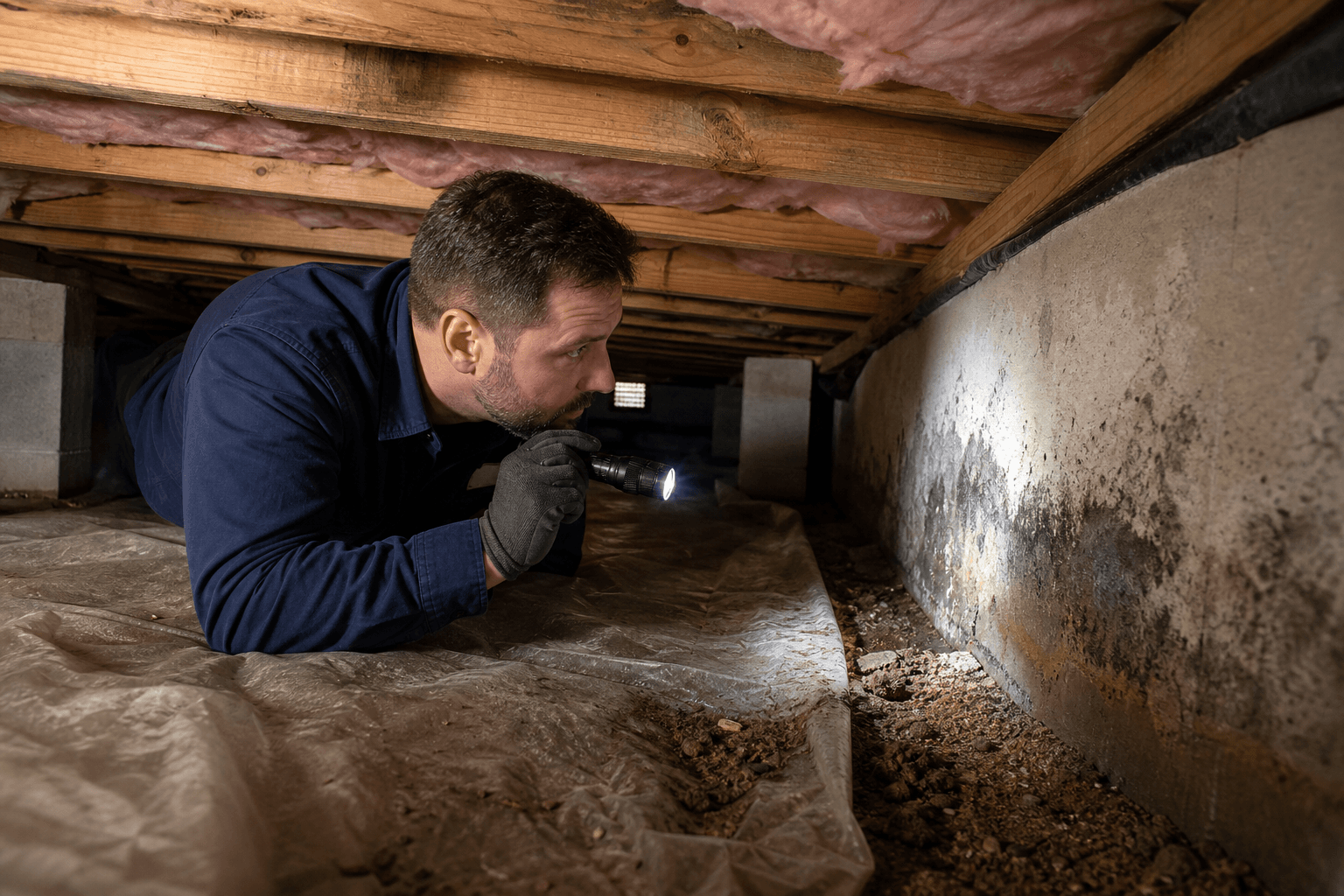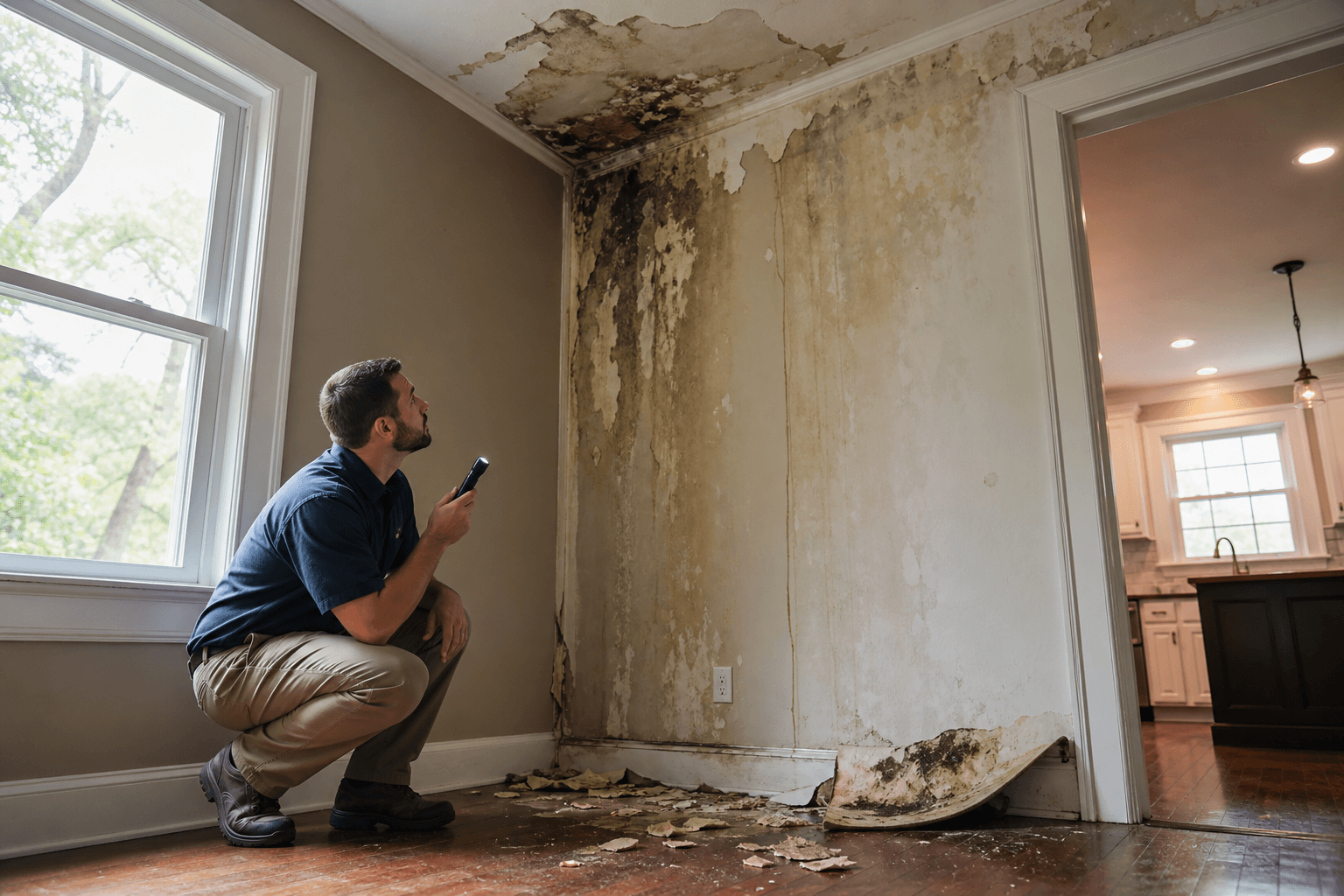
If you are evaluating a property in the GTA, spotting early moisture intrusion warning signs can prevent costly repairs and health risks. This checklist lists seven distinct signs, explains what each usually means, offers a quick verification you can do during a walkthrough, gives an urgency level, and tells you when to call an InterNACHI or CCPIA certified inspector such as those at Asmhomeinspection.
How to use this checklist during a walkthrough
Bring a flashlight, your phone for photos, and a basic hygrometer if you have one. Focus on basements, crawl spaces, attics, bathrooms, kitchens, ceilings and exterior grading. Note where you find problems, take clear photos, and timestamp them. If you suspect hidden moisture do not cut into finishes yourself. Record observations so you can compare them with a professional inspection report or use them in negotiations.
7 moisture intrusion warning signs to look for
Below are exactly seven warning signs. Each item includes what to look for, why it matters, a quick verification step, and an urgency rating you can use to decide the next action.
1. Visible water stains on ceilings, walls or floors
What to look for: Brown, yellow or grey rings and streaks on ceilings, walls, or floor finishes. Stains may expand after rain or when plumbing is used.
Why it matters: Discoloured patches often show a current or recurring leak above or behind the surface, from the roof, plumbing or exterior joints. Visible stains are a common early indicator of active water intrusion and long term deterioration. For more on interior and exterior water intrusion signs see the Building Envelope Waterproofing Toronto discussion.
Quick check: Photograph the stain, note whether it feels damp, and check the area above for roof or plumbing sources. Ask the seller when the stain first appeared and whether repairs were documented.
Urgency: Soon to immediate depending on size and dampness. Ongoing wet stains should trigger a professional inspection before closing.
2. Musty odour or visible mould and mildew
What to look for: A persistent musty smell in closets, basements, attics, or behind drywall. Visible black, green or white growth on finishes, trims or ceiling tiles.
Why it matters: Musty odours and mould indicate moisture is present in materials or cavities. Even small growth can release spores and lead to health and remediation costs. Early detection reduces the extent of required remediation.
Quick check: Open closet and cabinet doors, sniff near suspect areas, and look for surface growth where ventilation is limited. If you see mould note its extent and location.
Urgency: Immediate for visible mould in living spaces. For odours without visible mould, book an inspection to locate the source and extent.
3. Peeling paint, bubbling wallpaper or flaking plaster
What to look for: Paint that lifts, soft or bubbling wallpaper, and plaster that flakes or crumbles in patches, especially near corners, windows, or ceilings.
Why it matters: Finish failures mean moisture is trapped behind the surface and drying is incomplete. Cosmetic repairs alone may hide ongoing leaks. Early finish failure often precedes structural or mould issues.
Quick check: Gently press near the affected area to feel for soft spots, photograph the condition, and check adjacent rooms or the floor below for related damage.
Urgency: Soon. If finish breakdown is widespread or recurring after repairs, arrange a detailed inspection and moisture measurement.
4. Warped or soft flooring, sagging ceilings or swollen skirting
What to look for: Wood, laminate or engineered floors that cup, buckle or feel springy, ceilings that sag in patches, and baseboards that appear swollen or separated from the wall.
Why it matters: Dimensional changes in structural or finish materials happen when moisture affects wood or gypsum. These changes can indicate prolonged moisture exposure that may have compromised fasteners, subfloors, or framing.
Quick check: Walk the area and note soft or spongy spots. Look underneath stair landings, in basements and at bathroom thresholds for related deformation. Photograph these areas for the inspection report.
Urgency: Immediate to soon. Structural assessment may be required when load bearing elements are affected.
5. High indoor humidity, condensation on windows, or persistent damp spots
What to look for: Fogged windows in cold weather, condensation on interior frames, or rooms that feel consistently damp despite heating or ventilation.
Why it matters: Elevated indoor humidity or chronic condensation prevents proper drying and increases mould risk. It may signal poor ventilation, recurring leaks, or water migrating through assemblies.
Quick check: Use a hygrometer to record relative humidity in suspect rooms. If it stays above about 50 to 60 percent that is a concern. Note whether condensation occurs after showers or is constant.
Urgency: Soon. Persistent humidity warrants diagnosis because it accelerates material decay and mould growth.
6. Exterior drainage problems, wet grading, or foundation efflorescence and hairline cracks
What to look for: Soil that slopes toward the foundation, downspouts discharging near the building, persistent wet soil along foundation walls, white mineral deposits on concrete, or small cracks in masonry.
Why it matters: Water collecting at the foundation drives groundwater into basements and crawl spaces. Efflorescence is evidence that water has moved through masonry and deposited minerals. Slow foundation intrusion can be subtle yet cause long term deterioration and damage to insulation or framing.
Quick check: Walk the exterior after rain to see where water drains, look for pooling, and examine foundation walls for white staining and hairline cracks. Ask whether the property has a sump pump or perimeter drain and whether these systems are maintained.
Urgency: Soon to immediate depending on active seepage. Foundation moisture issues require prompt assessment to protect structure and finishes.
7. Recurrent plumbing leaks, stains under fixtures or damp in cupboards
What to look for: Water stains under sinks, dark or warped cabinet bottoms, signs of repeated patching beneath toilets, and damp laundry rooms or utility closets.
Why it matters: Areas around fixtures are common sources of concealed leaks from fittings, trap failures, and appliance hoses. Repeated evidence near fixtures suggests the problem is not fully resolved and may have hidden damage.
Quick check: Open cabinet doors, inspect pipe fittings, look for corrosion or fresh drips, and smell for mustiness. Photograph and list which fixtures are involved for the inspector.
Urgency: Immediate for active leaks that soak materials. For older stains without current dampness arrange a professional moisture scan to confirm drying and hidden damage.
How urgent each sign is and quick verification steps
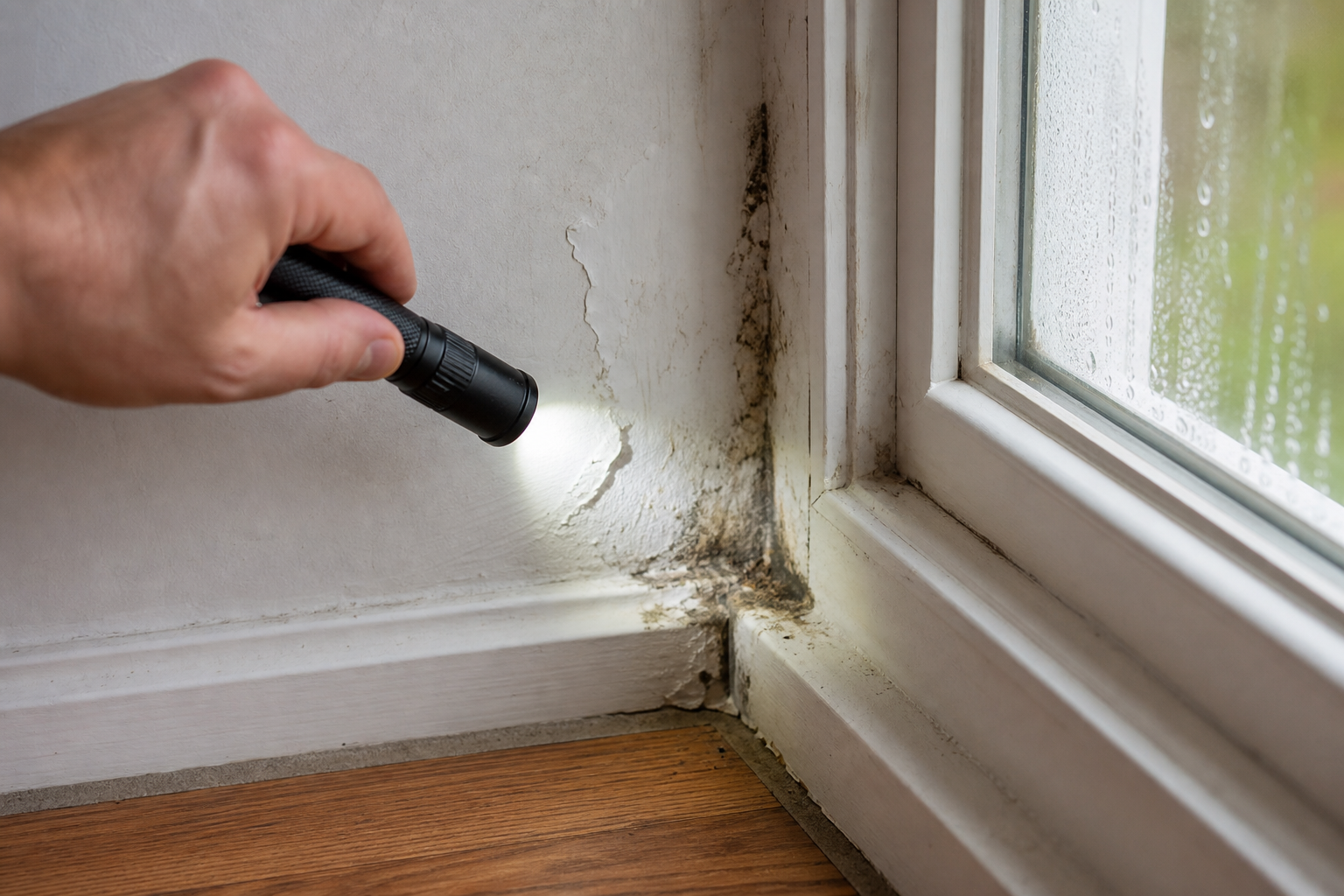
Use a three tier urgency scale: Immediate for active leaks or visible mould in living spaces, Soon for signs that show recurring moisture or material degradation, and Watch for single small stains or isolated cosmetic issues. On site checks you can perform safely include visual inspection, smell test, gentle pressure on finishes, and a hygrometer reading. Avoid invasive probing that could make a leak worse or disturb mould. For more detailed inspection procedures consult restoration and inspection guidance from professionals.
What an ASM inspector will check for moisture intrusion
An InterNACHI and CCPIA certified inspector from Asmhomeinspection will perform system by system checks. Typical steps include roof and attic inspection, interior finish and ceiling examination, basement and foundation review, plumbing fixture and drain checks, noninvasive moisture meter readings, and targeted infrared scanning when indicated. ASM offers same-day PDF inspection reports to document findings quickly so buyers and agents can use the information during negotiations.
Decision criteria: when to book a same-day inspection and how to use the report
Book a same-day inspection when you find an active leak, visible mould in living areas, structural deformation, recurring stains, or evidence of foundation seepage. A same-day PDF report provides time stamped photos, measured moisture readings, and a clear findings summary that supports conditional offers, repair estimates and insurance conversations. Use the report to ask for documented repairs, price adjustments, or to require specialised remediation prior to closing.
GTA-specific considerations for basements, condos and older homes

Greater Toronto Area homes often have older foundations and shallow footings that are susceptible to slow intrusion through hairline cracks, particularly during spring thaw and heavy rain. In condos your access to exterior envelopes is limited, so interior clues and the strata maintenance record are critical. Local restoration resources discuss how slow foundation moisture can produce long term damage.
Common objections and how to decide anyway
Expect responses like "it was fixed" or "that was cosmetic," and requests to rely on the seller's word. The practical solution is documented evidence. Ask for invoices or permits for repairs, and request a certified inspection if documentation is absent or vague. An independent same-day inspection report is objective and can resolve disputes during negotiations.
Frequently asked questions
What are the earliest moisture intrusion warning signs?
The earliest signs are musty odours and small discoloured stains on ceilings or walls, followed by finish failures like peeling paint. Early detection prevents bigger problems and is best confirmed with a professional moisture scan.
When should I book a home inspection for suspected water damage?
Book immediately for active leaks, visible mould in living spaces, structural sagging or recurrent stains. For odours or single small stains schedule a prompt inspection so the cause can be identified before it worsens.
Can a simple walkthrough checklist find hidden moisture?
A checklist helps spot many warning signs but cannot detect all concealed moisture. Use the checklist to prioritise a professional inspection that can include moisture meters and infrared scans for hidden problems.
How does a same-day inspection report help in a real estate transaction?
A same-day PDF report delivers documented findings quickly so buyers, sellers and agents can make time sensitive decisions, negotiate repairs, or add conditions to an offer without delaying the transaction.
Why choose an InterNACHI or CCPIA certified inspector for moisture concerns?
These certifications indicate standardised, accredited training for residential and commercial inspections. Certified inspectors follow recognised procedures when checking for moisture and provide consistent reports you can rely on during negotiations.
Book an inspection if you spot any of these signs
If you find one or more of these moisture intrusion warning signs in a property, call 647-381-9030 or visit Asmhomeinspection to schedule an InterNACHI and CCPIA certified inspection with same-day PDF reporting.