How to use these seven tips and a quick decision checklist
This article walks through seven specific leak detection techniques, numbered for quick reference. Each item contains a short DIY checklist you can use today, what a certified inspector or specialist would find that you probably will not, a brief pros and cons comparison, an estimate of effort and time, and a clear rule for when to call a certified inspection or a licensed plumber in the Greater Toronto Area (GTA).
Three quick decisions to guide you now:
- If you see active water, sagging ceilings, or mould growth, stop DIY and call a professional immediately.
- If you are under a transaction deadline (pre-purchase, pre-listing, rental move-in), a certified inspection with documented findings is usually the fastest way to get a verifiable answer.
- If the leak source is not visible after basic checks (meter, toilets, faucets), schedule a professional leak-detection inspection to avoid missed hidden damage.
ASM Home & Commercial Inspection provides certified residential and commercial inspections across the GTA and emphasises early moisture detection; the inspector is an InterNACHI and CCPIA certified inspector and delivers same-day PDF reports for time-sensitive transactions, which can be helpful when you need quick, documented findings (ASM Home & Commercial Inspection).
Seven detection methods compared

1) Visual and audible checks: the fastest DIY scan
DIY checklist (10–30 minutes): walk every room and look for water stains, bubbling paint, peeling wallpaper, mould patches, warped trim, pooled water, and listen for dripping or running water behind walls and under sinks. Check basements, crawlspaces, attics and around appliances.
What a professional inspection adds: systematic attic-to-basement scanning, moisture meter readings, and the trained judgement to distinguish old stains from active moisture. A certified inspector documents findings with photos and same-day PDF reports you can use in negotiations or to prioritise repairs (ASM Home & Commercial Inspection).
Pros and cons: DIY is free and fast but misses slow or hidden leaks. A pro documents condition and can prioritise repairs.
When to call: visible active leaks, expanding stains, new mould, or if you need a written inspection for a sale or purchase.
2) Toilet dye test and tank checks: easy fix, big waste saver
DIY checklist (5–15 minutes): remove the toilet tank lid, add a few drops of food colouring or a test tablet to the tank, wait 10–30 minutes without flushing, and check the bowl for colour. Inspect tank parts for cracks, a worn flapper, or continuously running water.
What a professional adds: measurement of leak rate, diagnosis of slow slab seepage around the toilet base, and identification of intermittent leaks that a short dye test might miss. Professionals can also advise if the toilet leak is a symptom of a larger pressure or mainline problem.
Why it matters: toilets are one of the most common household leak sources and a frequent cause of wasted water and higher bills; municipal and utility guides highlight toilet leaks as a top target for homeowners and renters.
When to call: continuous phantom flushing, visible floor saturation, or continued high water bills after you repair the tank components.
3) Faucet and fixture checks plus aerator and cartridge inspection
DIY checklist (10–30 minutes): inspect below sinks for wet cabinet bottoms, look for drips at cartridge fittings, remove aerators to check flow and sediment, and test shutoff valves by closing them and watching the fixture for change.
What a professional adds: pressure and flow-monitor testing, locating slow weeps inside vanity walls or under tubs, and advising on when to replace supply lines or valves rather than attempt temporary fixes. Certified inspectors may use moisture meters and thermal imaging to confirm behind-wall moisture.
Pros and cons: many faucet problems are straightforward DIY repairs such as replacing washers or cartridges, but corroded supply lines, soldered joints, and behind-wall leaks require professional tools and experience.
When to call: recurring leaks after DIY repair, visible corrosion on supply lines, or if water stains persist despite replacing fixtures.
4) Water meter test: how to detect hidden continuous leaks
DIY checklist (15–30 minutes): turn off all water-using appliances and fixtures, note the water meter reading and watch the low-flow indicator (small triangle or sweep hand) for movement over 15–30 minutes. If the meter moves while everything is off, you likely have a continuous leak.
What a professional adds: electronic flow-monitoring devices and data logging that detect small continuous leaks and intermittent runs that a short DIY test might miss. The US EPA explains how leak detection and flow-monitoring devices can find otherwise undetectable waste and offers guidance on device selection and use (EPA WaterSense on devices).
GTA-specific note: if you suspect the issue is the main service or municipal side, contact your water utility to learn municipal procedures for investigating main-line issues and for guidance on next steps.
When to call: the meter indicates continuous flow after turning everything off, especially when accompanied by a high bill or no visible source.
5) Ceiling, slab and hidden-line checks: why DIY falls short
DIY checklist (15–45 minutes): look for sagging ceilings, warm or damp spots on floors, unexpected drops in water pressure, and persistent musty smells. Gently press drywall for soft spots if safe and accessible, but avoid cutting or invasive checks yourself.
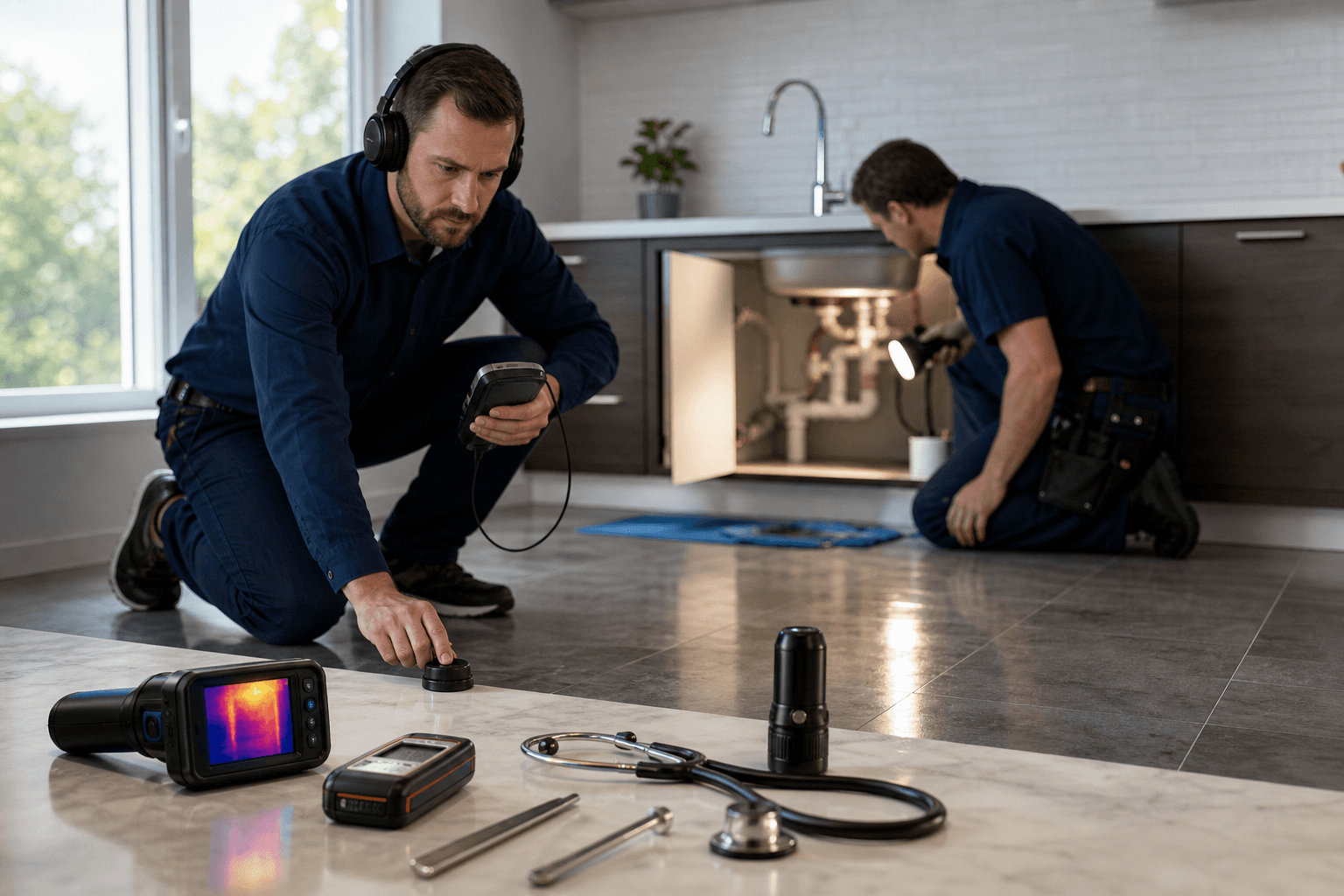
What a professional adds: acoustic leak detection, infrared thermal imaging to show cold or warm wet areas, borescope inspection through small access holes, and controlled pressure testing. Utility guides note that many leaks go unnoticed for months and that specialised tools are required to find slab and hidden-line leaks (leak detection guide, EPA WaterSense).
Pros and cons: DIY can identify warning signs but not reliably locate the source. Professional methods are more costly but much more likely to pinpoint a hidden leak before it causes structural or mould damage.
When to call: unexplained damp floors, ceilings, or falling drywall, rising bills without visible cause, or where cutting into finishes would be expensive without prior diagnosis.
6) Outdoor, irrigation and main service line checks
DIY checklist (15–60 minutes): inspect the meter pit or meter box, walk your yard after a dry period to look for localized soggy areas, check hose bibs and sprinkler heads for leaks, and note unusually fast lawn wetting when not explained by irrigation schedules or rain.
What a professional adds: advanced, excavation-free detection for mains such as acoustic correlators or tracer gas, and mapping of leaks across long runs of underground pipe. Flow-monitoring equipment helps locate exterior and service-line leaks that are invisible from the surface (EPA WaterSense).
Winter note for GTA properties: frost, freeze-thaw cycles and inadequate winterization can cause exterior lines to burst or develop leaks; winterize hoses and protect external valves.
When to call: sudden yard saturation, suspected main-service leak, or when repair requires excavation or municipal coordination.
7) When speed and documentation matter: inspections for buyers, sellers and landlords
Why choose a certified inspection: in pre-purchase or pre-listing situations, clear documentation of moisture and plumbing condition matters. A certified InterNACHI or CCPIA inspector provides a full, system-by-system examination of plumbing, moisture intrusion points, roof-to-foundation paths, and same-day PDF reports that help lawyers, realtors, buyers and sellers act quickly (ASM Home & Commercial Inspection).
What inspectors do and do not do: inspectors diagnose and document conditions, including moisture readings and photographic evidence, and they can recommend licensed plumbers for repairs. Inspectors do not perform plumbing repairs themselves unless explicitly authorised as a separate contractor.
When to choose inspection now: transaction deadlines, conflicting seller disclosures about past leaks, rental move-in documentation, or unexplained high bills with signs of property damage. Fast, documented reports help resolve disputes and prioritise licensed repairs.
Printable checklist: what to do before you call

- Turn off all water and record your water meter reading for 30 minutes to detect continuous flow.
- Perform the toilet dye test in every bathroom.
- Inspect under sinks, around appliances, and in the basement for damp or pooled water.
- Walk the yard after a dry spell and note any concentrated soggy areas.
- If you find active leaks, sagging ceilings, or widespread mould, photograph the damage and call a professional immediately.
Frequently asked questions
How do I perform a water meter test to check for hidden leaks in my Toronto home
Turn off every tap, appliance and automatic sprinkler, then note the meter reading and watch the low-flow indicator for 15–30 minutes. If the meter changes while everything is off, you likely have a continuous leak. Keep a short log of readings and times to support follow up with a utility or inspector.
When should I call a home inspector instead of a plumber for a suspected leak
Call a certified inspector when you need independent documentation, such as during a sale, purchase, or disputed disclosure, or when you suspect hidden moisture without a visible source. Call a licensed plumber when you have an obvious active leak that requires immediate repair. Inspectors diagnose and document; plumbers repair.
Does an InterNACHI or CCPIA certified inspection include electronic leak detection
Inspections commonly include moisture meters and thermal imaging for suspected moisture, but specialised electronic leak detection and excavation-free mains tracing may be a separate service coordinated with a leak-detection specialist or plumber. Ask about available diagnostic tools and same-day report turnaround (ASM Home & Commercial Inspection).
Can I use municipal resources to dispute a high water bill caused by a leak
Yes. Municipal offices provide information on spotting leaks and steps to take if you believe a leak caused an unusually high bill. Keep inspection reports, photos and meter test logs to support any dispute with your water utility.
What winter precautions should GTA homeowners take to prevent frozen pipes and leaks
Insulate exposed pipes, shut off and drain external hose bibs, allow a slow trickle at vulnerable faucets during deep freezes only if recommended by your local utility, and ensure attic and basement insulation reduces cold migration to pipe runs. If you find a burst or freeze event, call a plumber immediately and document damage for repairs and insurance.
Key takeaway and next step
Simple DIY checks like visual scans, toilet dye tests, faucet inspections and a meter test will find many common leaks, but hidden slab, behind-wall, and main-service leaks often require professional tools and expertise. If you need a fast, certified assessment with same-day documentation for a sale, rental, or urgent repair decision across the GTA, consider booking a certified inspection from Asmhomeinspection.