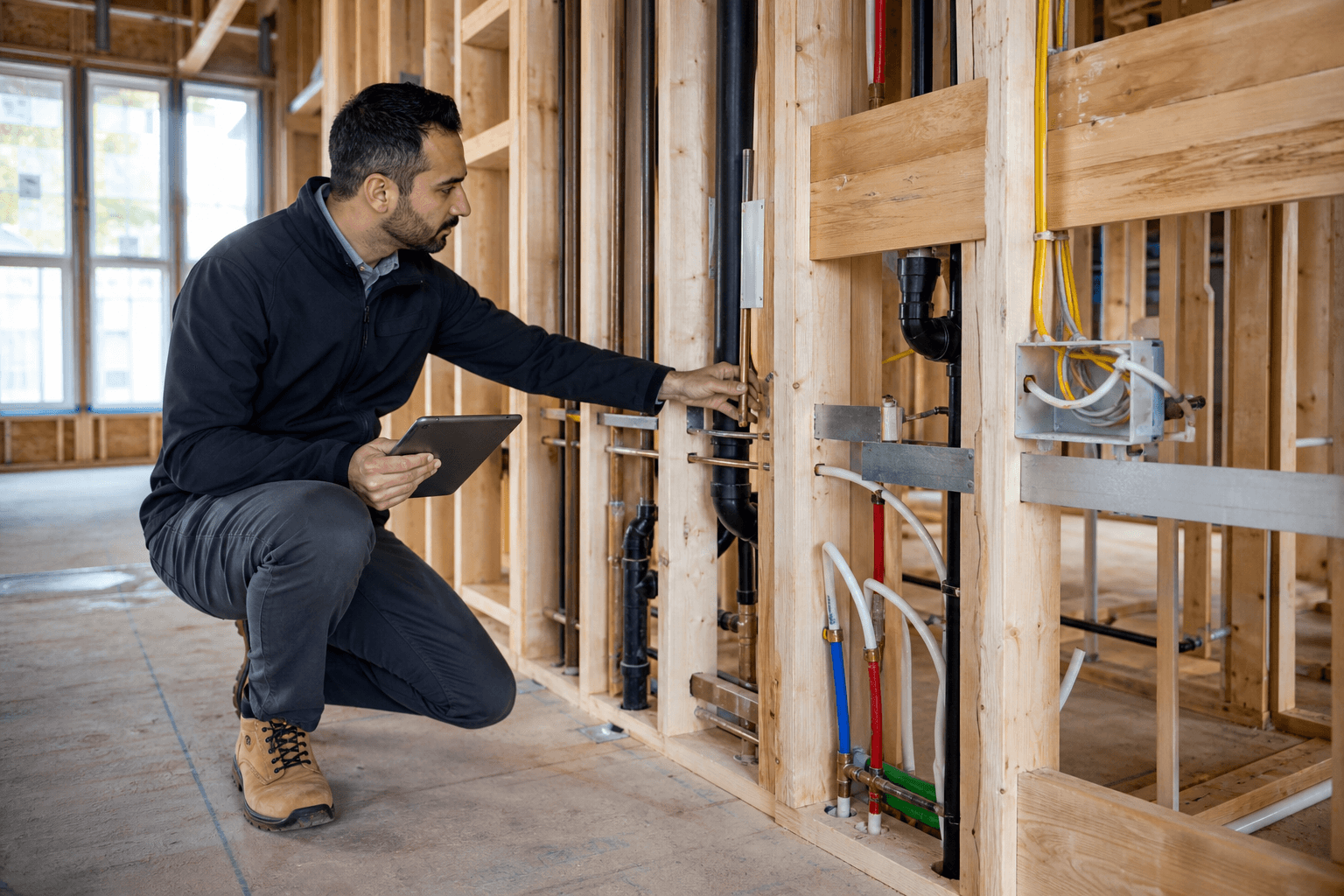
An annual maintenance inspection in Toronto gives property owners a broad view of current conditions, rather than a diagnosis of one known problem. Use a whole-property inspection for preventive planning, a qualified trade for a confirmed system fault, and routine owner or staff checks for simple, low-risk tasks.
The process below helps homeowners, landlords, property managers, and small commercial owners define the scope, prepare the property, understand inspection limits, and turn findings into a practical maintenance plan.
Step 1: Choose the right type of maintenance check
Annual scheduling is a planning option, not a universal requirement. The best check depends on the building’s age, use, condition, recent changes, and the decision you need to make.
| Check | Best for | Typical scope | Next action |
|---|---|---|---|
| Annual whole-property inspection | Broad condition review or maintenance planning | Accessible roof, attic, structure, basement, plumbing, electrical, HVAC, and interior components | Review findings and assign follow-up work |
| Specialized trade visit | Known failure or unusual system behaviour | Diagnosis, testing, repair, or replacement within the trade’s qualifications | Obtain professional advice or an estimate |
| Routine owner or staff check | Simple recurring maintenance | Low-risk observations, housekeeping, filters, and record updates | Record the task or escalate concerns |
A whole-property inspection does not replace a repair contractor, engineer, environmental professional, or regulatory inspection. It is most useful when you need a consistent baseline across several systems.
Step 2: Define the property and purpose

Record the building type, approximate age, occupancy, recent renovations, recurring concerns, and areas that may be difficult to access. A detached home may require attention to roofing, drainage, the foundation, attic, and basement. A condo review generally focuses on accessible conditions inside the unit, while common elements and building-wide systems may be managed separately.
State the purpose in one sentence, such as “establish a maintenance baseline,” “review conditions before planning repairs,” or “document a rental unit.” A clear purpose keeps the agreed scope focused without implying that concealed defects will be found.
Step 3: Gather records and known concerns
Collect previous inspection reports, repair invoices, warranties, renovation details, equipment records, and photographs of recurring issues. Add occupant observations such as staining after rain, musty odours, slow drains, unusual temperatures, or intermittent electrical behaviour. These notes help direct visual attention, but they do not establish a diagnosis.
An annual maintenance inspection plan can define inspection timing, responsibilities, documentation, and follow-up actions. Keep records factual: note what happened, where, and when, rather than assigning an unconfirmed cause.
Step 4: Prepare safe access
Unlock rooms, arrange access to safe attic and basement areas, move belongings away from accessible equipment, and coordinate with tenants, occupants, property staff, or a condominium manager. Secure pets and remove avoidable trip hazards.
- Provide keys, codes, and access contacts.
- Clear stored items from around visible equipment without moving heavy or hazardous materials.
- Identify recent leaks, stains, renovations, and equipment changes.
- Tell the inspector about restricted, unfinished, occupied, or unsafe areas.
- Do not remove covers, dismantle equipment, or disturb building materials.
Only accessible conditions within the agreed scope can be reviewed. Concealed or obstructed components may remain outside the inspection.
Step 5: Agree on scope and safety limits
Confirm which buildings, rooms, systems, and components are included. A visual review documents visible conditions and photographs, but it does not prove the cause of a problem, certify a repair, test every concealed component, or establish regulatory compliance.
- Do not open energized electrical equipment.
- Do not enter an unsafe roof, attic, crawlspace, or other area.
- Do not disturb suspected asbestos, mold, contaminated materials, or other hazards.
- Do not operate equipment if doing so could create risk or damage.
- Do not treat a stain, crack, noise, or temperature difference as a confirmed diagnosis.
Involve a qualified trade, engineer, environmental professional, or other specialist when testing, repair, design advice, hazardous-material handling, or formal certification is needed.
Step 6: Review major systems consistently
A repeatable sequence makes findings easier to compare. An annual home maintenance inspection can organize observations across these areas:
Roof, drainage, and attic
Review safely accessible roof surfaces, flashings, penetrations, gutters, downspouts, soffits, and drainage paths. In the attic, note visible moisture indicators, insulation concerns, ventilation observations, and conditions requiring further investigation.
Structure, foundation, basement, and moisture
Look for visible cracking, movement indicators, dampness, staining, drainage concerns, and foundation conditions. Moisture intrusion deserves attention because it can contribute to deterioration and safety concerns. A visual observation is not a structural or mold diagnosis.
Plumbing and electrical
Review accessible fixtures, connections, visible piping, the electrical panel exterior, receptacles, switches, and lighting. Record leaks, damage, unusual conditions, and access limitations. Specialists should diagnose faults and perform repairs.
Heating, cooling, and interiors
Review accessible furnace, air-conditioning, ventilation, water-heating, and related components subject to safe operation. Interior observations may include walls, floors, ceilings, windows, doors, stairs, and railings. The purpose is to document condition, not guarantee future performance.
Step 7: Read the report as an action document
When the same-day PDF report arrives, first check the property, date, scope, and access limitations. Then separate direct observations from recommendations, and use photographs and location descriptions to understand each finding.
- What was observed?
- Where is it located?
- Is there an apparent safety or active moisture concern?
- Who should assess or correct it?
- What evidence will show completion?
A report is a decision aid, not a substitute for specialist advice. Share relevant sections with the appropriate professional when a finding involves structural, electrical, plumbing, HVAC, or hazardous-material concerns.
Step 8: Prioritize corrective work
- Immediate: apparent safety hazards or active water entry. Restrict access where appropriate and seek qualified assistance.
- Time-sensitive: deterioration, drainage concerns, or damaged components that should be scheduled before worsening.
- Routine: ordinary upkeep, cleaning, adjustments, or replacement tasks.
- Monitor: observations needing documentation and periodic review when significance is not established.
Track each item by finding, location, priority, responsible party, professional required, target date, status, and completion evidence. Do not assign a repair method or cost until a qualified person has assessed the issue.
For broader property decisions, retain reports with repair documentation and maintenance records. This property decision resource may also help sellers organize information before a transaction.
Step 9: Build the recurring maintenance record
Store reports in a consistent digital folder with the property address, inspection date, and report type. Add photographs, invoices, work orders, warranties, specialist assessments, and completion notes.
- Inspection date and property area
- Observed condition and supporting photograph
- Priority and next step
- Responsible owner, tenant, manager, or contractor
- Repair documentation
- Follow-up date and completion status
Review the record before the next inspection and carry forward unresolved items. This creates a useful history without implying that annual scheduling is mandatory.
Frequently asked questions
How often should a Toronto property have an annual maintenance inspection?
There is no single schedule for every property. Annual planning may suit an older building, a property with recurring moisture concerns, a rental with changing occupants, or an owner seeking a regular baseline. Other properties may need a different interval based on condition and use.
Is an annual maintenance inspection the same as hiring a repair contractor?
No. An inspection is generally a visual review of accessible systems and components. A contractor diagnoses and corrects a specific problem. The inspection may identify an issue requiring specialist attention, but it is not itself a repair, engineering assessment, environmental test, warranty review, or regulatory inspection.
Can condos and rental properties benefit from an annual maintenance inspection?
Yes, when the scope is clear. A condo review can focus on accessible unit conditions, while common elements may require coordination with the condominium corporation. For rentals, coordinate with occupants and document both findings and areas that could not be reviewed.
What should I prepare before booking?
Prepare the address, building type, approximate age, occupancy details, known concerns, renovations, prior reports, repair records, and preferred timing. Arrange safe access and ask which systems are included. Do not dismantle equipment or enter hazardous areas to create access.
Conclusion: Choose the check that matches the decision
Use a whole-property annual inspection when you need a broad, documented review and a basis for planning maintenance. Contact a qualified trade for a specific failure or repair, and use routine checks for simple tasks. Escalate unusual observations rather than guessing at their cause.
For certified residential and commercial inspections across Toronto and the GTA, with same-day PDF reporting, Asmhomeinspection is a certified InterNACHI and CCPIA member. Request a scope that matches your property and maintenance decision.