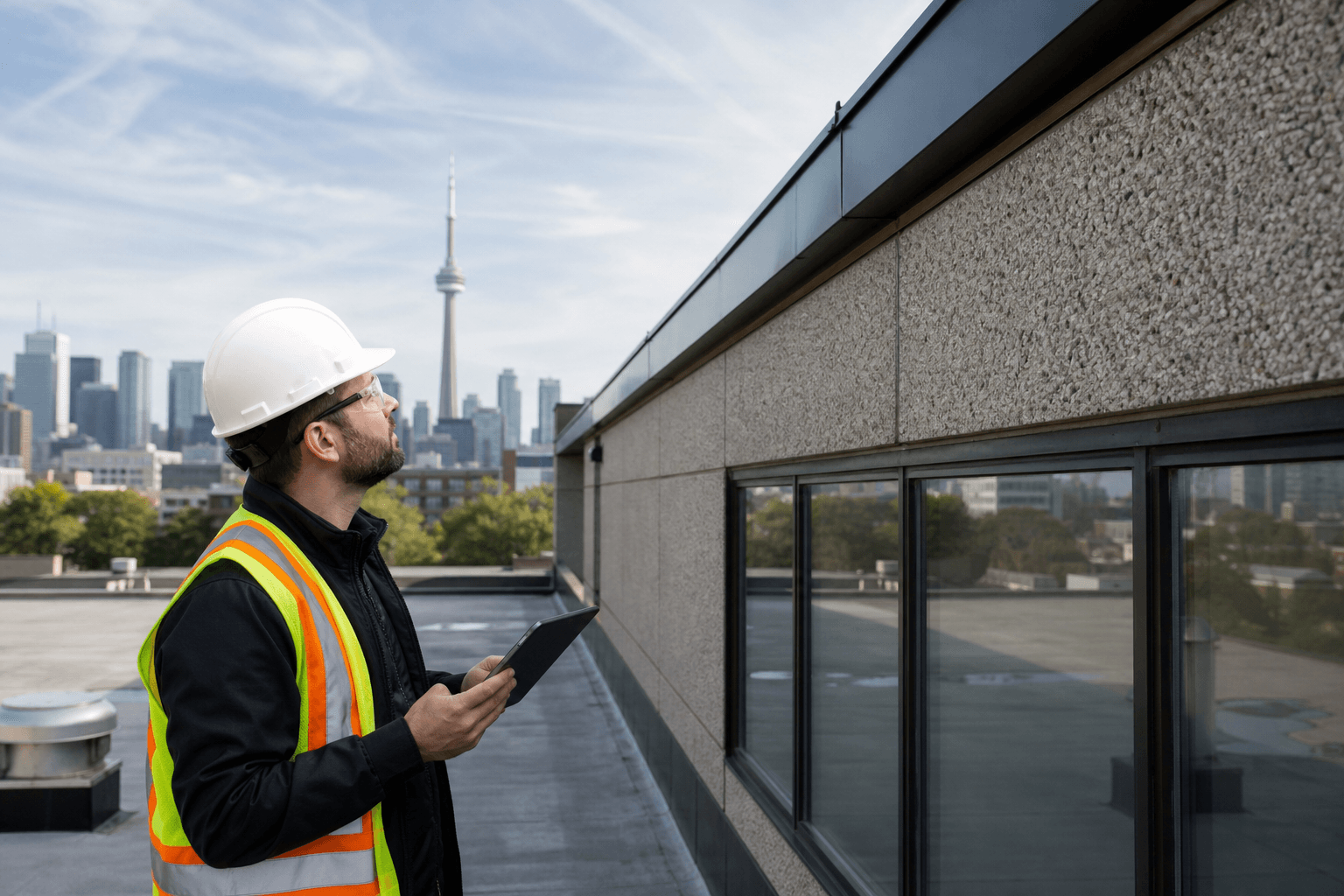
A commercial property inspection is worthwhile whenever a building’s condition could affect a purchase, lease, financing decision, occupancy plan, renewal, or maintenance budget. In Toronto and the GTA, the most useful inspection is not a generic checklist. It is a review of accessible conditions tailored to the property type, your decision, and the questions that matter most.
The inspection can identify visible concerns involving structure, the building envelope, roofing, electrical, plumbing, HVAC, interiors, and other accessible components. It does not replace municipal inspections, engineering advice, environmental testing, lender requirements, or legal due diligence. Those may be separate parts of a responsible commercial property review.
When should you arrange a commercial property inspection?
The best time is before a decision becomes difficult or expensive to reverse. A buyer or investor may use an inspection during due diligence to understand visible defects and likely maintenance priorities. An owner may arrange one to plan capital work, while a landlord or tenant may want clearer information before a new lease, renewal, or occupancy arrangement.
An inspection can also be useful before taking possession of a space, preparing for a sale, or evaluating several potential properties. The purpose should guide the scope. A buyer assessing an older industrial building may have different questions from a tenant taking over a finished office or an owner maintaining a multi-unit property.
Condition information is especially valuable when access will change after closing or occupancy. Before buying an investment property in Toronto, review visible building conditions along with records, operating assumptions, access arrangements, and specialist questions that could affect the decision. An external investment property due diligence checklist can help organize broader questions, but it should not replace a property-specific inspection.
What does a commercial property inspection cover?

A commercial inspection is generally a tailored review of accessible conditions. ASM’s commercial inspection scope may cover accessible structure, envelope, roofing, electrical, plumbing, HVAC, and interior conditions, with the agreed scope confirmed for the actual property. Conditions that are concealed, unsafe, inaccessible, or outside the agreed service should not be assumed to have been assessed.
For a fuller explanation of typical scope, reporting approach, and practical risks, review these commercial property inspection services before speaking with an inspector.
Commercial property inspection checklist
Use the following areas as a conversation checklist rather than a promise that every component will be inspected. The inspector should confirm what can be accessed safely and reasonably on the scheduled date.
Structure and foundation
Ask whether accessible structural elements, foundation areas, load-bearing concerns, settlement indicators, and visible deterioration fall within the agreed scope. The goal is to identify observable conditions that may require further review, not to assume that a general inspection provides an engineering opinion.
Exterior envelope, drainage, and roof
The exterior review may consider visible cladding, masonry, windows, doors, flashing, penetrations, grading, drainage, gutters, and other envelope conditions. Roof observations depend on safe access and roof design. Moisture pathways deserve particular attention because water entry can contribute to deterioration and more complicated repair decisions.
Electrical systems
Clarify which accessible electrical components are included, such as the service, panels, visible wiring, fixtures, and receptacles. The report may identify visible deficiencies or concerns for discussion with a licensed electrical professional. It should not be presented as a complete code-compliance certification unless a separately qualified assessment was performed.
Plumbing systems
Accessible supply, drainage, fixtures, water heaters, visible leaks, and signs of water damage may be relevant, depending on the building and scope. Ask how concealed piping, specialized process plumbing, or equipment serving a particular business will be treated. A specialist may be needed when the concern requires testing, opening finishes, or evaluating capacity.
Heating, cooling, and ventilation
Commercial HVAC systems can vary substantially in size, configuration, age, and operating demands. Confirm whether accessible equipment, distribution, controls, and visible condition are included. If a system’s performance, capacity, or specialized function is critical to the business, arrange appropriate mechanical follow-up rather than relying on a visual inspection alone.
Interior conditions
Interior observations may include walls, ceilings, floors, doors, windows, stairs, visible finishes, signs of moisture, and other accessible components. In a commercial space, note areas affected by tenant improvements, stored materials, active operations, or restricted rooms. These limitations can affect what the inspector is able to observe.
Visible safety-related conditions
An inspection can document visible conditions that appear to create safety or maintenance concerns, but it is not automatically a fire, accessibility, occupational health, or regulatory certification. Refer questions requiring a formal determination to the appropriate authority or specialist.
How the scope changes by property type
| Property type | Questions to clarify before booking |
|---|---|
| Retail or restaurant | Will operating hours, customer areas, kitchen or service areas, roof access, tenant improvements, and equipment access affect the review? |
| Office | Which floors, common areas, mechanical rooms, electrical rooms, elevators, and tenant spaces are accessible and relevant? |
| Industrial or warehouse | How will high ceilings, loading areas, large mechanical systems, stored goods, production equipment, and restricted zones affect the scope? |
| Multi-unit or apartment property | Is the review focused on individual units, common areas, building systems, exterior elements, or a combination? |
| Specialty-use property | Which systems are essential to the property’s use, and which require separate technical, environmental, operational, or regulatory assessment? |
Tell the inspector how the building is used, whether it is occupied, and which areas may be difficult to access. That information helps prevent an unsuitable generic scope and makes the final report easier to interpret.
Commercial inspection vs other due diligence
Several reviews may be relevant to a commercial property decision, but they answer different questions. Coordinate them rather than assuming one report covers everything.
| Review | Primary purpose |
|---|---|
| Commercial property inspection | Document visible and accessible conditions in agreed building systems and identify issues or maintenance questions. |
| Municipal building or permit inspection | Support the municipality’s process for applicable permits, construction, or by-law matters. |
| Specialist assessment | Investigate a defined concern, such as electrical, mechanical, roofing, environmental, or plumbing performance. |
| Engineering review | Provide technical analysis or professional opinion where structural, civil, mechanical, or electrical expertise is required. |
| Environmental testing | Assess environmental conditions that cannot be established through a standard visual inspection alone. |
| Lender and legal due diligence | Address financing conditions, title, leases, documents, contracts, liabilities, and other transaction requirements. |
A private inspection therefore does not replace a municipal building or permit inspection. If the inspection reveals a material concern, ask the relevant qualified professional what additional investigation is appropriate.
How the commercial inspection process works
- Share the basics. Provide the property address, building type, approximate size, intended use, and whether you are buying, leasing, occupying, maintaining, or selling.
- Explain the decision and deadline. A purchase condition, lease start, financing milestone, renewal date, or maintenance plan may affect scheduling and reporting priorities.
- Describe access. Identify occupied areas, locked rooms, roof access, mechanical spaces, tenant restrictions, operating hours, and safety limitations.
- Disclose concerns. Mention known leaks, unusual equipment, past repairs, visible damage, recurring problems, or questions raised by a lender, agent, contractor, or property manager.
- Confirm scope and quote. Make sure both sides understand which accessible areas and systems are included and which services require separate specialists.
- Coordinate the visit. Arrange access with owners, tenants, property managers, security staff, or other responsible parties.
- Review the report. Use photographs and written observations to sort immediate concerns, maintenance items, limitations, and follow-up questions.
The commercial inspection process can be adjusted once the building, purpose, access, and deadline are known.
Why commercial inspection pricing is quoted individually
There is no reliable single commercial inspection price for every Toronto property. A small office, multi-unit building, restaurant, and industrial facility can differ in size, age, operating systems, access, occupancy, roof configuration, and the information needed for the decision.
For that reason, commercial building inspection costs are quoted individually. When requesting a quote, provide:
- The property address and municipality.
- The property type, approximate size, age, and number of floors or units.
- The intended use and whether the building is occupied or operating.
- The decision deadline, such as closing, lease commencement, renewal, or financing.
- Requested areas, known concerns, specialist reports, and access restrictions.
A clear quote should identify the agreed scope and important limitations. Ask whether additional visits, testing, specialist assessments, or inaccessible areas are outside the quoted service.
How to use a same-day PDF inspection report
ASM states that its commercial inspection findings are organized with photographs and written observations and delivered in a PDF report on the same day. That turnaround can help organize questions promptly, but it does not guarantee financing, closing, leasing, or approval.
Start by separating four categories:
- Observed conditions: What was visible and accessible?
- Limitations: Which areas or systems could not be assessed, and why?
- Priority: Which findings need prompt attention, further investigation, maintenance, or monitoring?
- Next step: Should you request documents, obtain a repair estimate, consult an engineer or contractor, ask a municipal authority, or seek legal advice?
Do not treat every report item as an automatic reason to abandon a transaction. Connect each finding to the decision it may affect, verify important concerns with the appropriate specialist, and account for timing, cost, operational disruption, and available records.
What to prepare before booking
- Property address, city, and access contact.
- Property type, approximate size, age, floors, units, and current or planned use.
- The inspection purpose and the date by which you need the information.
- Known leaks, repairs, renovations, equipment concerns, or inaccessible areas.
- Available plans, maintenance records, prior reports, permits, or equipment information.
- The decisions the report must support, such as buying, leasing, budgeting, renewing, or planning repairs.
- The names of any agent, lender, lawyer, contractor, engineer, or property manager who may review the findings.
Frequently asked questions
Is a commercial property inspection the same as a Property Condition Assessment?
Not necessarily. A commercial inspection reviews agreed accessible conditions for a stated purpose. A Property Condition Assessment or Property Condition Report may follow a different scope, format, standard, or lender requirement. Confirm the required deliverable before booking.
Can a commercial inspection replace a municipal building inspection?
No. A private inspection and a municipal inspection serve different purposes. A municipal authority may address permits, construction, or by-law matters, while a private inspection documents accessible property conditions for an owner, buyer, tenant, or investor.
How much does a commercial building inspection cost in Toronto?
Commercial inspections are quoted individually. The price depends on building type, size, age, access, systems, operating conditions, and requested scope. Complete property details will help you receive an appropriate quote.
How quickly can I receive a commercial inspection report?
ASM states that it provides a same-day PDF report for its inspection findings. Confirm timing when arranging the inspection, particularly if your decision has a contractual, financing, lease, or occupancy deadline.
When should I involve an engineer or other specialist?
Involve a specialist when the report identifies a concern requiring technical analysis, testing, invasive investigation, design advice, formal certification, or a professional opinion outside the inspection scope.
Conclusion: match the inspection to the decision
A commercial property inspection in Toronto is most useful when arranged early, matched to the building and decision, and interpreted with its limitations in mind. Confirm the accessible scope, disclose the property’s use and operating conditions, understand why the quote is individual, and plan for specialist or municipal follow-up where needed.
ASM Home & Commercial Inspection provides certified commercial building inspections across Toronto and the GTA for investors, owners, and prospective occupants. To discuss the property type, required scope, access, and deadline, visit Asmhomeinspection.