This article lays out the Ontario code thresholds homeowners should know, the most frequent deck and railing failures seen across the Greater Toronto Area, a concise DIY inspection checklist you can use today, and clear decision rules for when to hire a certified inspector.
Two-sentence executive summary and decision flow
If a deck, porch, or balcony is more than 60 cm above the adjacent ground a guard is generally required, and key compliance points are guard height, baluster openings, and secure ledger and post connections. Do quick DIY checks first, treat wobbling posts or ledger rot as urgent red flags, and schedule a certified inspection if you find any of those problems or if you are planning a sale or renovation.
Ontario code at a glance: when a guard is required and basic thresholds
Provincial guidance and local summaries state that a guard is required where the walking surface is more than 60 cm, or 24 inches, above the adjacent ground. Common residential practice for raised decks is about 42 inches for guard height, and opening sizes between balusters should prevent passage of a 100 mm sphere to reduce child entrapment and climbability risk. For concise local explanations see resources that interpret the Ontario requirements and typical enforcement points:
- Ontario Building Code 101: Railing Heights & Safety, an accessible summary of when guards are required and why compliance matters for safety and insurance.
- Ontario railing code requirements, a practical Toronto-focused guide on heights, openings, and post strength.
- Deck railing building code requirements, a primer on load, spacing, and what inspectors commonly check.
Most common defects seen in the GTA compared with code expectations
Below are the failure modes inspectors most often see, listed alongside the code or good-practice expectation so you can compare quickly.
- Ledger and house connection: Expect a properly flashed ledger, through-bolts or ledger screws, and no hidden rot beneath the ledger. Inspectors frequently find missing flashing, short nails instead of proper fasteners, or rot that undermines the ledger connection. Ledger failure is a leading cause of serious collapses according to safety analyses.
- Loose or decayed posts: Code expects posts to bear on concrete footings and be tied with corrosion-resistant hardware. In practice, posts are often set directly in soil, show rot at the base, or move under hand pressure, which reduces load capacity and increases collapse risk.
- Corroded or inappropriate fasteners: Good practice calls for corrosion-resistant screws, bolts, and engineered connectors. Inspectors commonly find plain nails, corroded screws, or missing bolts that weaken lateral strength and the integrity of stair and rail assemblies.
- Excessive baluster openings and climbable rails: Code limits openings to prevent a 100 mm sphere from passing, and details discourage climbable top rails. Widely spaced ornamental balusters or horizontal rails that children can climb are common defects that raise fall risk.
- Stair and tread deterioration: Steps should have consistent rise and run and securely fastened treads. Missing fasteners, spongy boards, and uneven stairs are frequent trip hazards.
National and homeowner safety guides stress that ledger rot and undersized or missing connections are the highest risk items. For context on accident causes and maintenance priorities see the maintenance and safety analyses from consumer safety and building resources.
DIY deck and railing checklist you can use today
Perform these safe checks from the ground with a flashlight. Do not climb on a deck that feels unstable. If you doubt safety, stop and call a professional.
- Visual sweep, walk the perimeter and note any sagging, gaps between deck and house, or spongy boards.
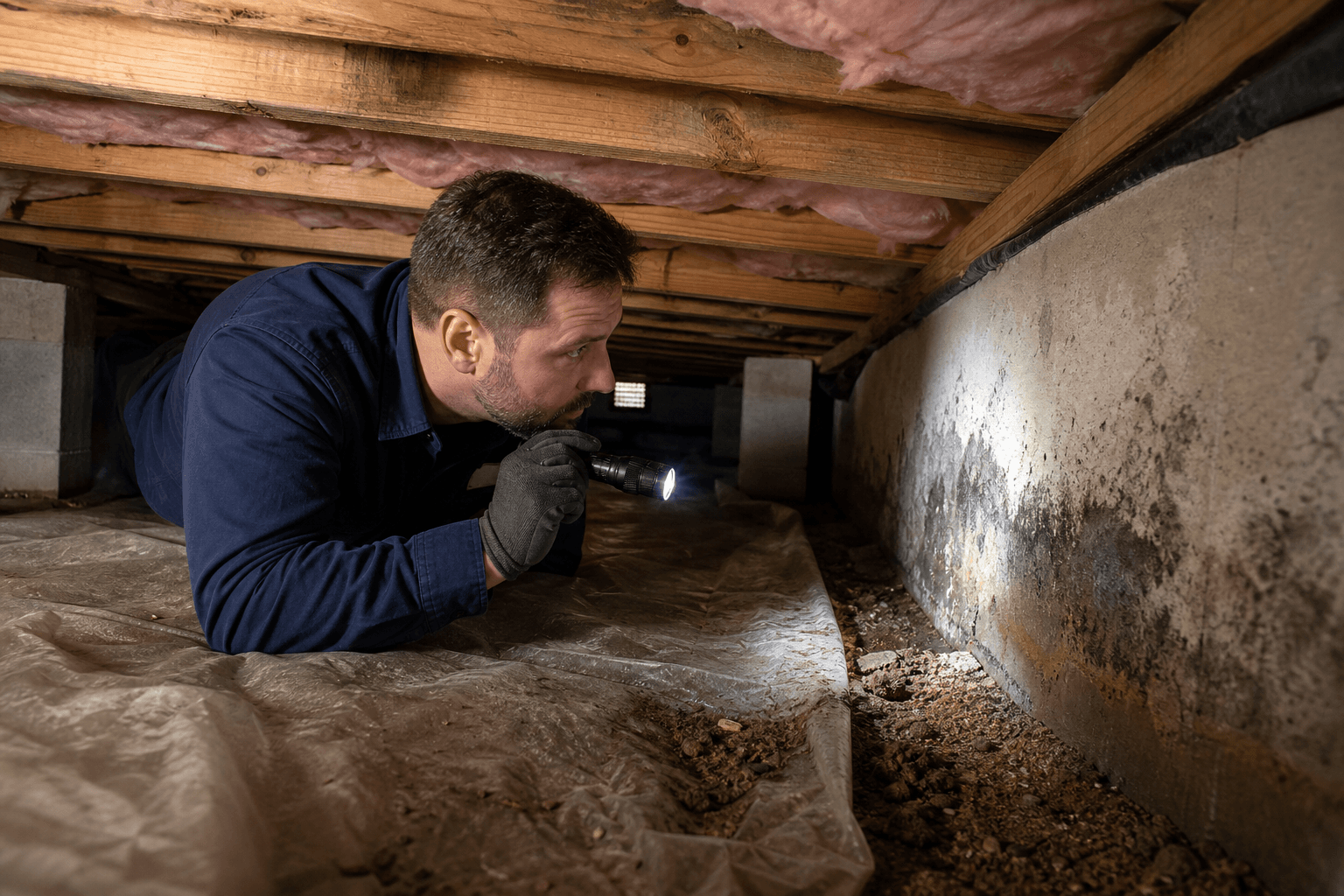
- Ledger check, look under where the deck meets the house for missing flashing, water stains, or exposed fasteners. Probe lightly with a screwdriver only if the wood looks generally sound. Treat any soft or rotten wood at the ledger as an urgent red flag.
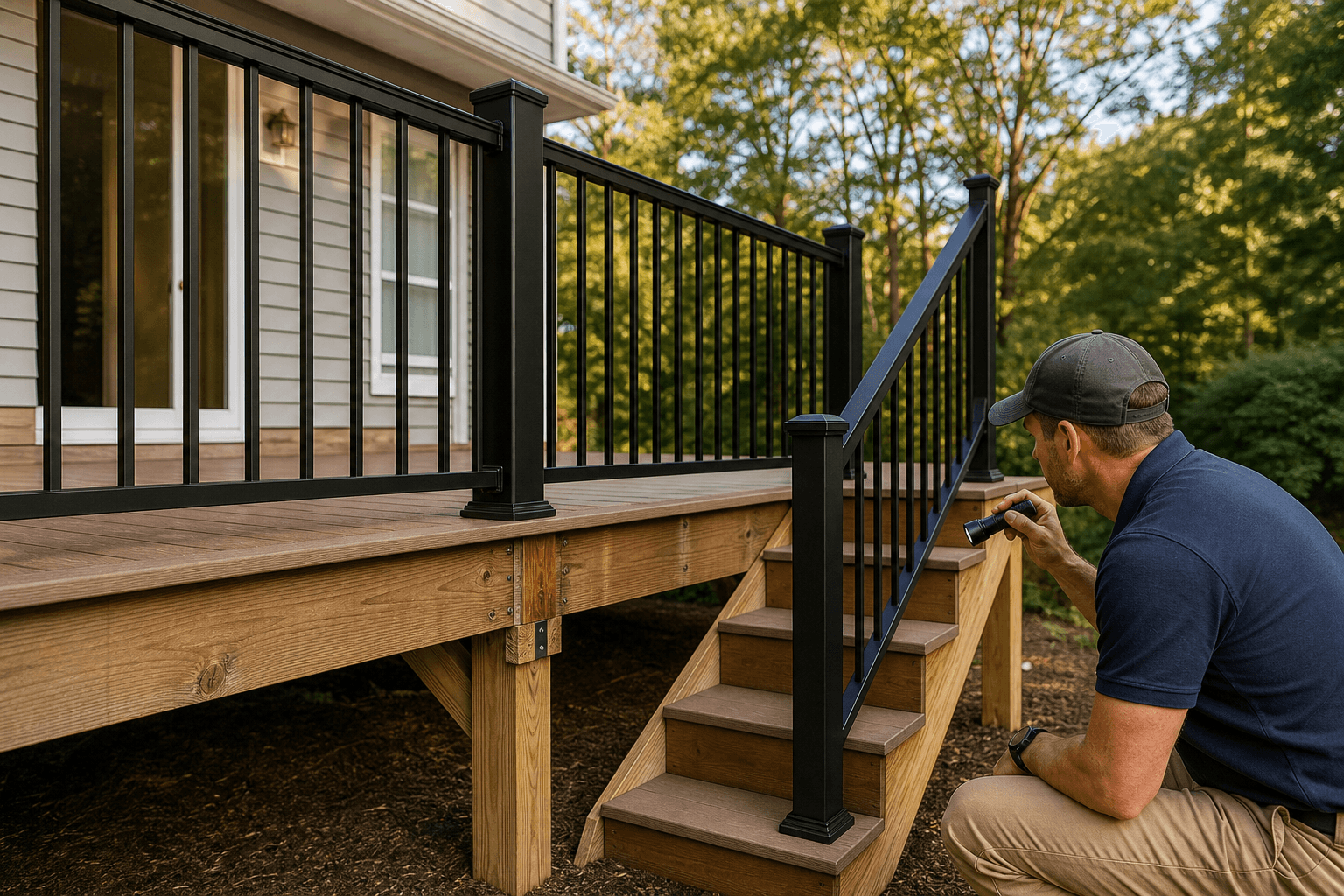
- Post and footing test, press the posts at knee height to check for wobble. A stable post should not move under firm hand pressure. Look for rot at post bases and for posts resting on soil rather than a concrete footing or approved metal base.
- Fasteners and connectors, inspect visible screws, bolts, and hangers for corrosion or missing parts. Note nails used where carriage bolts or engineered connectors are required.
- Rail solidity and openings, push on the top rail and see whether it moves more than about one inch. Measure or visually check that baluster gaps will not allow a 100 mm sphere to pass.
- Stair treads and handrails, check each step for movement, consistent rise and run, and continuous handrails on stairs. Repair loose treads promptly.
- Surface hazards, remove protruding nails, splinters, and fix uneven boards to reduce trip risk.
- Signs of moisture, look for green staining, mould, peeling paint, or rusted fasteners that indicate chronic moisture intrusion and higher risk of rot.
Ledger and house connection
Check for continuous flashing, proper through-bolts or ledger screws, and firm bearing at the rim joist. If flashing is missing or the ledger is attached with short nails, schedule a professional evaluation because ledger failure can cause a total collapse. Consumer safety resources highlight improper ledger connections as a common and serious hazard.
Posts, footings, and post-to-beam connections
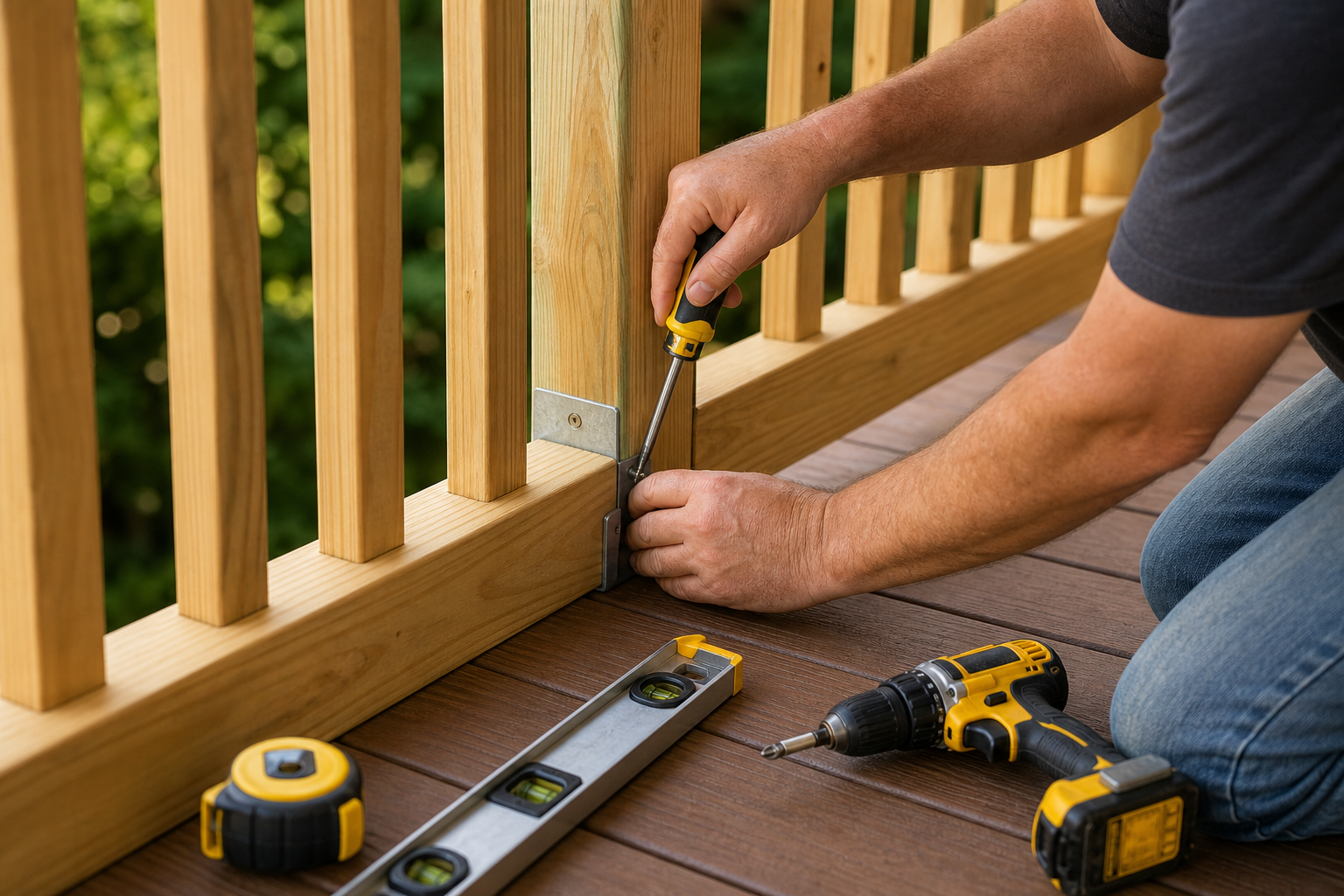
Look for concrete footings deep enough for local frost conditions, metal post bases that separate wood from soil, and connectors free of heavy corrosion. A post that moves at its base under hand pressure suggests an immediate structural concern.
Railings, balusters, and openings
Test rail solidity and confirm gaps do not allow a 100 mm sphere to pass. Also check that rails are not easily climbable by children. Local guides explain opening limits and the reasoning behind climbability restrictions.
Stairs, treads, and walking surfaces
Verify consistent stair geometry, secure treads, and that handrails run the full length of the stair. Loose treads and inconsistent stairs increase trip and fall risk, and should be repaired promptly.
Decision criteria: when to DIY, when to schedule a professional inspection
Use these rules of thumb. Small surface repairs, replacing a few rotten boards, or tightening loose screws are often safe DIY jobs. Get a certified inspector if you find any red flag below.
- Wobbling posts or railings that move under light pressure.
- Rot or soft wood at the ledger, joists, or post bases.
- Missing or corroded structural fasteners at key connections.
- Large gaps in balusters, absent handrails on stairs, or stair geometry that is inconsistent.
- Extensive mould, chronic moisture staining, or evidence that water is entering the house at the deck connection.
Many serious failures involve hidden damage or undersized connections. If a deck is raised, older than ten years, or has not been inspected after heavy storms, professional inspection is recommended. For transactions, a certified inspection with prompt documentation helps negotiations and repairs.
What a certified inspector will check and what you will receive
A certified inspector evaluates the deck system by system, testing structural load points and ledger attachment, probing for moisture and rot when safe, assessing fasteners and connectors, and checking rail and stair compliance with safety expectations. Inspectors prioritize defects by severity, document issues with photos, and recommend corrective actions so you know what to repair first.
ASM Home & Commercial Inspection offers certified residential and commercial inspections across the GTA and provides same-day PDF reports to support quick decision making for buyers, sellers, investors, and managers. For details about scope and turnaround see the company website at the official website.
Structural load points and ledger evaluation
Inspectors check ledger, joist hangers, and post-to-beam connections for correct fastener types and secure attachment. Because ledger failure can cause total deck collapse, a professional probe and photo documentation are standard when the ledger or rim joist looks suspect.
Moisture intrusion, rot, and corrosion assessment
The inspection includes moisture checks, probing for soft wood when safe, and assessing corrosion on connectors. The GTA climate increases the risk of freeze and thaw cycles and chronic moisture near foundations, so regular checks are important.
Permits, walkout decks, and GTA specifics
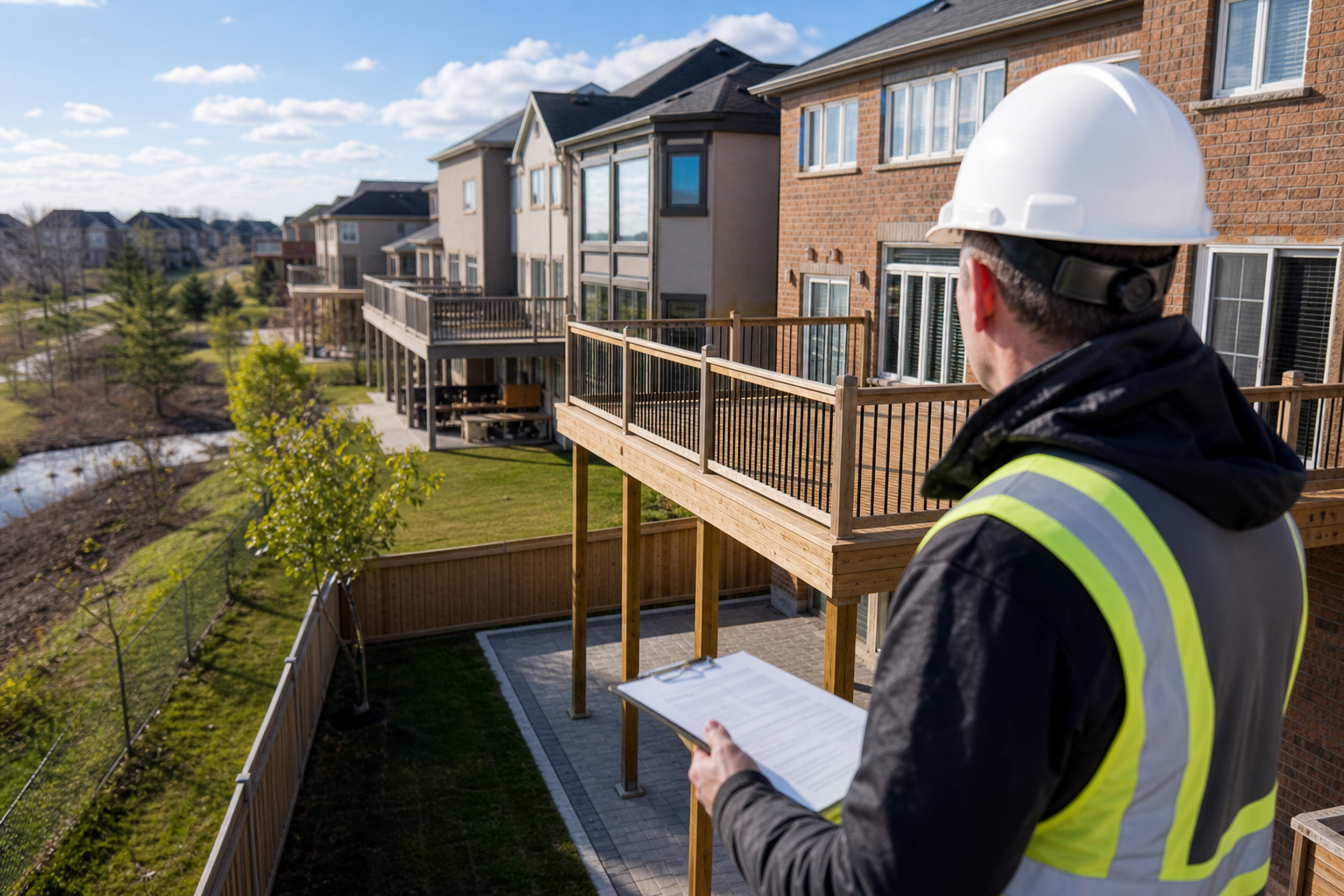
Municipal rules vary across the GTA. Permits are commonly required for new decks, structural changes, ledger replacement, and new footings. Walkout-basement decks are frequently higher than typical thresholds and often fall into the 42 inch guard class which can trigger engineered design or permit needs. Always confirm permit rules with your local building department before starting structural repairs or replacements.
Common homeowner objections and concise rebuttals
- My deck looks fine, response: Visual appearance can mask hidden rot and undersized connections. A simple ledger and post check can reveal serious issues.
- I can fix this myself, response: Cosmetic fixes are fine for small problems, but wobbling posts, ledger rot, or corroded connectors need professional evaluation to ensure structural safety.
- The deck is new so it must be safe, response: New work can have installation errors, missing flashing, or wrong fasteners. A certified inspection verifies correct installation and catches workmanship errors early.
Frequently asked questions
When is a railing required in Ontario and what height is standard
A guard is generally required where a deck, porch, or balcony is more than 60 cm above the adjacent ground surface, and common practice is a 42 inch guard height for raised decks with baluster openings limited so a 100 mm sphere cannot pass.
What immediate signs mean my deck is unsafe and should be evacuated
Evacuate if posts wobble, the deck moves when people stand on it, there is visible sagging, or you find large areas of rot at the ledger or primary supports. These signs precede collapse and require urgent action.
How long does a certified deck inspection take and will I get the report the same day
Inspection time varies with deck size and complexity, but many certified inspectors complete the assessment in one visit and deliver a same-day PDF report. Confirm timing with your chosen inspector.
Can I install or replace a railing myself and still meet Ontario code
Homeowners may replace rails if they follow code thresholds for height, opening size, and secure connections. If the work requires structural changes at the ledger or posts, hire a tradesperson and confirm permit needs with the local building office.
Do I need a municipal permit to repair, replace, or add a deck railing in the GTA
Permit requirements depend on municipality and scope of work. Significant structural repairs, ledger replacement, or new footings often trigger permit requirements. Contact your local building department before beginning major work.
To book a certified deck and railing inspection in the GTA with same-day PDF reporting, visit the official website or call 647-381-9030 for fast scheduling and guidance.