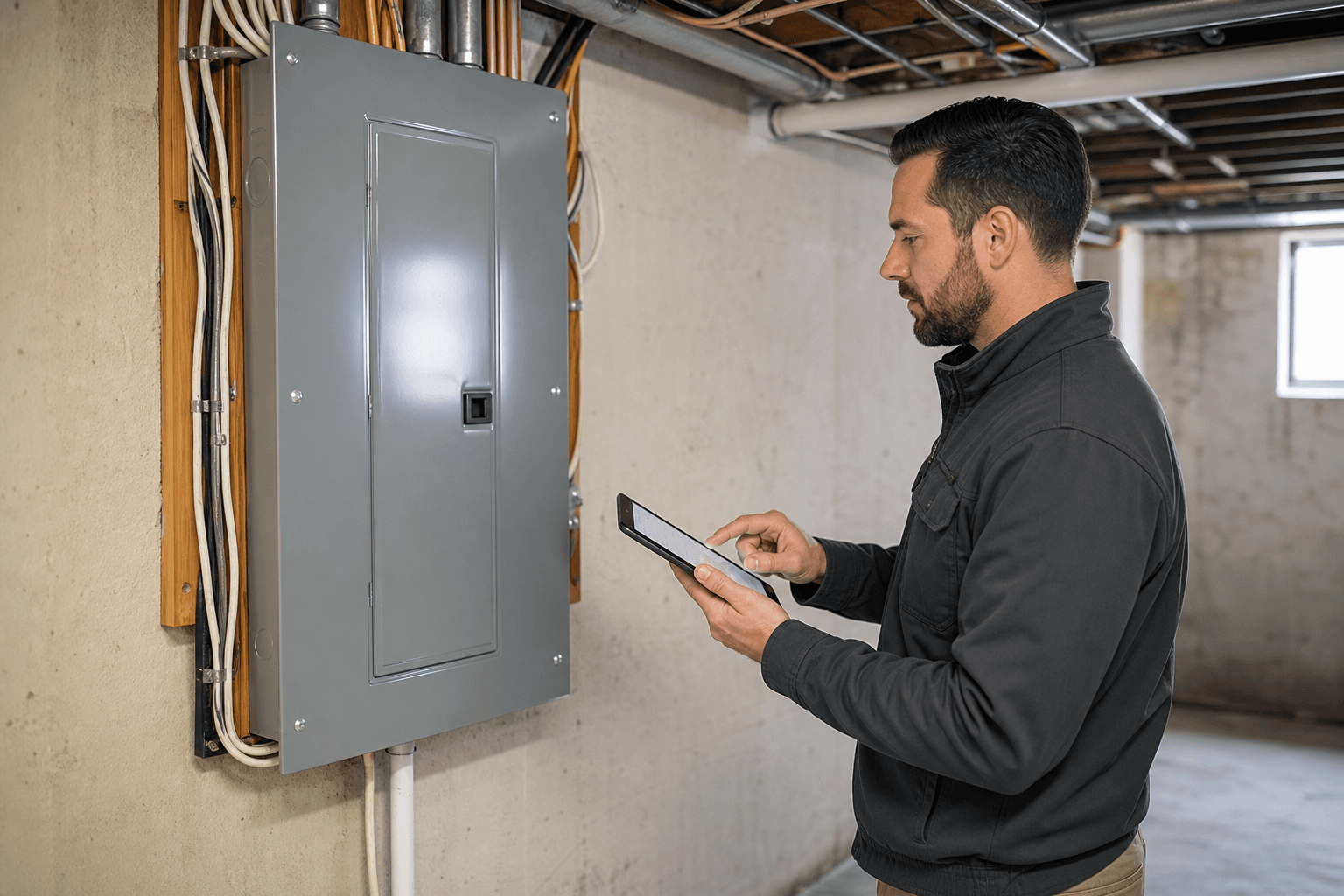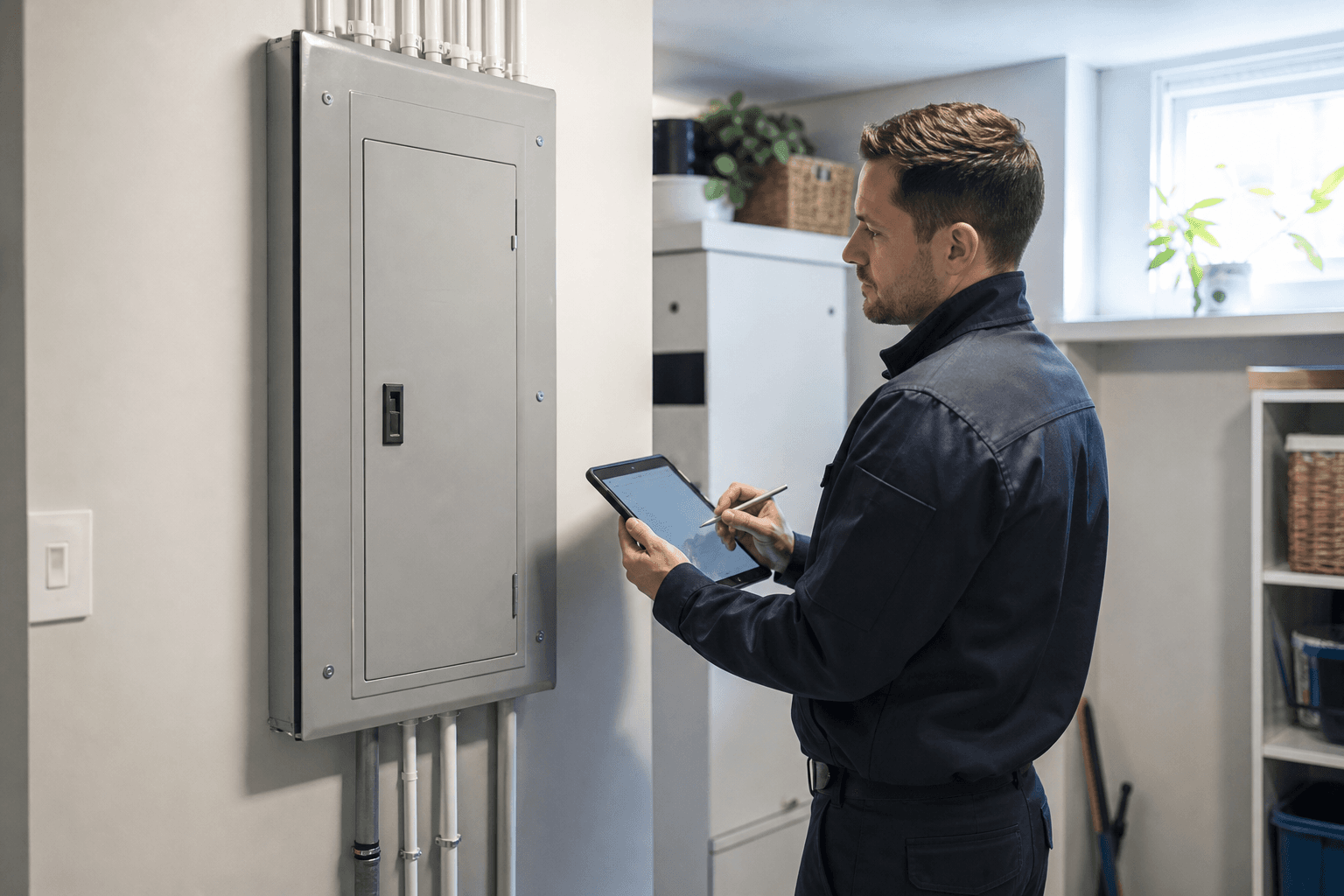
Electrical panel inspection indicators such as smoke, sparks, strong burning odours, popping sounds, or unusual heat should never wait for a routine home inspection. Move away from the panel and seek urgent professional help. Less dramatic signs, including repeated breaker trips, buzzing, scorch marks, exposed wiring, or confusing labels, still deserve documentation and a qualified assessment.
The safest approach is to observe without opening or touching the panel, then choose the right professional for the decision ahead. A residential home inspector can document accessible conditions as part of a broader property review, while a licensed electrician diagnoses and repairs electrical faults. In Ontario, an Electrical System Safety Assessment is a separate type of electrical assessment.
Quick summary

- Smoke, sparks, flames, strong burning odours, popping, or severe heat require urgent action, not a routine inspection appointment.
- Buzzing, repeated breaker trips, scorch marks, exposed conductors, double taps, and crowded wiring require professional attention, even when there is no visible fire.
- Observe from a safe distance. Do not remove the panel cover, touch conductors, repeatedly reset a tripping breaker, or attempt repairs.
- A visual home inspection can document accessible electrical conditions, but it does not replace electrical repair, diagnosis, or an ESA Electrical System Safety Assessment.
Electrical Panel Inspection Indicators to Take Seriously
A symptom does not identify the exact fault by itself. The same indicator can have several possible causes, so treat the table below as a decision aid rather than a diagnosis. Ontario consumer guidance describes a home inspection as a non-invasive visual evaluation, not a pass-or-fail test or confirmation that a property meets building or electrical codes. Ontario's home-buying guidance explains these limits.
| Indicator | What it may suggest | Practical next step |
|---|---|---|
| Smoke, sparks, flames, or a strong burning odour | Active overheating, arcing, or another serious electrical fault may be present. | Leave the area and contact emergency services or a licensed electrician according to the severity. Do not touch the panel. |
| Popping, cracking, or sustained buzzing | A loose connection, arcing, overloaded circuit, or stressed component is possible. | Arrange prompt professional assessment. Escalate immediately if the sound is accompanied by heat, smoke, or an odour. |
| Panel feels unusually warm or hot | Heat can be associated with resistance, overloaded conductors, or a failing component. | Do not handle the panel. Contact a licensed electrician promptly, especially if the temperature is increasing. |
| Scorch marks, melted plastic, or discolouration | Evidence of overheating or previous electrical damage may exist. | Stop using the affected equipment if it is safe to do so and arrange professional evaluation. |
| The same breaker trips repeatedly | The circuit may be overloaded, faulty, or affected by an appliance or wiring problem. | Do not keep resetting it. Record the pattern and have a licensed electrician investigate. |
| Exposed conductors or missing covers | People may be exposed to electrical contact, and components may not be adequately protected. | Keep occupants away and obtain professional assistance. Do not try to replace covers or secure wiring yourself. |
| Double taps, crowded wiring, or improvised splices | Connections or circuit arrangements may require correction or closer assessment. | Have the condition reviewed by a qualified professional rather than assuming it is safe or unsafe from appearance alone. |
| Missing, inaccurate, or unreadable circuit labels | It may be difficult to isolate a circuit safely during maintenance or an emergency. | Request documentation and labelling as part of appropriate professional work. |
For a closer look at buzzing, overheating, burning odours, repeated trips, and other electrical panel safety issues, review the warning signs and urgency steps before deciding what to do next.
How Urgent Is the Problem?

Emergency response
Smoke, visible flames, sparks, a strong burning smell, popping accompanied by heat, or a panel that is severely hot should be treated as an emergency. Keep people away, avoid contact with the panel, and follow emergency guidance. Do not open the cover to investigate or attempt to stop the problem yourself.
Same-day electrical attention
Sustained buzzing, visible scorching, exposed wiring, repeated tripping across multiple breakers, or an increasing panel temperature calls for prompt contact with a licensed electrician. These signs may indicate an active fault that a routine residential inspection is not intended to repair or fully diagnose.
Planned professional review
Unclear labels, an older panel with no obvious symptoms, a history of intermittent trips, or concerns before buying, selling, renovating, or maintaining a property can justify a planned inspection. A residential home inspection can document accessible conditions and place the panel in the context of the building's other systems.
What Homeowners Can Safely Check Without Opening the Panel
Safe preparation means observing, recording, and communicating. It does not mean testing live components or trying to confirm a suspected defect.
- Stand at a safe distance and note unusual sounds, smells, visible heat, smoke, or discolouration.
- Record which breaker trips, how often it happens, and what appliances or activities were operating at the time.
- Take an external photograph only if you can do so without approaching a dangerous condition or touching the panel.
- Note any recent renovations, new appliances, electrical work, water intrusion, or changes in how the system behaves.
- Keep the area around the panel clear so a professional can reach it safely.
Never remove the panel cover, touch exposed conductors, insert tools, repeatedly reset a tripping breaker, or attempt a repair. If there is smoke, fire, sparking, or a strong burning odour, skip routine documentation and seek urgent help.
What a Residential Home Inspection Can Confirm
A residential home inspection is generally a non-invasive, visual review of accessible systems and components. Canadian consumer guidance specifically includes electrical items such as junction boxes, distribution panels, and light fixtures among the elements an inspector may examine. The review can identify visible concerns, document representative conditions, and note limitations that affect what could be observed.
ASM's residential inspection scope includes accessible electrical components along with roofing, structure, foundation, plumbing, heating, cooling, attic, insulation, windows, doors, and interior components. Its supplied inspection information also describes photo-rich, same-day PDF reporting. The purpose is to give a buyer, seller, owner, or property manager a clear record of observable conditions, not to certify that hidden wiring is safe or that electrical work complies with every applicable requirement.
A professional electrical panel inspection examines individual indicators in the wider context of the enclosure, breakers, wiring, grounding, bonding, and labels. Even then, concealed conditions, live repairs, and specialist electrical assessments remain outside the scope of a typical visual home inspection unless separately arranged with the appropriate professional.
Home Inspector, Electrician, or ESA Assessment?
| Professional or service | Best fit | What not to assume |
|---|---|---|
| Residential home inspector | Documenting accessible electrical and building conditions during a pre-purchase, pre-listing, new-construction, move-in, or maintenance inspection. | The inspection is not a repair service, pass-or-fail certification, concealed-wiring investigation, or blanket code-compliance determination. |
| Licensed electrician | Diagnosing electrical faults, determining why a breaker trips, evaluating suspected overheating, and carrying out authorized electrical repairs. | A symptom alone does not establish the required repair or its urgency. |
| ESA Electrical System Safety Assessment | A situation requiring the specific electrical assessment identified by Ontario's Electrical Safety Authority. | This is not interchangeable with a general residential home inspection. |
If a transaction, renovation, authority, or other professional specifically calls for an ESA assessment, confirm the requirement with the Electrical Safety Authority or the responsible project professional. Do not describe a general home inspection as an ESA assessment.
When Panel Findings Matter Most
Before buying a GTA home
A pre-purchase inspection can help identify visible panel concerns before a purchase decision is finalized. If the report notes heat, damage, repeated tripping, or questionable wiring, give the findings to a licensed electrician for diagnosis and discuss the practical implications with the appropriate real estate and legal professionals.
Before listing a property
A pre-listing inspection gives a seller an opportunity to understand accessible conditions before marketing the property. Knowing about a panel concern early may allow more informed conversations with an electrician and the listing agent, rather than discovering the issue during a buyer's review.
Before renovating or adding major equipment
Panel observations should be considered before planning electrical changes, large appliances, or other renovations. A home inspector can document existing visible conditions, but an electrician must determine whether the proposed work is suitable and what electrical changes are required. When cabinetry or built-ins are planned near a panel, preserve safe access and review the cabinet installation checklist alongside the relevant electrical plan.
During ongoing maintenance
An annual maintenance inspection can create a dated record of accessible conditions and recurring symptoms. It is especially useful when the property has a history of moisture intrusion, renovations, older equipment, or intermittent electrical behaviour, but it does not replace urgent action when dangerous indicators are present.
How to Prepare for a Professional Inspection
Before the appointment, make the panel and surrounding area safely accessible. Tell the professional exactly what you observed, including the date, sound, odour, affected breaker, weather conditions, appliances in use, and whether the symptom stopped or continued.
Gather available records of electrical work, renovations, appliance installation, or previous assessments. Do not delay urgent electrical help while collecting paperwork, and do not remove covers or alter the installation to make it easier to inspect. Preparation improves the quality of the discussion, but it cannot expand a visual inspection into a repair or specialist assessment.
Frequently Asked Questions
Is a buzzing electrical panel an emergency?
It can indicate a serious electrical condition and should not be ignored. If buzzing is sustained, becoming louder, or accompanied by heat, smoke, sparks, popping, or a burning odour, move away and seek urgent professional help. Without those severe signs, arrange prompt assessment rather than repeatedly resetting breakers or opening the panel.
What should I do if the same breaker keeps tripping?
Do not keep resetting it to restore power. Record what was operating when it tripped, stop using the affected circuit if safe, and contact a licensed electrician to determine the cause. A residential home inspection may document the pattern and surrounding visible conditions, but it does not replace electrical diagnosis or repair.
Does a residential home inspection replace an electrical assessment in Ontario?
No. A residential home inspection is typically a non-invasive visual evaluation of accessible conditions. It can identify and report visible electrical concerns, while a licensed electrician diagnoses and repairs faults. An ESA Electrical System Safety Assessment is a separate service when that specific assessment is required.
Should I inspect the electrical panel before buying a GTA home?
Yes, electrical components are part of the broader system review that can inform a purchase decision. Ask what is accessible, what was observed, and what limitations apply. If the report identifies a potentially active fault or damaged component, obtain an electrician's assessment before relying on assumptions about the property's condition.
What should I do before a professional inspects my electrical panel?
Keep the area accessible, prepare a record of sounds, odours, trips, and recent work, and tell the professional about appliances or renovations. Do not remove the cover, touch wiring, repeatedly reset breakers, or attempt repairs. If dangerous symptoms are present, seek urgent help instead of waiting for a routine appointment.
Conclusion: Match the Indicator to the Right Next Step
Electrical panel inspection indicators are useful when they guide a safe decision. Smoke, sparks, flames, strong burning odours, popping, and severe heat call for urgent action. Repeated trips, buzzing, scorch marks, exposed conductors, and wiring concerns call for professional assessment. Quieter concerns, such as poor labelling or an older panel without active symptoms, can be documented during a planned inspection.
Choose the professional according to your need: a licensed electrician for diagnosis and repair, an ESA Electrical System Safety Assessment when that specific service is required, and a residential home inspector for a broader, non-invasive record of accessible property conditions. For GTA buyers, sellers, landlords, and owners who need that broader review, Asmhomeinspection provides certified residential inspections across Toronto and the GTA, reviews accessible electrical components, and delivers photo-rich same-day PDF reports.