What electrical panel safety issues means
An electrical panel safety issue is any visible or measurable condition in a breaker box, load center, or distribution panel that increases the risk of failure, arcing, overheating, fire, or loss of service. The panel is the hub that distributes power through your home, so failures there can affect multiple circuits and present hazards to occupants and property. Homeowner primers explain panel basics and why early identification matters for safety and insurance considerations.
Common warning signs to watch for
These homeowner-visible signs are the quickest way to spot a potential problem. Not every sign means an immediate emergency, but they all deserve attention.
- Buzzing or humming. A steady or growing buzz can indicate loose connections, overloaded circuits, or stressed components. Unusual sounds may precede arcing.
- Popping or cracking noises. Sharp pops or crackles from the breaker box often signal arcing or electrical discharge and should be checked promptly. Technical coverage links discuss popping sounds as a significant warning sign.
- Frequent breaker trips. Repeated trips on the same circuit, or many trips across the panel, can mean overloads, shared loads, or wiring faults.
- Panel heat. A panel that is warm to the touch or hot indicates high resistance, loose terminations, or overloaded conductors.
- Burning or metallic odours. Smells like burning insulation or scorched metal are serious and point to overheating or recent arcing.
- Visible damage. Scorch marks, melted plastic, or exposed conductors are immediate hazards.
- Open or unsecured panel door. Panels are intended to remain closed when not being serviced. Leaving the door open can be a safety and code concern in Ontario and increases the chance of accidental contact.
- Double taps and crowded wiring. Two wires under one breaker lug, improvised splices, or cramped wiring raise the risk of loose connections and overheating.
- Legacy or recalled panels. Older branded panels have been highlighted in trade resources for particular failure modes; these require professional evaluation rather than DIY fixes.
Urgency decision table: when to monitor, inspect, call an electrician, or treat it as an emergency
Use this plain mapping to choose the next step. When in doubt, err on the side of safety.
- Monitor — Minor cosmetic issues, dated equipment without heat, smell, or damage: schedule a non-urgent inspection to document condition and plan maintenance.
- Book a certified home inspection within days — Repeated trips without heat or odour, minor buzzing, or observed double taps with no scorching: get a professional inspection that includes photos and clear recommendations in a same-day PDF.
- Call a licensed electrician same-day — Sustained buzzing, panel surface heat, visible loose wiring, or repeated trips on many breakers: these signs suggest an active electrical fault that a licensed electrician should diagnose and repair promptly.
- Emergency response required — Popping with smoke, strong burning odour, sparks, or visible flames: evacuate, call emergency services, and avoid touching the panel or trying repairs yourself.
For more detail on sound-related warnings and the severity of arcing, see technical homeowner resources that describe popping and panel hazards in plain terms.
What a certified home inspector will identify and what only a licensed electrician can fix

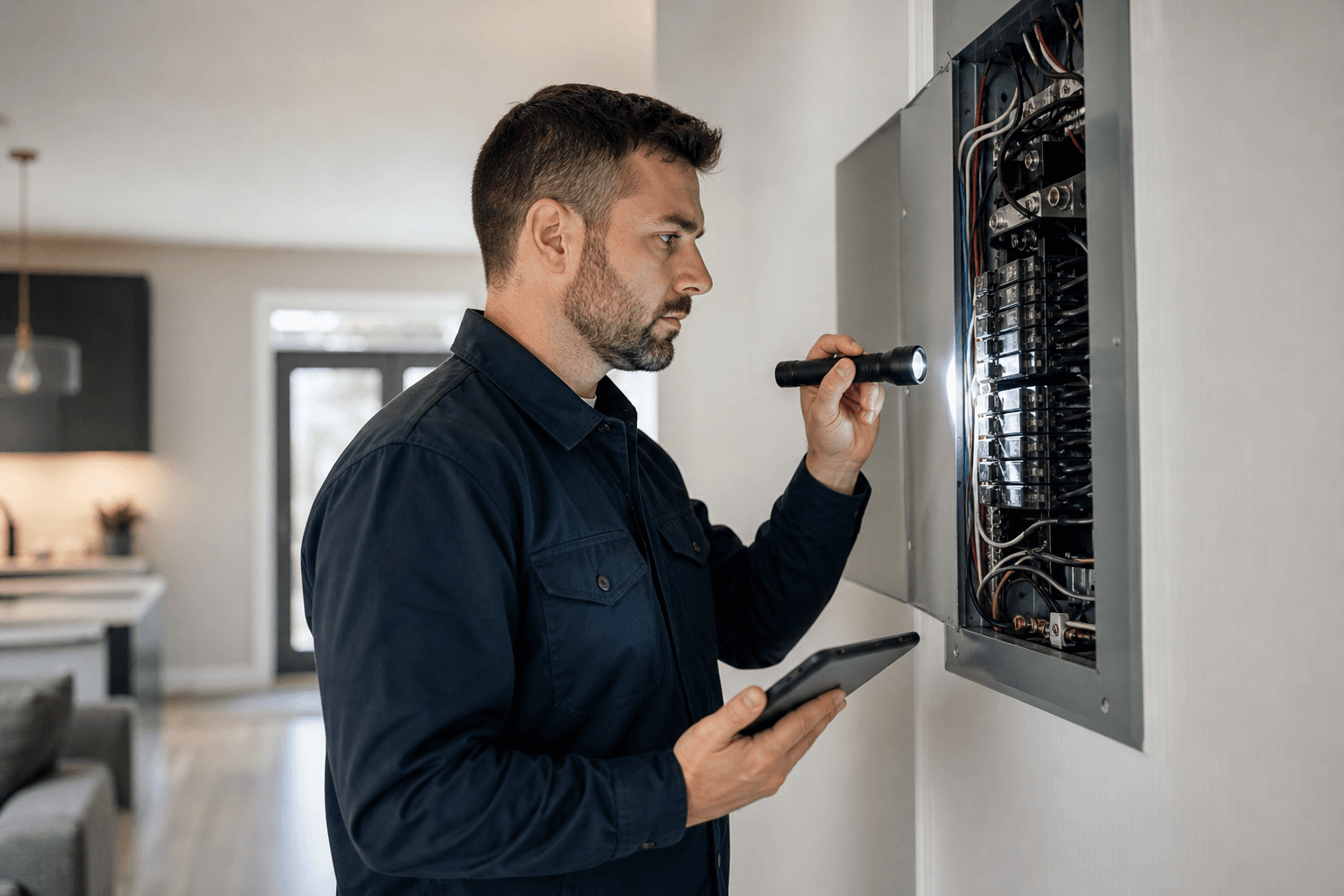
A certified inspector documents visible conditions and probable hazards during a routine inspection. Typical inspector tasks include documenting access and labels, photographing the panel interior when safe, noting scorch marks, double taps, missing knockouts, or lack of labeling, and testing obvious breaker operation by observing whether a breaker resets. Inspectors provide a condition assessment and priority recommendations, such as monitor, consult an electrician, or seek emergency repairs.
Only a licensed electrician should perform live electrical repairs, breaker replacements, rewiring, tightening of live connections, or work that requires permits and safety authority notifications. Electricians have tools to test under load, measure temperatures and contact resistance, and certify repairs to local codes. If work may affect code compliance or requires an Electrical Safety Authority notification, a licensed electrician will advise on permitting and follow the correct procedures.
ASM Home & Commercial Inspection inspects panels and major systems and provides same-day PDF reports to help clients decide whether to engage an electrician before closing or listing a property. Inspectors document what they can see and will never attempt repairs that require a licensed electrical contractor.
Legacy panels and branded risks you should know about
Certain older panel designs and branded products, including some widely discussed legacy types, have been shown to have failure modes that increase risk if left unassessed. Trade and contractor resources recommend professional evaluation rather than alarmist action. A professional evaluation determines whether a component is still serviceable, should be repaired, or requires replacement. If you suspect a legacy panel type in your property, have a licensed electrician inspect it and provide written findings.
Resources that discuss branded legacy concerns can help you understand why replacement is sometimes recommended and why testing is preferable to guessing.
How to prepare for an inspection and what to expect in a same-day PDF report
Before the inspector arrives, clear the area around the electrical panel so the inspector can access it safely, and make a note of any recent electrical problems such as trips, noises, or odours. Tell the inspector about known history, previous repairs, and any relevant paperwork from past electricians.
During the inspection the inspector will open the panel if it is safe and accessible. They will photograph visible conditions, note breaker labeling and accessibility, and test basic breaker operation when appropriate. Inspectors will not perform energised diagnostic testing or live repairs.
A typical same-day PDF report includes:
- Photographs of the panel and any defects
- Clear descriptions of observed conditions and likely risk
- Priority recommendations: monitor, consult an electrician, or emergency action
- Suggested next steps and, when appropriate, wording you can share with an electrician or listing agent
Having photos and concise recommendations the same day speeds decisions during tight real estate timelines.
Ontario rules and the role of the Electrical Safety Authority

In Ontario the Electrical Safety Authority monitors and enforces electrical safety standards, and their guidance treats panels that show arcing or overheating as high severity issues. Ontario-focused homeowner articles also note that leaving a breaker panel door open can be a code and safety concern. When a condition indicates active arcing, overheating, or visible damage, contact a licensed electrician immediately and, if the electrician advises it, notify the authority.
Practical point: if an electrician recommends immediate repair or replacement because a panel is unsafe, follow their advice and obtain any required permits or certificates of compliance.
Immediate actions you can take if you notice a problem
- Do not touch live parts; keep hands and tools away from the panel interior.
- Turn off non-essential appliances and devices on affected circuits to reduce load, but do not open or tamper with the panel.
- Evacuate and call emergency services if you see smoke, flames, or strong burning odour.
- Keep children and pets away from the panel area until a professional assesses it.
- Record what you observed and, if safe, take photos from a distance to share with an inspector or electrician.
Practical takeaways for GTA homeowners, buyers, and landlords
- If you hear buzzing, popping, or smell burning near the panel, treat it as urgent and call a licensed electrician or emergency services depending on severity.
- For repeated breaker trips or visible double taps without heat or smell, book a certified home inspection to get a documented condition report and same-day recommendations.
- Do not attempt live electrical repairs yourself. An inspector documents and recommends, and a licensed electrician performs repairs and provides any required notifications.
- If your home has an older or branded legacy panel, arrange a professional evaluation rather than making assumptions about safety.
Frequently asked questions
Is a buzzing electrical panel an emergency
Persistent or loud buzzing can indicate a loose connection or overloaded component and should be treated as urgent. If buzzing is accompanied by heat, burning odour, or visible damage, call a licensed electrician or emergency services immediately. If buzzing occurs without other signs, schedule a certified inspection so the issue is documented and assessed.
What is a double tap in an electrical panel and why does it matter
A double tap is when two branch circuit conductors share a single breaker lug that is designed for one conductor. Double taps can loosen over time and increase the risk of overheating or arcing. An inspector will note the condition in a report, and a licensed electrician will correct it, often by installing a properly sized breaker or making a compliant connection.
Can I leave the breaker panel door open briefly
Panels are designed to remain enclosed when not being serviced. Leaving the door open can be a safety and code concern in Ontario and increases the chance of accidental contact or ingress of debris. Close the panel when legitimate service ends.
When should I replace my electrical panel
Replacement is recommended when a licensed electrician documents unsafe components, recurring overheating, capacity shortfalls, or when a panel contains high‑risk legacy parts that cannot be reliably serviced. A certified inspection combined with an electrician assessment gives you the information needed to plan a safe upgrade.
What will a home inspection report say about my electrical panel
A certified inspection report will describe visible conditions, note safety concerns such as burn marks, double taps, lack of labeling, or access issues, and recommend whether an electrician evaluation or immediate repairs are needed. Same-day PDF delivery allows you to act quickly on the findings.
For certified inspections across the Greater Toronto Area and same-day PDF reports that clearly document electrical panel safety issues, contact Asmhomeinspection.
Selected references: homeowner primers and Ontario-focused articles on panel safety and warning signs, including resources about popping and buzzing sounds, the safety concerns of open panel doors, legacy panel risk discussions, and explanations of how breakers protect circuits. See technical articles on panel sounds and panel door safety for more background.