Visual catalogue of common foundation crack types
When you first spot a crack, matching its look and pattern to common types helps set the right priority. Below are frequent foundation crack patterns homeowners see, with short notes on typical causes and immediate visual red flags.
- Hairline (very thin, often vertical) — Typical cause: normal settling and shrinkage. Red flag: if the crack widens over time or runs through masonry units with displacement. This Old House notes that some hairline cracking is common with settling and not always a structural emergency (This Old House: Foundation Cracks).
- Vertical — Typical cause: uniform settlement or shrinkage. Red flag: paired interior floor or wall offsets (doors that stick) or an uneven width that suggests movement.
- Diagonal or slanted — Typical cause: differential settlement where one side moves more than the other. Red flag: increasing width or a stair‑step continuation through blocks.
- Stair‑step (through masonry/block joints) — Typical cause: soil movement or uneven footing support. Red flag: large step offsets or accompanying bowed walls; these patterns often warrant closer evaluation (Family Handyman).
- Horizontal — Typical cause: lateral pressure from saturated soil or frost-related heave. Red flag: horizontal cracks are more likely to indicate structural stress and are higher urgency.
- Separation/gap at joint or between wall and floor — Typical cause: overall settlement or shrinkage creating offsets. Red flag: visible gaps large enough for light to pass through or locations where water is entering.
Comparing 'normal settling' cracks vs cracks that suggest structural risk

Use consistent, observable criteria to decide whether to monitor or call a professional. Compare these features when you evaluate a crack:
- Orientation and pattern — Vertical and thin cracks often indicate settling; stair‑step and horizontal cracks are more concerning (This Old House: Basement Wall Cracks).
- Width — Narrow, stable cracks can sometimes be monitored; Angi notes that a roughly 1/8-inch crack from normal settling is typically harmless when it stays narrow, level across both sides, and stops growing (Angi).
- Continuity and growth — A crack that extends through multiple materials or appears to widen over time indicates movement that should be evaluated.
- Interior offsets — Doors or windows that jam, interior wall cracks that align with the foundation crack, or new floor slope suggest the foundation movement affects the structure.
- Associated moisture — Active leaks, efflorescence, or damp walls near a crack raise urgency because water both damages foundations and signals drainage problems.
Moisture changes how a crack should be treated. Signs that increase urgency include active leaks entering at the crack, damp or musty smells, white powdery efflorescence, pooled water or poor grading next to the foundation, and saturated soil or repeated freeze‑thaw at the foundation line. Immediate temporary steps include diverting runoff away from the foundation, using temporary gutters or sandbags to keep water from pooling at footings, and photographing wetting patterns and timing.
Quick rule of thumb: monitor small vertical or hairline cracks that remain stable and show no moisture or interior effects; arrange professional evaluation sooner for stair‑step, horizontal, widening, or moisture-associated cracks.
How to measure and monitor cracks at home: a simple protocol
Documenting cracks before a professional visit helps inspectors assess rate of change. Follow this simple, repeatable protocol:
- Mark and date. Use a permanent marker to draw a small line across the crack edge and write the date beside it so future checks are consistent.
- Measure. Use a steel ruler, caliper, or a feeler gauge to measure width at several spots. Record the largest width in millimetres or fractions of an inch and note the exact location (for example, "north wall, 2 ft from northwest corner").
- Photograph. Take a straight-on photo with a scale (ruler or coin) in the frame and save the image with a date-labeled file name.
- Log and recheck. Keep a one-page observation log with dates, measurements, and photos. Recheck periodically over the following months, and re-measure if you notice new symptoms such as doors sticking, new interior cracks, or water entry. Bob Vila provides monitoring suggestions that are useful to bring to an inspector (Bob Vila).
Bring this log and photos to any inspection — it speeds diagnosis and helps distinguish old, static cracks from active movement.
How repairs differ by crack type and when to call a certified inspector

Repair strategies vary by crack pattern and cause. Professionals will first diagnose whether the crack is static or active and whether water, soil pressure, or footing issues are the primary driver.
- Narrow, static cracks: Often sealed by epoxy or polyurethane injection to restore water-tightness when movement has stopped. This Old House provides a how-to that illustrates common methods for sealing concrete foundation cracks (This Old House: How to Repair a Crack).
- Water-driven cracks: Interior drainage, exterior waterproofing, or re-grading to divert water away from footings are common to stop ongoing deterioration and reduce lateral soil pressure.
- Horizontal or bowed walls: Higher urgency; solutions may include wall anchors, carbon-fiber reinforcement, or underpinning, depending on the severity of lateral pressure (Angi).
- Stair‑step cracks in block foundations: May require masonry repair combined with stabilization of the underlying soil support; contractors often combine tuckpointing with support measures (Bob Vila).
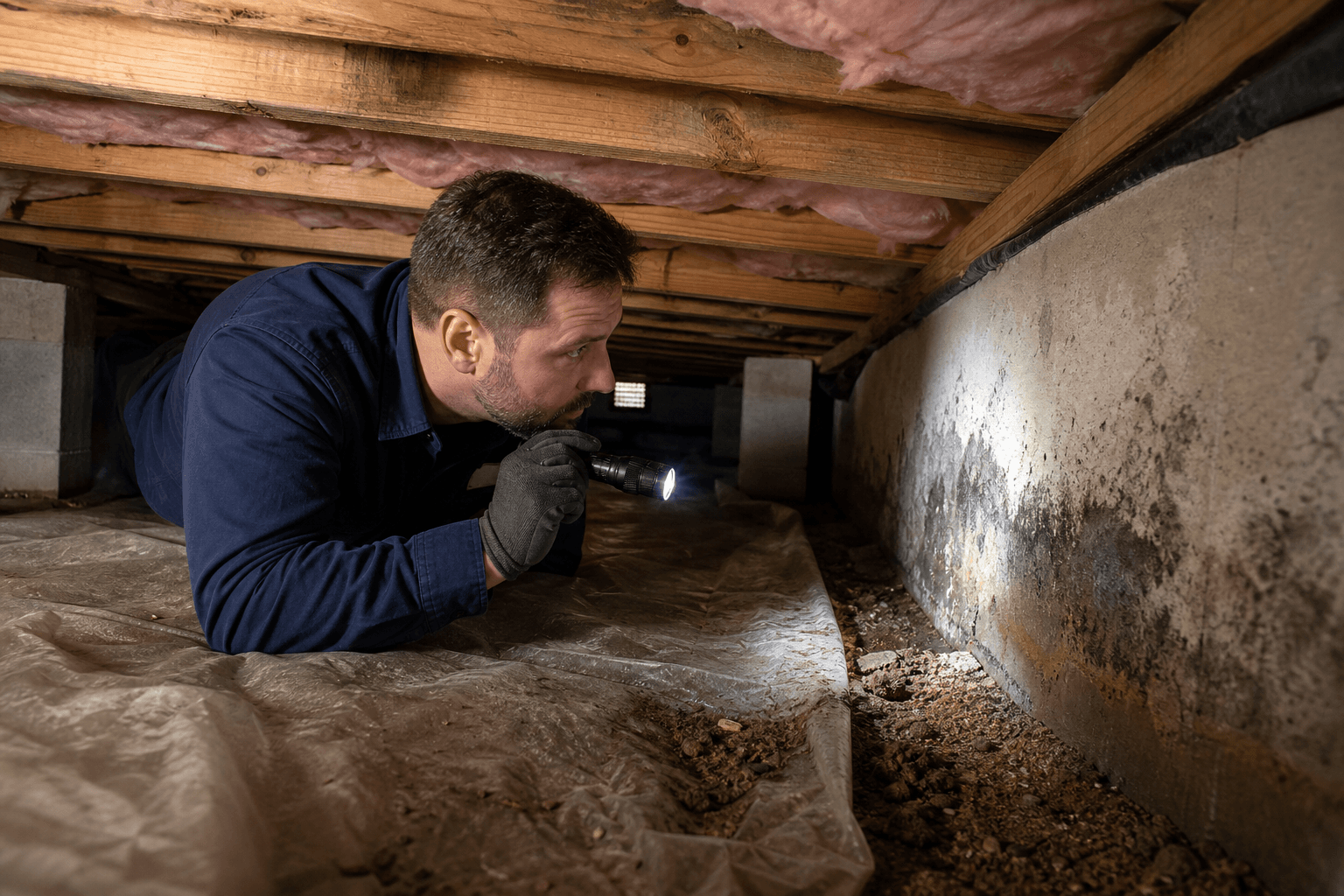
When to call a certified inspector: arrange an inspection if you see horizontal or stair‑step cracks, cracks that appear to be widening or changing rapidly, cracks accompanied by interior offsets (doors/windows sticking), or any crack with active water entry. A certified inspector will document crack patterns, measure and photograph defects, assess moisture and exterior grading, and recommend next actions (continued monitoring, specialist contractor evaluation, or structural repair). Bringing your dated photos, measurements, and observation log helps the inspector determine whether movement is active and supports faster, clearer reporting.
Professionals typically recommend short-term safety steps you can take immediately (temporary sealing against water, relocating valuables, and documenting changes) while arranging permanent repairs.
Frequently asked questions
Is a hairline (less than about 1/8") foundation crack dangerous?
Not necessarily. Small vertical hairline cracks commonly result from normal settling or shrinkage and are often harmless if they remain narrow and stable. Expert guidance notes that a roughly 1/8-inch crack from normal settling is typically harmless when it remains level and stops growing; continued monitoring and documentation are still recommended (Angi).
What does a stair‑step crack in a block foundation usually mean and how fast should I act?
Stair‑step cracks often indicate differential movement in the footing or soil under the foundation and can lead to progressive damage if the underlying cause persists. Document the crack, check for moisture or interior distress, and schedule a professional inspection if the steps appear to widen or interior issues like sticking doors develop.
How can I tell if a horizontal crack is a structural problem or just normal settling?
Horizontal cracks are more likely to signal lateral soil pressure or frost heave and therefore have a higher probability of being structural concerns than vertical hairline cracks. If you see a horizontal crack—especially one with wall bowing, widening, or water intrusion—arrange an inspection so a professional can evaluate load-bearing concerns and remediation options.
If I see water near a foundation crack, what immediate steps should I take before an inspection?
Prioritize stopping ongoing water entry: divert downspouts and surface runoff away from the foundation, use temporary gutters or sandbags if needed to keep water from pooling at footings, remove stored items from wet areas, and photograph the wetting patterns and timing. These steps reduce further damage and give an inspector clearer evidence when they visit.