Gutter drainage issues are a frequent cause of moisture intrusion, foundation staining, and basement flooding in Greater Toronto Area homes. This article lists nine common problems, the visual signs and simple checks you can do today, short-term fixes, and when to call a professional. It also explains what a certified inspector documents in a same-day PDF report and summarizes relevant municipal rules about downspouts.
Nine common gutter drainage issues and how to spot each
1. Clogged gutters and downspouts
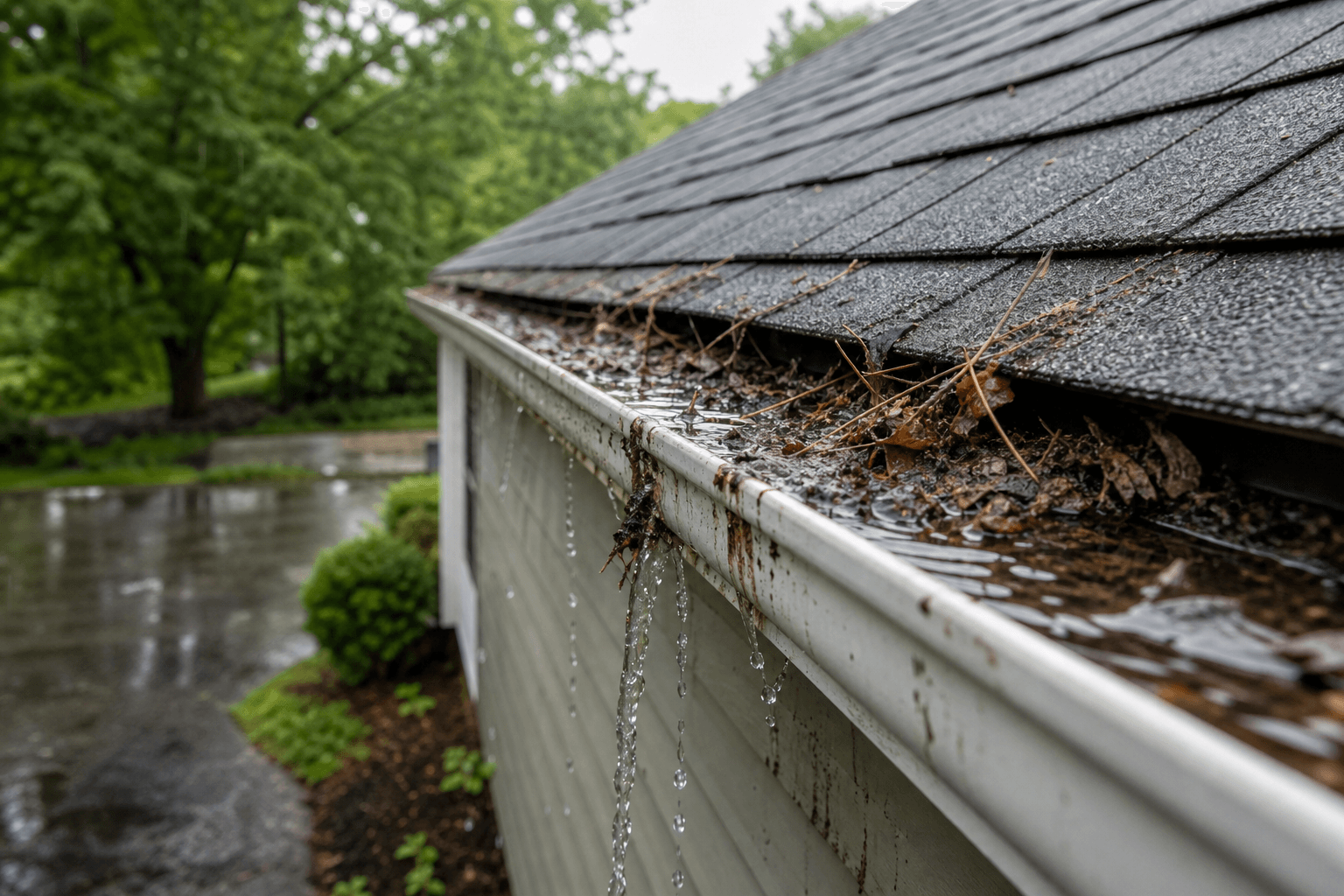
Signs: standing water in the eavestrough, plants growing from the gutter, water spilling over the sides during light rain. Check: scoop a small sample of debris or run a garden hose from the roof edge to see if water moves freely through the downspout. Quick homeowner action: remove leaves and debris, then flush the system from the top down. For guidance on cleaning and basic repair that reduces flood risk, consult federal recommendations for eavestroughs and downspouts (Layout).
2. Sagging gutters or incorrect slope
Signs: long pools of water in sections of the gutter, overflow near low points, visible droop where hangers are loose. Check: use a short level across a run to confirm slope; gutters should pitch slightly toward the downspout so water drains. Quick action: re-secure loose hangers temporarily; plan a professional re-pitch if multiple sections hold water because standing water speeds corrosion and increases leaks.
3. Loose hangers, separated seams and leaking joints
Signs: rust around fasteners, water dripping from seams, brown stains on siding below seams. Check: after it rains, inspect the underside of eaves and interior walls near the top for active drips or fresh staining. Quick action: apply temporary leak tape or remove and reseal small seams, but expect a professional repair for corroded or misaligned joints because DIY patches often fail.
4. Short, disconnected or improperly terminated downspouts
Signs: water discharging within a metre of the foundation, wet soil or pooling near the foundation line, basement sill plate staining. Check: follow the downspout to its outlet—some are buried, others terminate against the foundation or into a short elbow. Short or disconnected downspouts that direct water toward the house increase foundation risk; federal guidance recommends extending downspouts away from the building where local rules allow (Layout).
5. Poor grading and landscape drainage near the foundation
Signs: ground sloping toward the house, soft or boggy soil near the foundation, repeated pooling after storms. Check: measure slope by standing at the foundation and stepping outward; the ground should fall away from the foundation by at least a small grade. Practical solutions include regrading and using splash blocks or extensions to move roof runoff away from the building and protect footings.
6. Ice dams and winter freeze problems
Signs: ice forming at the eaves, long icicles, wet spots on interior ceilings after a thaw. Check: look for ridge ice or packed snow on the roof over the eaves; ice dams form when warm attic areas melt snow that then refreezes at the eaves. Immediate precautions include careful removal of roof snow and ensuring attic insulation and ventilation are adequate to reduce repeated formation; for winter-specific prevention advice, see guidance on eavestrough and downspout maintenance (Layout).
7. Overflow during heavy rain from undersized gutters or blocked downspouts
Signs: overflow only during storms, not during light rain, or rapid spillover at corners. Check: observe performance during a heavy shower, and note whether overflow occurs at predictable points. If gutters frequently overload, the system capacity may be too small for the roof area or local storm intensity, and simply clearing debris will not be a lasting fix.
8. Splash erosion and displaced soil at downspout exits
Signs: eroded channels or exposed roots where the downspout discharges, or visible soil loss near footings. Check: follow the flow path from the downspout outlet and look for channels carved into the soil or exposed footing edges. Temporary protections include adding a splash block or a rigid downspout extension to dissipate flow and prevent further erosion until a more permanent drainage solution is installed.
9. Damage from fallen branches, impacts, or poor installation
Signs: punctures, ripped seams, or misaligned outlets after a storm or from poor attachment. Check: inspect gutters for dents, torn sections, or areas where fasteners have pulled free. Action: minor impact damage might be patched, but extensive distortion or mismatched materials often justify replacing the affected run for long-term reliability.
What an inspection checks and how ASM documents gutter drainage issues
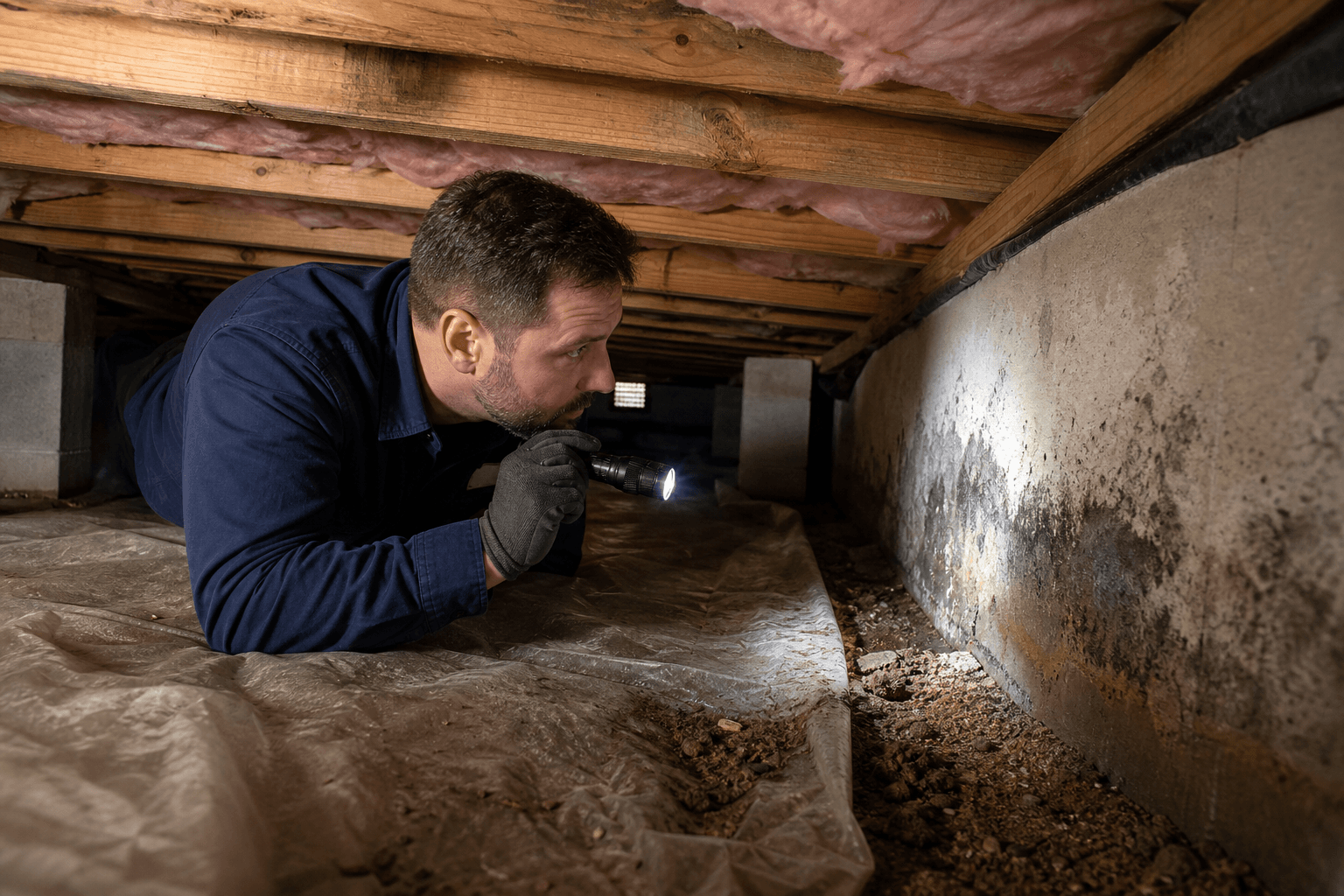
A certified inspector evaluates gutter drainage issues as part of a system-by-system inspection of the roof, attic, exterior, grading, and basement areas. ASM Home & Commercial Inspection lists comprehensive checks for roofs, attics, foundations, and drainage, and delivers a same-day PDF report summarizing findings and recommendations for each item on the property inspection checklist. The report is intended to support negotiation, repairs, or maintenance planning.
Inspection checklist items you should expect
- Visual condition of eavestroughs and gutters: corrosion, seams, fasteners, and slope.
- Downspout routing and termination: connected, buried, or discharging near the foundation.
- Evidence of overflow or past moisture intrusion: staining on siding or foundation and interior signs in the basement or attic.
- Ground grading and surface drainage within the immediate perimeter of the building.
- Photographs of each deficiency, a severity rating, and recommended next steps or referrals.
ASM documents these items with photos and concise recommendations in the same-day PDF report so you can act quickly.
Toronto and GTA rules you need to know about downspouts and stormwater

Municipal rules affect where and how you can redirect roof water. The City of Toronto has mandatory downspout disconnection requirements in specific contexts and provides homeowner guidance on managing rain and meltwater to reduce basement flooding. Always consult your municipality before changing a discharge point so you remain compliant with local rules; municipal requirements also matter when permits or public connections are involved.
Short-term homeowner fixes you can do today and when they help
- Clear gutters and flush downspouts with a garden hose to confirm flow. This often removes the immediate cause of overflow.
- Use a downspout extender or flexible routed hose to move discharge away from the foundation for temporary protection.
- Install a splash block under the downspout outlet to reduce soil erosion and encourage water to run away from the foundation.
- Re-secure loose hangers and remove visible debris from the roof edge to prevent additional clogs.
These short-term measures are effective for minor blockages and small grading issues, but major grading changes, recurring basement moisture, or evidence of structural movement require professional assessment and permanent correction. Federal guidance on eavestroughs and downspouts recommends correct termination and regular maintenance to help prevent flood damage (Layout).
When to call an inspector, plumber, landscaper, or drainage contractor
Call a certified home inspector when you want an objective, documented assessment of gutter drainage issues, moisture intrusion risks, and repair priorities. Choose a licensed plumber or drainage contractor if you find buried or complex underground drainage problems, repeated backups into basement drains, or if regrading and surface drainage redesign are needed. If you observe active interior leaks, structural movement, or repeated basement flooding, arrange professional services promptly rather than relying on temporary fixes. ASM performs certified residential and commercial inspections across the GTA and can document issues in a same-day PDF to support decision-making.
Maintenance schedule, repair decision criteria, and common homeowner objections

Recommended frequency: clean gutters at least twice per year and inspect after major storms. Consider professional inspection when you notice recurring overflow, interior stains, or soil movement. Common homeowner objections include cost and scheduling; weigh those against the higher cost of foundation repairs and mould remediation if moisture intrusion continues unchecked. If a seller or landlord is involved, use a documented inspection report to clarify responsibility and prioritise safety-related corrections.
How to use an inspection report in a real estate transaction
A same-day PDF inspection report provides photos, severity notes, and recommended next steps. Buyers can use the report to negotiate repairs or price adjustments; sellers can use a pre-listing inspection to address issues before listing. Prioritise safety and moisture-intrusion items first, followed by functional repairs like re-pitching gutters or downspout rerouting. Keep copies of the report for municipal permit discussions when changes to discharge points or regrading are planned.
Photos and notes checklist to take before an inspection
- Close-up photos of each gutter run showing any standing water, separations, or rust.
- Photos of downspout outlets and the ground where they discharge.
- Interior photos of any basement or ceiling stains, peeling paint, or damp insulation.
- Photos of grading near the foundation and any erosion channels.
- Note dates and recent storm events that correspond to the problems you observed.
Frequently asked questions
Will a standard residential inspection include gutters, downspouts, and grading near the foundation?
Yes. A standard inspection typically covers exterior drainage components, downspout routing, and surface grading as part of the exterior and foundation evaluation. Findings are usually included with photos and recommendations in the inspection report. For details about ASM’s inspection scope and same-day report delivery, visit the ASM Home & Commercial Inspection website.
Does the City of Toronto require downspout disconnection and how does that affect where water can be redirected?
The City of Toronto has mandatory downspout disconnection requirements in specific situations and provides guidance on how to manage rain and meltwater to reduce basement flooding. Consult municipal guidance before installing permanent discharge changes so you remain compliant with local rules.
How fast can I get a same-day PDF report after an inspection and what will it include about gutter drainage issues?
ASM provides same-day PDF reports that include photographs, a description of each deficiency, severity notes, and recommended next steps for gutter and drainage issues, enabling timely negotiation or repair planning.
Can temporary fixes like splash blocks prevent basement flooding until I arrange professional repairs?
Temporary measures such as splash blocks and downspout extensions can reduce immediate risk by moving water away from the foundation, but they do not replace solutions for underlying problems like poor grading, buried blockages, or structural drainage failures. Use temporary fixes while you schedule a certified inspection.
Who is responsible for fixing gutter or grading problems on a home I am buying or renting?
Responsibility for repairs depends on the sales contract, lease terms, and negotiation between buyer, seller, landlord, and tenant. A documented inspection report helps all parties agree on priorities and who will pay for required work.
For certified inspections and same-day PDF documentation across the GTA, contact Asmhomeinspection to schedule an exterior drainage and full property evaluation.