Choosing an HVAC ductwork inspection method starts with the question you need answered. A standard property inspection usually begins with safe, visual and functional observations of accessible ducts, vents, equipment, and controls. Specialist testing may be appropriate when you need measured airflow, leakage data, internal camera views, cleaning advice, or commercial ventilation documentation.
For most buyers, sellers, landlords, and homeowners, the sensible approach is to begin with the least invasive method and escalate only when symptoms, access conditions, or regulatory responsibilities justify it. The goal is not to order every possible test. It is to match the inspection to the property, the concern, and the decision deadline.
HVAC ductwork inspection methods compared
The phrase “air duct inspection” can describe several different services. They do not answer the same question, and a routine residential inspection should not be treated as a substitute for technical HVAC diagnostics. A visual-and-functional HVAC inspection is a useful starting point because it identifies observable conditions and helps determine whether more testing is justified.
| Method | What it can reveal | When it fits | Main limitation |
|---|---|---|---|
| Visual and functional inspection | Visible damage, disconnected sections, insulation condition, moisture indicators, accessible registers, controls, noise, and basic operation | Home purchases, listings, move-in reviews, maintenance planning, and initial fault screening | Usually does not measure leakage, pressure, efficiency, refrigerant condition, or combustion safety |
| Video-camera duct inspection | Internal views of accessible duct sections, debris, obstructions, damage, or suspected contamination | When a specific internal concern exists and the duct can be accessed without unsafe dismantling | It cannot inspect sealed, inaccessible, or unreachable sections |
| Airflow checks | Evidence of weak, uneven, or restricted air delivery at accessible outlets | Rooms feel consistently uncomfortable or a system appears poorly balanced | A basic observation does not establish full system design, load, or pressure balance |
| Pressure or leakage testing | Measured information about duct leakage, pressure, or system performance | Persistent performance concerns, renovation review, commissioning, or contractor-led diagnostics | Requires appropriate instruments, access, defined conditions, and a qualified provider |
| Cleaning assessment | Whether visible debris or suspected contamination warrants further evaluation or cleaning advice | After construction, water intrusion, unusual debris, or a defined cleanliness concern | A visual inspection cannot certify air quality or prove cleaning will solve a symptom |
Step 1: Define the question before inspecting the ductwork

Write down what prompted the inspection. A buyer may want to understand whether visible HVAC conditions affect a purchase decision. A seller may want to identify issues before listing. A landlord may need a time-stamped record before occupancy, while a property manager may be investigating uneven temperatures, odours, noise, moisture, or recurring service calls.
Collect equipment details, service invoices, renovation records, previous inspection reports, and occupant observations. Note which rooms are affected, whether the problem occurs during heating or cooling, and whether it is constant or intermittent. These details help the inspector or HVAC contractor choose a proportionate next step.
Step 2: Inspect accessible ductwork and related components
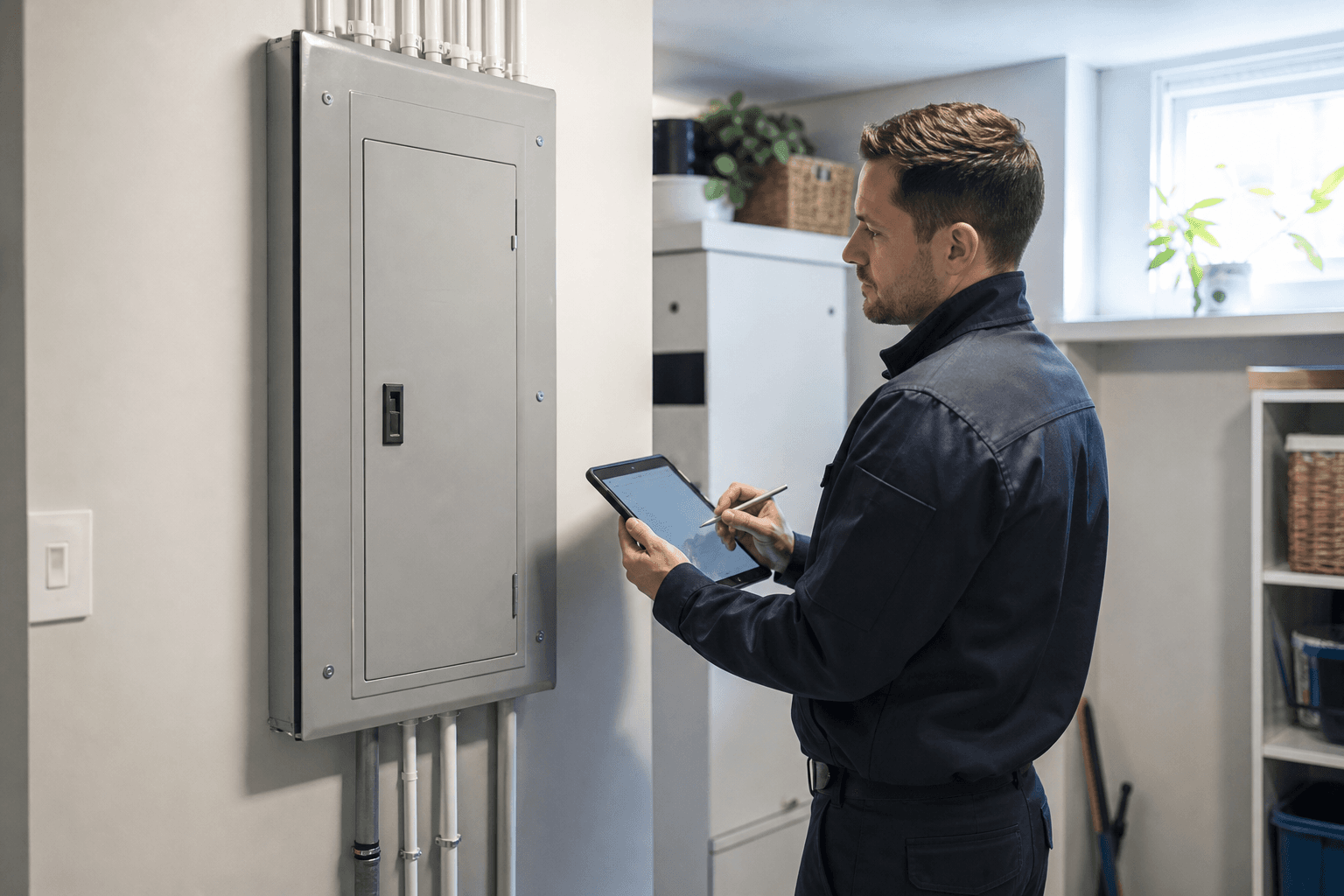
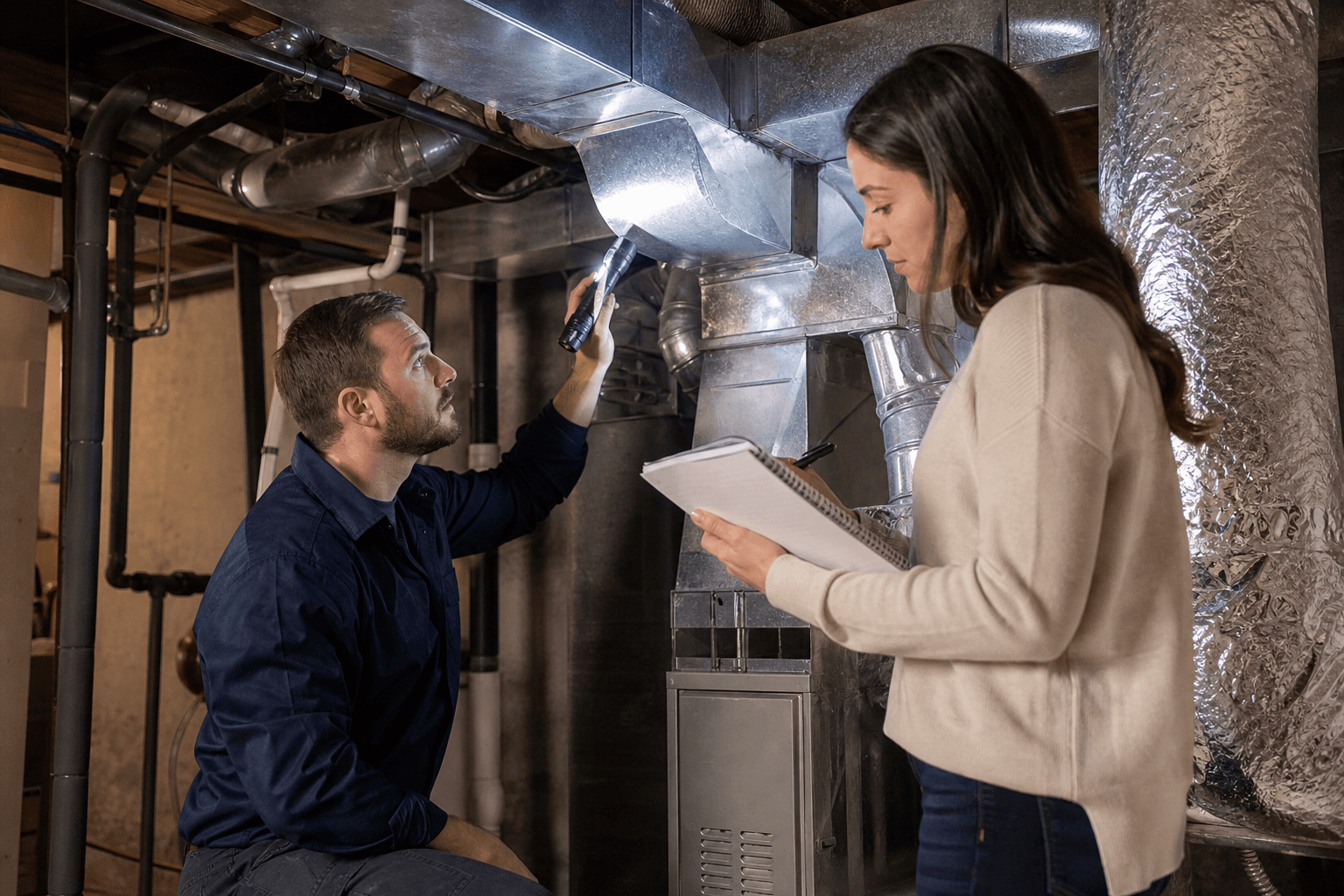
A safe initial review covers components that can be observed without dismantling equipment or entering a confined space. Depending on the agreed scope, this may include accessible supply and return ducts, insulation, visible connections, registers, grilles, vents, thermostats, condensate-related observations, and nearby areas where moisture or movement could affect the system.
Look for damaged or missing insulation, disconnected sections, loose joints, sagging or crushed ductwork, staining, active moisture, unusual odours, and material that appears heavily soiled or contaminated. Also note blocked registers, damaged grilles, vibration, and signs that air is escaping around visible connections. These are observations, not automatic diagnoses.
Stop point: Do not remove panels, cut into ducts, crawl into unsafe areas, or disturb suspicious material to obtain a better view. If equipment is energized, access is restricted, moisture is active, or the area is confined, record the limitation and arrange appropriate specialist assessment.
Step 3: Observe HVAC operation and airflow symptoms
Functional observation can show whether the thermostat responds, whether heating or cooling starts, whether air reaches accessible registers, and whether the system produces unusual noise, vibration, odour, or visible leakage. Compare rooms and floors, but record the operating mode and any access limitations.
Weak airflow at one register may have a different explanation from poor delivery throughout an entire floor. A noisy return, rattling grille, or temperature difference may justify further investigation, but none proves a particular defect. Routine inspection also does not establish duct sizing, system efficiency, refrigerant condition, combustion safety, or complete pressure balance.
Step 4: Match specialist testing to the unresolved problem
- Airflow measurements: Choose these for weak delivery, uneven room conditions, or suspected imbalance. Ask where measurements will be taken and whether results will be compared with design or manufacturer information.
- Pressure or leakage testing: Consider this when visible gaps, persistent performance problems, renovation work, or energy concerns suggest measured system performance matters.
- Video-camera inspection: Use this when a specific accessible duct section may contain debris, damage, an obstruction, or suspected contamination. Confirm which sections the camera can reach.
- Cleaning assessment: Consider this when debris, water intrusion, construction residue, or suspected contamination is the central concern. Ask whether the provider is assessing condition, recommending cleaning, or offering cleaning separately.
A routine home inspection may identify the reason for follow-up, but it does not typically include duct leakage testing, refrigerant pressure testing, combustion analysis, or load calculations. Specialist testing should be booked as a defined service, not assumed to be part of a standard inspection.
Step 5: Check whether commercial ventilation requirements apply
Residential transaction inspections and commercial ventilation reviews are not interchangeable. A homebuyer generally needs a clear picture of accessible conditions before making a decision. A commercial owner, employer, facility manager, or investor may also need maintenance records, operating instructions, testing documentation, commissioning information, or evidence that a qualified person completed required work.
In Ontario, qualifying workplace mechanical ventilation systems covered by Ontario Regulation 67/93 must be inspected by a qualified person at least every six months. Applicability depends on the workplace and regulation, so commercial clients should confirm the requirement with the responsible qualified person or regulator. Ontario’s ventilation inspection guidance explains the inspection, service, and maintenance context.
Federal workplace rules can also require written instructions for HVAC operation, inspection, testing, cleaning, maintenance, and sensor calibration where applicable. This is a compliance and operations question, not something a general residential inspection report can resolve alone.
Step 6: Document observations, limitations, and next actions
Request a report that makes the decision trail easy to follow. For each relevant observation, record the location, visible condition, operating context, photographs where appropriate, access limitation, urgency, and recommended next action.
Keep the boundaries clear. A property inspector can document accessible conditions and explain why further evaluation may be appropriate. A contractor, qualified ventilation professional, or engineer may be needed for repairs, technical testing, design analysis, commissioning, certification, or compliance documentation.
When to stop and call an HVAC specialist
Stop the inspection and arrange qualified follow-up when you encounter suspected combustion or carbon monoxide concerns, exposed electrical hazards, active moisture, major duct disconnection or collapse, persistent airflow failure, suspected contamination, or equipment that requires dismantling. Do not enter ductwork, handle suspicious debris, bypass safety controls, or remove equipment panels without appropriate training and authorization.
Stop as well when the question cannot be answered by observation. If you need a leakage rate, pressure measurement, refrigerant diagnosis, combustion analysis, load calculation, internal duct view, or formal commercial ventilation documentation, define a specialist scope.
Booking checklist: questions to ask before an air duct inspection
- What exact question will this inspection answer?
- Which ducts, registers, equipment, and related components are accessible?
- Is the service visual and functional, or does it include airflow, pressure, leakage, or camera testing?
- What access, operating conditions, records, or preparation are required?
- What will the report document, including photographs and access limitations?
- Which findings require an HVAC contractor, ventilation professional, engineer, or other specialist?
- For a commercial property, does the scope address building use, maintenance records, and potentially applicable workplace requirements?
- When will the report be delivered, and can the provider explain the findings afterward?
Prepare service records, equipment information, previous reports, renovation details, occupant observations, and a list of affected rooms. Make accessible areas available where safe, but do not remove panels or attempt repairs to make the inspection easier.
Frequently asked questions
Does a standard home inspection include HVAC duct leakage testing?
Usually, no. A standard inspection can observe accessible ductwork, registers, equipment, controls, and basic operation, but leakage testing requires defined conditions and specialist instruments.
When is a video-camera duct inspection useful?
It can help when a specific accessible duct section may contain debris, damage, an obstruction, or suspected contamination. It is not automatically necessary for every home.
Can an inspector determine whether ducts need cleaning?
An inspector can document visible debris, staining, moisture, or other conditions that justify further evaluation. That does not certify indoor air quality or prove cleaning will resolve a symptom.
Should airflow testing be arranged before buying a GTA home?
Not automatically. Begin with a standard inspection and discuss uneven temperatures, weak airflow, unusual noise, or visible duct concerns. Arrange measured testing when those symptoms remain important or a specialist advises it.
What should a commercial property owner verify about ventilation inspections in Ontario?
Verify whether applicable requirements cover the property, who is qualified to perform the inspection, which systems and records are included, how often inspections are required, and what documentation must be retained.
Choose the least invasive method that answers the real question
The best HVAC ductwork inspection method addresses a defined concern without creating unnecessary risk or cost. Start with safe visual and functional observations of accessible components. Escalate to airflow, leakage, pressure, camera, cleaning, or compliance-focused work only when symptoms, evidence, access, or commercial obligations make that next step useful.
For GTA buyers, sellers, landlords, property managers, and commercial owners, a clear scope matters as much as the method. Asmhomeinspection provides certified residential and commercial property inspections across Toronto and the GTA, with same-day PDF reporting available for its inspection services.