When you see the term InterNACHI certified inspector attached to a residential or commercial property inspection, it signals that the inspector belongs to a professional association with defined standards of practice and ethics. This article explains what that means in plain language, how to confirm the credential, what a certified inspection typically covers across major building systems, and the practical questions to ask so you can book with confidence.
What InterNACHI certification means
InterNACHI (International Association of Certified Home Inspectors) is a professional organization for home inspectors. A member listed as an InterNACHI certified inspector has pursued association membership and adheres to InterNACHI’s published standards of practice and code of ethics. While the details of coursework and continuing education are managed by the association, the key takeaway for consumers is that certification provides a recognizable framework: an agreed scope for inspections, ethical conduct expectations, and a consistent approach to reporting defects and safety concerns.
Because building conditions vary widely, certification is not a guarantee of outcomes. Instead, it is a way to standardize how inspections are performed and documented. For buyers, sellers, and property managers, this standardization helps you compare properties and make informed decisions with fewer surprises.
How to verify an inspector’s certification
You don’t have to take anyone’s word for their credentials. Use this quick verification process before you schedule:
- Ask for the inspector’s full name and certification identification as listed with InterNACHI.
- Request a link or screenshot showing active InterNACHI membership. A current, verifiable listing is the strongest confirmation.
- Confirm that the scope of your inspection aligns with InterNACHI’s standards of practice (for example, a pre-purchase, pre-listing, or new construction inspection).
- For commercial buildings, ask whether the inspector also maintains a commercial-focused credential in addition to InterNACHI’s residential focus, such as membership in the Certified Commercial Property Inspectors Association (CCPIA). Some inspection firms explicitly note both memberships to clarify that they serve residential and commercial clients.
- Review a sample report to ensure it is clear, includes photos where useful, and organizes findings by system or priority so you can act on them.
Taking five minutes to verify saves time later and makes it easier to present the report to agents, contractors, or facilities staff.
What a certified inspection typically covers
InterNACHI’s standards of practice outline what inspectors generally observe and describe. The specifics may vary by property type and accessibility, but a certified inspector’s checklist commonly includes the following major systems and components:
- Roof and exterior water management: roof covering, visible flashing, gutters and downspouts, soffits, and general exterior surfaces that shed water away from the structure.
- Attic and insulation: visible framing, ventilation, insulation levels, and signs of past or current moisture intrusion.
- Structure and foundation: readily accessible portions of the foundation, framing, and structural elements, with attention to movement indicators and moisture pathways.
- Garage, porches, decks, stairs, and railings: basic safety and condition checks on attached structures and egress components.
- Interior finishes: representative walls, floors, ceilings, doors, windows, and cabinetry, primarily to identify material defects and evidence of moisture.
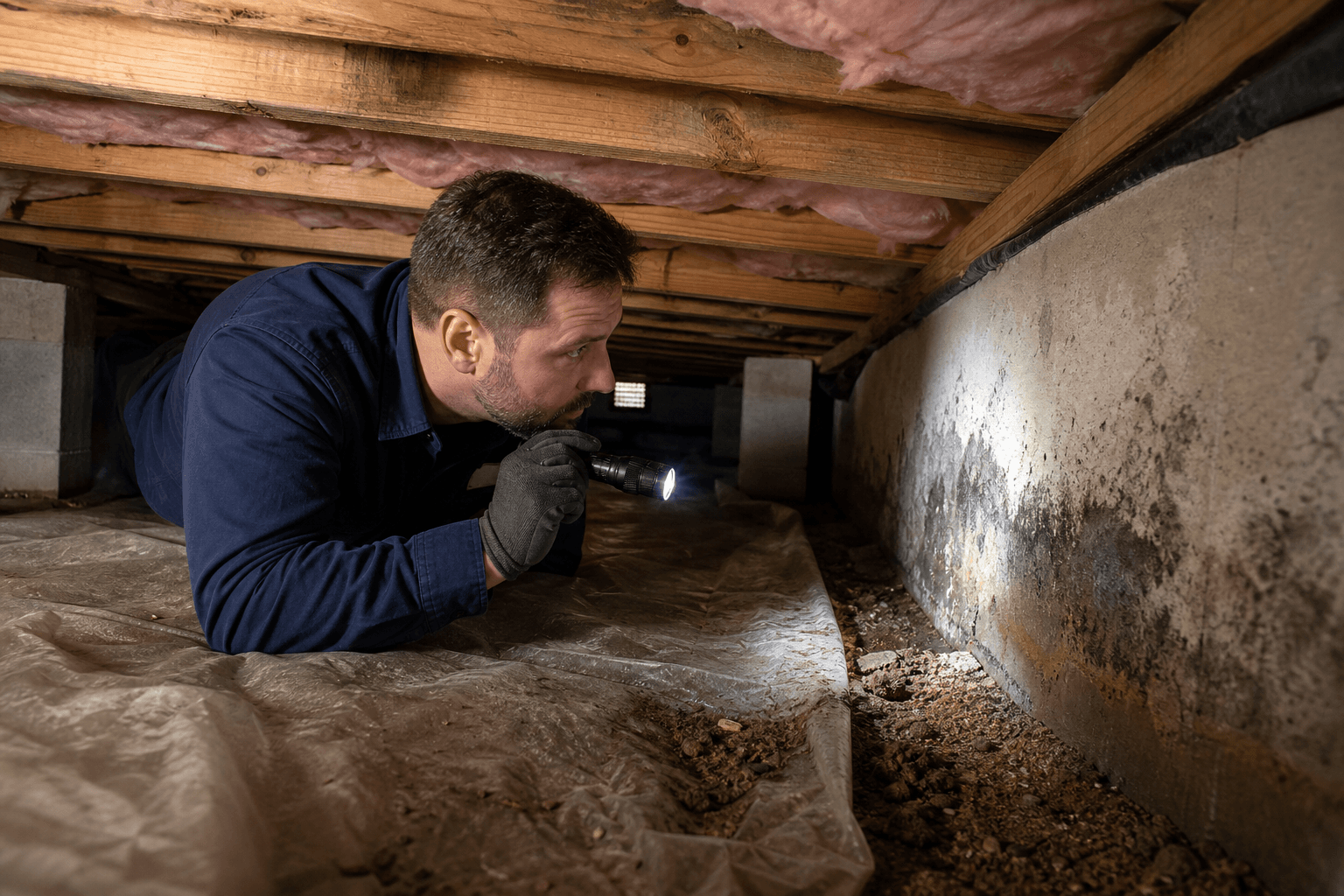
- Basement or crawlspace: visible structure, ventilation, and moisture conditions where accessible.
- Plumbing: visible supply and waste lines, fixtures, and functional checks where feasible.
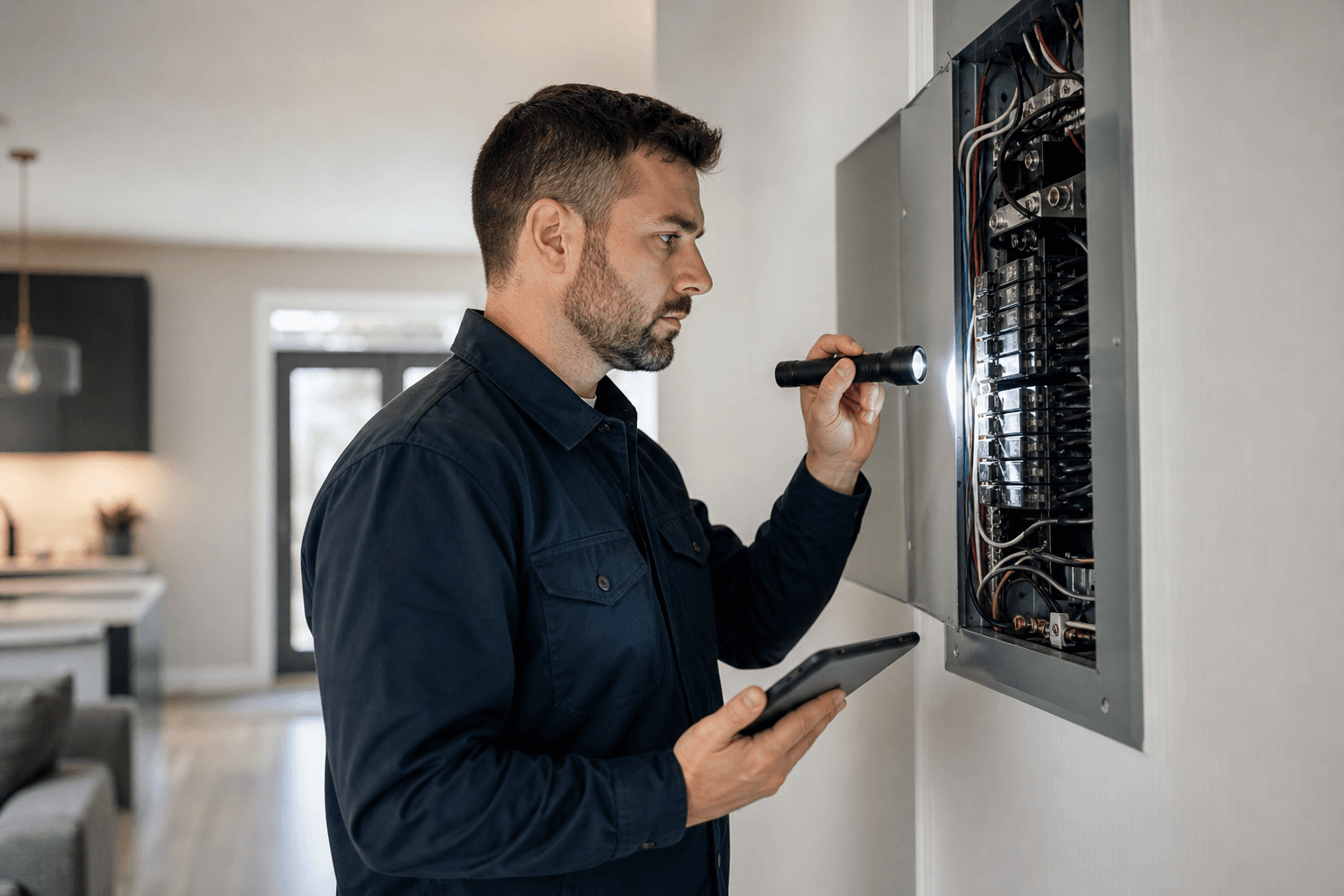
- Electrical: a non-invasive review of the electrical service, distribution panels, lights, and receptacles for basic safety and function.
- Heating and cooling (HVAC): basic operation observations of furnaces, boilers, water heaters, and air conditioning equipment when conditions permit testing.
Certified inspections are visual and non-destructive. The goal is to identify material defects and conditions that warrant maintenance, monitoring, or further evaluation by a qualified specialist.
Residential vs. commercial scope
Many consumers start with the assumption that inspections are only for homes. In practice, the same systematic approach also applies to commercial properties. For residential clients, the inspection centers on occupant safety and the expected service life of major systems. For commercial clients, the focus often expands to include building components and site conditions relevant to operations and maintenance planning.
Some inspection providers are active members of both InterNACHI and the Certified Commercial Property Inspectors Association (CCPIA). When a firm highlights both memberships, it’s an indicator that they perform inspections across a wide range of property uses, from apartments and condominiums to retail, restaurants, schools, hospitals, warehouses, manufacturing, offices, hotels/motels, gas stations, storage, and other industrial or specialty facilities. If you manage a mixed portfolio, asking about both residential and commercial credentials helps you align the right inspector to the right asset type.
Why moisture intrusion gets special attention
Moisture is one of the most common threads tying building issues together. It can originate at the roof, exterior cladding, grading, plumbing, or condensation points. Regardless of where it starts, moisture can accelerate material deterioration and introduce safety risks for occupants. This is why many inspection firms expressly call out moisture detection as a priority throughout the roof, attic, foundation, basement, and interior review.
During your walkthrough, ask your inspector to summarize any observed moisture pathways, contributing factors (like drainage or ventilation), and immediate next steps. Even if the fix is simple, documenting it early helps you prevent larger problems later.
How to prepare for inspection day
Preparation helps your inspector access the areas they need to see and gives you a smoother experience. Use this checklist:
- Ensure clear access to the attic hatch, electrical panel, furnace/boiler, water heater, crawlspace, and main plumbing shut-offs.
- Move stored items away from walls in basements, garages, or mechanical rooms so surfaces and equipment are visible.
- Replace burned-out bulbs and test door/garage remotes so operation can be observed.
- Have recent repair or renovation documentation ready. It helps your inspector connect observations to past work.
- Plan to attend the final walkthrough if possible. Seeing issues in person makes the written report easier to interpret.
What to expect in the written report
A useful inspection report is organized, readable, and actionable. Certified inspectors commonly deliver reports in a digital format and summarize findings by system, with photos and concise notes. Look for:
- Scope and limitations: a clear statement of what was inspected and what was not accessible at the time.
- System-by-system findings: observations for roof, structure, plumbing, electrical, HVAC, interior, exterior, and site conditions.
- Material defects and safety items: issues that may influence safety, serviceability, or significant cost decisions.
- Maintenance and monitoring notes: items that do not require immediate repair but merit routine care or observation.
- Photos or diagrams: visuals that make it easier to locate and understand each item.
Some inspection providers note that they deliver same-day PDF reports, which can help you make timely decisions in fast-moving situations. If you are on a deadline, confirm expected delivery timing before the appointment.
Questions to ask an InterNACHI certified inspector before booking
Use these targeted questions to qualify your inspector and align expectations:
- Are you an active InterNACHI certified inspector, and can you share a link to your membership?
- Do you also hold membership in a commercial-focused association if I’m scheduling a commercial property inspection?
- Can I review a sample report for a property similar in age and type to mine?
- What parts of the property are inaccessible or excluded by your standard scope?
- How do you handle suspected moisture intrusion findings during the inspection?
- When will I receive the written report, and in what format?
- If you identify issues, do you recommend further evaluation by licensed specialists, and how is that indicated in the report?
Using the report to make decisions
An inspection report supports decisions in several common scenarios:
- Pre-purchase: focus on safety, structural, and major system issues that could affect financing, insurance, or long-term costs.
- Pre-listing: address fixable items ahead of listing to reduce last-minute renegotiations and give buyers a clearer picture.
- New construction: document workmanship and incomplete items before warranty milestones.
- Move-in: capture existing conditions to set expectations between landlords and tenants.
- Annual maintenance: track recurring items like drainage, sealants, HVAC servicing, and minor repairs to extend component life.
Regardless of the scenario, keep your report organized with quotes, receipts, and follow-up notes so you have a single record of decisions and outcomes.
Limitations and when to seek specialists
An InterNACHI certified inspection is a visual, non-invasive assessment. It does not replace evaluations that require destructive testing, code enforcement authority, engineering calculations, or trade-specific diagnostics. When a report recommends further evaluation, consult a qualified professional such as a structural engineer, licensed electrician, plumber, HVAC technician, roofer, or environmental specialist as appropriate. These specialists can confirm causes, specify repairs, and provide cost estimates beyond the scope of a general inspection.
FAQ
Is an InterNACHI certified inspector required for a valid inspection?
No single credential is universally required for all properties or jurisdictions. However, choosing an inspector with InterNACHI certification provides a clear standards-of-practice framework and a recognized code of ethics.
Will an inspection find every problem in a building?
No. Inspections are visual and non-destructive, limited by access and conditions at the time. The goal is to identify material defects and safety concerns and to note when specialized evaluation is prudent.
Can a certified inspector advise on repair costs?
General inspectors typically describe conditions and recommend next steps rather than quoting repairs. For pricing, consult licensed contractors or specialists after you receive the inspection report.
What if part of the property was inaccessible during the inspection?
The report should list inaccessible areas or components. After access is provided—such as unlocking utility rooms or clearing storage—arrange for a follow-up evaluation if needed.