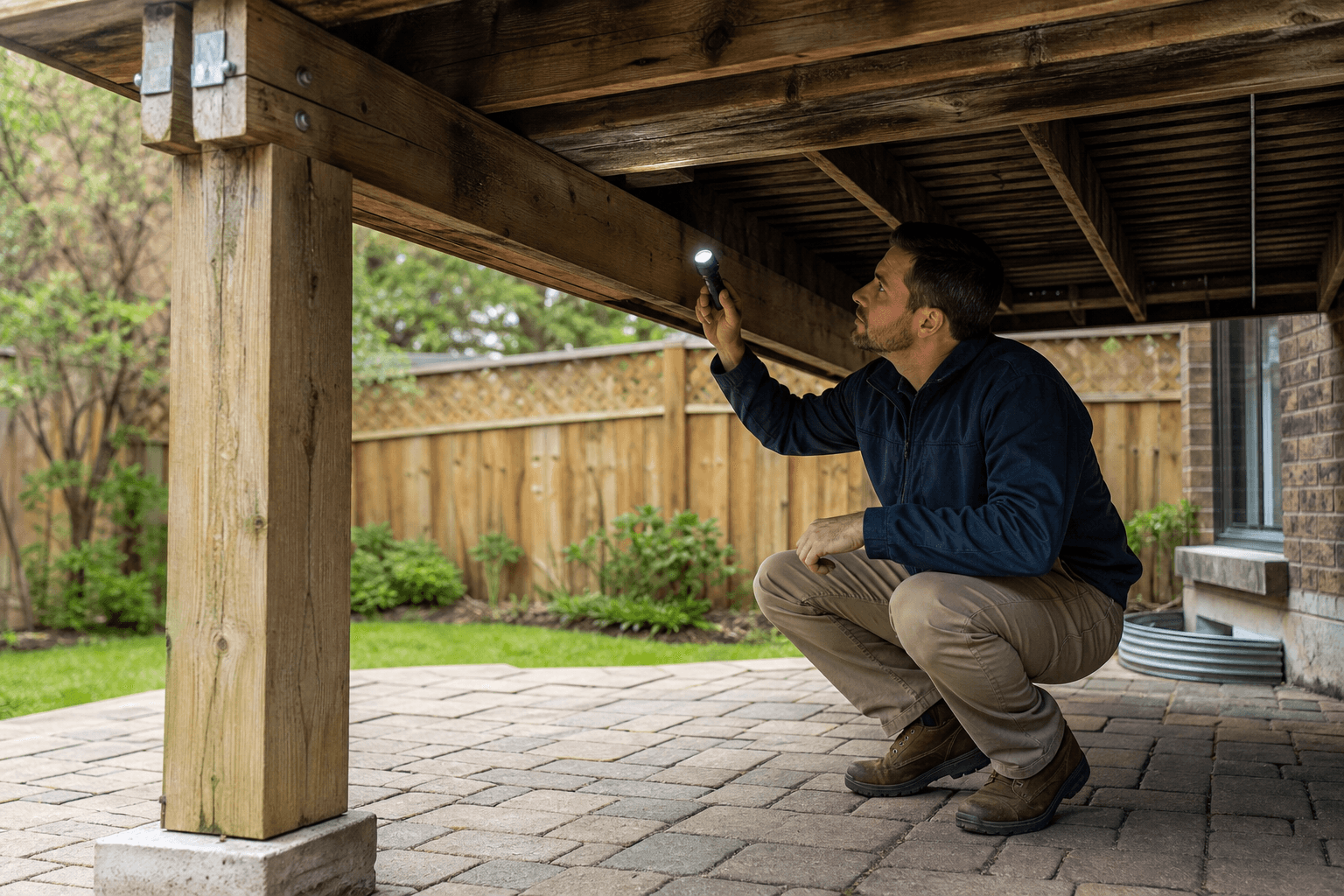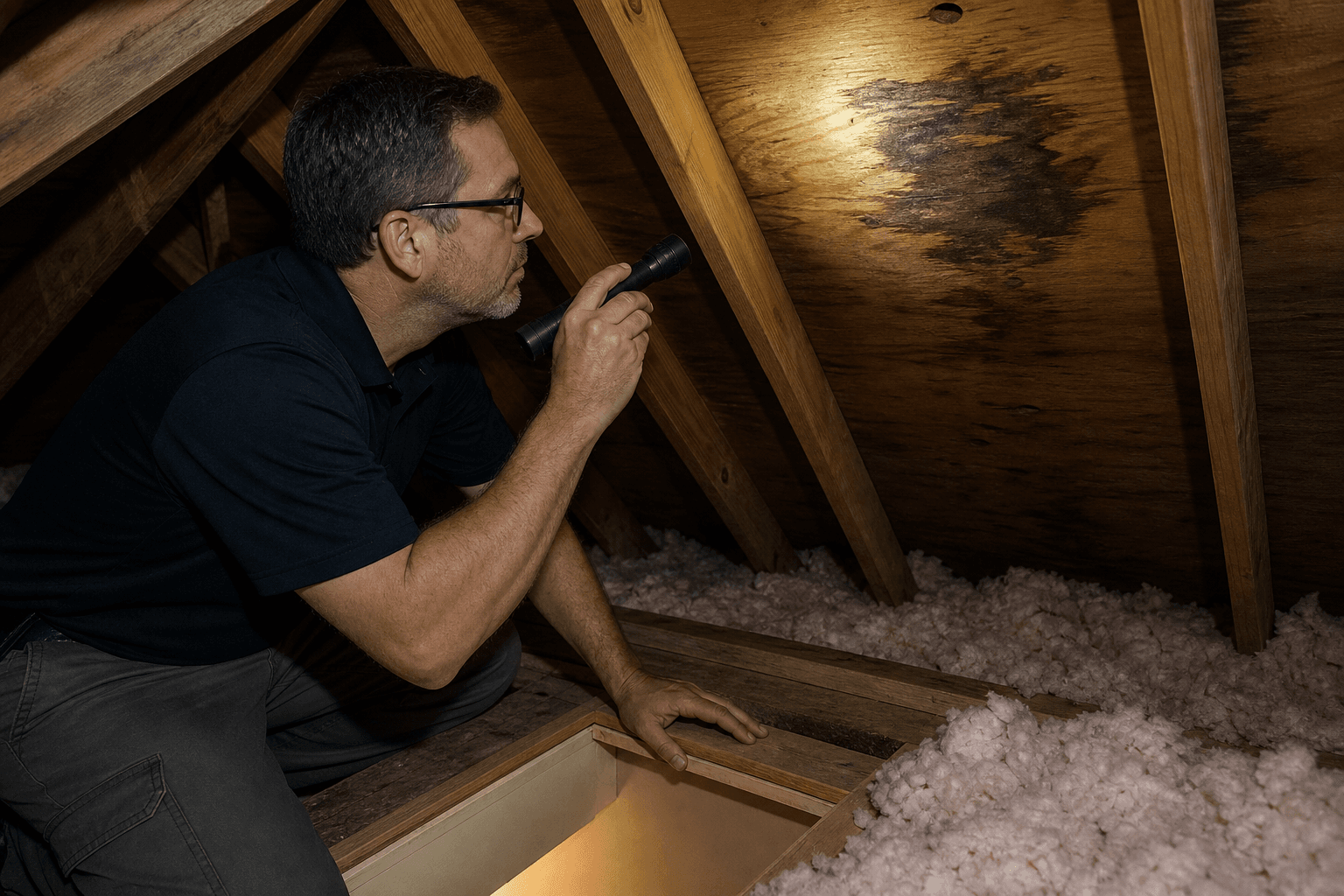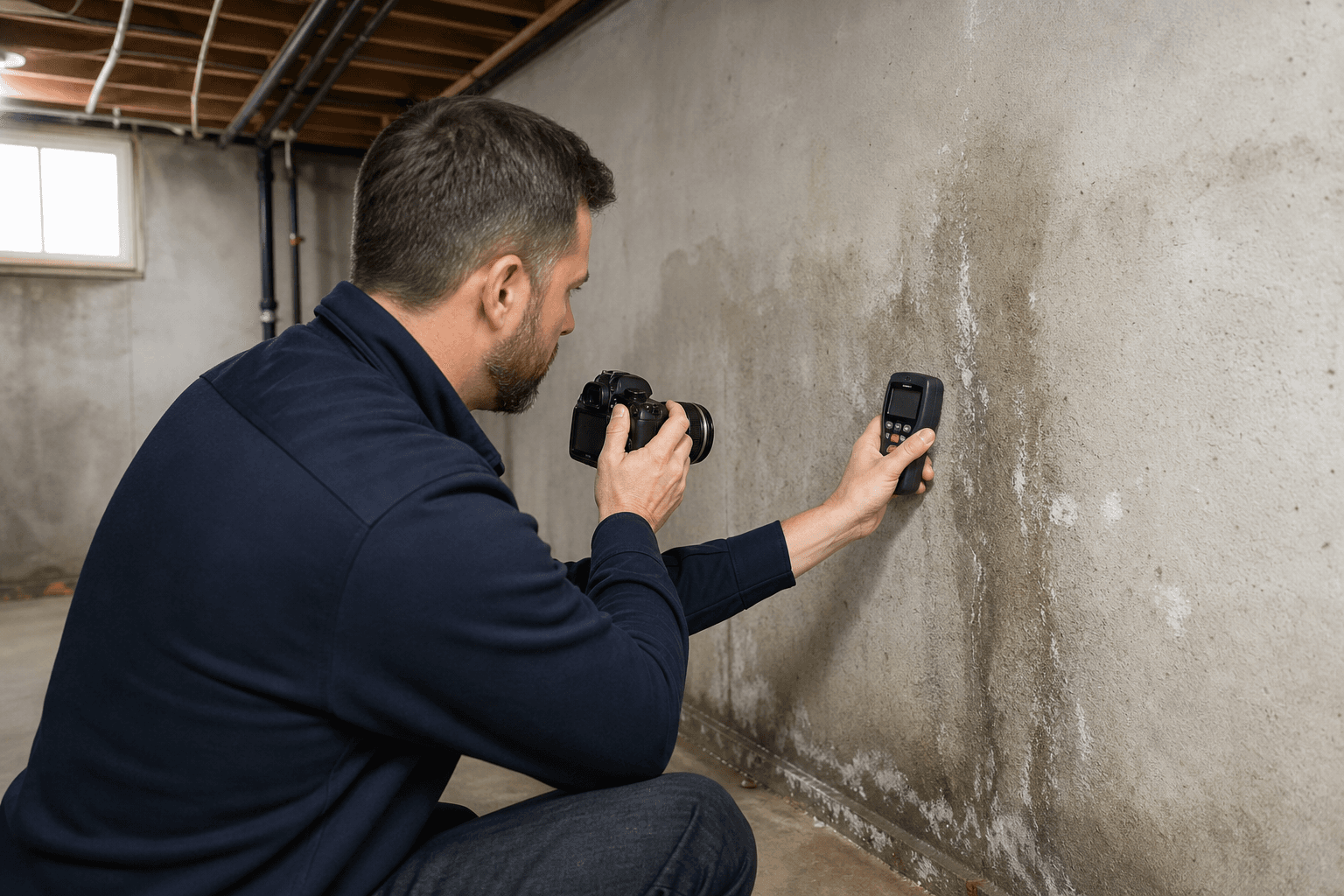
Moisture intrusion detection in Toronto starts with treating stains, odours, peeling finishes, and damp areas as clues rather than conclusions. A visible mark may point to a roof, plumbing system, foundation, window, or exterior-wall concern, but it does not prove where water entered or whether the problem is still active.
The right next step depends on your decision. A residential or commercial property inspection can document accessible conditions across the building, while a plumber, waterproofing contractor, mould professional, or remediation provider may be better suited to source tracing, repair, assessment, or cleanup.
Quick summary

- Photograph stains, bubbling finishes, mould-like growth, and affected areas before cleaning or repainting.
- Do not assume a dry stain, musty odour, or condensation pattern identifies the exact source of a leak.
- Choose a property inspection for broad decision support, and a specialist when you need repair, source tracing, mould assessment, or remediation.
- For condos, separate conditions inside your unit from concerns involving the roof, exterior envelope, or other common elements.
- Confirm inspection scope and access in advance, especially for finished basements, occupied rentals, and commercial buildings.
What possible moisture intrusion looks like
Common indicators include musty odours, brown or yellow discolouration, bubbling or peeling paint, warped materials, visible drips, and dampness near plumbing fixtures. Clues can also appear around roofs, attic areas, foundations, windows, exterior walls, basements, and HVAC components. These signs deserve investigation, but each has more than one possible explanation.
For a practical visual reference, review these moisture intrusion warning signs before a walkthrough. You can also compare the issue with these common moisture intrusion signs, including stains and finish failures around building components.
Moisture matters beyond cosmetic damage. Ontario identifies flooding, leaks, water intrusion, and condensation as primary reasons for mould growth in buildings. If you see widespread mould-like growth, experience persistent dampness, or have concerns about occupant health, avoid treating a general inspection as a mould-health assessment and seek an appropriately qualified professional. Ontario’s guidance on mould in buildings emphasizes controlling the moisture problem, cleaning or remediating affected materials, and conducting preventive maintenance.
From a visible clue to the right next step

The table below helps match the evidence you have with a sensible response. The possible areas are not diagnoses. A site visit, access conditions, history, and further testing may change the conclusion.
| What you notice | Possible area of concern | Useful next step |
|---|---|---|
| Brown ceiling or wall stain | Roof, flashing, plumbing, or a past leak | Document its location and history. Arrange an inspection for broader condition review, or contact a plumber or roofing professional if active water is present. |
| Musty odour without an obvious stain | Moisture in concealed or poorly ventilated materials | Check adjacent rooms, basements, closets, and HVAC areas. Consider an inspection, and seek mould or remediation advice if growth or extensive dampness is present. |
| Peeling, bubbling, or soft finish | Trapped moisture, repeated wetting, or a surface failure | Do not cover it with new paint. Photograph it and have the underlying area assessed before repairs. |
| Dampness near a sink, toilet, laundry area, or water heater | Supply, drain, fixture, or appliance connection | Stop or limit use if water is active and contact a plumber. An inspection can document broader property conditions but may not locate every concealed leak. |
| Basement dampness or water at the wall-floor joint | Foundation, drainage, grading, plumbing, or condensation | Document when it occurs and arrange the appropriate combination of property assessment and waterproofing or plumbing advice. |
| Water around a window or exterior wall | Flashing, seal, cladding, roof edge, or interior condensation | Record weather and location patterns. An inspection can document visible conditions, while envelope or window specialists may be needed for detailed repair advice. |
Five mistakes that can delay a clear answer
1. Treating a stain as purely cosmetic
Painting over a discoloured area can hide useful evidence and leave the cause unresolved. Before covering it, photograph the mark, note its size and location, and record whether it changes after rain, snowmelt, or plumbing use.
2. Dismissing a musty odour
An odour does not confirm mould or an active leak, but it can indicate that moisture deserves attention. Check nearby finishes, stored materials, lower levels, closets, and ventilation paths rather than relying only on what is visible in the main room.
3. Inspecting only the room where the damage appears
Water can travel along framing, ceilings, floors, pipes, and other building components before becoming visible. A stain below a bathroom, for example, may relate to plumbing, a fixture, a floor assembly, or an older repaired leak. Look at surrounding areas and spaces above and below when access allows.
4. Overlooking the roof-to-foundation path
Moisture concerns are not limited to basements. Roofing, attic ventilation, gutters, exterior walls, windows, foundations, plumbing, heating, and cooling systems can all influence what you see inside. A property-wide inspection is more useful than a narrow visual check when you are making a purchase, listing, or investment decision.
5. Expecting one inspection to replace every specialist
A general inspection documents accessible property conditions and helps prioritize questions. It is not automatically a waterproofing quote, plumbing repair, mould-health assessment, remediation plan, engineering opinion, permit review, or specialized leak-detection service.
What a Toronto property inspection can document
A residential property inspection can review accessible structure, roofing, exterior, plumbing, electrical, heating, cooling, insulation, and interior components. In the context of suspected moisture intrusion, that means documenting visible stains, finish deterioration, leakage indicators, drainage-related observations, and conditions around accessible roof, foundation, plumbing, and interior areas.
A report should be read as an account of observed and accessible conditions, not a guarantee that every concealed moisture source has been found. Reports can help buyers, sellers, and property professionals organize findings while a transaction or repair decision is still active.
Should you book an inspection or a specialist?
- Property inspection: You are buying, selling, moving into, maintaining, or evaluating a property and want a broad review of accessible systems and components.
- Plumber: You have active water, a suspected supply or drain leak, a fixture problem, or a plumbing component that needs repair.
- Waterproofing or building-envelope contractor: You need advice about recurring basement water, exterior drainage, foundation entry, roofing, flashing, windows, or other water-management repairs.
- Mould professional or remediation provider: You have extensive visible growth, contaminated materials, persistent dampness, or concerns requiring assessment and cleanup.
- Specialized leak-detection provider: You need source tracing that may require methods beyond a standard accessible inspection.
If you are planning a basement renovation, resolve moisture evidence before finishes conceal walls, floors, or service areas. A useful educational reference on green basement remodeling in the GTA can support planning, but renovation information does not replace a moisture assessment or repair professional.
Checks that change by property type
Detached and attached homes
Review the roof and attic, gutters and downspouts, exterior walls, windows, basement, foundation areas, plumbing fixtures, and rooms above or below the suspected location. Attached homes can have finished lower levels that conceal foundation walls and wall-floor joints, so stains, odours, and finish changes may be especially important clues.
Finished basements
Finished walls and flooring can restrict visibility. Look for discolouration at baseboards, musty odours, bubbling finishes, damp storage areas, and evidence around basement kitchens or bathrooms. An inspection can document accessible conditions, but concealed assemblies may require further investigation before renovation or repair.
Condos
A condo inspection generally focuses on accessible interior unit components such as fixtures, the electrical panel serving the unit, heating and cooling equipment, windows, doors, floors, walls, ceilings, and visible moisture indicators. Roofs, exterior envelopes, and other common elements may fall under the condominium corporation’s responsibility.
Commercial buildings
Commercial inspection scope should reflect the building and the decision. A retail unit, office, warehouse, multi-unit property, healthcare facility, or specialty-use building may present different envelope, roof, plumbing, HVAC, occupancy, and access questions. Scope should be tailored to the property and required access.
Condo moisture concerns: unit conditions versus common elements
If water appears around a window, ceiling, balcony door, exterior wall, or another boundary of a condo unit, do not assume the visible location identifies responsibility or source. Record the condition inside the unit, review available condominium records, and raise common-element concerns with the appropriate condominium representative or property manager.
An in-unit inspection can document what is accessible from inside the suite. It cannot, by itself, provide a complete assessment of every roof, exterior wall, garage, balcony assembly, or shared system.
How to prepare before booking
- Take dated photographs of stains, peeling finishes, damp materials, visible leaks, and nearby fixtures.
- Write down when the issue appeared and whether it changes after rain, snowmelt, plumbing use, or heating and cooling.
- List affected rooms, levels, walls, ceilings, windows, appliances, and systems.
- Share known leaks, past repairs, renovations, insurance work, or recurring odours.
- Clear reasonable access to affected areas, mechanical equipment, attic openings, basement walls, and plumbing fixtures.
- Gather relevant maintenance, repair, condominium, or property records.
- Ask whether the requested inspection is appropriate for your goal and whether additional specialists may be needed.
A short checklist for different property decisions
- Buyers: Photograph concerns during the viewing, ask about prior water entry, and arrange an inspection early enough to discuss findings before finalizing the purchase decision.
- Sellers: Identify and document visible moisture conditions before listing. A pre-listing inspection can support repair planning and informed conversations with your agent.
- Landlords and tenants: Record move-in conditions, report active water promptly, and preserve photographs and dates for maintenance discussions.
- Commercial owners and investors: Describe the property type, occupancy, affected systems, access limitations, and intended decision so the inspection scope reflects the building.
What should I document before arranging a moisture intrusion inspection?
Record photographs, dates, odours, affected locations, weather or usage patterns, previous repairs, and known leaks. Also confirm access, property type, transaction timing, and inspection scope.
Frequently asked questions
Can a home inspection find the exact source of a water leak in Toronto?
Not necessarily. A property inspection can document visible and accessible conditions and identify areas needing attention, but water may travel through concealed assemblies. Exact source tracing may require a plumber, roofing professional, building-envelope specialist, or specialized leak-detection provider.
Is a wet basement inspection the same as waterproofing or leak repair?
No. An inspection helps document conditions and possible areas of concern. Waterproofing and leak repair involve diagnosing a repair need, selecting a method, and carrying out work.
What does a condo moisture inspection include?
It focuses on accessible conditions inside the unit, including visible moisture indicators around walls, ceilings, windows, doors, plumbing fixtures, and installed systems. Common elements such as the roof or exterior envelope may require involvement from the condominium corporation or another qualified professional.
Should I book an inspection before calling a plumber or mould professional?
It depends on the urgency and the question. Active water or a plumbing failure calls for prompt plumbing help. Extensive mould-like growth or contaminated materials may require a mould or remediation professional. If you are evaluating the property as a whole before buying, selling, or moving in, a property inspection can provide broader context.
Match the evidence to the decision
Moisture intrusion detection in Toronto is most useful when it leads to the right question. Monitor and document a minor, unexplained clue when there is no active damage, arrange a property inspection when you need a broad view before a property decision, and contact a specialist when the priority is source tracing, repair, mould assessment, or remediation.
Arrange a Toronto moisture intrusion inspection
For accessible residential and commercial property conditions across Toronto and the GTA, Asmhomeinspection provides certified inspections and same-day PDF reporting to help buyers, sellers, owners, landlords, and investors decide what to do next. Review the inspection service and the condo moisture inspection scope, then confirm the property, access, and inspection question before booking.