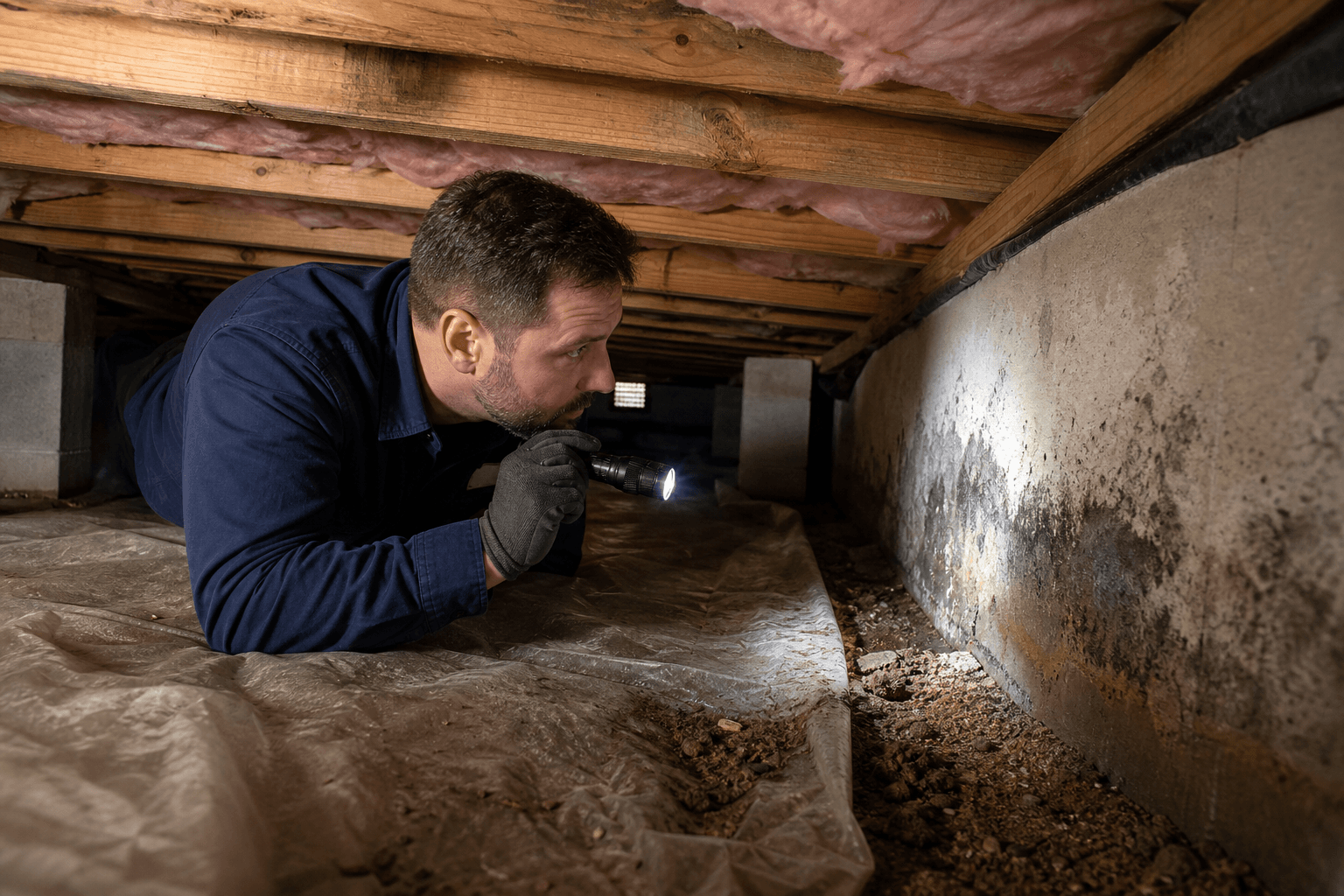
Water is essential to a home’s systems, but when it escapes pipes, roofing, or the building envelope, it can quietly undermine finishes and structural components. Recognizing moisture intrusion signs early helps you narrow down likely sources, plan repairs, and prevent recurring damage. This guide explains what to watch for, where to look, and how to document findings so you can move from suspicion to a clear action plan.
What is moisture intrusion and why it matters
Moisture intrusion is water or water vapor entering building materials or spaces where it doesn’t belong. Entry points include the roof, exterior walls, windows and doors, foundations, plumbing systems, and HVAC components. Left unaddressed, trapped moisture can deteriorate finishes, corrode metal parts, and weaken wood-based materials. It can also foster conditions that are unhealthy for occupants. Catching issues at the stain-and-odor stage is far less disruptive than waiting until surfaces soften, warp, or fail.
- Liquid water problems often show up as stains, peeling finishes, swelling, or drips.
- Water vapor problems tend to show as condensation, musty odors, and periodic dampness tied to temperature and humidity swings.
- Recurring problems usually indicate a persistent source such as an exterior leak, an unsealed penetration, or chronic condensation.
Common moisture intrusion signs by surface and system
Use the patterns below to quickly categorize what you see. The appearance, location, and timing of the symptom often point to the source.
Ceilings and walls
- Brown or yellow “coffee ring” stains below bathrooms, kitchens, or laundry rooms suggest plumbing supply or drain leaks.
- Diffuse, map-like stains beneath attic spaces often point to roof or flashing leaks, especially after storms.
- Bubbling, peeling, or flaking paint or joint compound signals trapped moisture behind the finish.
- Cracked tape joints or nail pops accompanied by discoloration can indicate recurring wetting and drying.
Floors and trim
- Cupping or crowning of hardwood flooring suggests moisture imbalance—often from below (crawlspace/basement) or above (spills, leaks).
- Swollen baseboards, soft MDF trim, or separating quarter-round indicate intermittent wetting at floor perimeters.
- Loose or “squishy” tiles, darkened grout lines, or efflorescence (white powder) hint at ongoing moisture from slabs or shower assemblies.
Windows and doors
- Condensation on glass or frames beyond cold snaps points to elevated indoor humidity or poor air circulation.
- Water staining at sill corners suggests failed exterior sealant, clogged weep holes, or flashing issues.
- Swollen or sticking sashes and doors may indicate periodic wetting of surrounding framing.
Basements and crawlspaces
- Damp or musty odors after rain imply surface runoff, downspout discharge near the foundation, or poor drainage.
- Efflorescence on concrete or masonry walls shows past moisture migration through the material.
- Visible seepage at cold joints, cracks, or around utility penetrations indicates active water entry.
- Rust on appliances or structural metal components suggests chronic humidity.
Attics and rooflines
- Darkened sheathing, rusted nail tips, or frosty roof nails in winter signal condensation due to inadequate ventilation or air leaks from living spaces.
- Localized staining below penetrations (vents, chimneys, skylights) points toward flashing or boot failures.
- Wet or compressed insulation indicates past or ongoing roof or condensation issues.
Plumbing and HVAC
- Drips or mineral tracks beneath valves, traps, or fittings show slow leaks.
- Corrosion on supply lines or shutoff valves implies long-term moisture exposure.
- Condensation on cold water pipes or uninsulated HVAC ducts suggests high humidity or missing insulation/vapor barriers.
- Overflow pans with standing water below air handlers or water heaters point to drainage obstructions.
Where to look first: high-probability zones
When time is short, prioritize locations that frequently cause or conceal water entry.
- Bathrooms: under sinks, around tub/shower surrounds, at toilet bases, and below bathrooms on the ceiling below.
- Kitchens and laundries: supply and drain connections, dishwasher and refrigerator lines, and areas around washing machines.
- Exterior transitions: roof-to-wall intersections, step flashing at dormers, and penetrations for vents or chimneys.
- Foundations: hairline to wider cracks, window wells, and utility penetrations.
- Gutters and downspouts: sections clogging or discharging too close to the foundation.
- Attic hatches and recessed lights: common pathways for humid air to escape into the attic.
Simple DIY checks to confirm or rule out moisture
You can perform several low-risk checks to better understand whether a stain or soft spot is active, seasonal, or leftover from a past event.
- Blot test: Press a dry, white paper towel against the suspect surface for 10–20 seconds. Visible transfer suggests active dampness.
- Tape-and-date: Outline a stain’s edge with painter’s tape and add the date. Recheck after rain or showers. Growth beyond the tape indicates ongoing moisture.
- Humidity snapshot: Place a small hygrometer near problem areas. Relative humidity consistently above roughly 60% indoors can drive condensation on cool surfaces.
- Drip tracing: Wrap dry tissue around valves or traps and check later for dampness to reveal slow, intermittent leaks.
- Controlled-water test: With caution, run fixtures one at a time (shower, sink, toilet) and observe ceilings below. Any fresh staining narrows the source.
Measuring and monitoring for clarity
Objective measurements help distinguish a one-time spill from a recurring leak or vapor problem.
- Surface moisture meters: Pin or pinless meters compare readings in suspect areas against known dry reference spots.
- Infrared thermography: Temperature differences can reveal evaporative cooling or hidden wet insulation, guiding targeted follow-up.
- Weighing and drying: For removable materials (rugs, small trim pieces), weighing before and after drying confirms moisture content changes.
- Trend logging: Recording room humidity and temperature over days helps identify conditions that trigger condensation.
To understand how professionals interpret material readings, this resource on moisture content analysis explains typical approaches to evaluating damp building materials.
Matching signs to likely sources
Use this quick mapping to focus troubleshooting and limit exploratory damage.
- Stains that expand after rainfall: investigate roof coverings, flashings, exterior cladding joints, and window/door flashing.
- Stains that grow after showers or laundry runs: focus on plumbing supply lines, shower pans, tile grout and sealants, and drain assemblies.
- Condensation on cold surfaces even in mild weather: examine indoor humidity, ventilation rates, and insulation/vapor barrier continuity.
- Musty odors limited to basements: check grading, downspout discharge distance, window wells, and wall/seam cracks.
- Localized swelling near exterior doors: consider door sill pans, thresholds, and adjacent siding or flashing transitions.
Preventive steps and low-cost maintenance
Small adjustments can meaningfully reduce the risk of future intrusion.
- Keep gutters clear and confirm downspouts discharge well away from the foundation.
- Maintain flexible sealants at high-movement joints (around tubs, showers, and exterior penetrations) and replace when cracked or separated.
- Install and routinely use bath and kitchen exhaust fans that vent outdoors, not into attics or crawlspaces.
- Insulate cold water lines and HVAC ducts in humid spaces to reduce condensate formation.
- Place leak detection trays or smart sensors under appliances and in cabinets with supply lines.
- Periodically regrade soil or add extensions where water tends to pool against the building.
When to escalate and what to document
If signs persist or escalate, organized documentation speeds diagnosis and repair quotes.
- Photograph the area in good light and include a ruler or coin for scale.
- Record dates, weather conditions, and household activities (e.g., showers, laundry) surrounding each occurrence.
- Note measurements from any moisture or humidity tools and where you took them.
- Capture nearby features—roof penetrations, plumbing runs, or exterior transitions—that could be related.
- Avoid sealing or repainting over active issues before the source is confirmed; it can trap moisture and obscure diagnostic clues.
FAQ: quick answers about moisture intrusion signs
How can I tell if a ceiling stain is old or active?
Outline the stain with painter’s tape and date it, then monitor after rain or fixture use above. Growth beyond the tape or a darker center after events suggests an active source. Comparing moisture meter readings at the stain versus a known dry area also helps.
Why do windows “sweat,” and is it a leak?
Condensation on interior glass is usually a humidity and temperature issue, not a water intrusion from the exterior. Improve ventilation, run exhaust fans during moisture-generating activities, and promote air circulation near windows. However, staining at sill corners can indicate exterior detailing problems that deserve a closer look.
What does white powder on basement walls mean?
That powdery residue is commonly efflorescence—mineral salts left behind as moisture migrates through masonry. It indicates moisture has been present, even if the wall seems dry today. Check gutters, downspouts, grading, and any foundation cracks or penetrations.
Can hardwood floors flatten back out after cupping?
Mild cupping from a one-time humidity spike may lessen as conditions normalize, but recurring wetting often leads to permanent distortion. Find and address the moisture source before refinishing; sanding too early can create uneven boards if moisture levels are still imbalanced.
Are musty odors alone enough to confirm a problem?
Odors are a useful early warning, especially after weather events or in below-grade spaces, but they are not specific to a single cause. Pair odors with visual inspection, humidity measurements, and moisture readings to confirm and locate the source.