Negotiating repairs after an inspection is not about asking the seller to fix every item in the report. The strongest approach is to identify documented, material concerns, understand what your Agreement of Purchase and Sale permits, and request a remedy that matches the risk and timing.
Safety concerns, structural observations, active water entry, moisture intrusion, and significant defects in major systems usually deserve attention before cosmetic issues or ordinary maintenance. Your options may include requesting a defined repair, a price adjustment, a closing credit, accepting the condition, or deciding not to proceed where your agreement allows it.
Quick summary

- Review the report summary, photographs, locations, recommendations, inspection condition, and deadline.
- Prioritize safety, structural, moisture, active-defect, and major-system findings over cosmetic concerns.
- Compare seller repairs, price adjustments, credits, and acceptance based on control, timing, verification, and uncertainty.
- Identify the location, observed condition, concern, requested remedy, and completion evidence in every request.
- Use a qualified specialist, real estate representative, lawyer, or lender when the issue or contract requires advice beyond a general inspection.
Start With the Inspection Report and Your Agreement
Before contacting the seller, read the report as a decision document rather than a list of demands. Review the summary, photographs, description of the observed condition, location, and recommended next step. A well-organized home inspection report helps separate urgent findings from maintenance suggestions and gives your request a factual basis.
Confirm the wording and deadline in your Agreement of Purchase and Sale, including any inspection condition. The report describes the property as observed at the time of inspection. It does not automatically change the contract or guarantee that the seller will accept a request.
Ontario government guidance identifies several possible buyer decisions after an inspection: asking the seller to make repairs, accepting a defect and its consequences, requesting a price adjustment, or deciding not to buy the home. The choice available to you depends on your agreement, its conditions and deadlines, and advice from the appropriate professionals. Review the Ontario homebuying guidance when needed.
Which Inspection Findings Should You Raise First?

Rank each finding by its potential effect on safety, the building’s structure or envelope, active damage, essential systems, and your near-term ownership risk. This prevents an emotional or unfocused negotiation.
1. Safety, structural, and moisture concerns
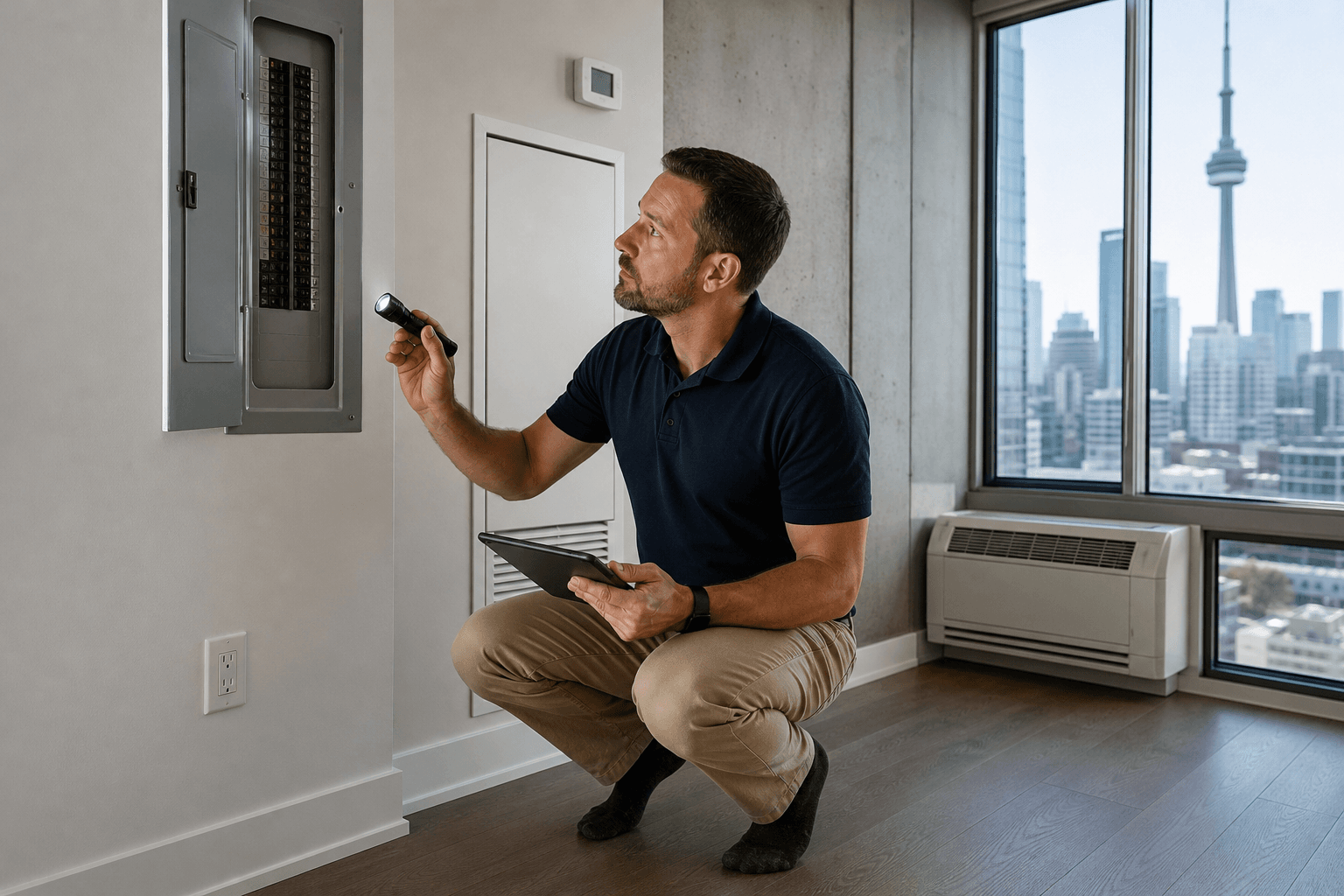
Start with observations that could affect occupant safety or the building’s stability. Examples may include unsafe stairs or railings, exposed electrical concerns, unstable components, visible movement, or other conditions identified as requiring prompt attention. Do not convert an observation into a definitive diagnosis without the appropriate assessment.
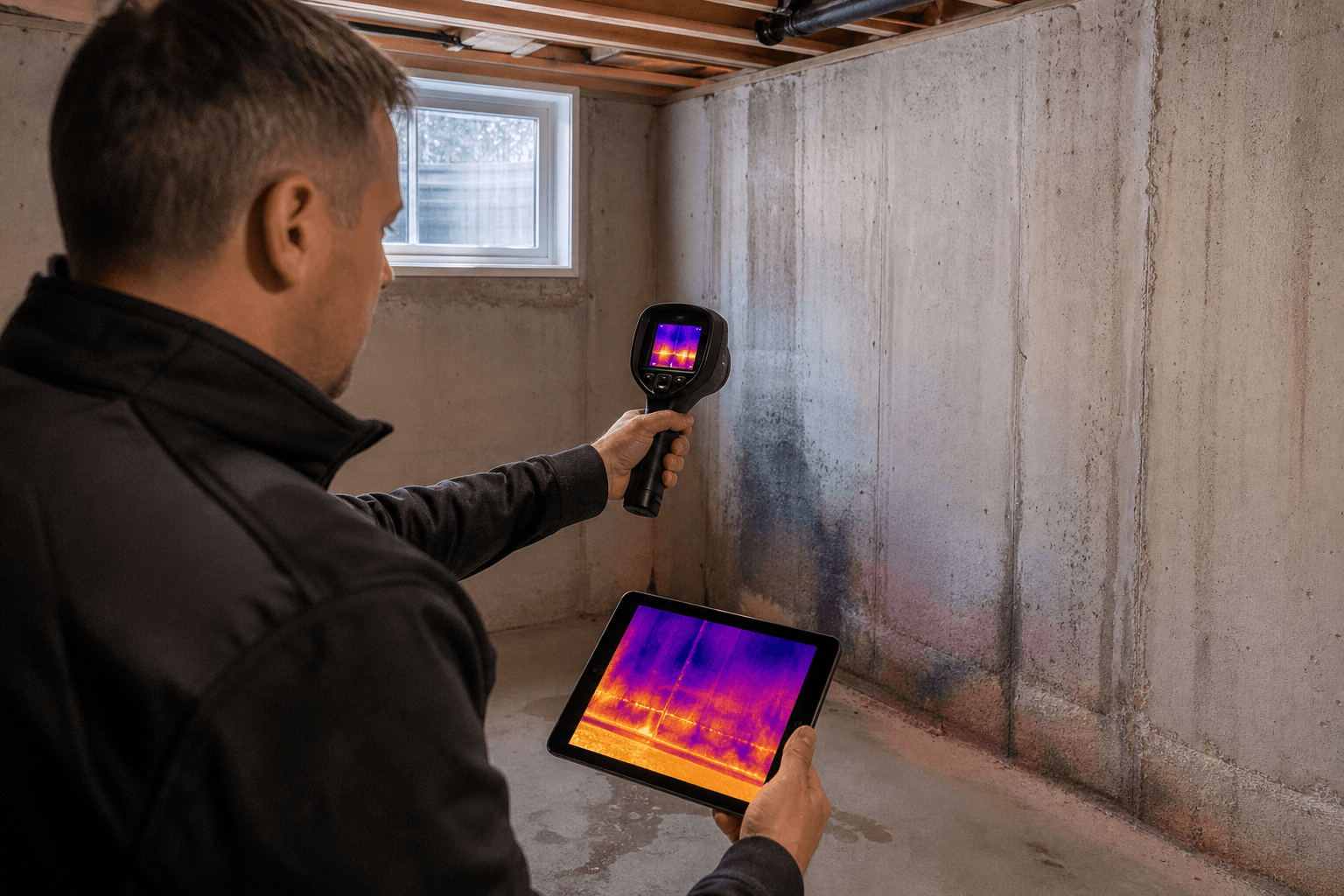
Moisture deserves particular attention because water entry can affect finishes, framing, foundations, and other components over time. An inspection may document staining, dampness, drainage concerns, or visible water entry without determining the full source or extent. Request further investigation or a defined remedy when the evidence supports it, rather than claiming that the report proves hidden damage.
2. Active defects and major systems
Next, consider defects involving the roof, foundation, plumbing, electrical system, heating, cooling, or other major components. A current leak, non-functioning system, or clearly documented defect is generally easier to explain than a request based only on age or the possibility of future failure.
Separate the inspector’s observation from a specialist’s conclusion. A general residential home inspection reviews accessible components and reports visible conditions. It is not a substitute for an engineer, electrician, plumber, HVAC professional, roofer, or other specialist when further evaluation is recommended.
3. Routine maintenance, aging, and cosmetic items
Minor cosmetic flaws, normal wear, expected aging, and routine maintenance are often weaker negotiation priorities. They may still matter to your budget, but asking for every small item can make a material request less persuasive.
Age becomes more important when paired with a documented functional problem, safety concern, active failure, or evidence of damage. Focus on the condition and its practical effect, not simply on replacing an older component because it is not new.
Repairs, price adjustments, credits, or acceptance
Ontario buyers may discuss different remedies after an inspection, but no option is automatically available or guaranteed. Use this comparison to frame the conversation with your agent, lawyer, lender, and seller.
| Option | When it may fit | What to verify |
|---|---|---|
| Seller-completed repair | The work is clearly defined and can be completed before closing. | Scope, contractor suitability, receipts, permits where applicable, and completion verification. |
| Price adjustment | You want control of the work after closing and the parties agree to change the purchase price. | Contract wording, financing effects, tax or legal implications, and lender and lawyer acceptance. |
| Closing credit | A credit is more practical than coordinating work before closing. | Whether the credit is permitted and acceptable to the lender, lawyer, and agreement. |
| Accept the condition | The issue is manageable and does not change your decision. | Expected maintenance, specialist advice, and your post-closing plan. |
| Do not proceed | The risk is unacceptable and your agreement permits that decision. | The applicable condition, notice requirements, and deadline. |
For broader closing preparation, a closing coordination checklist can help identify documents, professionals, and timing issues that should not be left until the final days.
When seller-completed repairs may make sense
A seller repair can be appropriate when the problem is specific, the work can be completed before closing, and the result can be verified. Identify the affected location and the work needed to address the documented condition rather than simply saying “fix everything in the report.”
Depending on the issue, useful evidence may include an invoice, photographs, a specialist report, permit documentation where applicable, or a final walkthrough. Your lawyer or real estate representative can help ensure that any agreed repair is written clearly into the transaction documents.
When to consider a credit or price adjustment
A credit or price adjustment may be more practical when the correct scope is uncertain, the work cannot be coordinated before closing, or you want to select the contractor yourself. It can also avoid accepting a rushed repair that cannot be inspected properly before possession.
These options are not interchangeable in every transaction. Confirm the proposed structure with your real estate representative, lawyer, and lender. Do not assume that a lender will accept every credit or that a price change has no contractual or financial consequences.
How to turn a report finding into a clear request
- Location: Identify the room, exterior area, component, or system.
- Observed condition: Accurately summarize the report’s wording and photographs.
- Material concern: Explain the safety, function, moisture, structural, or ownership implication without overstating it.
- Requested remedy: Ask for one defined repair, assessment, price adjustment, or credit.
- Verification: State what documentation, inspection, receipt, or walkthrough would confirm completion.
This evidence-based approach supports a stronger negotiating position than an unexplained dollar demand. The aim is to make the condition and requested next step clear, not to invent a repair cost the report does not establish.
Example of a stronger repair request
A vague request might say: “Repair the basement moisture problem and replace anything damaged.” It does not identify what was observed, whether the source is known, or how completion would be confirmed.
A more useful request could say: “The inspection report documents visible moisture staining at the basement wall near the rear window. Before closing, please arrange an assessment by an appropriately qualified professional to identify the source and provide documentation of the recommended corrective work. The parties should confirm in writing whether the remedy will be completed by the seller, addressed through an agreed credit, or handled through another documented arrangement.”
This wording connects the request to an observed condition without inventing a diagnosis or promising a particular outcome.
When you need a specialist assessment
Seek specialist input when the report identifies a possible structural concern, recurring or unexplained moisture, electrical hazard, plumbing failure, roof problem, heating or cooling defect, or another condition outside a general inspection’s scope. A structural engineer, electrician, plumber, HVAC professional, roofer, or environmental specialist may be appropriate depending on the observation.
Use a real estate representative or lawyer for questions about notice, contract rights, inspection conditions, disclosure, amendments, or whether you can end the transaction. A general inspector can document accessible observations, but cannot replace contract-specific legal advice or every specialist assessment.
Pre-negotiation checklist for Ontario buyers
- Read the report summary and review relevant photographs and locations.
- Classify findings as safety, structural, moisture, active defect, major system, maintenance, or cosmetic.
- Confirm the inspection condition, notice requirements, and deadline in your Agreement of Purchase and Sale.
- Choose the two or three most material issues rather than sending an unprioritized list.
- Decide whether you need a repair, specialist assessment, credit, price adjustment, or acceptance.
- Obtain estimates or specialist opinions where the scope or seriousness is uncertain.
- Ask your lawyer and lender whether the proposed financial remedy is acceptable.
- Put the request in writing through the agreed communication channel.
- Define how completed work, documentation, or access for verification will be handled.
Common mistakes that weaken a repair request
Do not ask for every minor observation, rely on an unsupported repair estimate, or describe a possible issue as a confirmed defect. Avoid vague language such as “bring the house up to code” unless a qualified professional has identified a specific requirement and your advisors confirm that wording is appropriate.
Do not miss the contractual deadline while waiting for a perfect request. Do not treat the inspection as a warranty, guarantee, exhaustive code-compliance review, or promise that the seller must correct every item. If the deadline is close, contact your real estate representative and lawyer immediately.
Frequently asked questions
Can a buyer ask for a price reduction after a home inspection in Ontario?
A buyer can ask for a price adjustment, but acceptance is not automatic. Ontario guidance identifies a price adjustment as one possible post-inspection choice. Your position depends on the Agreement of Purchase and Sale, its conditions, and applicable deadlines.
Is a seller required to make the repairs requested after an inspection?
Not every requested repair is automatically required. The seller’s obligations and your available remedies depend on the agreement and applicable law. Have your lawyer review the situation before assuming that a request must be completed or that you can cancel the purchase.
Should I request a repair or a closing credit?
Choose based on certainty, timing, and control. A defined repair may suit a clear problem that can be verified before closing. A credit may be preferable when the scope is uncertain or you want to choose the professional, but confirm acceptability with your lawyer and lender.
What should I do if the inspection reveals a possible structural or moisture problem?
Do not rely on a general report to establish the full diagnosis. Ask an appropriate specialist for an assessment, preserve the report and photographs, and speak promptly with your real estate representative and lawyer about the contract deadline and available options.
Can I negotiate repairs after the inspection condition deadline has passed?
You may still ask the seller to discuss an issue, but your contractual position may be different after a deadline. Do not assume that a late request creates a right to cancel, renegotiate, or receive compensation. Obtain prompt legal advice based on your signed agreement.
Conclusion: Negotiate the risk, not every observation
The best repair conversation starts with evidence and prioritization. Use the report to identify safety, structural, moisture, active-defect, and major-system concerns, then match each material issue with a realistic remedy and a clear verification plan.
Before communicating, check your Agreement of Purchase and Sale, inspection condition, and deadline. Where the report raises uncertainty, involve the right specialist or legal professional instead of guessing at a diagnosis, cost, or contractual outcome.
For GTA buyers who need a pre-purchase inspection and a same-day PDF report covering accessible systems and components, Asmhomeinspection provides certified residential inspection services across the area.