This step-by-step checklist shows how to rank and schedule warehouse inspection priorities so you can protect people, preserve stock, and reduce downtime. It is written for warehouse managers, operations leads, maintenance supervisors, and safety coordinators working in the Greater Toronto Area and Ontario. The process groups items by urgency, assigns who should perform each check, sets frequencies, and gives explicit stop points and safety limits you must not cross.
Who should use this checklist and what it covers
Use this checklist for storage warehouses, distribution centres, and light industrial facilities across the GTA. It combines operational audit practice with workplace inspection guidance so you and your team can run repeatable checks on safety systems, racking, material handling equipment, mechanical and electrical systems, and documentation. For a broader audit scope, see the warehouse audit checklist overview from Shopify and the practical inspection frequencies described by MaintainX.
Local trust signals to consider when you need an outside assessment include certified commercial inspectors, fast report turnaround, and local service coverage. For example, ASM Home & Commercial Inspection lists InterNACHI and CCPIA certifications and same-day PDF report delivery for commercial inspections across the GTA.
How to triage findings: issue priority scale and response times
Apply a simple issue priority scale to every finding so the team knows how fast to act. A practical four-level scale is:
- Critical: immediate danger to life, property, or continuity. Stop operations and isolate the hazard now.
- High: likely to cause injury or serious damage within days. Plan for corrective action within 24 to 72 hours.
- Medium: performance or reliability issue that should be repaired within weeks as part of planned maintenance.
- Low: housekeeping or improvement item for future cycles.
Use a documented response window for each level and record the decision in your inspection log. This triage approach aligns with common material handling and warehouse inspection frameworks.
Priority 1: safety-critical daily checks (do not delay)
These are non-negotiable checks that protect life and prevent immediate shutdowns. Operators or floor supervisors should perform them at the start of each shift. Daily checks are typically handled by equipment operators, while maintenance teams handle deeper checks.
Key daily items, who does them, and exact stop points
-
Emergency exits and evacuation routes — Inspector: floor supervisor or safety lead. Frequency: daily. What to check: doors unlocked, routes clear of stock, signage visible, exit hardware working. Stop point: any blockage that prevents egress. Action: remove obstruction immediately, notify management, and record as Critical until cleared.
-
Aisle obstructions and trip hazards — Inspector: operators on each shift. Frequency: daily. What to check: pallets protruding, loose strapping, spilled materials. Stop point: obstruction that prevents safe passage for pedestrians or forklifts. Action: remove or barricade, escalate if repeated.
-
Forklift and mobile equipment basic checks — Inspector: equipment operator. Frequency: daily pre-use. What to check: brakes, steering, horn, lights, tyres, seat belt. Stop point: failed brake, steering fault, or missing safety device. Action: tag out of service and replace equipment until repaired.
-
Spills and hazardous material leaks — Inspector: operators and spill response team. Frequency: immediate when noticed. What to check: active leaks, chemical spills, odours. Stop point: ongoing leak or spill that threatens workers. Action: isolate area, follow spill response, and call qualified responders if required.
-
Fire and life safety visible checks — Inspector: floor supervisor. Frequency: daily walk. What to check: blocked access to extinguishers, apparent damage to fire doors, obvious smoke or burning smell. Stop point: blocked extinguisher or visible fire. Action: follow emergency procedures and call emergency services.
Priority 2: structural and storage-system checks (monthly to quarterly)

Structural and storage systems need closer review by maintenance staff or a qualified racking inspector. These items affect load integrity and long-term safety. Scheduled inspections are recommended for racks, docks, and building exteriors rather than relying on daily floor checks alone.
How to inspect racks and detect moisture intrusion
- Racking and shelving integrity — Inspector: trained maintenance technician or certified racking inspector. Frequency: monthly visual; quarterly detailed. What to check: bent or bowed beams, missing safety pins, loose footplates, beam-to-column connections, upright damage from impacts. Stop point: vertical deformation, severely bent uprights, or displaced anchors. Action: immediately remove the affected bay from service and schedule professional racking repair.
- Dock levelers and loading docks — Inspector: maintenance team. Frequency: monthly. What to check: mechanical function, lip wear, dock seals, and safe operation of restraints. Stop point: failed lip operation or loose restraints. Action: take dock out of service until repaired.
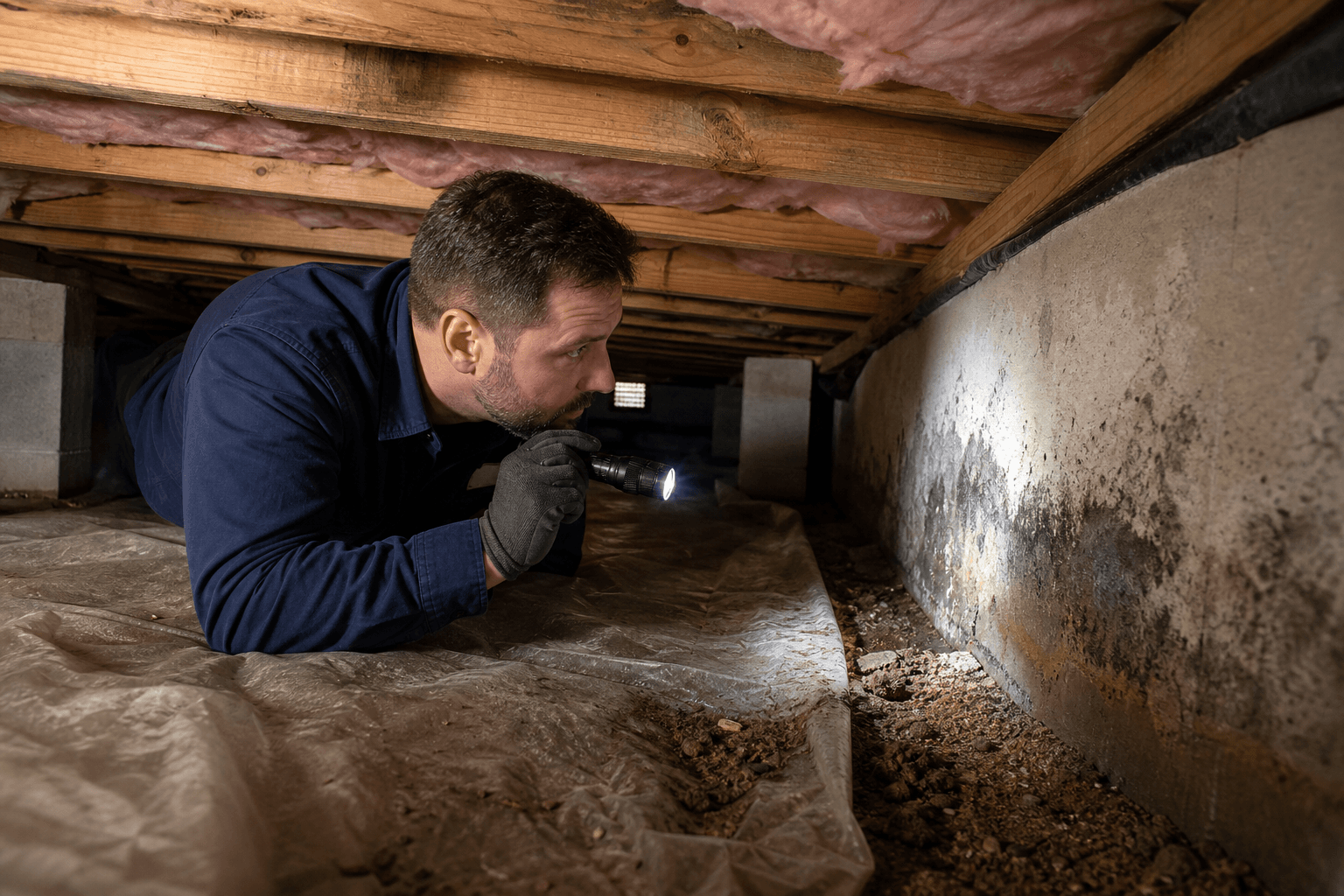
- Roof, gutters, and drainage for moisture intrusion — Inspector: facilities lead with periodic certified inspection. Frequency: quarterly and after major storms. What to check: pooling water, clogged gutters, stains on ceiling panels, and damp insulation. Stop point: active leaks over stored goods or bulk water penetration. Action: move stock away, contain moisture, and schedule a certified inspection. Early detection of moisture intrusion is critical to prevent structural and inventory damage; this is a common focus for professional commercial inspectors.
Priority 3: mechanical, electrical and fire protection systems (monthly to quarterly with licensed trades)
Mechanical and electrical systems often require licensed personnel for safe inspection and repair. Documented scheduled checks and escalation to qualified trades are best practice for these systems.
- Electrical panels and wiring — Inspector: certified electrician for monthly or quarterly checks. Do not open panels unless you are qualified. Stop point: burning smell, smoke, or main breakers that reset repeatedly. Action: isolate circuits and call a licensed electrician immediately.
- Emergency lighting and exit signage — Inspector: maintenance or qualified contractor. Frequency: monthly functional test; annual full test. Stop point: non-functioning emergency lighting. Action: repair within 72 hours for High priority.
- Fire suppression and alarm systems — Inspector: certified fire technician. Frequency: monthly visual, plus annual certification tests as per local code. Stop point: obvious damage, disabled alarm zones, or missing inspection tags. Action: engage a certified fire service provider without delay.
- HVAC and compressed air systems — Inspector: mechanical technician. Frequency: monthly or per manufacturer guidance. Stop point: unsafe pressures, oil leaks, or loss of ventilation in occupied spaces. Action: shut down the affected system if it poses a hazard and contact a service provider.
Safety limits and when not to attempt repairs in-house
Never attempt electrical, structural, or fire-system repairs without a licensed technician. Confined-space entries, work at height, and structural bolting require certified procedures and permits. If a finding meets the Critical or High level on your issue priority scale, stop normal operations as necessary and call licensed professionals.
Priority 4: operational, material handling and housekeeping priorities (daily to weekly)
Operational items prevent process failures and improve productivity. Operators and supervisors should own these checks with weekly oversight by operations managers.
- Inventory location and labelling accuracy — Inspector: inventory control staff. Frequency: daily spot checks and weekly cycle counts.
- Aisle and signage compliance — Inspector: floor supervisor. Frequency: daily to weekly. Ensure pedestrian walkways and forklift lanes are clearly marked.
- Spill control and containment materials — Inspector: shift lead. Frequency: daily. Keep spill kits accessible and train staff on use.
- Operator training and PPE — Inspector: safety coordinator. Frequency: training reviewed quarterly and PPE checks daily.
Priority 5: documentation, reporting and follow-up
Inspection value depends on clear documentation, assignment, and verification. Record each finding, assign a priority, set an owner, and track completion dates. Fast, shareable reports reduce risk and help decision making in time-sensitive transactions. ASM highlights same-day PDF reports for commercial inspections to accelerate follow-up in transactions across the GTA. For audit-ready tracking, keep a dated log and use a simple corrective action register with the issue priority attached.
When to call a certified commercial inspector in the GTA

Call an external certified commercial inspector when any of the following apply:
- Repeated or unclear structural damage to racking or building elements.
- Unidentified moisture intrusion, suspected hidden water damage, or roof penetration above storage areas.
- Complex legal or insurance questions after a loss, or when you need an independent report for a purchaser, lender, or regulator.
- You require a fast, professional report for transaction timelines or insurance underwriting.
Look for InterNACHI and CCPIA credentials, rapid report delivery, and local GTA coverage when choosing an inspector. ASM Home & Commercial Inspection advertises InterNACHI and CCPIA certifications, same-day PDF reports, and service across GTA municipalities such as Toronto, Mississauga, Brampton, Vaughan, Markham, and Oakville.
Common objections and how to decide
- Cost — Balance inspection frequency against risk. For critical operations or high-value inventory, more frequent checks reduce catastrophic downtime costs.
- Downtime — Plan checks during shift changes or low-activity windows. Keep isolation and fallback procedures documented so checks do not interrupt core operations unnecessarily.
- Perceived redundancy — Separate daily operator checks from monthly certified checks. Use the issue priority scale so only High or Critical items trigger external services.
Deliverables: printable checklist and a 30-day implementation plan
Use this one-page checklist on the floor and adapt the 30-day plan below to embed the new inspection routine.
One-page printable checklist (copy to paper or digital form)
- Daily: emergency exits, aisle clearance, forklift pre-use checks, spills, visible fire safety issues.
- Weekly: aisle signage, inventory spot checks, spill kit replenishment, operator PPE checks.
- Monthly: rack visual inspection, dock leveler test, electrical panel visual check, emergency lighting test.
- Quarterly: detailed racking inspection, roof and drainage check for moisture, fire suppression system inspection by a certified provider.
- As required: escalate any Critical or repeated High findings to licensed trades or certified commercial inspectors.
30-day implementation plan
- Week 1: Train operators on daily checklist items and assign logging responsibility.
- Week 2: Run daily checks and collect data. Supervisor reviews logs and flags recurring issues.
- Week 3: Complete the first monthly inspections for racks and electrical visuals. Escalate High items.
- Week 4: Hold a review meeting, update schedules, and if needed, book a certified commercial inspection for unresolved structural or moisture concerns.
Frequently asked questions
How often should I inspect warehouse racking and what are the signs of a compromised rack?
Inspect racking visually every month and perform a detailed check quarterly. Signs of compromise include bowed uprights, bent beams, missing safety pins, displaced anchors, or impact damage. If you find vertical deformation or anchor failure, remove the bay from service and call a certified racking inspector.
Can my warehouse operators perform all required inspections or do I need a certified inspector?
Operators can handle daily safety and housekeeping checks. For structural, electrical, and fire-system work you must use qualified maintenance staff or certified inspectors. Use operators for daily triage and call external professionals for High and Critical findings.
What does each level of the issue priority scale mean and how fast should I respond?
Critical requires immediate cessation of operations in the affected area and urgent remediation. High should be repaired within 24 to 72 hours. Medium is scheduled maintenance within weeks. Low is for future improvement. Record the priority and assigned owner in your corrective action register.
Will a commercial inspection guarantee regulatory compliance for my warehouse?
No inspection can guarantee ongoing compliance. A certified commercial inspection identifies current defects and recommendations. Use the report to schedule corrective actions and follow local codes. For regulatory interpretation, consult legal or regulatory specialists.
How quickly can I expect a report from a certified inspector in the GTA?
Turnaround varies by firm. Some certified inspectors provide same-day PDF reports to speed decision making. Check the inspector's service promise; for example, ASM Home & Commercial Inspection advertises same-day PDF reports for commercial inspections in the GTA.
If you need a certified commercial inspection, schedule local expertise with ASM Home & Commercial Inspection for inspections across the Greater Toronto Area by visiting the official website.