A storm damage assessment is a structured review and record of visible or suspected property damage after severe weather such as high winds, heavy rain, hail, lightning, or a tornado. It helps you understand what may have been affected, document conditions for your insurer, and choose the right next professional.
The correct order matters: protect people first, document damage only from safe locations, notify your insurer when appropriate, and then arrange an inspection, repair, or specialist assessment based on the hazard. A property inspection can document accessible components, but it does not replace emergency response, insurance adjusting, electrical work, structural engineering, arborist services, or repairs.
What is a storm damage assessment?
A storm damage assessment examines the property after severe weather to identify visible damage, possible water intrusion, safety concerns, and conditions that require specialist follow-up. It may include the exterior, roof edges, attic, interior finishes, foundation or basement, plumbing, electrical systems, HVAC equipment, and other accessible components.
The assessment has two purposes. First, it helps establish what changed or may have been damaged. Second, it guides the next decision, such as calling an emergency service, roofer, licensed electrician, structural professional, arborist, insurer, or qualified property inspector.
An assessment is not automatically a determination of insurance coverage. The Insurance Bureau of Canada recommends recording event details, taking photographs and notes, listing damaged items, contacting your insurer, and reviewing policy terms, exclusions, deductibles, and limits when filing a claim (IBC claim guidance).
What should you do before checking storm damage?

Begin with a safety check rather than a damage check. Severe storms can create hazards from wind, rain, lightning, hail, unstable structures, flooding, and fallen trees. Toronto advises calling 9-1-1 when emergency assistance is required, and the City recommends using an arborist to assess storm-damaged private trees (Toronto emergency guidance).
- Stay away from downed or damaged power lines, exposed wiring, and electrical equipment that has been wet.
- Do not climb onto a roof, enter a visibly unstable structure, walk through contaminated or deep floodwater, or approach a leaning tree.
- Keep clear of ceilings that are sagging, walls that have shifted, broken glass, and areas with active water entering near electrical components.
- If there is an immediate threat to life, fire, collapse, or live electrical infrastructure, leave the area and contact emergency services or the appropriate utility.
Only begin a non-invasive visual review when the area is safe and accessible. Do not touch suspected electrical damage or dismantle finishes to search for moisture.
Storm damage assessment checklist for GTA properties
Use the checklist below as a documentation aid, not as permission to enter hazardous areas. A normal-looking surface does not prove that concealed framing, insulation, wiring, or mechanical equipment is undamaged.
Exterior, roof edges, and soffits
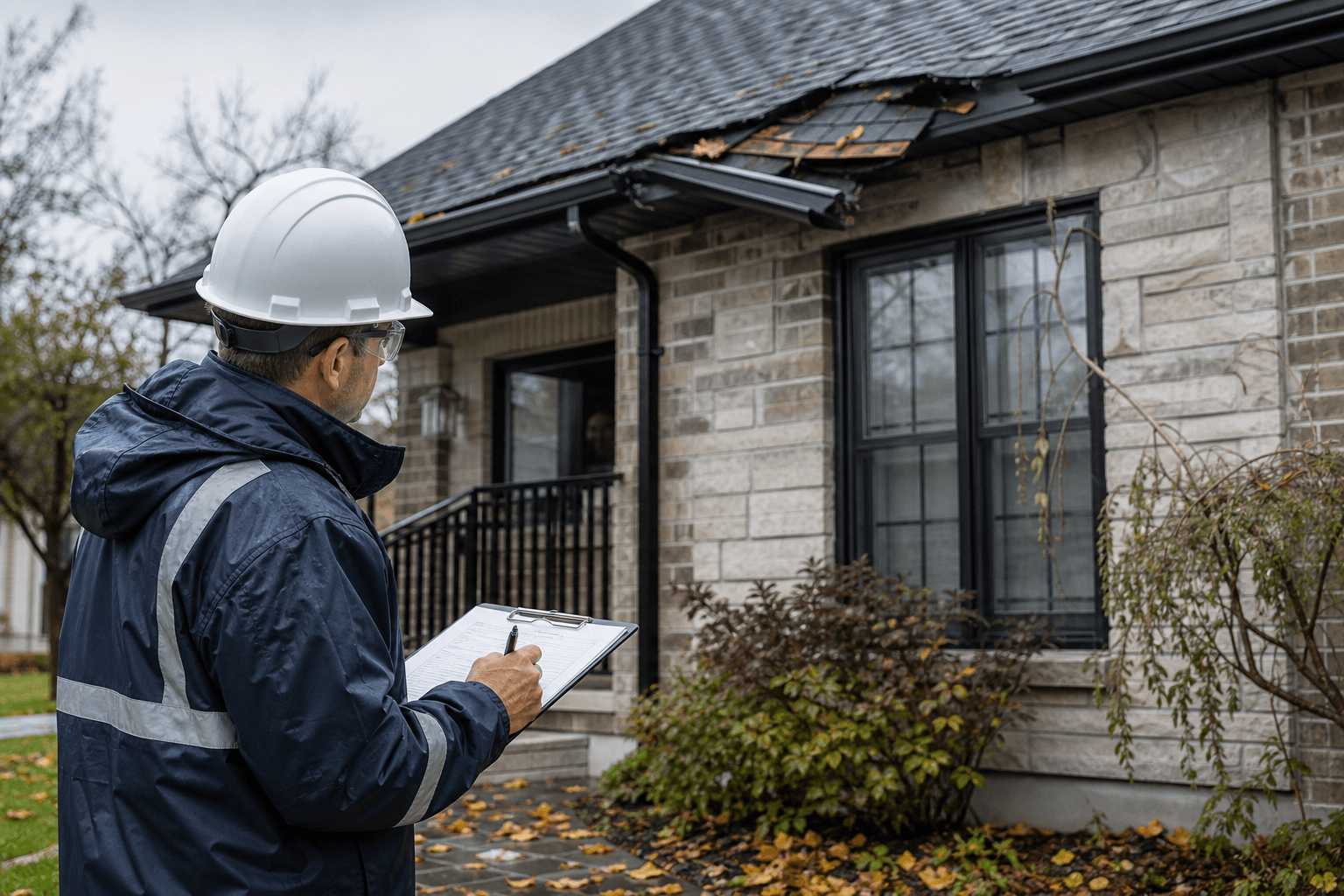
From ground level, look for missing or displaced shingles, damaged flashing, lifted roof materials, sagging roof edges, impact marks, broken siding, cracked windows, and bent gutters or downspouts. Check whether water is being directed toward the foundation or collecting around window wells.
Pay particular attention to the soffits and fascia around the roof edge. Gaps, detached panels, staining, holes, peeling finishes, or blocked vents can indicate impact, moisture, ventilation, or pest-related problems. This storm-related soffit damage walkthrough explains what can be observed safely without climbing.
A roofer or qualified contractor is generally the appropriate next contact for repair or a detailed roof assessment. A property inspector can help document accessible conditions across the property, but should not be treated as a substitute for emergency roof stabilization or repair.
Attic, interior moisture, and hidden damage
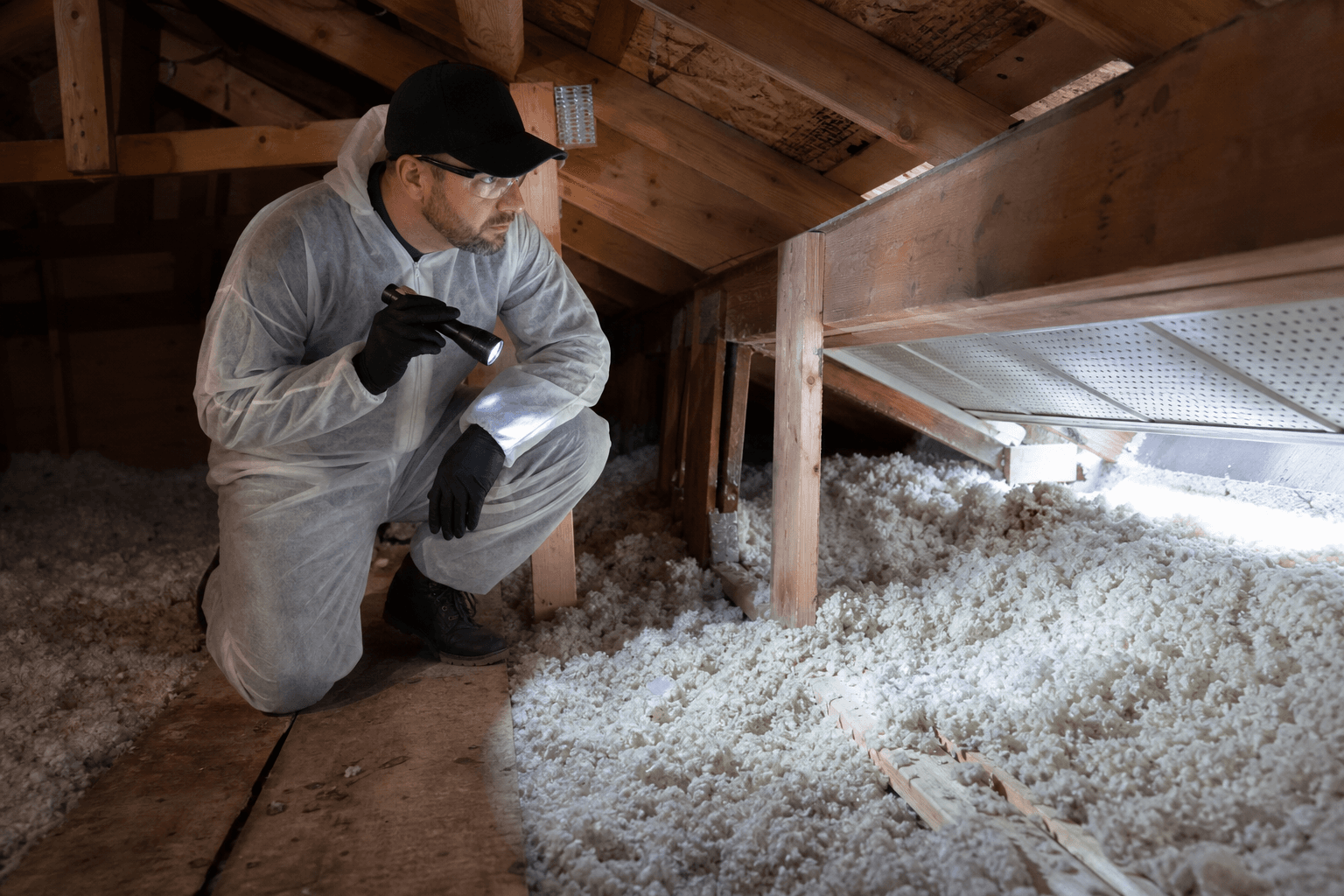
If safe access already exists, look for fresh staining, damp insulation, wet roof sheathing, water marks on rafters, musty odours, bubbling paint, swollen trim, or soft flooring. Do not enter an attic if the roof structure appears compromised, insulation is wet near wiring, or access requires unsafe movement.
Storm water can remain behind drywall, ceilings, flooring, insulation, or trim after visible surfaces appear dry. New odours, recurring stains, peeling finishes, or unexplained dampness deserve follow-up rather than cosmetic covering. Review these hidden water damage signs before assuming that a property is unaffected.
Early identification matters because moisture intrusion can contribute to deterioration and safety concerns. A property inspection can document accessible evidence, while moisture remediation, destructive testing, or repairs may require a contractor or specialized restoration professional.
Basement, foundation, plumbing, electrical, and HVAC checks
In the basement, record standing water, damp patches, efflorescence, new cracks, water marks, damaged window wells, sump-pump concerns, and changes in odour. Do not operate electrical equipment that has been submerged or use a flooded area as a route through the building.
Look for leaking supply or drain lines, displaced fixtures, damaged water heaters, and evidence that storm water entered through the foundation or plumbing system. For electrical systems, document visible damage from a safe distance and arrange a licensed electrician when wiring, panels, outlets, or equipment may have been affected.
Check HVAC equipment only through safe visual observation. Water around a furnace, air conditioner, electrical disconnect, ductwork, or control equipment requires qualified evaluation before use. A property inspector can report accessible condition, while electrical, mechanical, structural, and repair work belongs to the properly licensed specialist.
How should you document storm damage?
Document conditions before cleanup or temporary repairs when doing so is safe. Take wide photographs that show the affected room or elevation, then closer photographs of individual defects. Add written notes describing the location, apparent change, odour, water level, damaged belongings, and any temporary action taken.
- Record the approximate date and time of the storm and the type of weather observed.
- Photograph the property from safe interior and exterior locations without approaching unstable areas.
- Make a list of damaged building components, contents, and areas where water may have entered.
- Keep receipts, invoices, contractor communications, and records of necessary emergency work.
- Contact your insurer or claims department and ask what evidence, mitigation, and inspection steps they require.
The Insurance Bureau of Canada advises affected residents to assess and document damage when safe, take photographs, and contact their insurer. Ontario's Disaster Recovery Assistance for Ontarians may provide help for eligible expenses after an activated natural-disaster program, but eligibility and program availability must be confirmed through current provincial guidance, not assumed from the presence of storm damage (Ontario disaster assistance information).
Which professional should assess the damage?
The right professional depends on the immediate risk and the question you need answered.
| Professional | Best suited to | Important boundary |
|---|---|---|
| Emergency responders or utility provider | Fire, collapse risk, life safety threats, dangerous flooding, or downed power lines | Contact them before attempting a property inspection. |
| Roofer or contractor | Roof breaches, missing materials, flashing, gutters, temporary protection, and repairs | A repair estimate is not the same as an independent condition assessment. |
| Licensed electrician | Wet wiring, damaged panels, outlets, service equipment, or electrical safety concerns | Do not touch or energize suspected damaged equipment. |
| Structural professional | Major movement, collapse concerns, substantial foundation damage, or questions about structural capacity | A general property inspection is not a structural engineering opinion. |
| Arborist | Damaged, leaning, split, or fallen trees on private property | Do not approach unstable trees or attempt removal yourself. |
| Insurance adjuster | Claim investigation, coverage-related assessment, and insurer-required documentation | An inspector cannot decide whether a policy covers the loss. |
| Property inspector | Documenting visible and accessible condition across multiple building systems | Inspection does not include emergency stabilization, repairs, or every concealed defect. |
When an insurer assigns an adjuster or property appraiser, that person assesses the damage and prepares an estimated repair cost for the claim process. The Insurance Bureau of Canada notes that, after coverage is confirmed and a claim is approved, repairs may be arranged with a contractor chosen by the property owner or suggested by the insurer (IBC severe weather insurance information).
When is a professional property inspection useful?
A professional property inspection is useful when you need a documented overview of accessible conditions after a storm, particularly when several systems may be involved or moisture intrusion is a concern. ASM Home & Commercial Inspection provides certified residential and commercial inspections across Toronto and the GTA, with scope that includes roofs, attics, structure or foundation, plumbing, electrical, HVAC, and other visible components.
This can be relevant to a homeowner deciding what requires follow-up, a landlord documenting a unit, a buyer evaluating a property after severe weather, a seller recording condition before listing, or a commercial property manager reviewing damage across a larger building. ASM advertises same-day PDF reporting for its inspections, which can provide a clear record for decision-making, subject to the agreed inspection scope and site conditions.
Before booking, ask what areas will be accessible, whether the report is intended to document storm-related observations, what limitations apply, and which findings require another professional. These questions to ask a home inspector in Toronto can help you compare scope and reporting before choosing a provider.
A simple post-storm decision checklist
- Emergency response: Choose this path for immediate threats to life, fire, collapse, dangerous electrical conditions, or an unsafe structure.
- Specialist referral: Contact a roofer, licensed electrician, structural professional, arborist, or restoration provider when the observed problem falls within that specialist's work.
- Professional property inspection: Arrange this when you need a documented, system-by-system view of accessible conditions or need to understand whether further specialist assessment is warranted.
- Safe monitoring: If no immediate hazard is present, photograph and record minor observations, notify the insurer where appropriate, and monitor for new staining, odours, leaks, or movement.
For landlords and commercial property managers, preserve time-stamped records and communicate access or safety restrictions to occupants. Buyers and sellers should confirm whether an inspection is allowed under the transaction timeline, while homeowners should avoid delaying emergency mitigation simply to obtain a general inspection.
Storm damage assessment FAQ
Can a home inspection find hidden storm damage?
An inspection may identify visible clues of concealed damage, such as staining, damp insulation, musty odours, swollen finishes, or moisture-related deterioration in accessible areas. It cannot guarantee that every hidden defect will be found, and opening walls or testing specialized systems may require another professional.
Should I contact my insurer before arranging a storm damage assessment?
Contact your insurer or claims department as soon as practical after documenting conditions safely. Ask what evidence, mitigation, adjuster access, and inspection steps are required. Your insurer determines coverage under the policy, not a general property inspector.
Who assesses a storm-damaged tree in Toronto?
The City of Toronto advises private property owners to hire an arborist to assess storm-damaged trees. Keep away from leaning or split trees, and do not treat a general property inspection as a substitute for an arborist's assessment.
Is a storm damage assessment the same as a repair estimate?
No. An assessment documents condition and helps determine the next step. A roofer, contractor, electrician, or other specialist may then provide a repair scope and estimate, while an insurer or adjuster handles the claim assessment and coverage process.
Choose the next safe step after storm damage
A storm damage assessment is best understood as a decision-making process, not a single universal service. Start with safety, document what you can without entering danger, notify the insurer when appropriate, and match each problem to the professional qualified to address it.
When you need documented information about the accessible condition of a residential or commercial property across the GTA, Asmhomeinspection provides certified property inspections covering major systems and same-day PDF reporting. The inspection can support your next decision, while emergency response, repairs, insurance determinations, and specialized assessments remain with the appropriate professionals.