Hidden moisture is one of the most common dealmakers and dealbreakers in Greater Toronto Area real estate. This article gives the key water damage hidden signs to check during a viewing, practical DIY tests you can perform in minutes, and the specific red flags that justify calling a certified inspector. Use these questions to avoid costly surprises and to decide when to request a professional inspection with fast, actionable reporting.
Why hidden water damage matters in GTA property decisions
A small leak left undetected can become a major repair. Water that soaks into framing, insulation, or subflooring causes rot and accelerates structural deterioration, and it creates conditions where mould can grow. Consumer guidance and restoration specialists consistently warn that early detection cuts both repair scope and cost, and that musty odours often mean mould is present in cavities rather than on visible surfaces (regional restoration guidance; consumer protection advice).
How a small leak becomes a big repair
Drips behind walls or from a slow plumbing connection can soak drywall and wood over weeks or months. That moisture weakens fasteners and finishes and may lead to brittle drywall, peeling paint, warped flooring, and electrical hazards where water reaches wiring. The longer a leak persists, the higher the chance of mould and of structural repairs that go beyond simple patching.
GTA-specific risks to be aware of
The GTA has many older brick and century homes, and freeze-thaw cycles can open mortar joints and roof flashings to water. Condominiums add party-wall and common-element exposure: moisture originating in a neighbouring unit or the building envelope can appear inside your walls. These local patterns make it especially important to spot subtle cues during a viewing rather than assume a property is dry.
Five quick smell and visual checks you can do in 10 minutes
These five checks reveal a surprising number of hidden issues. Perform them in every room you can access.
- Odour check. Step into small or closed rooms and note any musty or mildew smell. Health Canada advises that a strong musty odour with no visible mould should prompt consideration of a professional inspection, because mould can be concealed within walls, ceilings, or floor cavities (Health Canada).
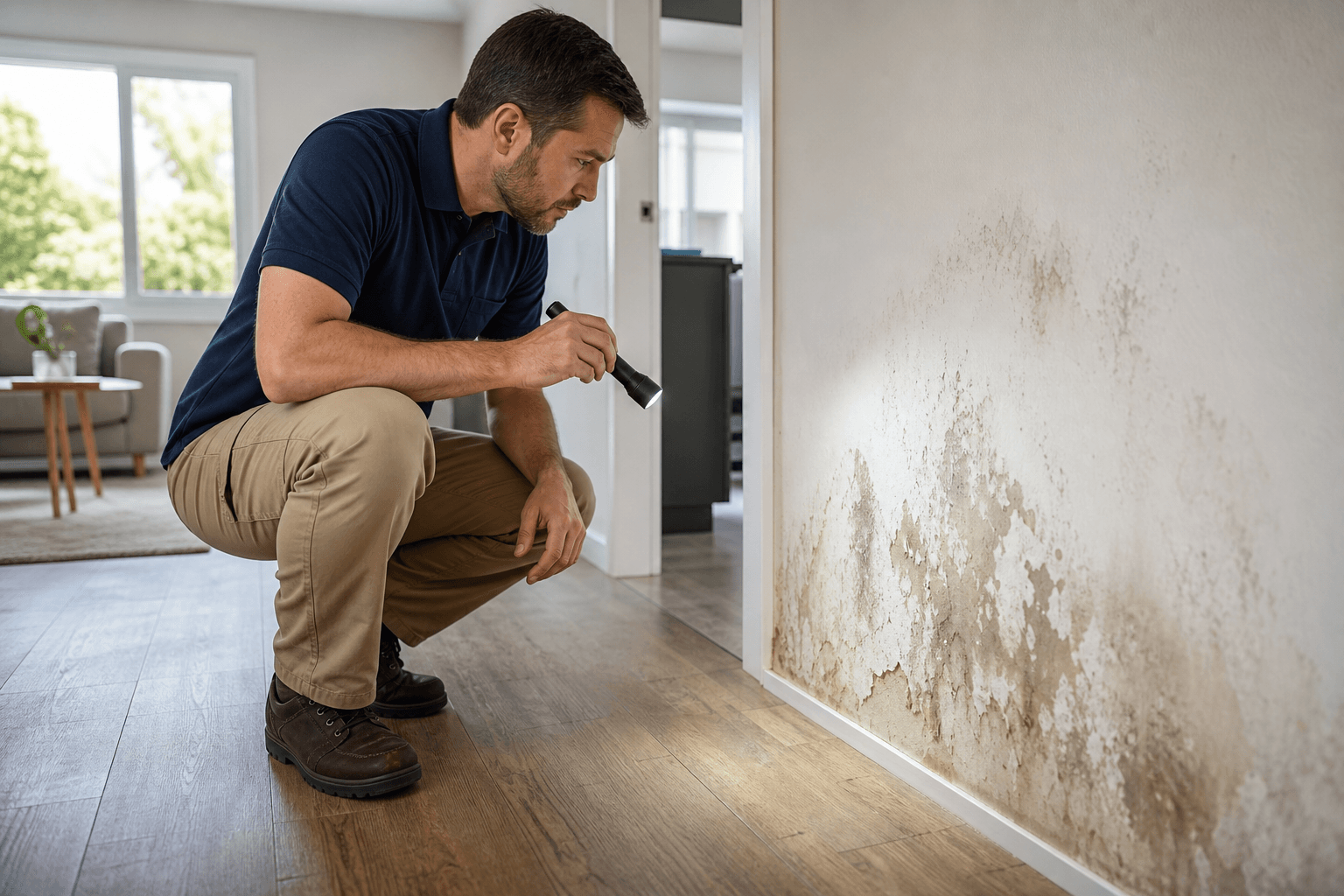
- Surface stains and paint. Look for discoloured patches on ceilings and walls, peeling paint, or bubbling wallpaper. Water stains often have soft, irregular edges and may be paired with a slightly darker surface texture.
- Floorboard and carpet cues. Check for cupped or buckled hardwood, soft spots on vinyl or laminate, or concentrated stains on carpets. These often indicate a chronic moisture source below the surface.
- Window and door perimeters. Inspect the seals and undersills for staining or rot. Condensation chronically forming on windows or frames can indicate high indoor humidity or failing weather seals, both of which raise moisture risk.
- Localized swelling or soft trim. Press gently on painted baseboards and door casings. Soft or crumbling trim is a common sign that moisture has been present for some time.
One follow-up question for each check
For every cue, ask yourself: is this isolated to one room or repeated in adjacent areas? Repeated cues across a wall, floor or ceiling are more likely to mean a concealed source rather than a small surface repair.
Plumbing and utility checks that reveal concealed leaks

Many leaks start at plumbing fixtures or appliance connections that are hidden from casual view. The Canada Mortgage and Housing Corporation and homeowner guides recommend simple, evidence-based checks before you sign anything (CMHC checklist; preventive guidance).
- Run the water test. Turn on every faucet and flush all toilets while watching for slow fills, dripping, or weak pressure. Run the washing machine and dishwasher if possible and look under sinks for active drips.
- Water meter check. Close all taps and note the water meter. Avoid running anything for 30 minutes and check the meter again. Movement often means a hidden leak.
- Inspect appliance connections. Look behind refrigerators, under dishwashers, and at hot water tank fittings. Corrosion, mineral deposits, or recent repair marks suggest past leaks.
- Locate shut-off valves. Ask the seller or manager where the main and secondary shut-off valves are. If they are missing or hard to reach, that is a practical risk in an emergency and a detail you should note on your inspection request.
Attic, roof and exterior penetration checks where moisture often hides
Roof and attic issues often leak quietly until they reach finished living spaces. Many of these checks are visual and safe from an attic hatch; climbing a ladder or walking a roof should be left to professionals if you are not comfortable.
Attic insulation and stains
Look for discoloured insulation, dark staining on rafters, or daylight coming through roof sheathing. Damp, compressed insulation and dark streaks along rafters point to repeated roof leaks or condensation problems, both of which require further investigation (restoration guidance).
Gutters, downspouts and flashing
Blocked eavestroughs and poorly directed downspouts allow water to pool at the foundation or back up under roofing flashings. Check gutters for debris and look at flashing around chimneys, skylights, and vents for rust or separation.
When roof issues mean a specialist is needed
If you see active leaks, missing shingles, sagging rooflines, or daylight through the deck, these are signs to stop DIY checks and schedule a professional roof evaluation. Unsafe access, complex flashing defects, and concealed roof sheathing damage require a trained inspector.
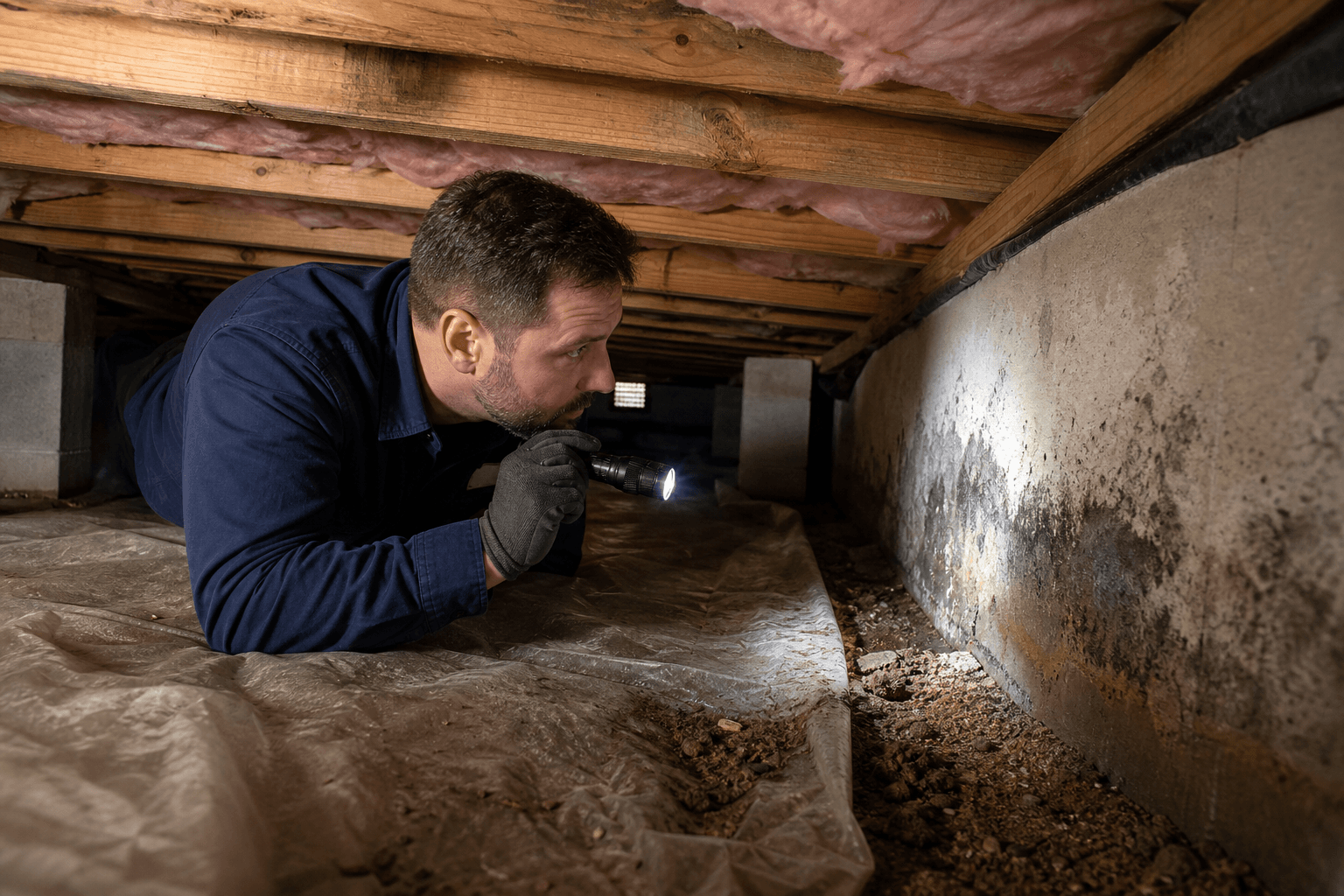
Basements, crawlspaces and sump areas: checks for GTA basements
Basements are a frequent origin of concealed moisture problems in the GTA. Look for these foundation and sump indicators during a visit.
- Foundation wall clues. Efflorescence, white salt streaks on concrete, or repeating damp patches indicate water movement through the foundation wall. CMHC recommends a dry, odour-free basement as part of a healthy unit evaluation (CMHC checklist).
- Sump and pump checks. Ask if the home has a sump pump and when it was last serviced. A non-functioning or noisy pump can allow water to accumulate during heavy rain. Look for signs of recent patching or staining around the sump pit.
- Floor cracking and movement. Cracked floors with staining, or sections of heaving slab, suggest repeated water pressure or freeze-thaw damage. These conditions may need a structural referral.
Condo and shared-wall warning signs you must ask about

In multi-unit buildings, a leak in one unit or a failure in a common component can affect multiple owners. CMHC and Health Canada guidance recommend active inquiry when odour or evidence of moisture appears without a visible source (CMHC; Health Canada).
Ask the right condo questions
- Has the condominium had any recent water damage claims or remediation in the last five years? Request documentation.
- Are there records of repairs to balconies, building envelope, or plumbing stacks that could affect adjacent units?
- Does property management or the board complete routine waterproofing or balcony inspections?
When to stop DIY checks and hire a certified inspector or remediator
Some signs require professional escalation. Health Canada specifically flags strong musty odours with no visible mould as a reason to consider a professional assessment because mould can be hidden in cavities (Health Canada).
- Concentrated musty odour with no obvious source.
- Visible mould growth, active leaks, or pooling water.
- Repeated or widespread stains across adjacent rooms or floors.
- Structural sagging, significant floor movement, or cracks that are leaking.
- Unexplained, sustained increases in water bills during a period with no known change in use.
What inspectors will document
A certified inspector will evaluate the roof, attic, structure and foundation, plumbing, electrical and HVAC systems, and other visible components as part of a comprehensive inspection. ASM Home & Commercial Inspection notes that certified inspectors can provide a same-day PDF report with photos, condition notes, and recommended priorities to support fast decisions during a transaction (ASM Home & Commercial Inspection).
What a certified inspection delivers and practical next steps
When a red flag appears, a certified inspection gives a documented baseline you can use in negotiations. Expect clear photographs, a description of the defect, risk level, and recommended next actions. For buyers, that often means asking the seller for repair quotes or a credit. For sellers, a pre-listing inspection can surface issues to fix proactively.
- Ask for a same-day PDF report if you are working with tight real estate timelines. ASM highlights same-day delivery as a service advantage for time-sensitive transactions (ASM Home & Commercial Inspection).
- If mould or concealed moisture is suspected, obtain specialist remediation estimates before agreeing to terms so you know potential costs.
- Document everything you see during the viewing with photos and notes to share with the inspector. That information speeds diagnosis and helps prioritise invasive checks.
Frequently asked questions
When should I call a professional about water damage hidden signs?
Call a certified inspector if you detect a strong musty odour with no visible source, see visible mould, find active leaks, or encounter structural movement. Health Canada recommends a professional assessment when odour suggests hidden mould (Health Canada).
Will my homeowner or condo insurance automatically cover hidden water damage?
Insurance coverage varies by policy and by the cause of the leak. Do not assume automatic coverage; gather documentation and ask your insurer about specific limits and exclusions. Professional inspection reports and repair estimates will help when filing a claim.
How quickly can I get a same-day inspection report and what will it include?
Some certified inspectors offer same-day PDF delivery that includes photos, condition summaries, and priority items. ASM advertises same-day PDF reports to support fast negotiations in real estate transactions (ASM Home & Commercial Inspection).
Can small visible signs be ignored if a seller says the issue was repaired?
No. Ask for documented evidence of the repair, including receipts and the name of any contractor. If the signs are in an area where repairs were claimed, a certified inspector should verify the work and look for lingering moisture or incomplete remediation.
What evidence should I capture during a viewing to help an inspector?
Take clear photos of stains, odour sources, warped flooring, loose trim, visible mould, and any appliance connections. Note when you ran fixtures or observed the water meter. These details reduce guesswork in the inspection.
Asmhomeinspection can perform certified residential and commercial inspections across the Greater Toronto Area and provide a same-day PDF report to help you act quickly. Ready to schedule a certified inspection with Asmhomeinspection?