Radon testing is the process of measuring the concentration of radon gas inside a building to estimate a person’s long-term exposure. Radon is an odourless, colourless radioactive gas that forms from the natural breakdown of uranium in soil and rock. It can enter homes through foundation cracks, service pipes, drains, and other openings. The goal of radon testing is to determine the average indoor radon level so homeowners, buyers, and property managers can decide whether corrective action is needed to reduce health risk.
How Health Canada defines a proper test and the action threshold
Health Canada recommends using a long-term test to estimate annual average radon exposure, and a long-term test should run for a minimum of three months. This duration helps capture seasonal and daily variation that short tests miss. If the long-term average exceeds the Canadian Radon Guideline of 200 becquerels per cubic metre, corrective action is advised. For full details and official procedures, see Health Canada’s testing guidance and the measurement guide: Testing your home for radon and Guide for radon measurements in homes.
Why radon testing matters for Toronto and GTA homes
Long-term exposure to elevated radon increases the lifetime risk of lung cancer. The Canadian guideline is a practical threshold set to protect public health, and Health Canada recommends testing every home regardless of location because radon levels can vary widely between neighbouring houses. The only reliable way to know a property’s risk is to measure it directly. For support and regional contacts, Health Canada provides a radon contact page and additional resources.
How long should radon testing run and why long-term matters
A long-term measurement of at least three months is recommended to represent a home's annual average. Short-term tests that run for days or a few weeks can miss seasonal peaks and troughs and are not equivalent to a long-term average. Health Canada also recommends conducting long-term detectors during the colder months when homes are closed up, because fall and winter measurements better approximate the annual average.
Where to place detectors and the best time to test

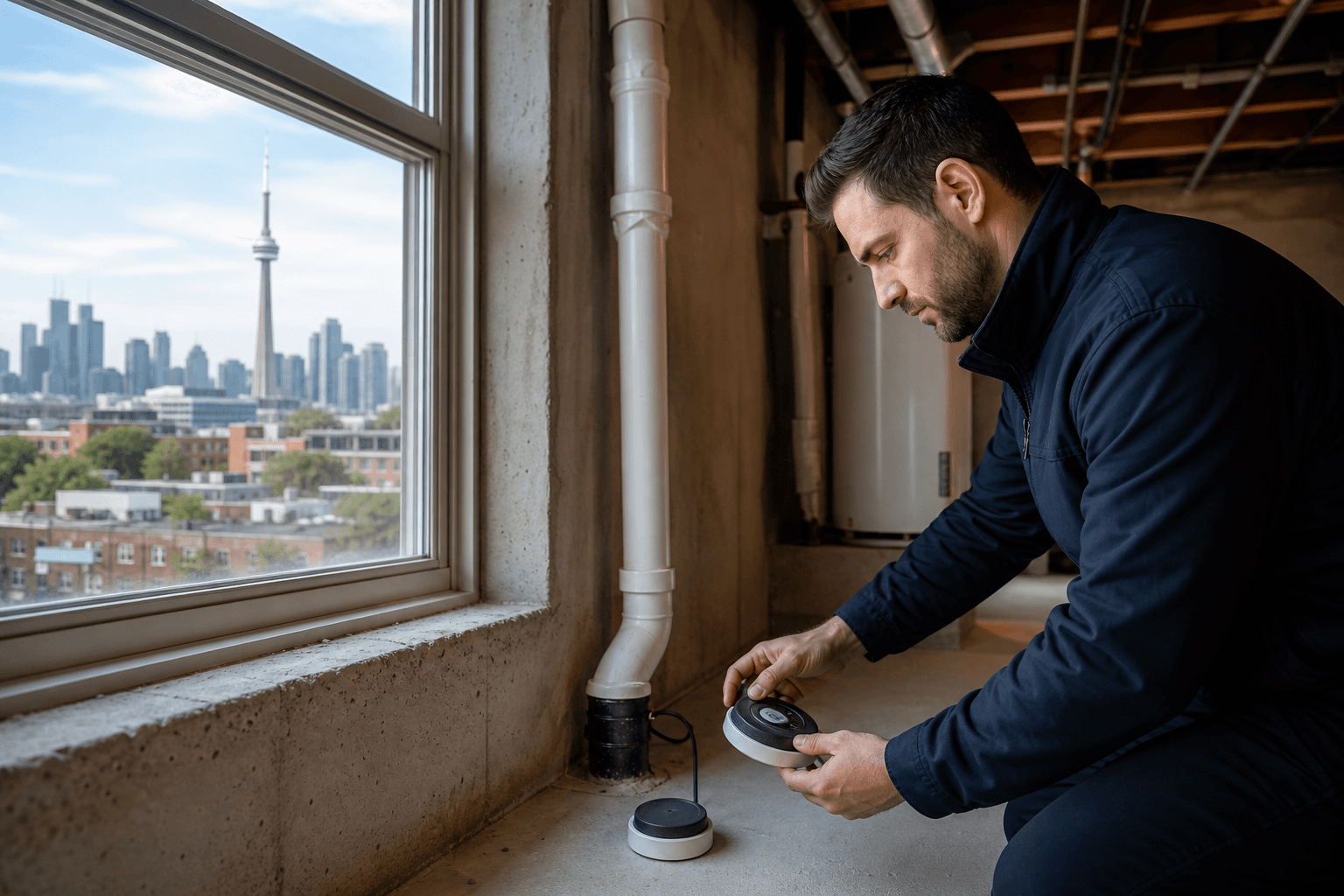
Place the detector on the lowest lived-in level of the home where occupants spend at least four hours per day. Typical locations include basements that are used regularly, ground-floor living rooms, or primary bedrooms. Avoid placing detectors in kitchens, bathrooms, closets, next to windows, or near drafts. Health Canada recommends running long-term tests in the fall or winter to capture conditions when homes are less ventilated. For complete placement do's and don'ts, consult Health Canada’s radon reduction guide and testing instructions.
Testing options: DIY long-term kits versus hiring a certified professional
Health Canada accepts two options for measuring radon. You can buy and deploy a do-it-yourself long-term radon test kit, or you can hire a radon measurement professional. A DIY long-term kit is cost effective for homeowners who can place the detector correctly and wait the three-month interval. A DIY result is useful for personal awareness and ongoing monitoring but may not be accepted as certified documentation in some transactions.
If you need certified documentation, for example to support a real estate negotiation or rental documentation, hire a radon measurement professional. Health Canada recommends using providers who are certified and who follow long-term measurement protocols. For regional assistance and certified provider lists, consult Health Canada’s radon contact information.
Pros and cons
- DIY long-term kit — Pros: lower cost, widely available, suitable for homeowners who can wait three months for results. Cons: may not be accepted as certified documentation in real estate or legal contexts.
- Certified professional — Pros: results documented in a formal report, provider should follow standardized protocols, helpful for transactions and landlord obligations. Cons: higher cost and scheduling required to deploy and retrieve detectors.
What a professional radon measurement should include
A certified radon measurement professional should deploy a long-term detector for a minimum of three months, document detector placement and start and end dates, and deliver a written report that states the average radon concentration in becquerels per cubic metre. The report should describe the test method, any factors that may have affected the measurement, and recommended next steps. When hiring a pro, ask for credentials, the test protocol they will use, and how they will report results. Health Canada’s pages explain what to expect from certified measurement and mitigation professionals.
How to interpret results and next steps if the level is high

Interpretation is straightforward against the Canadian Radon Guideline of 200 Bq/m³. If a long-term average is at or below 200 Bq/m³, no corrective action is required under the guideline, although periodic testing remains sensible. If a long-term average exceeds 200 Bq/m³, Health Canada advises corrective action. Typical next steps include contacting a certified radon mitigation professional to inspect the property, review reduction options, and provide a written mitigation plan. After mitigation, a follow-up long-term test is recommended to confirm the new average level. For technical reduction strategies and timing advice, review Health Canada’s radon reduction guidance.
How radon testing can fit into a GTA pre-purchase or pre-listing inspection
In real estate transactions, the three-month long-term requirement can make timing difficult. Buyers who want certified, long-term results must plan testing early in the offer period or request that a long-term detector be deployed as part of an offer condition. When time is limited, some parties accept short-term tests for preliminary screening, but those are not substitutes for long-term averages. Local home and commercial inspectors can coordinate long-term measurements as an add-on to a pre-purchase inspection, document the result, and include the radon test summary with the standard inspection report. For inspection services across the Greater Toronto Area, see Asmhomeinspection to discuss adding radon measurement to your inspection.
Decision checklist and answers to common objections
Use this quick checklist to choose a testing path.
- Need certified documentation for a transaction — hire a certified radon measurement professional and request a long-term test report.
- Cost sensitive and not in a hurry — purchase a long-term DIY kit and place it according to Health Canada instructions for three months.
- Short transaction window — perform a short-term test for screening, then follow up with a long-term measurement as soon as feasible.
- Living in a multiunit building — test the specific unit you occupy because radon can vary between units in the same building.
Authoritative resources and recommended next steps for Toronto homeowners
Begin with Health Canada’s official pages to download instructions, learn about detector options, and confirm the 200 Bq/m³ guideline: Testing your home for radon, Guide for radon measurements in homes, and Radon reduction guide for Canadians. For regional help or to find certified professionals, see Contact us — Radon.
If you would like to combine radon measurement with a property inspection, speak with a local GTA inspector about adding a long-term measurement to your pre-purchase, pre-listing, or annual maintenance inspection. ASM Home & Commercial Inspection provides certified inspection services across the GTA and can explain how radon testing integrates into inspection timelines and same-day reporting.
Frequently asked questions
How long should radon testing run to reflect my Toronto home's annual exposure?
Health Canada recommends a long-term test of at least three months because it best represents the annual average. Conducting the test in fall or winter improves the estimate of annual exposure.
At what radon level does Health Canada recommend taking corrective action?
The Canadian Radon Guideline is 200 becquerels per cubic metre. If a long-term average exceeds that level, Health Canada advises corrective action and recommends consulting a certified mitigation professional.
Can I use a short-term radon test during a real estate transaction in the GTA?
Short-term tests are useful for initial screening when timelines are tight, but they do not replace a long-term measurement. If you need a reliable estimate of annual exposure or certified documentation, arrange a long-term test or hire a certified measurement professional.
Where exactly should I place a radon detector in my house?
Place the detector on the lowest lived-in level where occupants spend at least four hours per day, away from windows, doors, and high-traffic areas. Avoid kitchens and bathrooms. For full placement instructions, refer to Health Canada’s placement guidance.
Do you offer radon testing with a pre-purchase inspection in Toronto?
Many GTA inspectors include radon measurement as an add-on service or can coordinate long-term testing alongside a pre-purchase inspection. Contact Asmhomeinspection to discuss options for combining radon testing with your inspection and to learn about same-day PDF reporting.
Would you like to add a long-term radon test to a pre-purchase or pre-listing inspection in the GTA?