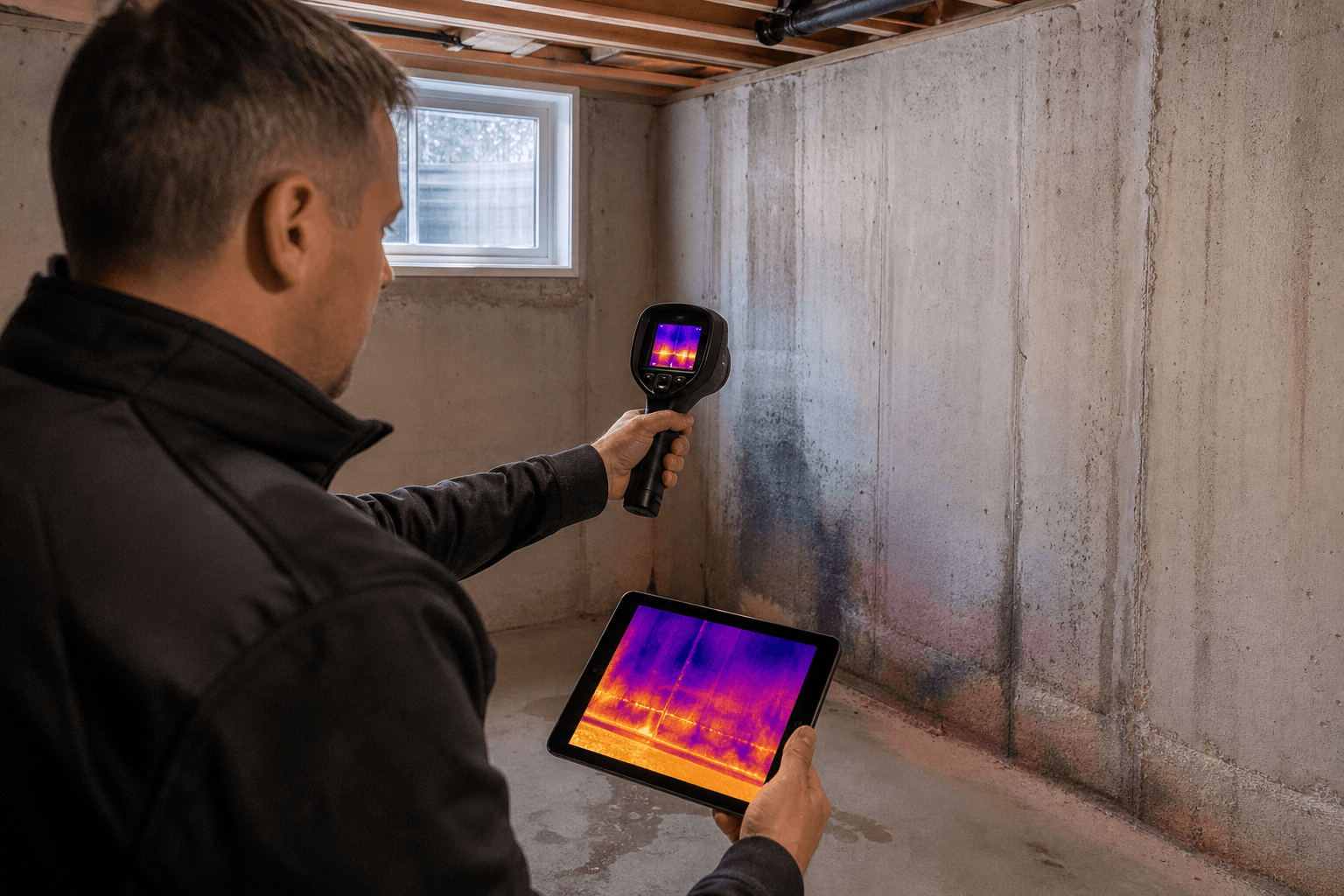
A home inspection for Toronto buyers is an independent, visual assessment of a property's accessible condition before you finalize a purchase decision. It can reveal visible concerns across major systems, clarify maintenance priorities, and help you decide which questions require a seller, agent, contractor, or specialist.
It is not a pass-or-fail test, a guarantee that every defect will be found, or a substitute for legal, engineering, environmental, plumbing, electrical, or other specialist advice. Ontario government guidance describes a home inspection as an on-site, in-person visual examination of a home's condition and structure, including major elements such as the foundation, electrical and plumbing systems, attic ventilation, and roof.
Quick summary

- Arrange the inspection after identifying the property and before your purchase decision is finalized. Confirm contractual questions with your real estate and legal advisors.
- Confirm the property type, requested scope, access requirements, report format, delivery timing, and any areas that may be concealed, locked, stored, or unsafe.
- Expect a visual, non-destructive review of accessible roofing, exterior, structure, foundation, plumbing, electrical, heating, cooling, attic, insulation, windows, doors, and interior components.
- Compare quotes by scope, qualifications, limitations, reporting, timing, and professional protections, not price alone.
- Use the report to separate urgent or safety-related concerns from maintenance items, then obtain specialist advice where appropriate.
When should Toronto buyers arrange a home inspection?
The practical time to book is once you have identified the property and can provide its address, property type, access details, and transaction timing. The inspection should take place early enough for you to understand the findings before your purchase decision is finalized. Confirm the exact contractual timing and any inspection condition with your real estate and legal advisors.
When requesting a quote, describe whether the property is a detached home, townhome, condominium, multi-unit property, older house, or recently renovated home. Mention features that may affect scope, such as a finished basement, addition, second suite, garage, crawl space, attic access, or unusual heating and cooling equipment.
Ask who will provide access to relevant areas and whether the home will be vacant or occupied. Stored belongings, locked rooms, restricted exterior areas, and unsafe conditions can prevent an inspector from observing parts of the property. Those limitations should be documented rather than overlooked.
What does a pre-purchase home inspection cover?

A residential home inspection focuses on accessible systems and components that help you understand the home's visible condition. The exact scope depends on the property, access, agreement, and inspection purpose.
| Area reviewed | What it may help you understand |
|---|---|
| Roof and exterior | Visible roofing, flashing, drainage elements, exterior materials, doors, windows, soffits, and signs that may warrant maintenance or specialist follow-up. |
| Structure and foundation | Accessible signs of movement, cracking, moisture, or other conditions that may justify additional investigation. |
| Plumbing | Visible supply and drainage components, fixtures, water-related conditions, and issues that may need a qualified plumber. |
| Electrical | Visible panels, lights, receptacles, and conditions that may raise safety questions or require an electrician. |
| Heating and cooling | Accessible components, apparent operation, maintenance concerns, and questions about further servicing. |
| Attic and insulation | Accessible insulation, ventilation, moisture indicators, and conditions affecting maintenance planning. |
| Interior components | Visible walls, floors, ceilings, stairs, railings, cabinets, doors, windows, and basement conditions. |
The purpose is not to assign the home a simple pass or fail. It is to give you organized observations that support better questions and more informed decisions. A finding's importance depends on its nature, location, extent, accessibility, and the advice of an appropriately qualified professional.
How scope changes by property type
Detached homes
A detached house may provide access to a wider range of components, including the roof, foundation, exterior drainage, garage, attic, mechanical systems, and surrounding structures. The number of systems and condition of access points can affect both scope and price.
Townhomes
A townhome inspection examines the unit's accessible interior, mechanical, plumbing, electrical, attic, exterior, and structural elements within the agreed scope. Some exterior, roof, foundation, drainage, or shared components may involve common ownership or limited access, so ask what can be observed directly and what must be confirmed through property documentation.
Condominiums
A condo inspection concentrates on the unit and its accessible components. Do not assume it evaluates every shared building system, the entire exterior envelope, common roof, parking structure, or mechanical room. Review the inspection scope alongside condominium documents and ask your legal or real estate advisor about information outside the physical inspection.
Older Toronto homes
Older properties may have more renovation history, additions, conversions, or layered mechanical systems than newer homes. That does not establish that a defect exists, but it makes it important to identify accessible areas, describe previous work where known, and ask whether a visible condition deserves specialist review.
Renovated or converted properties
Finished basements, second suites, additions, and other alterations can conceal portions of the original structure or services. An inspector can document visible conditions and limitations, but concealed work may require permits, plans, contractor records, engineering input, or other professional review.
How to interpret findings and inspection limitations
Separate findings into practical categories:
- Visible deficiency: an observed condition that appears damaged, incomplete, deteriorated, or deserving attention.
- Maintenance recommendation: a routine or preventative action that may help manage the property.
- Safety concern: a condition that may create risk and should be discussed promptly with a qualified professional.
- Limitation: an area or system that could not be fully observed because it was concealed, inaccessible, locked, stored, or unsafe.
- Specialist follow-up: an observation that is not a diagnosis and requires investigation by a contractor, engineer, electrician, plumber, environmental professional, or other specialist.
A standard home inspection is visual and non-destructive. It does not involve opening walls, damaging finishes, or dismantling equipment. It also does not establish future performance, guarantee the absence of defects, certify code compliance, determine property value, or replace specialist evaluations.
Ontario's Home Inspection Act, 2017 is not yet in force according to the province's statute page. Buyers should verify practical qualifications, association credentials, written scope, reporting, insurance or professional liability coverage, and limitations rather than assume a provincial home-inspector licence is available to verify.
Buyer checklist: questions to ask before booking
- What is included for this property type and address?
- Which areas or systems are excluded, inaccessible, unsafe, or dependent on someone providing access?
- Will the inspection be visual and non-destructive, and how will limitations appear in the report?
- Will the report include photographs, written observations, priorities, and recommended next steps?
- When will the report be delivered, and is same-day delivery available for the agreed scope?
- What credentials or professional association memberships does the inspector hold?
- Does the inspector carry professional liability coverage?
- How is the quote calculated for the property's size, age, access, systems, and requested scope?
- Can the inspector explain findings after delivery?
- Which concerns would normally justify specialist evaluation?
How much does a home inspection cost in Toronto?
Pricing varies because a condominium unit, townhouse, detached home, and older or extensively altered property do not present the same scope or access requirements. Property type, size, age, access, and requested scope affect the final quote.
ASM's published residential starting price is $199. That is a starting point, not a universal final price. Ask for a property-specific quote and confirm what it includes, including systems reviewed, report format, delivery timing, and exclusions.
Before booking, compare the home inspection cost in Toronto with the scope you need. A lower quote may not represent the same access, reporting, timing, or coverage as another quote.
How to review a same-day PDF inspection report
A same-day report helps you work while the inspection is fresh, but fast delivery does not make the decision for you. Start with the summary, then review observations and photographs for items affecting safety, water management, structure, major systems, or near-term maintenance.
- Read the highest-priority items first. Identify concerns requiring prompt safety action, specialist assessment, or clarification.
- Separate defects from maintenance. Recommendations do not all have the same urgency, cost, or consequence.
- Check the evidence. Read the observation, inspect the photograph, and note whether it describes a visible condition, limitation, or recommendation.
- Review limitations. A finding near an inaccessible area may need a different next step than one supported by a fully visible component.
- Build a question list. Ask the inspector to clarify report language, then direct legal, contractual, and property questions to the appropriate advisor.
- Obtain specialist input where appropriate. A roofer, electrician, plumber, engineer, environmental professional, or other qualified specialist may be needed.
For more detail on sections, photos, priorities, and next steps, use this guide to read an inspection report. Keep the report with your purchase records and use it as a question-and-maintenance document, not as an automatic reason to proceed or withdraw.
What to do after the inspection
Ask for clarification on wording you do not understand. A useful question identifies the location, observed condition, access limitation, and whether specialist evaluation is recommended.
Gather the information needed for your decision. This may include a specialist assessment, repair estimate, permit or renovation documentation, condominium records, or advice from real estate and legal professionals. Do not assume an inspection automatically creates a negotiation right or determines the purchase outcome.
Finally, organize findings by urgency and consequence. A safety-related concern, active moisture condition, structural question, or major system issue may deserve earlier attention than routine maintenance, but the appropriate professional should establish the technical significance.
Frequently asked questions
Is a condo inspection different from a detached-home inspection in Toronto?
Yes. A condo inspection generally focuses on the unit's accessible components, while a detached-home inspection may include more directly accessible exterior, roof, foundation, attic, garage, and drainage elements. Shared condo systems and common areas may require separate documentation or review.
What can limit the results of a pre-purchase home inspection?
Concealed components, locked rooms, stored belongings, unsafe conditions, restricted exterior access, and systems outside the agreed scope can limit what the inspector observes. The report should identify these limitations.
Does a same-day inspection report mean the inspection is less thorough?
Not necessarily. Same-day delivery describes when the PDF is provided, not its quality or completeness. Compare scope, field observations, photographs, explanations, limitations, and reporting process.
How much does a home inspection cost in Toronto?
ASM publishes residential inspection pricing starting at $199. The final amount depends on property type, size, age, access, and requested scope, so provide the address and property details before relying on a quote.
Is a home inspection a pass-or-fail test?
No. It is a visual assessment of accessible conditions, not a pass-or-fail test. The report helps you understand observed deficiencies, maintenance needs, safety questions, and limitations so you can make an informed decision.
Make your inspection decision with the right scope
The strongest inspection choice is not automatically the cheapest or fastest. Choose a Toronto home inspector who can explain the scope for your property type, identify access limitations, provide clear documentation, disclose relevant credentials and protections, and deliver the report within your decision timeline.
ASM provides certified residential inspections across Toronto and the GTA, with accessible systems matched to the property and a same-day PDF report. To confirm coverage, discuss your address and requested scope, and request a property-specific quote, contact Asmhomeinspection.