The right GTA home inspection depends on the decision you need to make, the type of property involved, and the documentation and turnaround you require. Compare the inspection purpose, system coverage, credentials, report format, service area, and property-specific quote rather than choosing on starting price alone.
1. Start with the reason you need an inspection
Inspection types serve different decisions. A buyer needs information before completing a purchase, while a landlord may need move-in condition documentation. A seller may want to identify concerns before listing, and an owner may want a periodic review of maintenance needs.
ASM Home & Commercial Inspection lists pre-purchase, pre-listing, new construction, move-in, and annual maintenance inspections across the Greater Toronto Area. Review ASM’s residential inspection services once you know which decision the inspection must support.
| Inspection type | Who it serves | Decision it supports |
|---|---|---|
| Pre-purchase | Homebuyers and residential investors | Whether to proceed, negotiate, plan for concerns, or seek further assessment |
| Pre-listing | Homeowners and sellers | What to address or disclose before listing |
| New construction | Owners taking possession of a newly built home | Whether visible workmanship or component concerns need attention |
| Move-in | Landlords and tenants | The documented condition of a rental at occupancy |
| Annual maintenance | Property owners and managers | Which observable maintenance concerns merit monitoring or follow-up |
Pre-purchase home inspection

A pre-purchase home inspection gives a buyer a structured view of a home’s condition before completing the transaction. Use the appointment and report to understand major systems, identify concerns needing clarification, and separate immediate questions from longer-term maintenance planning.
Ask whether the scope fits the property’s age, size, visible construction, and any concerns noticed during the showing. A general report supports decision-making, but specialized testing, engineering advice, or other assessments should not be assumed to be included.
Pre-listing inspection
A pre-listing inspection helps a seller understand property concerns before buyers raise them. It can provide time to gather information, decide which issues to address, and prepare more accurately for questions about condition.
The goal is not to present a property as flawless. It is to replace avoidable surprises with better information before listing. Ask for documentation organized clearly enough to support discussions with your real estate professional and contractors.
New construction inspection
New construction can still warrant an inspection. Relevant questions may include whether visible components appear complete, whether workmanship concerns are present, and whether outstanding items should be documented for discussion with the builder or other responsible parties.
Confirm what stage of construction the inspection addresses and what access will be available. Do not assume it is a code-compliance review, engineering assessment, or warranty process. Ask about the boundaries of the service.
Move-in and annual maintenance inspections
A move-in inspection documents condition at the start of a tenancy, helping both parties record visible damage and maintenance concerns before occupancy.
An annual maintenance inspection serves a different purpose: reviewing the property’s condition over time and identifying items that may need attention. Confirm exactly what will be documented and how the report will be delivered.
2. Check whether the scope matches the property
ASM identifies major components including the roof, attic, gutters and downspouts, soffits, structure and foundation, garage, stairs and railings, porches and decks, walls, floors, ceilings, doors, windows, cabinets, basement, plumbing, electrical, furnace, water heater, and air conditioning. See ASM’s stated residential inspection scope before requesting a quote.
- Exterior and upper areas: roof, attic, gutters, downspouts, soffits, windows, doors, porches, decks, and stairs.
- Structure and lower areas: structure, foundation, basement, garage, walls, floors, and ceilings.
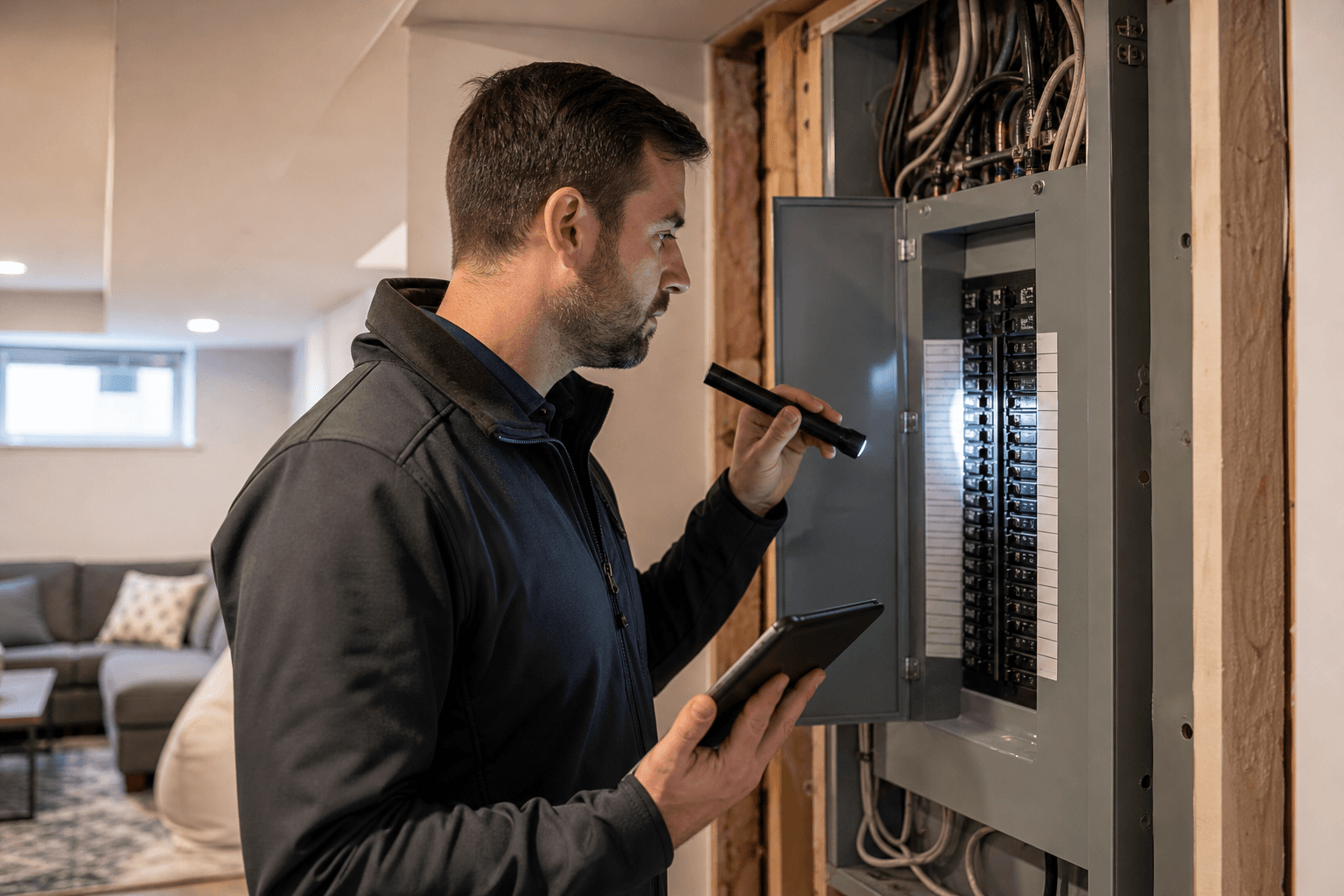
- Building systems: plumbing fixtures and systems, electrical panels and receptacles, furnace, water heater, and air conditioning.
Ask what is excluded, what access is required, and whether any concern falls outside a general inspection. This prevents a mismatch between expectations and the service provided.
3. Give moisture intrusion its own place in the discussion
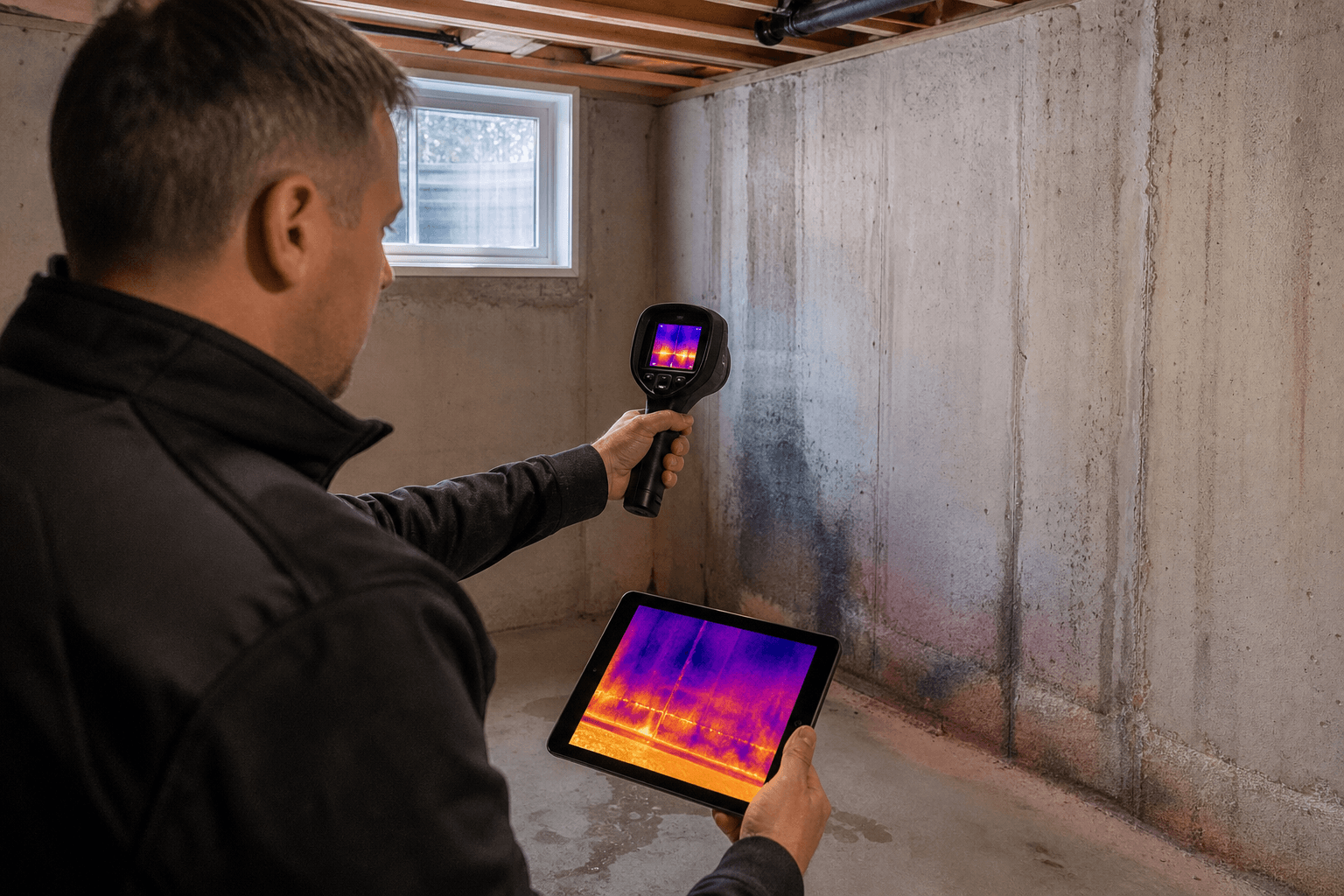
Moisture can involve several connected parts of a property. Ask how the inspection will consider observable indicators around the roof, attic, gutters, soffits, exterior drainage, foundation, basement, walls, ceilings, windows, and doors.
ASM emphasizes early identification of moisture intrusion because it can contribute to structural damage and occupant safety risks. Read ASM’s property inspection information and ask how moisture-related observations will be recorded.
A general inspection does not establish the source, extent, or remedy for every moisture concern. Findings may require specialized testing, repair planning, or engineering input.
4. Evaluate credentials as one part of the decision
Ask which organizations the inspector belongs to, what inspection type the credential relates to, and whether the stated service matches your property. ASM identifies its inspector as a certified member of InterNACHI and the Certified Commercial Property Inspectors Association, or CCPIA. These affiliations are useful comparison points, but certification alone does not establish that one provider is automatically better.
5. Ask when and how the report will arrive
Clarify report format and delivery timing before scheduling. Buyers may need information during a time-sensitive transaction, while sellers and professionals may need documentation that is easy to share.
ASM states that it provides same-day PDF inspection reports. Confirm whether that timing applies to your appointment and what the report will contain. A PDF home inspection report should make findings and recommendations understandable enough to guide your next questions.
6. Questions to ask before booking
- Which areas and major systems are included?
- Does the scope fit this property’s type, size, age, and construction stage?
- What is excluded?
- How will moisture-related observations be addressed and documented?
- Which credentials or professional affiliations does the inspector hold?
- When will the report arrive, and will it be delivered as a PDF?
- What property details are needed for a quote?
- Could any concern require specialized testing, engineering advice, or another assessment?
7. Know when you need a commercial property inspection
A commercial property inspection differs from a typical residential inspection because building use, systems, and decision context can vary. ASM states that its commercial coverage includes apartments and condominiums, retail stores and restaurants, schools and hospitals, churches and places of worship, warehouses and manufacturing facilities, offices, hotels and motels, gas stations, storage facilities, and industrial properties. Review ASM’s commercial property inspection services if your project involves one of these categories.
Ask whether the proposed service is a general condition assessment or whether specialists are needed for particular systems, environmental concerns, design questions, or regulatory matters.
8. Confirm the property is within the GTA service area
ASM states that it serves Toronto, Mississauga, Markham, Vaughan, Richmond Hill, Brampton, Oakville, Pickering, Whitby, and Oshawa, along with Thornhill, Woodbridge, Maple, Aurora, Milton, and Ajax. Provide the exact property address and municipality when requesting a quote.
9. Compare quotes by scope, not just starting price
ASM promotes pricing starting from $199 and a current 20% discount. Treat these as promotional starting information, not a universal price. Final pricing may vary by property type, size, and scope.
Compare inclusions, exclusions, report timing, and suitability for your purpose. Written details help ensure that different quotes represent comparable services.
A simple booking decision checklist
- Identify the purpose: Choose the inspection type that matches your decision.
- Describe the property: Share the address, type, approximate size, and access details.
- Confirm the scope: Check major systems and ask about moisture-related observations.
- Verify reporting and credentials: Confirm affiliations, format, and timing.
- Request a property-specific quote: Compare price, inclusions, exclusions, and timing.
Frequently asked questions
Can one inspection serve both a home purchase and a commercial property decision?
Usually, the inspection should be matched to the property and decision. A residential home inspection and a commercial property inspection may require different scopes, so describe the property before booking.
What should I provide when requesting a GTA home inspection quote?
Provide the exact address, municipality, property type, approximate size, construction stage if relevant, and any known concerns or access limitations.
Does a same-day PDF report replace specialized testing or engineering advice?
No. Same-day delivery describes report timing. A general inspection report does not replace specialized testing, engineering advice, or other assessments that a particular concern may require.
Choose the inspection that fits your property and decision
The best-fit GTA home inspection aligns with your purpose and property, not simply the lowest advertised starting price. Confirm inspection type, major-system coverage, moisture-related observations, credentials, report delivery, service area, and exclusions.
ASM Home & Commercial Inspection provides certified residential and commercial inspections across the GTA and states that it offers same-day PDF reports. Call +1 647-381-9030, email asmhomeinspection@gmail.com, or visit https://asmhomeinspection.ca/ to discuss your property.