Roof inspection services provide a visual review of accessible roof coverings, flashing, drainage, penetrations, visible attic conditions, and signs of water intrusion. They can help you decide whether a property needs routine maintenance, a roofing contractor’s assessment, or a broader inspection, but they do not guarantee concealed conditions, remaining roof life, watertightness, or repair cost.
What Roof Inspection Services Actually Do
A roof inspection is an on-site assessment of observable roof and moisture-management conditions. Depending on the agreed scope and safe access, the inspection may examine the roof surface, visible edges, flashing, gutters, downspouts, soffits, penetrations, attic-visible components, and interior signs that water may have entered.
Ontario government guidance describes a home inspection as an in-person, visual examination of major systems and components, including the roof when it is safe and accessible. Ontario's Home Inspection Act, 2017 also requires licensing for home inspectors and inspection providers, subject to prescribed exemptions, and requires a written report containing prescribed information. The Home Inspection Act, 2017 sets out those licensing and reporting requirements, while Ontario's home inspection guidance explains the general purpose and limits of this type of assessment.
A roof-focused inspection gives the roof and its related water paths more attention than a general review of the whole property. It is useful before a purchase, before listing, during maintenance planning, after a suspected leak, or when a visible condition needs to be documented before you decide what specialist help is appropriate.
Asmhomeinspection provides certified residential and commercial inspections across Toronto and the GTA. Its inspection scope is based on the actual property and agreed service, not a generic assumption about what every roof or building includes.
What a Roof Inspection Can Examine
A roof inspection can document visible conditions and explain why they matter. It cannot reveal every concealed defect, especially where the roof, attic, wall assembly, or drainage system is inaccessible.
Roof coverings and accessible edges
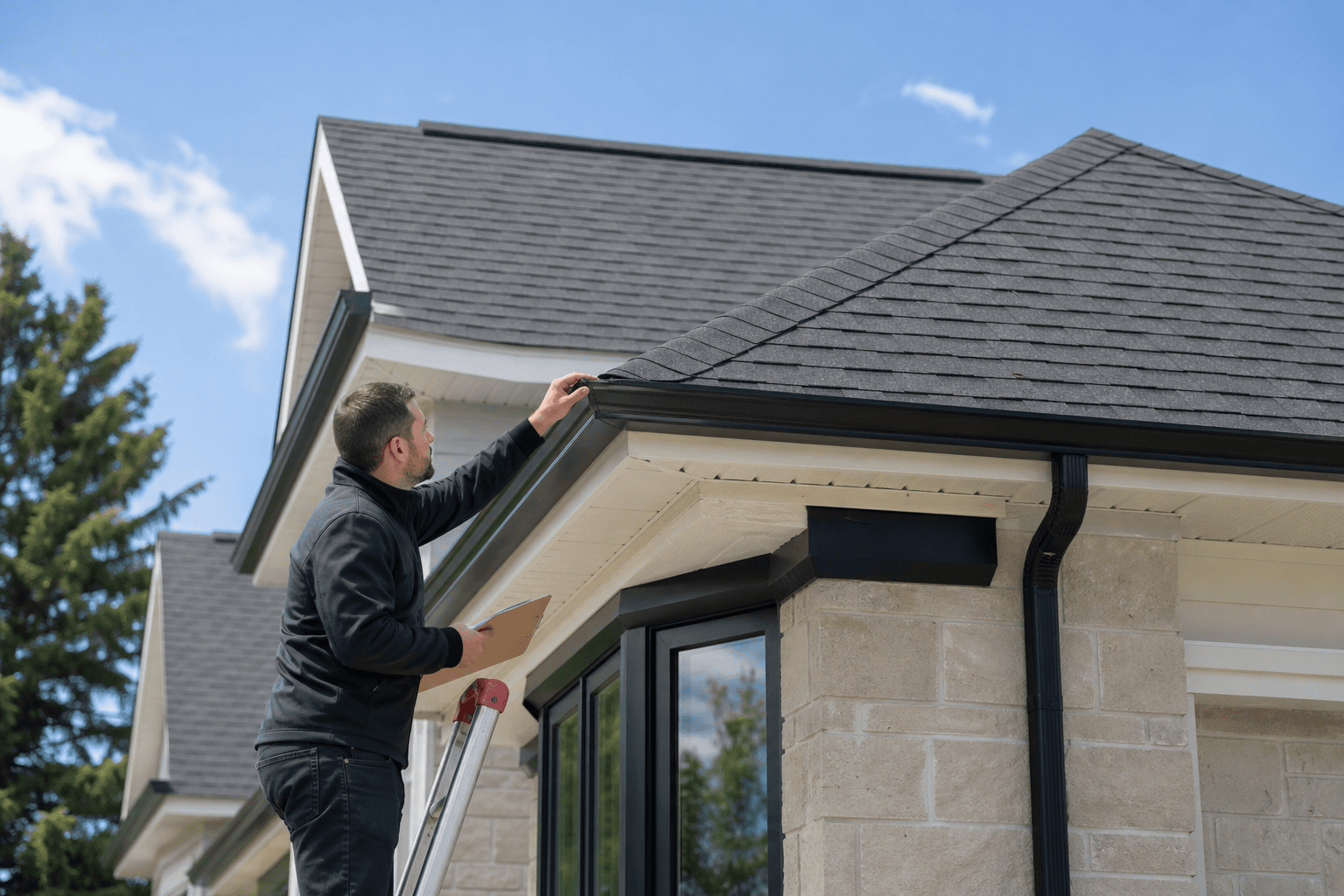
The inspector may review accessible shingles, membranes, tiles, metal panels, or other roof coverings for visible damage, displacement, wear, patching, open seams, deterioration, or conditions that deserve further evaluation. The assessment does not establish an exact remaining service life unless a separate service is specifically defined for that purpose.
Flashing, valleys, penetrations, and transitions
Flashing at walls, chimneys, skylights, vents, roof-to-wall transitions, valleys, and other penetrations can create water-entry paths when it is damaged, loose, poorly sealed, or visibly deteriorated. A roof inspection can record what is visible and identify when a roofing contractor should investigate or repair the detail.
Gutters, downspouts, soffits, and drainage
Roof water does not stop at the roof covering. The inspection may examine visible gutters, downspouts, extensions, soffits, roof edges, drainage routes, and signs of overflow or blocked discharge. Staining, erosion, dampness, or damaged trim can suggest that water management deserves attention, but a visible clue is not the same as a confirmed concealed leak.
Before comparing providers, review the roof inspection scope to understand which coverings, flashing, drainage components, access conditions, and limitations may be included in a broader residential inspection.
Attic-visible conditions and interior evidence
Where the attic is accessible and safe, the inspection may document visible insulation, ventilation components, roof sheathing, staining, condensation clues, or other conditions related to moisture movement. Interior ceilings, upper walls, and finished areas may also show staining, damaged finishes, or other evidence that requires follow-up.
Attic access, roof pitch, weather, stored items, fragile finishes, and unsafe conditions can limit what is observable. Those areas should be identified as limitations in the report instead of being treated as inspected without access.
Residential and Commercial Roof Decisions Are Different
Asmhomeinspection offers certified residential and commercial property inspections for buyers, sellers, owners, landlords, occupants, and investors. A standard residential inspection may include accessible structure, roofing, exterior, plumbing, electrical, heating, cooling, insulation, and interior components, while a commercial scope is tailored to the building, occupancy, systems, and decision in front of you.
| Property situation | Roof question to answer | What can change the scope |
|---|---|---|
| Detached or semi-detached home | Are visible roof, flashing, drainage, attic, and moisture conditions consistent with the purchase or maintenance decision? | Roof design, height, attic access, age, extensions, weather, and finished areas. |
| Townhouse | Which roof and exterior elements belong to the unit, and which may be common elements? | Condominium responsibilities, shared walls, roof access, and the inspection agreement. |
| Condo apartment | What can be observed inside the unit, and what roof or envelope information must come from the corporation? | Unit-only access, common-element boundaries, balconies, records, and building management. |
| Rental property | What condition should be documented for maintenance planning or a change in occupancy? | Tenant coordination, access to units and attic areas, known leaks, and report timing. |
| Commercial building | What visible roof, drainage, envelope, and operational conditions could affect the asset or near-term maintenance plan? | Roof size, membranes, equipment, penetrations, tenant areas, escorts, roof access, and occupancy. |
For a commercial property, a walk-through may document membrane wear, patching, flashing, penetrations, ponding, blocked drains, damaged edges, and signs of interior leakage. Those observations can help an investor decide whether to obtain a roofing contractor's assessment, review maintenance records, or request additional due diligence. The commercial property inspection services guide explains how accessible roof conditions fit into a broader commercial inspection.
For example, a commercial buyer may see ponding near rooftop equipment. A visual inspection can document the location and surrounding conditions, but it does not by itself establish the cause, membrane condition below the surface, or repair price. A roofing specialist may be the appropriate next step if the finding affects a purchase decision or capital plan.
Choose the Right Time to Schedule an Inspection
The best time depends on the decision you need to make, not simply on the age of the roof.
- Before buying: Arrange a roof-focused review when the roof is a major concern, the property has visible water evidence, or you need more roof detail alongside a pre-purchase inspection. Use the findings to decide whether a contractor or specialist should investigate before a contractual deadline.
- Before listing: Sellers can use an inspection to identify visible roof and drainage conditions before marketing the property. This may help organize repair questions and provide clearer information for discussions with an agent or buyer.
- For maintenance planning: Homeowners, landlords, and managers can document accessible conditions, drainage concerns, and moisture clues before commissioning routine work.
- After a suspected leak: An inspection can help document visible evidence and identify whether the unresolved question belongs with a roofer, plumber, building-envelope specialist, or another professional.
- After a storm: Arrange an assessment when you notice displaced materials, fallen branches, new staining, damaged flashing, blocked drainage, or water entry. Do not climb onto a roof or enter an unsafe attic to investigate suspected damage.
A roof inspection can complement a broader residential or commercial inspection when the roof is central to the decision. If you need information about the entire property, confirm whether a full inspection and the roof-focused scope should be combined or scheduled separately.
What Happens During Roof Inspection Services
A useful inspection begins before the appointment. The inspector needs to understand the property, the decision you are making, known concerns, and the areas that can be safely accessed.
- Define the question. Explain whether you are buying, selling, maintaining, documenting a leak, or reviewing a commercial asset. Share the property type, approximate size, deadline, and known roof history.
- Confirm the scope. Ask which roof areas, attic spaces, drainage components, interior areas, photographs, limitations, and report format are included. Confirm whether any specialist testing or return visit is separate.
- Arrange access. Unlock relevant areas, coordinate tenants or building representatives, and identify roof doors, attic hatches, mechanical rooms, and restricted spaces. Access should never require an unsafe action.
- Provide useful records. Share prior reports, repair invoices, roof warranties, leak history, maintenance records, renovation details, or photographs of conditions that are no longer visible.
- Complete the visual review. The inspector examines accessible roof and related components, records photographs, and documents observations as the visit progresses. The exact method depends on the agreed scope and conditions at the property.
- Receive the report. ASM states that its residential inspections include a clear PDF report delivered the same day, where that timing is part of the agreed service. A useful report should connect photographs and written observations to locations, limitations, priorities, and practical next steps.
- Prioritize follow-up. Separate urgent concerns, significant defects, maintenance items, and unresolved questions that need a qualified specialist.
Inaccessible areas should appear as limitations. A report should not imply that a concealed roof assembly, unsafe roof surface, blocked attic, or inaccessible commercial area was fully assessed.
Roof Inspection Versus a Contractor, Certification, or Insurance Document
These services answer different questions. Choosing the wrong one can leave you with a useful observation report when you actually need a repair estimate, specialist diagnosis, certification, or claim-related document.
| Service | Main question answered | Typical output | What it does not establish |
|---|---|---|---|
| Roof inspection | What visible and accessible roof conditions should affect my decision? | Written observations, photographs, limitations, and recommended next steps. | Hidden damage, exact remaining life, watertightness, code compliance, or repair cost. |
| General home inspection | What is the visible condition of the home's major systems and components? | A broader report covering areas such as structure, roof, exterior, plumbing, electrical, HVAC, and interior components. | A specialized roofing diagnosis or guarantee of roof performance. |
| Roofing contractor assessment | What repair or replacement work may be needed, and what could it cost? | Trade recommendations, repair options, and often an estimate or proposal. | An independent whole-property condition report, unless separately provided. |
| Roof certification or warranty opinion | Does the provider meet a particular certification, warranty, or transaction requirement? | A document with requirements defined by the issuing professional, program, insurer, or transaction. | A substitute for every type of inspection or specialist evaluation. |
| Insurance-related documentation | What information does the insurer or adjuster require for a policy or claim? | Documentation matching the insurer's requested format and purpose. | A guarantee that a claim will be accepted or that all damage has been identified. |
Some roofers offer free inspections. A free contractor visit may be a sales or repair assessment, not an independent inspection with a photo-rich written report. Ask what the visit includes, who prepares the report, whether repair recommendations and estimates are separate, and whether the provider is evaluating the whole property or selling a particular scope of work.
Roof Inspection Cost and What Changes the Quote
There is no single universal price for a dedicated roof inspection. The quote can change with property type, roof size and design, height, access, attic conditions, commercial coordination, urgency, reporting requirements, taxes, and whether specialist work is requested.
ASM publishes a residential inspection starting price of $199. Supplied GTA planning references place many general home inspections around $350 to $600, with larger, older, or more complex homes often costing more. Neither figure is a universal price for every roof-only service. The final quote should match the property and written scope. Related reading: Home inspection.
Before booking, ask:
- Is this a roof-focused inspection, a broader home inspection, or both?
- Which roof, attic, drainage, interior, and commercial areas are included?
- How will inaccessible or unsafe areas be reported?
- Are photographs, prioritized findings, and a PDF report included?
- When will the report be delivered?
- Are HST, travel, return visits, testing, or specialist assessments separate?
- What is the total price for this property and scope?
A written proposal should identify the systems and areas covered, limitations, photo documentation, report timing, and how findings will be explained. The inspection rate guide provides a useful framework for comparing scope and value instead of comparing headline prices alone.
How to Read the Roof Findings and Decide What to Do Next
Do not treat every roof observation as an emergency or assume that every defect means full replacement. Sort the report into four practical categories, then match each category to the right next step.
1. Urgent safety or active water-entry concern
This category may include active interior water entry, a visibly unstable component, a serious exposed opening, or a condition that presents an immediate safety concern. Protect people and contents first, limit further exposure where appropriate, and arrange the qualified professional needed to investigate or make the area safe.
2. Significant defect requiring timely trade review
Loose flashing, damaged roof coverings, failed visible sealant, substantial drainage problems, or repeated staining may deserve a roofing contractor's assessment. The inspection identifies the observable concern, while the contractor determines repair methods, access requirements, materials, and cost.
3. Routine maintenance
Examples may include cleaning accessible drainage components, monitoring minor deterioration, trimming conditions that affect drainage, or planning maintenance for visible wear. The report should explain the condition and why it belongs in routine planning rather than immediate emergency work.
4. Limitation or unresolved question
A concealed leak, inaccessible roof area, suspected structural movement, hidden membrane failure, or question about compliance may require a specialist. A visual inspection can identify why further evaluation is warranted without pretending to answer a question that the inspection method cannot resolve.
Hypothetical example: If an inspector documents staining on attic sheathing below a roof penetration, the finding supports follow-up with a roofing professional to trace the water path. It does not prove that the penetration is the only source, establish how long the leak has existed, or provide a repair price.
Prepare Questions Before You Book
Have these details ready so the scope can be matched to the property:
- Property type, address, approximate size, and number of levels.
- Roof design, known roof age if available, and any recent repairs or renovations.
- Reason for the inspection, such as purchase, listing, maintenance, leak documentation, or storm concern.
- Known staining, odours, water entry, damaged materials, drainage problems, or previous reports.
- Roof, attic, interior, mechanical-room, tenant, and commercial access arrangements.
- Areas that may be unsafe, blocked, occupied, snow-covered, or otherwise inaccessible.
- Required report format and deadline, especially if a purchase or listing decision is time-sensitive.
Ask for the agreed scope, limitations, total price, report format, delivery timing, and any separate specialist services in writing. If you are unsure whether you need a roof-focused review or a full property inspection, describe the decision first and let the scope follow the question.
Frequently Asked Questions About Roof Inspection Services
How much does a typical roof inspection cost?
A typical roof inspection does not have one universal price. Cost changes with the property type, roof size and design, access, height, attic conditions, commercial coordination, report requirements, timing, taxes, and any specialist work. ASM publishes a $199 residential inspection starting price, while general GTA home inspection planning references commonly fall around $350 to $600. Ask for a property-specific written quote because those figures are not universal roof-only prices.
What does a roof inspection include?
A roof inspection may include accessible roof coverings, flashing, valleys, penetrations, gutters, downspouts, soffits, roof edges, drainage conditions, visible attic insulation and ventilation, and interior signs of water entry. Exact scope depends on the property's design, safety, weather, access, and agreed service. Concealed materials, unsafe areas, and inaccessible roof assemblies should be identified as limitations.
Do roofers do free inspections?
Some roofers offer free visits, but a free contractor assessment is not automatically equivalent to an independent roof inspection. Confirm whether you will receive a written report with photographs and limitations, or only a repair or replacement proposal. A contractor is usually the right follow-up when you need a repair method or estimate, while an inspection is useful when you first need an independent record of visible conditions.
Should I get a roof inspection after a storm?
Yes, schedule an assessment after a storm when you notice displaced materials, fallen branches, new staining, damaged flashing, blocked drainage, or water entry. Do not climb onto the roof or enter an unsafe attic yourself. An inspection can document visible conditions and indicate whether a roofing contractor, building-envelope specialist, or insurance professional should handle the next step.
Choose the Scope That Matches Your Property Decision
Before booking, match the service to the question you need answered. Confirm the property-specific roof and attic access, visible areas, limitations, report timing, and total price. If the roof concern is part of a purchase, sale, maintenance plan, rental record, or commercial decision, ask whether a broader inspection should be included.
Asmhomeinspection provides certified residential and commercial inspections across Toronto and the GTA, with roof and related observations documented within the agreed scope. For a property-specific quote and inspection path, review the residential and commercial inspection services and provide the property type, roof concern, access details, and decision deadline.