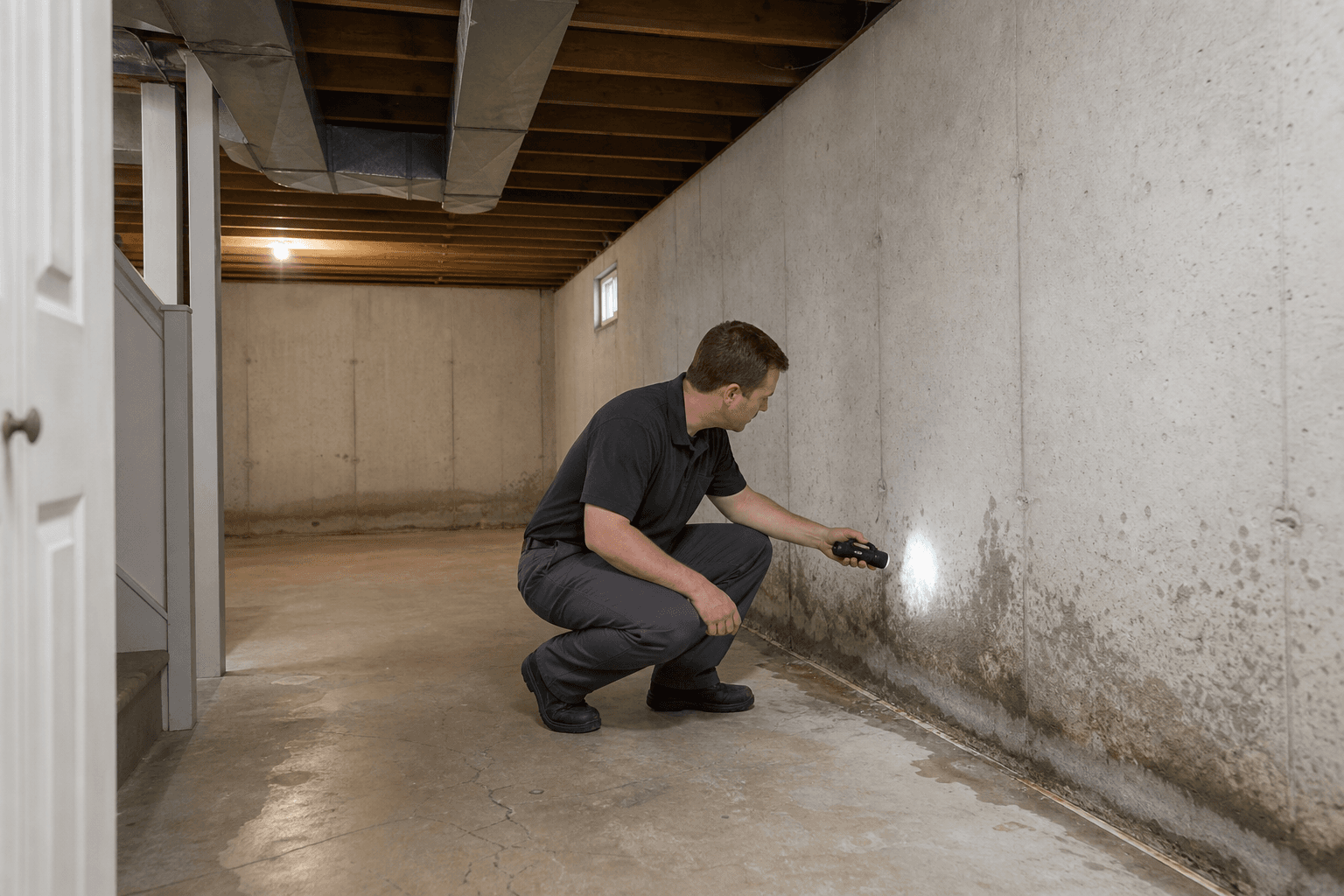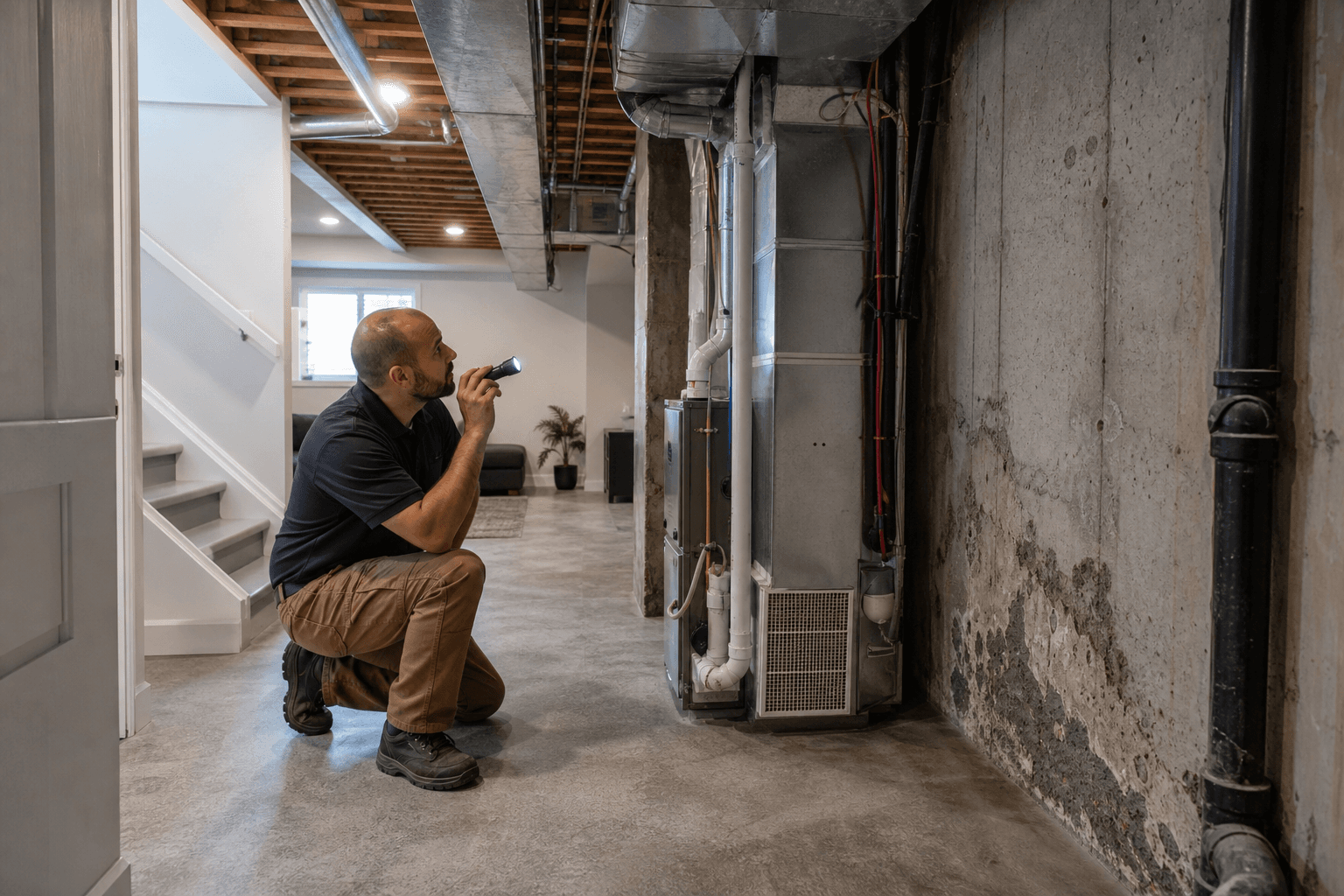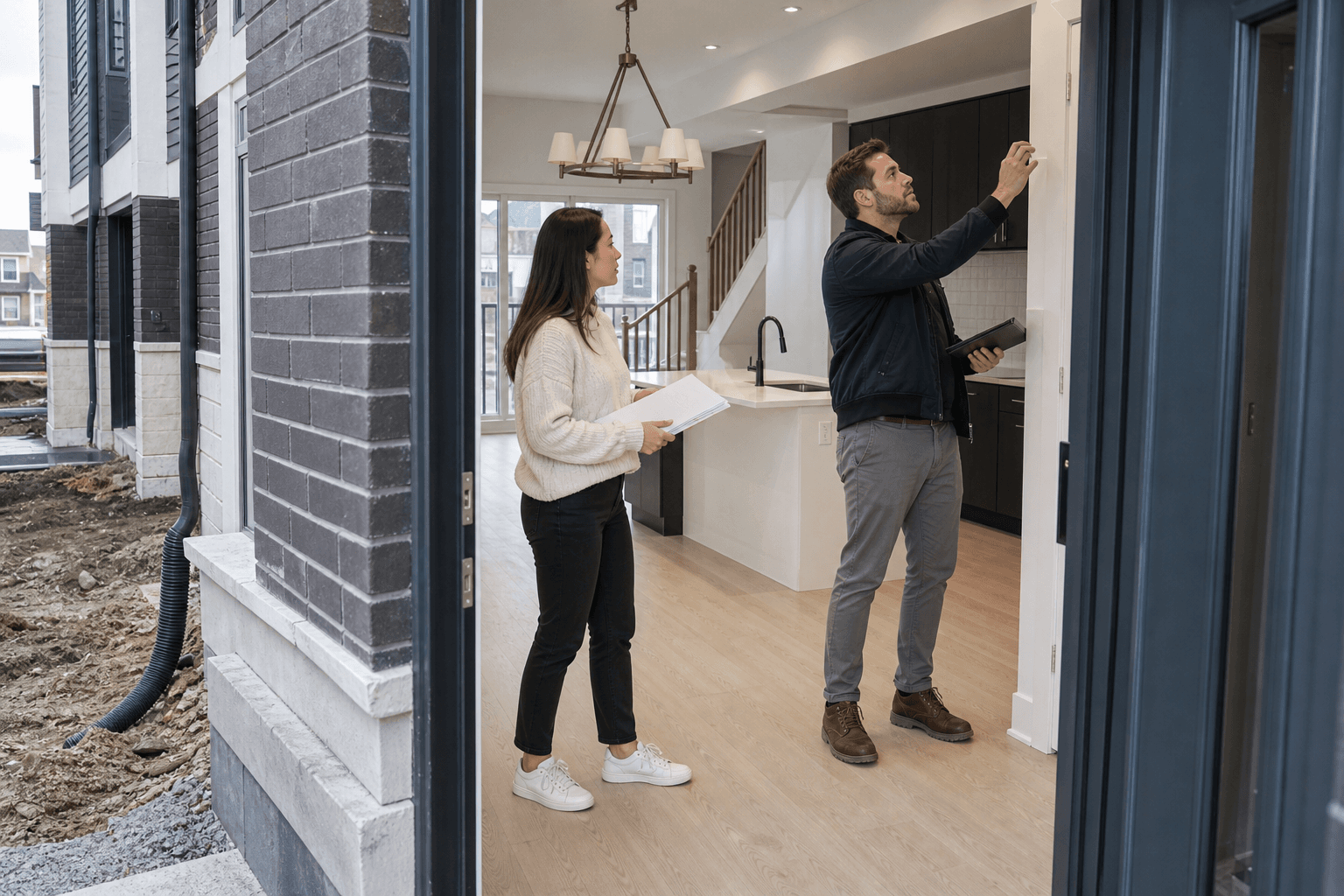
Complete the builder’s pre-delivery inspection (PDI) or final walkthrough, but do not treat it as a replacement for an independent new construction inspection. The PDI records the home’s condition with the builder, while an independent inspection gives you a separate visual and operational review of accessible systems and workmanship. For many buyers, the practical answer is both, with each record serving a different purpose.
PDI or Independent Inspection: What Each Process Is Actually For
A PDI or final walkthrough and an independent inspection answer different questions. The builder-led process documents the condition of the home as it is delivered. The independent inspection gives you an impartial review of accessible components within the agreed scope.
| Question | PDI or final walkthrough | Independent new construction inspection |
|---|---|---|
| Who leads it? | The builder and purchaser, or the purchaser’s delegate. | An inspector hired by the buyer. |
| Main purpose | Record items that are incomplete, missing, damaged, or not operating as expected for builder follow-up. | Assess visible and accessible structure, systems, workmanship, safety features, and moisture clues from a separate perspective. |
| When does it happen? | Before possession through the builder’s applicable process. | At a stage matching the buyer’s question, such as pre-drywall, pre-possession, or early occupancy. |
| What is documented? | Condition and deficiencies identified during the builder’s walkthrough. | Observed conditions, photographs, limitations, and practical next steps in an inspection report. |
| What can limit it? | Time, access, incomplete commissioning, weather, and the areas made available. | Access, construction stage, weather, equipment safeguards, manufacturer instructions, and the limits of visual, non-invasive inspection. |
The PDI remains an important part of receiving a new home. Attend it when permitted, record items through the builder’s process, and retain the completed documentation. An independent inspection adds a different perspective, not a replacement for that record.
Ontario describes a home inspection as an on-site, in-person visual examination of a home’s condition and structure. It is not a pass-or-fail test and does not determine whether a property meets zoning or building codes. The province identifies the foundation, electrical and plumbing systems, attic ventilation, and roof as examples of areas a home inspection may examine. You can review the province’s home-buying guidance for this distinction.
If you want the terminology separated before booking, review the distinction between the builder-led pre-delivery inspection and a private inspection. One records the home with the builder, while the other gives you an independent assessment of accessible conditions.
Why a Finished-Looking New Home Is Not Proof That You Need No Inspection
A clean, newly painted home can still have questions that a short walkthrough does not fully answer. New construction passes through multiple trades, deliveries, weather exposure, installations, and handoffs, so visible finish quality is only one part of the picture.
Hypothetical example: imagine a townhouse that looks complete on possession day. The floors are clean, the fixtures are installed, and the walls are painted. During a systematic review, you notice that a bathroom fixture does not operate, a downspout appears to discharge close to the foundation, a ceiling finish is damaged, and one register has weak airflow. Those observations should be recorded and directed to the appropriate party, even though the home looks ready for occupancy.
An independent inspection may add photographs, system-by-system observations, and questions about accessible installation details or moisture-management clues. It cannot see every concealed condition or guarantee future performance. Its value is the separate review and durable record, not a promise that every construction issue will be found.
Choose the Inspection Stage That Matches Your Unresolved Question
The right timing depends on what the PDI cannot answer for you. Choose pre-drywall when you need to see work before finishes conceal it, final or pre-possession when you need an independent view of the delivered home, and early occupancy when actual use has revealed a new problem.
| Your unresolved question | Most suitable timing | Main tradeoff |
|---|---|---|
| What will soon become impossible or difficult to see? | Pre-drywall | You can view accessible framing, insulation, rough-ins, and related details, but finished surfaces and final operation are not yet available. |
| What condition is the completed home being delivered in? | Final or pre-possession | You can assess more finishes, fixtures, doors, windows, drainage clues, and accessible systems, but drywall may conceal earlier work. |
| What problems appear only after the home is occupied? | Early warranty or maintenance review | Actual use can reveal comfort complaints, intermittent leaks, unusual sounds, or equipment concerns, but this does not replace the PDI. |
Access still depends on the construction stage and the builder’s arrangements. An inaccessible or incomplete area should be recorded as a limitation, not treated as satisfactory by assumption.
For stage-specific planning, the key decision is not how many inspections you can schedule. It is which unanswered question justifies another visit. A buyer concerned about concealed rough-ins needs a different appointment from one concerned about a delivered finish or a recurring leak after occupancy.
What to Do During the PDI or Final Walkthrough
Use the PDI to create a precise builder-facing record, not to reproduce the scope of an independent inspection. Focus on whether items are incomplete, missing, damaged, or non-operational, and follow the builder’s required documentation process.
- Bring the required information. Have the purchase documents, builder instructions, appliance information, and walkthrough materials available.
- Describe each item precisely. Identify the room, component, condition, and location. “Scratched lower cabinet door beside the kitchen sink” is more useful than “kitchen damage.”
- Test accessible items as permitted. Operate representative lights, plumbing fixtures, windows, doors, thermostats, exhaust fans, and appliances according to the builder’s instructions.
- Record visible water-management concerns. Note staining, unfinished penetrations, damaged sealants, or exterior conditions that appear to direct water toward the building.
- Use photographs to identify location. A wide image showing the setting and a closer image showing the condition create a clearer record.
- Retain the completed paperwork. Keep the PDI documentation, photographs, builder responses, dates, and revised records together.
Complete the builder’s process carefully even if you also hire an independent inspector. A private report can support your understanding and follow-up, but it does not replace the forms, procedures, or responsibilities that apply to the builder’s process.
What an Independent New Construction Inspection Can Add
An independent inspection adds a second set of eyes and a separate written record. Depending on the stage, property type, access, and agreed scope, the review may include accessible structure and foundation areas, roofing, exterior components, attic and insulation, plumbing, electrical, heating and cooling equipment, interior finishes, windows, doors, stairs, railings, garage areas, safety features, and visible moisture clues.
The inspector may also observe accessible installation details, filter access, thermostat operation, airflow at selected registers, and unusual HVAC sounds. Testing can be limited by weather, manufacturer instructions, equipment safeguards, or commissioning stage, so the report should distinguish an observation from a conclusion about performance.
The added value is not that the private inspection overrides the builder’s record. It is that you receive an independent account organized around accessible conditions, photographs, limitations, and next steps. A photo-rich, same-day PDF can provide a durable record for builder discussions, warranty documentation, specialist referrals, and later monitoring. Learn how to use a home inspection report without treating every item as equally urgent.
For additional questions before booking or attending, use this guide to home inspection questions for buyers to prepare a focused list.
Know the Limits Before You Rely on Either Record
Neither a PDI nor an independent visual inspection proves that every concealed component is correct or that the home will perform perfectly in the future. Finished walls can conceal rough-ins, inaccessible areas cannot be assessed directly, and conditions that develop after the appointment will not appear in an earlier report.
A general inspection also does not certify code compliance, zoning compliance, construction quality, or warranty eligibility. Ontario’s consumer guidance states that a home inspection is not a code-compliance assessment. Ask the builder or relevant authority for compliance documentation, and use a qualified specialist when the question falls outside a general inspection.
- Commissioning or balancing: use the appropriate HVAC professional for verified system performance, balancing, or commissioning.
- Electrical concerns: involve a qualified electrician for detailed diagnosis, repairs, or questions requiring work beyond visual inspection.
- Plumbing concerns: involve a plumber for leaks, pressure problems, concealed piping, or invasive investigation.
- Structural concerns: seek a structural engineer when the condition requires design analysis or an opinion beyond accessible visual observations.
- Builder or warranty follow-up: direct incomplete, damaged, missing, or non-operational construction items through the applicable process.
Do not open electrical equipment, dismantle installed systems, enter unsafe areas, or operate equipment against builder instructions simply to complete a checklist. Record the access limitation and direct the unresolved question to the appropriate professional.
How to Choose an Independent Inspector for a New Build
Ask questions that relate specifically to new construction, not only general home inspection experience. Confirm the proposed stage, accessible areas, expected scope, report format, timing, and limitations before the appointment.
- How much experience do you have with newly built houses, townhouses, or condominium units?
- Do you offer pre-drywall, final or pre-possession, and early occupancy inspections?
- What systems and components are included at this construction stage?
- How will incomplete, inaccessible, or uncommissioned areas appear in the report?
- Will the report include photographs, locations, limitations, and recommended next steps?
- What training, insurance, references, written scope, and written contract do you provide?
Ontario’s Home Inspection Act, 2017 is not in force, and the official provincial source states that there are currently no mandatory requirements for home inspectors in Ontario. Evaluate training, experience, insurance, references, contract terms, and reporting quality instead of assuming that a job title alone establishes expertise. Source: Home Inspection Act, 2017, S.O. 2017, c. 5, Sched. 1".
Turn the PDI and Inspection Report Into One Follow-Up Plan
Keep the two records separate but use them together. The PDI shows what you recorded with the builder, while the independent report organizes observations from a separate inspection. Combining them into one undifferentiated list can make it harder to identify who needs to answer each question.
- Label each record. Save the PDI, independent report, photographs, emails, and builder responses with their dates.
- Separate responsibility. Mark each item as a builder or warranty matter, a specialist question, a maintenance issue, or an observation to monitor.
- Write location-based requests. Identify the room, component, observed condition, and requested response.
- Track the response. Record the promised action, date, photographs, invoices, test results, or revised documentation.
- Verify repairs. Do not mark an item resolved solely because someone says it was addressed. Look for appropriate evidence or a new observation.
For example, replace “water problem near the rear wall” with: “At the rear basement wall beside the utility room, staining is visible below the exterior downspout. Please identify the drainage correction, provide the completion date, and explain how the area will be checked after rainfall.” The second version gives the builder a location, observation, and clear question.
When Both Checks Make Sense for a GTA New-Home Buyer
Complete the applicable builder PDI or final walkthrough because it records the home’s condition through the builder’s process. Add an independent inspection when you want impartial observations, broader accessible-scope review, photographs, or a separate record for follow-up. Choose the timing according to the question you need answered, not simply because one appointment is labelled “the inspection.”
ASM provides certified residential inspections across Toronto and the GTA, reviews accessible components within the agreed scope, and delivers a photo-rich PDF report the same day. The relevant scope still depends on the property, construction stage, access, and requested service.
Questions Buyers Still Ask
Can a final walkthrough replace a home inspection on a new build?
No. A final walkthrough or PDI records the home’s condition with the builder, while an independent home inspection provides a separate visual and operational review of accessible components. Complete the builder’s process, then decide whether independent documentation is worthwhile for your property and stage.
Is a new construction inspection worth it if the home looks finished?
It can be worthwhile when you want an impartial review of accessible workmanship, systems, moisture clues, finishes, and operation. A finished appearance does not prove that every fixture operates, every exterior drainage detail is effective, or every accessible installation is free of observable concerns.
When is the best time to inspect a new build in Ontario?
The best time depends on the question: pre-drywall for soon-to-be-concealed work, final or pre-possession for the completed home, and early occupancy for issues that appear through use. These stages provide different information and cannot fully replace one another.
What should I do if the builder will not allow an independent inspection before possession?
Complete the builder’s PDI or final walkthrough, document the condition carefully, and ask what access is permitted and when. If a private inspection cannot occur before possession, schedule it at the earliest permitted stage and preserve all PDI records, photographs, builder communications, and unresolved questions.
Plan the Review Around Your Possession Date
Before booking, gather the construction schedule, PDI or walkthrough date, property type, access restrictions, commissioning status, and questions you want answered. Then ask Asmhomeinspection about the appropriate new construction inspection scope and reporting arrangement for your stage.