Active water intrusion is often the most consequential home inspection red flag because ongoing moisture can damage finishes, structure, and other building components. It is not always the single worst finding: serious structural movement, unsafe electrical conditions, or major roof failure can be more urgent depending on severity, progression, access, and specialist evidence. Related reading: 7-item on-site pest inspections checklist Whitby homeowners need.
For Ontario buyers, the key point is that a home inspection is a visual examination, not a pass-or-fail test or a determination of zoning and building-code compliance. The right question is not simply, “Is this defect expensive?” It is, “What risk does it create, how quickly could it worsen, and what evidence do I need before I commit?” Ontario’s home-buying guidance describes the inspection in these terms.
How to decide whether a red flag is truly serious
A serious inspection finding usually combines one or more of five factors: immediate safety risk, evidence that the condition is active or worsening, broad impact on the property, complex or uncertain repairs, and limited visibility because an area could not be accessed. This framework is more useful than treating every old component, stain, or crack as a deal-breaker.
- Safety: Could the condition injure occupants or create an immediate hazard?
- Activity: Is water entering now, is movement continuing, or is the defect recurring?
- Extent: Is the concern limited to one finish, or does it affect several rooms, systems, or structural elements?
- Complexity: Can the repair be clearly defined, or does it require investigation, opening concealed areas, engineering, or several trades?
- Access: Did the inspector see enough to characterize the issue, or does an inaccessible attic, finished basement, roof area, or wall leave an important uncertainty?
A small active leak can deserve more attention than a large cosmetic defect. A long foundation crack may be stable and limited, while a smaller crack accompanied by displacement, water entry, or repeated change may require faster follow-up.
The findings that deserve the closest attention

The riskiest part of a home inspection is not one universal room or component. It is the finding that combines a credible threat to safety or the building with evidence of progression and an unresolved cause.
| Finding | Why it matters | Questions to ask next |
|---|---|---|
| Active water intrusion or drainage failure | Water can affect finishes, insulation, framing, foundations, and indoor conditions. The source may be outside the visible stain. | Is water entering now? Is the source identified? Does it recur after rain or snowmelt? Is structure or finished space affected? |
| Structural movement or foundation concerns | Movement may affect the foundation, walls, floors, doors, windows, or load paths. One symptom rarely establishes the cause. | Is there displacement, a pattern of related cracks, sloping, sticking openings, or evidence of progression? |
| Unsafe electrical conditions | Exposed conductors, overheating, damaged equipment, or repeated electrical problems can create a direct safety concern. | What was observed, where is it located, and does an electrician need to assess or correct it? |
| Major roof failure | A failed roof covering, flashing, or drainage path can allow continuing water entry and accelerate damage below. | Is the issue localized or widespread? Is the roof accessible? Are attic or interior moisture signs present? |
| Severe plumbing or HVAC conditions | Leaks, failed drainage, combustion concerns, or a system that cannot operate properly can affect safety, habitability, or near-term costs. | What component failed, what was tested, and does the condition require a plumber, HVAC professional, or another specialist? |
A useful report should help you separate these categories by location, severity, photographs, limitations, and recommended next steps. Reviewing prioritized inspection findings can help you distinguish an urgent safety concern from routine maintenance or a cosmetic defect.
Why water intrusion often ranks first
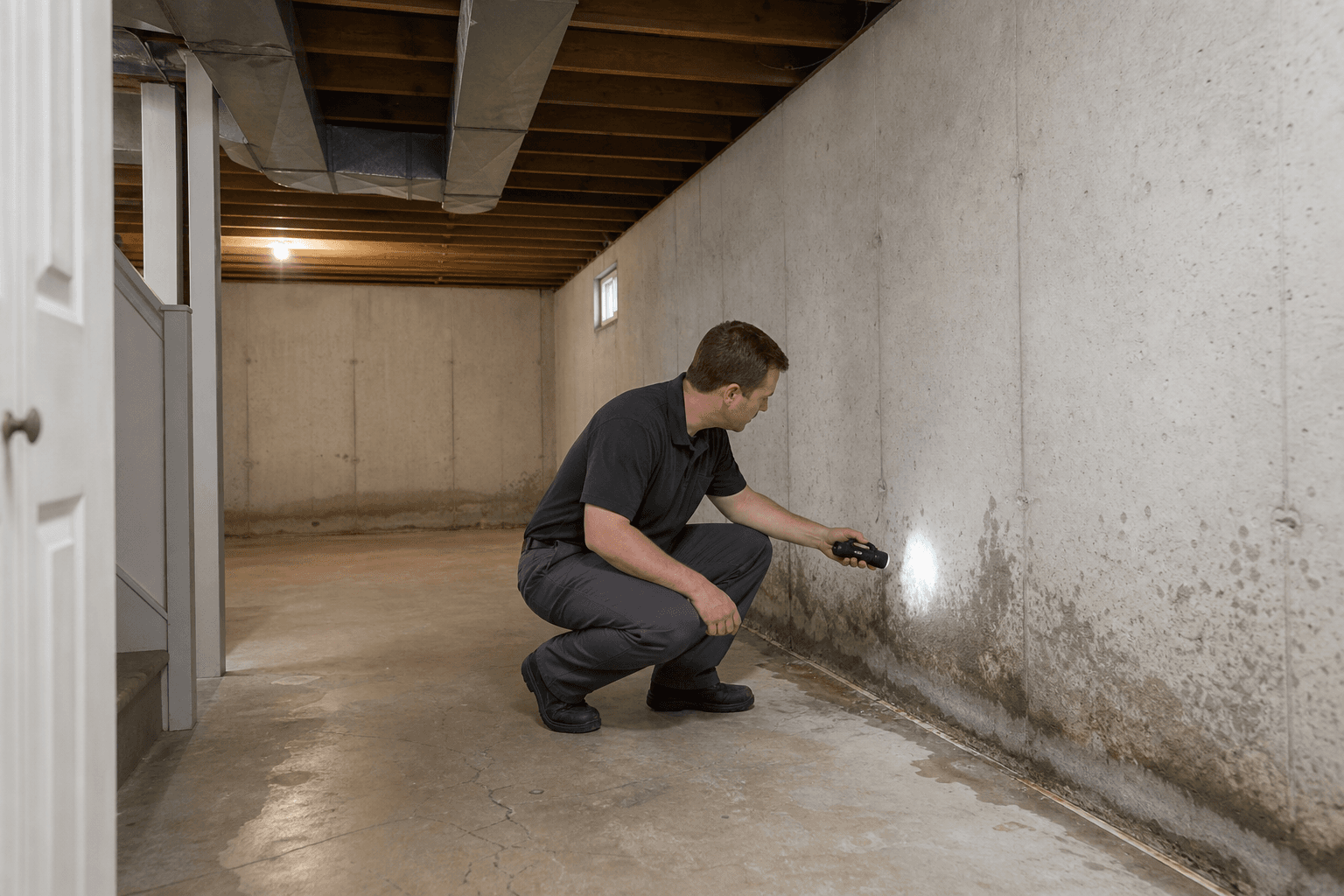
Water is a high-consequence concern because it can travel away from the point where it appears. A ceiling mark may reflect a roof, flashing, plumbing, condensation, or drainage problem. Basement dampness may relate to grading, downspouts, foundation conditions, plumbing, or a one-time event.
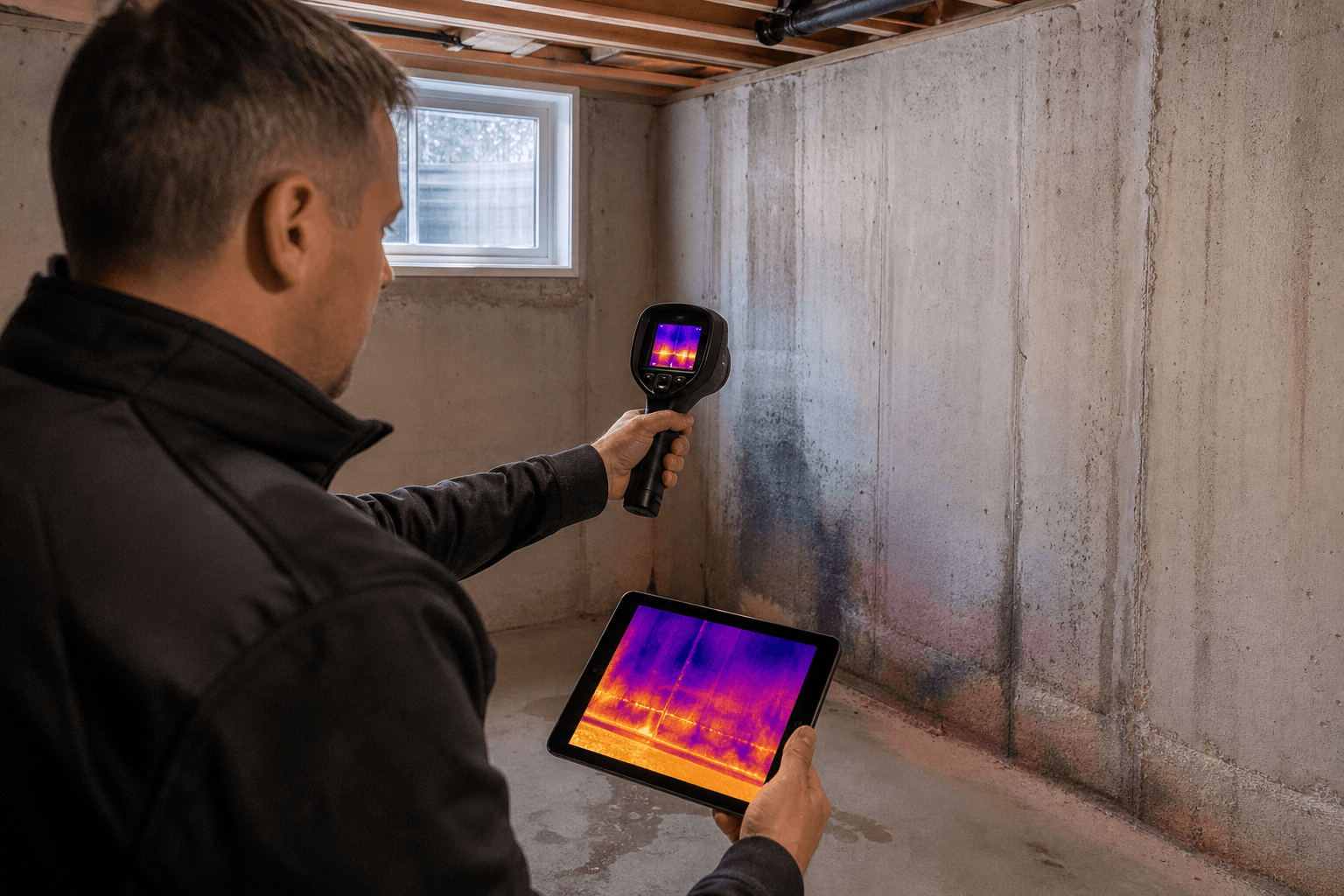
Look for the pattern behind the symptom: staining that returns, musty odours, deteriorated materials, efflorescence, damp insulation, swollen finishes, or moisture around several connected areas. These clues do not by themselves prove mould, concealed damage, or structural failure, but they justify a closer assessment of the source and extent.
Read the clue in context, not in isolation
The same visible defect can lead to very different decisions. Consider a hypothetical buyer viewing a detached home with a basement wall stain and a foundation crack.
Scenario one: a limited, explainable condition
The stain is dry, has not returned after recent rain, the downspout discharges well away from the foundation, and the crack is narrow with no visible displacement. The inspector documents the condition and recommends monitoring or a targeted repair. This may be a maintenance item, although the buyer should still understand the limitation and cost of the recommended work.
Scenario two: recurring moisture with related clues
The stain is damp after rainfall, the downspout discharges beside the foundation, the basement finish is deteriorated, and similar moisture marks appear nearby. The concern now involves an active water pathway and a larger affected area. A buyer may need drainage corrections, a qualified foundation or waterproofing assessment, repair estimates, and enough time to decide whether the property still fits the budget.
Scenario three: uncertain structural significance
The crack is accompanied by displaced masonry, a sloping floor, sticking doors, or a pattern of related cracks. A general inspection can document those observations, but a structural engineer may be the appropriate professional to assess significance and recommend corrective work.
The same reasoning applies elsewhere. A single aged roof shingle is not equivalent to widespread failed flashing and active attic moisture. One tripped breaker is not the same as heat, scorching, buzzing, damaged wiring, or repeated shutdowns. Do not touch exposed electrical components; the risk is not worth trying to confirm a suspected hazard yourself.
What a home inspection can identify and what it cannot prove
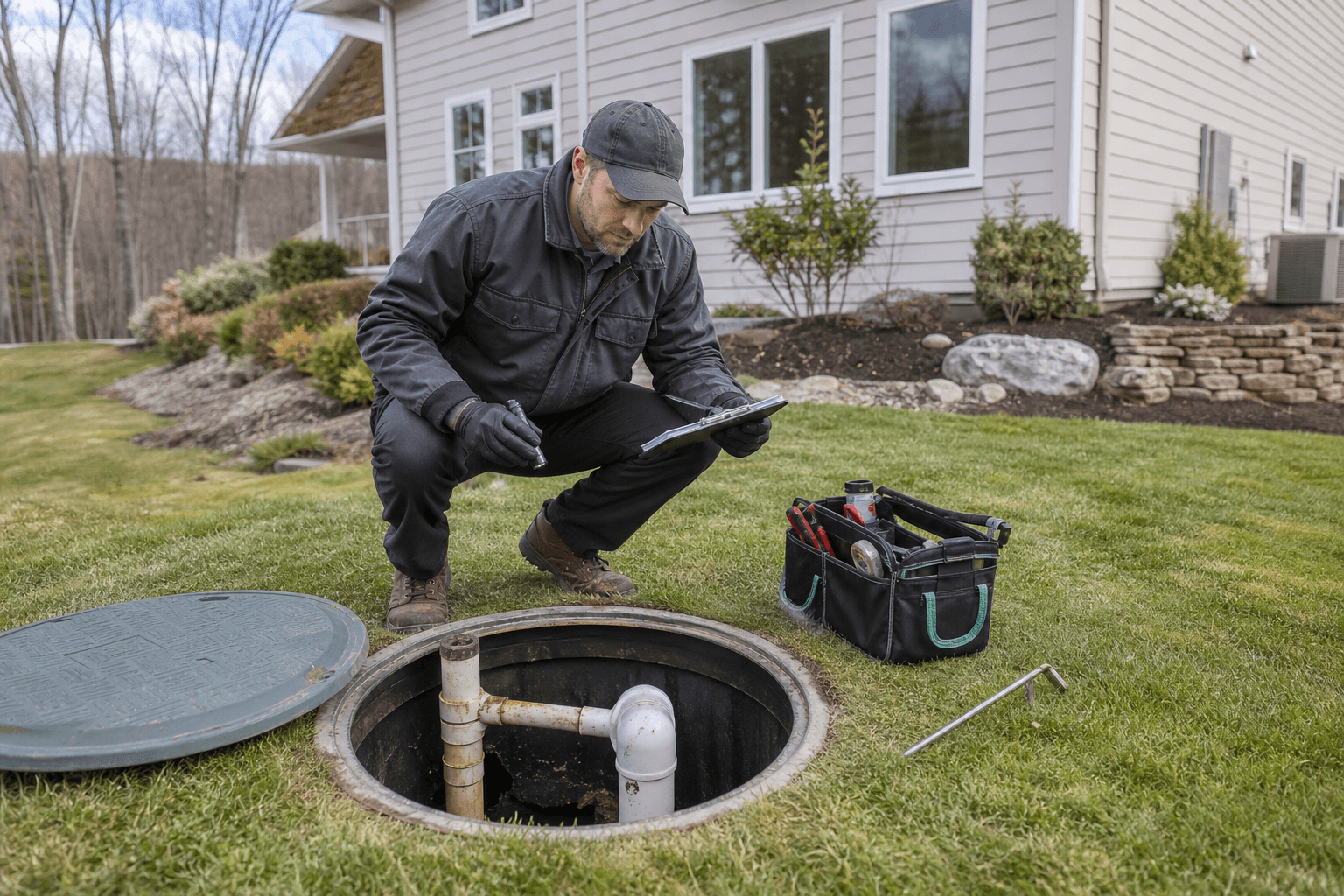
A visual home inspection can document accessible and visible conditions in major systems such as the roof, attic, exterior, foundation, basement, plumbing, electrical components, heating, cooling, insulation, windows, doors, and interior finishes. It can identify clues that warrant repair, monitoring, testing, or specialist investigation.
It cannot prove that a concealed condition is absent. A standard inspection does not automatically establish the presence or absence of mould, asbestos, termites, concealed leaks, hidden wiring defects, or structural problems behind finished surfaces. It also does not certify that the property complies with every building or zoning requirement.
Access matters. A finished basement may conceal foundation walls, stored belongings may block plumbing or electrical components, and roof or attic access may be limited by height, weather, construction, or safety conditions. A finding marked with an access limitation should not be treated as a clean bill of health for the unseen area.
Match the unresolved question to the professional who can answer it. Structural movement may call for an engineer, suspected electrical hazards for an electrician, a roof-system question for a roofing professional, a plumbing source for a plumber, and a specialized mould or environmental concern for the appropriate assessor.
What to do after a serious finding
A bad inspection does not automatically mean “walk away,” and a reassuring report does not eliminate every property risk. Use the finding to control the next decision.
- Read the observation and limitation together. Identify exactly what was seen, where it was seen, what was inaccessible, and whether the report describes an active condition or a possibility.
- Review the applicable deadline. If your agreement includes an inspection condition, review its deadline with your lawyer or real estate representative.
- Ask targeted questions. Request clarification about the likely source, affected area, urgency, and the reason for any recommended specialist assessment.
- Obtain appropriate evidence. For a potentially significant defect, seek a specialist opinion, repair scope, estimate, or additional testing that addresses the actual unresolved question.
- Compare the decision options. Depending on the agreement and negotiations, you may consider proceeding, requesting a repair or price adjustment, accepting the condition, or reconsidering the purchase.
- Judge uncertainty honestly. An unknown condition can be more difficult to price than a documented repair. Treat limited access or an unresolved source as part of the risk.
Whether a seller repairs an item or offers another adjustment depends on the agreement and negotiations.
If you are comparing inspection options, ASM publishes residential inspections starting at $199. The final price depends on property type, size, age, access, and requested scope, and the service includes a same-day PDF report with photographs and written observations. Review the published residential inspection scope and pricing against the property you are considering.
Should you attend the inspection?
Yes, attending can be useful if the schedule and property access allow it. You can see where a symptom appears, understand how the inspector distinguishes an observation from a limitation, ask focused questions, and learn which findings deserve priority in the report.
Attendance does not replace the written report or specialist follow-up. If you cannot attend, ask how the findings and limitations will be explained and reserve time to review the report before an applicable condition deadline.
If you already own the home: monitor the less urgent risks
Not every red flag requires an emergency response. If a concern is not active or immediately hazardous, record its location, photograph changes over time, keep repair documents, and address the source instead of only covering the visible symptom.
An annual home maintenance inspection can provide a repeatable, non-invasive review of accessible components and help document developing moisture, structural, or system concerns. It is a planning tool, not a substitute for urgent action or specialist assessment.
Frequently asked questions
Should I be at the home inspection?
Attending is useful when you want to understand the location, context, and priority of findings, but it is not mandatory. Whether you attend or not, read the report and its limitations before deciding how to proceed.
Do sellers have to fix everything found in a home inspection?
Whether a seller repairs an item or offers another adjustment depends on the agreement and negotiations.
What is the riskiest part of a home inspection?
The riskiest finding usually involves an immediate safety hazard, active water entry, structural movement, or a major system failure that is worsening or difficult to define. Water intrusion is often high-consequence, but a severe electrical or structural condition can be more urgent.
Can a home inspection prove that a serious problem is not present?
No. A visual inspection can document accessible conditions and identify warning signs, but it cannot prove that concealed damage, hidden leaks, mould, asbestos, pests, or every structural defect is absent.
For additional questions about inspection scope, pricing, reporting, and booking, review ASM’s inspection FAQs.
Choose the next step with the property and decision in view
The best response to a red flag is proportionate: clarify the evidence, investigate unresolved risk, protect your transaction timeline, and compare the property with the repair uncertainty it carries. For a GTA buyer who needs a documented review of accessible systems and a same-day PDF report, Asmhomeinspection provides a residential home inspection service matched to the property and decision.