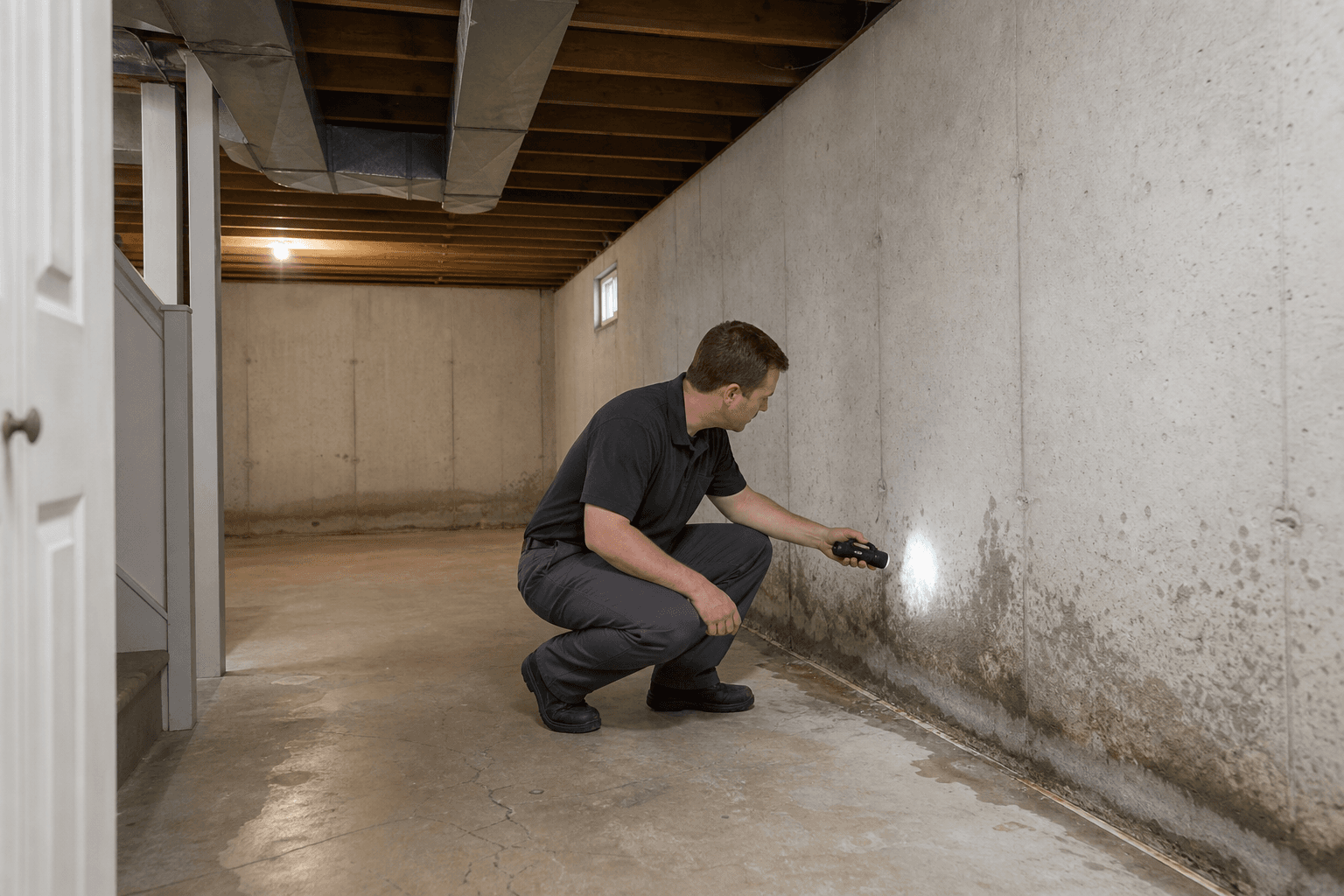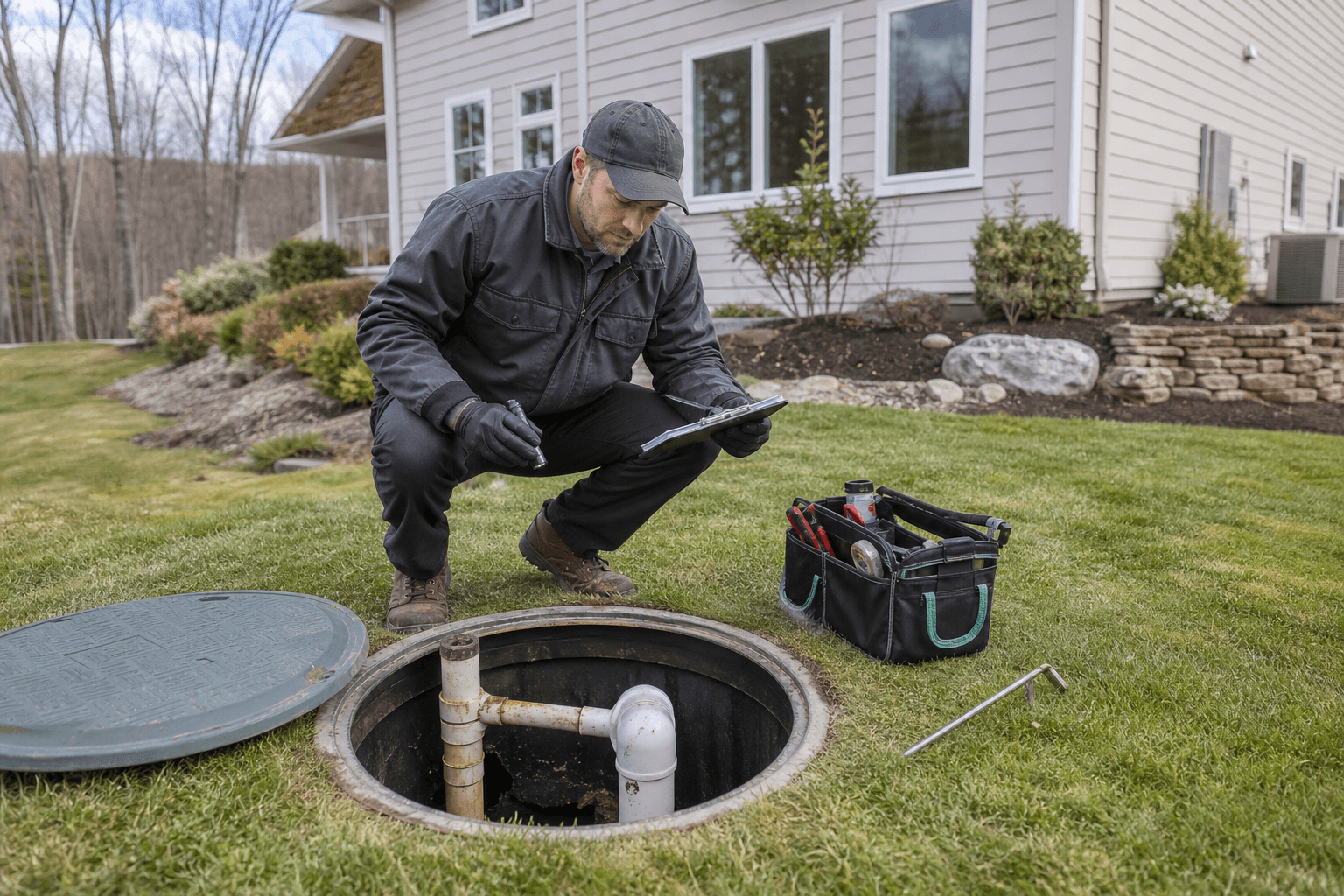
A septic system inspection typically reviews the accessible tank, lids, inlet and outlet components, pumps or alarms where present, distribution equipment, drain-field indicators, related plumbing flow, site conditions, and available records. It is usually a visual or operational assessment, not automatically pumping, excavation, dye testing, soil testing, repair, or certification. Related reading: Comprehensive vehicle inspection services at master mechanic east york.
That distinction matters before buying, selling, or maintaining a property with private wastewater servicing. This guide focuses on what the inspector examines, how the process works, what the report can document, and which questions require separate follow-up.
What a Septic System Inspection Usually Includes
The inspection begins with components that can be located, safely accessed, and reasonably observed. Depending on the property and written scope, the review may cover the tank, access points, inlet and outlet areas, baffles, pumps, alarms, distribution equipment, drain-field clues, connected plumbing, and visible site conditions.
The inspector may also consider permits, pumping records, repair invoices, maintenance history, reported symptoms, and changes in occupancy. These details provide context, but they do not prove that every buried component is sound or that the system will perform indefinitely.
Ontario describes a general home inspection as an in-person visual examination of major elements and systems. It is not a pass-or-fail test and does not determine whether a property meets zoning or building codes. A septic assessment should therefore be treated as a defined scope of work, not an automatic part of every residential inspection. Ontario’s description of a home inspection explains this distinction.
A general home inspection may overlap with a septic assessment around visible plumbing, drainage, moisture, or site conditions, but the component-specific scope can differ. Review septic system inspections versus home inspections for the broader comparison before booking.
Included, Separate, or Not Automatically Included?

Use this table as a starting point, not a guaranteed scope. Access, system design, weather, safety, available records, and the professional’s written agreement determine what can actually be inspected.
| Item | What an inspection may examine | What may require separate work |
|---|---|---|
| Tank and lids | Location, accessible condition, liquid level, and visible structural concerns | Excavation, lid replacement, or pumping |
| Inlet, outlet, and baffles | Accessible components and visible blockage, damage, or abnormal flow | Digging, dismantling, or repairs |
| Pumps, floats, and alarms | Presence, accessible condition, alarm status, and basic operation where permitted | Electrical diagnosis, removal, replacement, or performance testing |
| Distribution equipment | Accessible equipment and visible signs of uneven distribution or damage | Excavation, balancing, repair, or replacement |
| Drain field or leaching bed | Ponding, wet ground, odours, lush strips, erosion, or wastewater breakout | Soil evaluation, hydraulic testing, excavation, design review, or certification |
| Connected plumbing | Visible fixtures, drainage behaviour, slow-flow symptoms, and moisture observations | Camera work, leak repair, or detailed plumbing diagnosis |
| Records | Permits, pumping receipts, service records, repairs, alarms, and known symptoms | Obtaining missing files or proving current performance |
| Pumping | Conditions that make pumping worth discussing | Pumping itself, unless expressly included |
| Certification | Observed conditions and stated limitations | Formal certification, regulatory approval, or transfer documentation |
How the Inspection Works From Start to Finish

Review the property history
First, identify the question being asked. A buyer may need due diligence before a condition expires, while an owner may be investigating slow drains, an alarm, odour, wet ground, or a change in performance.
Useful records include septic permits, tank-location information, pumping history, repair invoices, inspection reports, drawings, and notes about additions or occupancy changes. Missing records do not prove failure, but they can limit what can be verified.
Locate components and confirm access
The professional identifies the tank, lids, risers, pump chamber, alarms, distribution equipment, and visible drain-field areas. A site sketch or prior service record can save time where components are buried beneath landscaping, decks, driveways, snow, or stored materials.
A locked pump chamber, inaccessible lid, or buried component that cannot be located may result in a limited inspection rather than a complete finding.
Observe plumbing and wastewater flow
Depending on the scope, selected fixtures may be operated or observed to identify slow drainage, backup, surging, leakage, or alarm conditions. This is the practical answer to “How do they test a septic system?” They observe accessible components and system response under suitable conditions, then compare those observations with the site layout, records, and reported symptoms.
Examine the tank and accessible components
Where safe access is available, the review may include the lid, tank condition, liquid level, inlet and outlet areas, baffles, and visible signs of scum, sludge, blockage, leakage, or abnormal flow.
Pump-out removes accumulated solids. It does not establish that the drain field, distribution equipment, tank structure, or pump controls will continue to work. A recently pumped tank is not proof that the entire system is sound.
Look for drain-field and site clues
The drain field may be underground, so the assessment often relies on visible indicators such as ponding, soft ground, wastewater surfacing, strong odours, erosion, damaged landscaping, vehicle traffic, or unusual vegetation patterns.
These clues are not equivalent to soil testing, hydraulic testing, excavation, or design evaluation. A dry surface on inspection day does not prove performance under every loading condition.
Document observations and limitations
The report should organize what was observed, what was inaccessible, what symptoms were present, and what should happen next. It should distinguish a directly observed condition from a suspected cause and identify when specialist follow-up is warranted.
Ontario’s septic guidance states that most rural septic systems are governed by the Ontario Building Code, with Part 8 covering sewage systems with a daily design flow of up to 10,000 litres. That context does not turn a visual inspection into a compliance certificate. Ontario’s septic-system guidance provides further background.
How to Prepare Before the Appointment
Good preparation reduces avoidable limitations. Before the visit:
- Locate the tank, lids, risers, pump chamber, alarm, distribution box, and drain-field area if known.
- Clear soil, snow, stored items, furniture, or vegetation blocking agreed access points.
- Unlock gates, utility rooms, pump controls, and other areas requiring access.
- Provide permits, site plans, pumping receipts, service records, repair invoices, and previous reports.
- Record slow drains, backups, odours, wet areas, alarms, high-water events, or recent plumbing changes.
- Tell the provider about occupants, pets, vacant periods, additions, accessory buildings, and unusual water use.
- Ask how water use should be managed before the appointment. Do not assume one restriction applies to every system.
- Share the purchase or closing deadline so follow-up time can be considered.
A septic inspection is typically a non-invasive review of accessible components and systems. Unusual findings may require a specialist assessment.
Rural-edge and estate properties deserve an early scope conversation. In Vaughan, private water or septic servicing and detached structures may sit outside a standard residential inspection unless they are specifically included and confirmed before the visit.
What the Report Should Document
A useful report identifies the agreed scope, observed components, operating observations, photographs, inaccessible areas, limitations, warning signs, and prioritized recommendations. It should distinguish a directly observed condition from a possibility requiring further investigation.
For a buyer, the report should clarify whether the next step is routine maintenance, pumping, specialist testing, repair pricing, engineering review, or local-authority confirmation. A photo-rich, system-by-system document is more useful than a statement that simply calls the system “good” or “bad.”
ASM’s broader inspection reports include photographic documentation and system-by-system findings. Those facts describe general inspection and reporting services, not automatic septic certification or specialized septic testing. Read about photo-rich inspection reports.
How to Read Findings and Choose the Next Step
A septic report is not a pass-or-fail certificate. Read every finding in light of the agreed scope and stated limitations.
If accessible components and operation appear satisfactory
Use the report as a record of observed condition and follow routine maintenance recommendations. Keep it with permits, pumping receipts, repairs, and future service records.
If pumping or maintenance is recommended
Ask whether the recommendation relates to tank contents, service history, access, an observed level, or another concern. Arrange the appropriate service and retain the invoice.
If access is limited or records are missing
Treat the result as an information gap, not proof of failure. A buyer may need component locating, access work, municipal records, or specialist assessment before deciding whether the uncertainty is acceptable.
If a pump, alarm, tank, or distribution concern is identified
Ask a septic contractor or qualified pump provider to diagnose the component and provide repair or replacement options. A general inspection can document an accessible symptom, but it is not a substitute for detailed repair diagnosis.
If the drain field appears stressed
Obtain the specialist evaluation needed to investigate performance, soil, distribution, design, or repair options. A buyer can then decide whether to proceed, request a repair arrangement or price adjustment, extend the investigation, or withdraw if the agreement permits.
Which Professional or Authority Handles Each Question?
Match the unresolved component or document to the professional who handles it. A general home inspector may document accessible plumbing, drainage, moisture, and site conditions within a residential scope. A septic contractor or pump provider handles pumping, pump diagnosis, tank access, component repair, and system-specific service.
An engineer or other qualified specialist may be needed for design, soil, hydraulic, or unresolved failure questions. Excavation, repairs, and replacement work require the appropriate contractor. A local authority may need to confirm permits, approvals, inspection programs, or transaction-specific requirements.
Ontario states that municipalities enforce applicable septic-system rules in most cases, although a local board of health, conservation authority, or another principal authority may have responsibility depending on the jurisdiction. Ontario’s explanation of regulatory roles helps identify the responsible authority.
Do not assume that one report satisfies every municipal, financing, transfer, health-related, or sale requirement. Ask the relevant authority or transaction professional what document is required.
Questions to Ask Before Booking
- Which components are included: tank, lids, baffles, inlet, outlet, pumps, alarms, distribution equipment, drain field, and plumbing?
- Is pumping included, recommended, or separate?
- Will locating or excavating buried components be part of the appointment?
- What happens if a lid, pump, alarm, or distribution box cannot be accessed?
- Who performs specialized testing, repairs, pumping, or certification?
- What records should I provide?
- How should water use, occupants, pets, and utilities be managed?
- Will the report include photographs, limitations, observed operation, and prioritized recommendations?
- Can the timing support my closing or maintenance decision?
- Which local authority should confirm permit, transfer, or compliance requirements?
Choose the Inspection Scope That Matches the Property
Before booking, confirm the property’s private servicing, accessible components, decision deadline, and whether the question concerns general condition, pumping, repair, performance, certification, or regulatory approval. That conversation prevents a standard visual inspection from being mistaken for a complete septic-system evaluation.
Asmhomeinspection provides residential and commercial property inspections across Toronto and the GTA, examining accessible systems and components within the agreed scope and delivering a photo-rich PDF report the same day. For a property where private servicing needs to be discussed alongside broader building condition, ask about the residential inspection service and confirm the septic-related scope before booking.