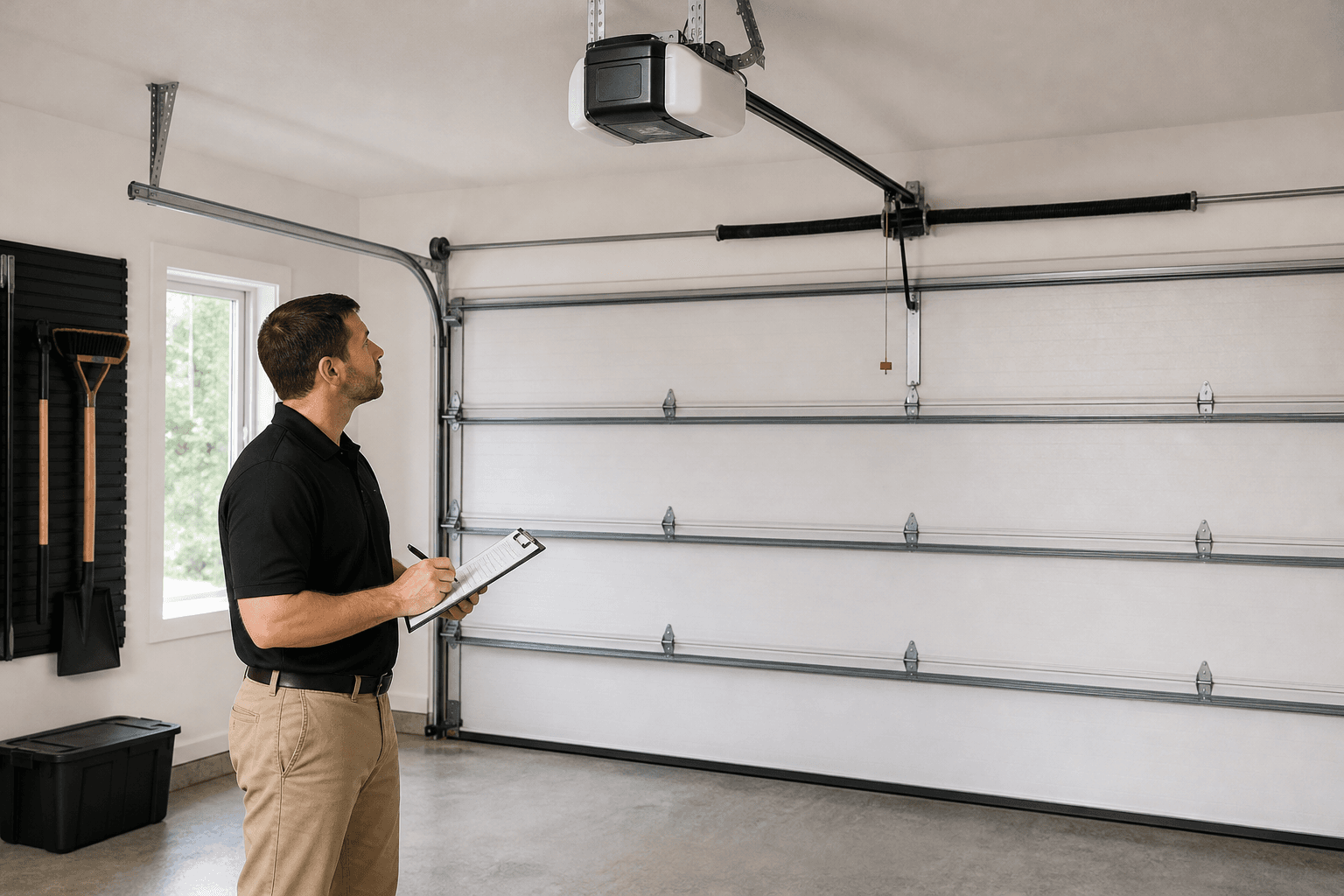
A garage door inspection reviews the visible door, tracks, rollers, springs, cables, opener, safety features, and surrounding garage conditions when they are accessible and safe to assess. It is not a pass-or-fail or code-compliance test. The useful question is which findings need action and which can be monitored.
For buyers, sellers, landlords, and homeowners, the report should distinguish observed conditions from repairs, specialist evaluations, and limitations.
What a Garage Door Inspection Can Actually Tell You
A garage door inspection is usually one part of a broader residential home inspection. The inspector observes accessible components, operates systems where conditions allow, records relevant findings, and explains limitations. Ontario describes a home inspection as an on-site visual examination of major home elements and systems. It is not a pass-or-fail test and does not determine zoning or building-code compliance.
| Inspection activity | What it may involve | What it does not establish |
|---|---|---|
| Visual observation | Panels, hinges, rollers, tracks, springs, cables, brackets, seals, opener, sensors, and surrounding conditions. | Concealed conditions, remaining service life, or the exact cause of a defect. |
| Basic operation | Whether the door opens, closes, binds, shakes, makes unusual noise, or responds to the opener. | Future reliability or proof that every function was tested. |
| Safety-feature observation | Accessible photo-eye sensors, reversal behaviour, emergency-release access, and obvious damage. | Certification, code approval, engineering opinion, or a guarantee of safety. |
| Reporting | Photographs, written observations, limitations, and recommended priorities. | A repair, adjustment, installation, warranty, or specialist diagnosis. |
Access, weather, stored belongings, the door’s condition, and the agreed scope affect what can be assessed. Ontario’s consumer guidance confirms that a home inspection is a visual review of major systems, including foundations, electrical, plumbing, attic ventilation, and roofs: Ontario home inspection guidance.
A residential inspection differs from a garage-door service call. A specialist is the better fit for detailed adjustment, part replacement, installation, or diagnosis of a high-tension mechanism.
The Garage Door Inspection Checklist
A useful inspection follows the load path from the door to the opener and surrounding structure. The component name alone does not determine urgency. Condition, operation, access, and the consequence of failure all matter.
Door panels, hinges, and seals
Look for impact damage, cracks, corrosion, separation between sections, bent hinges, loose fasteners, daylight around the closed door, and deteriorated weatherstripping. A small cosmetic mark is different from damage that distorts the door, catches during travel, or affects the connection between sections.
A worn seal does not automatically mean replacement. Record where the gap occurs and whether the floor, threshold, framing, or door alignment contributes to it.
Tracks, rollers, springs, and cables
Tracks should appear secure, aligned, and free from obvious bending. Rollers should remain in their tracks without excessive wobble, binding, or visible breakage. A displaced roller or badly bent track can affect safe operation.
Springs and cables carry substantial mechanical load. A broken spring, frayed cable, loose cable routing, or uneven door deserves prompt attention from a qualified garage-door professional. Do not dismantle, tension, loosen, or realign these parts yourself.
Opener, sensors, and emergency release
Observe the opener’s mounting, visible wiring, vibration, noise, response to controls, and whether the door stops or reverses as expected. Photo-eye sensors should face each other across the opening and remain unobstructed.
The emergency release should be accessible and identifiable, particularly if the garage is the only route into the home. A home inspection does not prove the opener’s internal electrical or mechanical condition.
Surrounding garage conditions
Consider the garage floor, framing near the opening, visible water entry, impact damage, electrical conditions, and separation between the garage and adjacent or overhead living areas when accessible.
Attached and tandem garages need additional context. Where a garage sits below living space, garage and shared-wall conditions deserve particular attention, along with visible conditions at the ceiling and floor slab.
How to Prioritize Findings
A failed safety function or uncontrolled door movement deserves a different response from faded paint, a dirty track, or a worn seal.
| Priority | Examples | Next step |
|---|---|---|
| Safety concern | The door falls, moves unpredictably, fails to reverse, or has visibly damaged high-tension parts. | Stop using it if operation creates a clear risk and arrange prompt specialist evaluation. |
| Repair recommendation | Damaged roller, bent track, broken hinge, loose mounting, malfunctioning opener, or panel damage affecting operation. | Obtain a component-specific assessment and repair quotation. |
| Routine maintenance | Debris, minor surface corrosion, dirty sensor lenses, worn seals, or noise without operating failure. | Clean accessible areas and arrange routine service where adjustment is required. |
| Monitor | Cosmetic deterioration or a non-structural finish defect not affecting operation. | Photograph it and reassess if it changes or affects movement or water control. |
| Specialist evaluation | The cause is uncertain or the question involves structure, electrical work, or compatibility. | Brief the appropriate garage-door professional, electrician, contractor, or engineer. |
Warning signs include a door that drops, a frayed or displaced cable, a broken spring, a badly bent track, a roller outside its track, or an opener that does not reverse. Noise alone is not a diagnosis. Grinding combined with binding or uneven movement deserves closer attention.
Two Safe Homeowner Checks

You can make limited observations without opening the opener or handling high-tension parts. These checks do not prove the complete system is safe.
Photo-eye sensors
- Confirm both lenses face each other across the opening and that nothing blocks the path.
- Clean visible dust with a soft, dry cloth if the equipment instructions allow it. Do not pull wiring or move brackets.
- Observe indicator lights, if fitted. A warning or inconsistent response can indicate obstruction, misalignment, wiring trouble, or another fault.
- Use normal controls only if the area is clear. Stop if the door behaves unexpectedly.
Automatic reversal
Use the opener’s intended test method and a suitable solid test object placed where the manufacturer specifies. Keep people, pets, hands, feet, and other body parts away from the travel path. If the door strikes the object, continues downward, hesitates, or behaves inconsistently, stop testing and arrange specialist evaluation.
Do not adjust or dismantle springs, cables, tracks, brackets, rollers, or other high-tension or load-bearing components. Those parts require appropriate training and equipment.
Repair or Replace?
Repair is more plausible when the door remains structurally sound, the problem is localized, and the hardware or opener can be corrected without safety or compatibility concerns. Replacement becomes more reasonable when several panels or load-bearing parts are damaged, the system is repeatedly unreliable, or it cannot be restored through focused repair.
Can you replace a garage door without replacing the tracks?
Sometimes, but not automatically. Compatibility depends on the replacement door’s dimensions, weight, section design, track type, radius, mounting arrangement, hardware, spring system, clearances, and opener requirements.
Existing tracks may remain when they are suitable and in good condition. Replacement may be necessary when tracks are bent, corroded, worn, incorrectly configured, or incompatible with the new door. A door professional should confirm this before installation.
When should the opener be assessed separately?
Arrange a separate assessment when the opener vibrates excessively, struggles to move the door, stops unpredictably, has damaged wiring or mounting, lacks a functioning safety response, or is unsuitable for the door’s weight and configuration. A new opener does not correct a damaged door, track, spring, or cable system.
What Findings Should Look Like in a Report
A strong report states what was observed, where it was found, what was tested, and what decision should follow. ASM organizes findings with photographs, written observations, prioritized recommendations, and same-day PDF delivery. See how home inspection reports turn observations into action items.
| Illustrative observation | Meaning | Next step |
|---|---|---|
| “Photo-eye response was not confirmed because the opener was inaccessible.” | This records a limitation, not a failed feature. | Restore access and arrange a safe operational check. |
| “The right-side cable appears frayed near the lower bracket.” | A visible condition may affect operation, but the complete system is not diagnosed. | Request prompt specialist evaluation before continued use. |
| “The left roller is damaged and the door binds during operation.” | The component condition is linked to an operating symptom. | Obtain a repair assessment and ask about related track or hinge damage. |
| “The vertical track is visibly bent at the lower section.” | The door path may not remain aligned. | Have the track and connected components assessed. |
| “The garage ceiling below living space shows an opening near the door assembly.” | The concern may involve separation or concealed construction. | Request appropriate specialist evaluation before closing or repair. |
For a buyer, a finding can support a defined specialist assessment, repair documentation, or price discussion. It does not automatically justify replacement. Sellers can address documented concerns before listing and retain professional repair records.
A Practical Garage Door Maintenance Calendar
A garage door deserves a short visual and operational check throughout the year. An annual home maintenance inspection can include the garage within a broader review of accessible systems.
Monthly
- Watch the door open and close from a safe position. Note binding, shaking, scraping, unusual noise, or uneven movement.
- Keep the doorway and sensor path clear of stored items and debris.
- Look at panels, hinges, rollers, tracks, cables, springs, and brackets without touching loaded components.
- Notice whether the opener responds consistently.
Seasonally
Clean accessible surfaces with a method suitable for the finish. Remove leaves and grit from the floor and beside the tracks, but do not bend, loosen, or realign tracks. Clean sensor lenses gently if permitted by the equipment instructions.
After severe weather or an impact, look for new panel damage, water entry, corrosion, shifted seals, or changed door travel.
Annually
Review the door alongside the garage floor, framing, drainage near the opening, visible electrical components, shared walls, and any living space above. Keep photographs and service records so changes can be compared.
When to Book a Residential Inspection
Include the garage door in a pre-purchase inspection when evaluating a home alongside its roof, structure, foundation, plumbing, electrical system, HVAC, attic, and interior. A pre-listing inspection can identify visible concerns before showings. A move-in or annual inspection can create a documented condition record.
A focused specialist is the better fit for spring or cable work, track adjustment, opener repair, installation, detailed load testing, or replacement compatibility. A residential inspection fits when the garage concern is part of a larger property decision. Related reading: Moisture meter inspection decision checklist.
ASM’s listed residential inspection price starts from $199. Scope varies by property type and accessibility, and can include major systems plus a same-day PDF report. For a broader property assessment, Asmhomeinspection’s residential inspection service can match the scope to your buying, selling, or maintenance decision.
Frequently Asked Questions
Can you replace a garage door without replacing the tracks?
Sometimes. Existing tracks can remain only when their type, dimensions, condition, hardware, clearances, spring arrangement, and the replacement door are compatible.
How can I test my garage door sensors safely?
Check that both lenses face each other and are unobstructed, then follow the opener’s intended test method. Keep people and pets away from the travel path and arrange specialist evaluation if the response fails or is uncertain.
How often should you check a garage door?
Observe operation monthly, look for changes seasonally and after severe weather or impact, and include it in an annual maintenance review. Arrange an inspection sooner if the door binds, shifts, drops, or develops visible damage.
What is the best way to clean a garage door?
Use a method suitable for the door’s surface and remove loose dirt from accessible areas. Do not force, bend, loosen, or adjust tracks, springs, cables, brackets, or other loaded hardware.
Does a home inspection test every garage door and opener function?
No. Testing depends on access, safety, stored belongings, equipment condition, and agreed scope. The report should identify what was observed or operated and explain limitations.