A chimney inspection protects your home, occupants, and heating appliances. This step-by-step guide walks GTA homeowners, buyers, landlords, and real estate professionals through exactly what to do before the inspector arrives, what the inspector will do on site, how to interpret findings, and when to request a WETT inspection for wood-burning appliances. Use the checklist and safety limits here to save time during the visit and reduce the chance of missed issues. For local certified providers look for InterNACHI or CCPIA credentials and same-day PDF report delivery from the inspector you hire, for example Asmhomeinspection.
Quick overview: what a chimney inspection is and which level you need
A chimney inspection is a system review of the chimney, flue, liner, flue connector and related appliances to identify safety and performance problems. Industry practice describes three inspection levels. A Level 1 is a visual review with limited openings and is used for routine maintenance or pre-listing checks. A Level 2 adds targeted access or camera work and is required after events such as a chimney fire, appliance replacement, or before transfer of ownership. A Level 3 is the most extensive and may include partial dismantling to evaluate hidden problems. National guidance sets out procedures and checklists inspectors use to determine safety and next steps (Chimney safety tests user's manual : procedures for determining the safety of residential chimneys).
Regional GTA guides report that a typical Level 1 inspection commonly takes 45 to 75 minutes. Time increases for Level 2 and Level 3 work depending on access, age and suspected issues, so confirm scheduling and turnaround when you book (The Complete GTA Chimney Inspection Guide: Levels, Costs, Timing & What Really Matters (2026)).
Step 1 — before the inspector arrives: a safety-first checklist you can use
Complete these homeowner-level tasks to make the inspection efficient and safer. Each item below is non-invasive and safe to do without entering the flue or performing repairs. Photograph items you want the inspector to see and provide records of past sweeps or repairs if available.
Exterior checks you can do safely
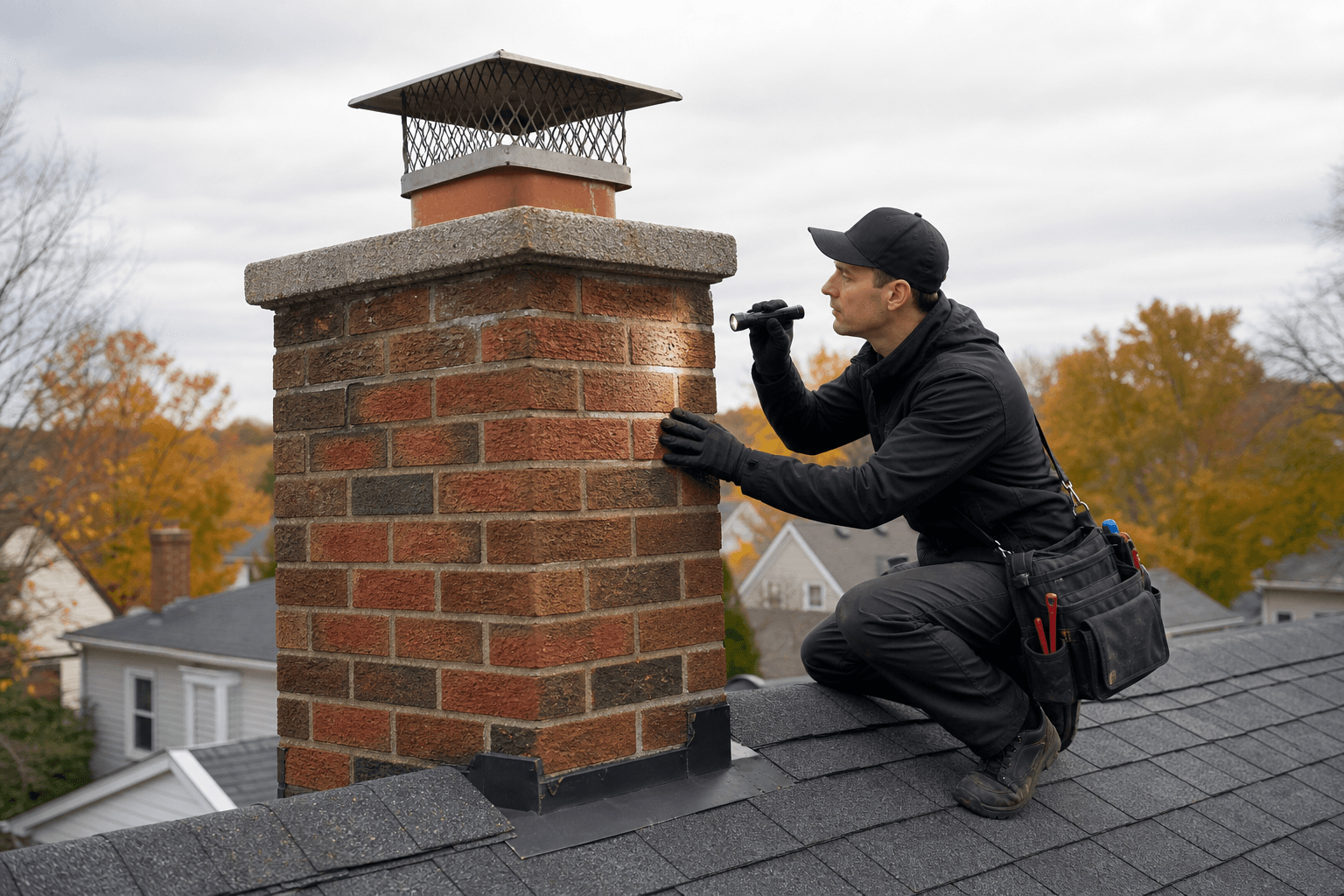
- Photograph the chimney crown or wash and note visible cracks, spalling or crumbling concrete. Crown problems are a common masonry defect (Chimney Inspection Checklist).
- Confirm a chimney cap or chase cover is present and note if it is damaged or missing, which allows animals and water into the flue.
- Look for missing mortar or cracked face brick, and take clear ground-level photos when possible.
- Inspect flashing at the roofline for gaps or rust and note whether the chimney is noticeably out of plumb.
- From a safe position on the ground, look into the flue mouth for large debris or nests. Do not climb on an icy, steep, or unstable roof to inspect the chimney.
If you can provide the inspector with photos before the visit, it speeds triage and helps the inspector bring any specialist tools they may need.
Interior checks you can do safely
- Open the fireplace and examine the opening, ash bed and visible throat for heavy soot or creosote. Note when the appliance was last swept.
- Smell for persistent smoke or combustion odour in the room and check for soot staining on walls or ceilings, which can indicate spillage. If you suspect spillage, stop using the appliance and report it immediately (Combustion Gases in Your Home – Things You Should Know About Combustion Spillage).
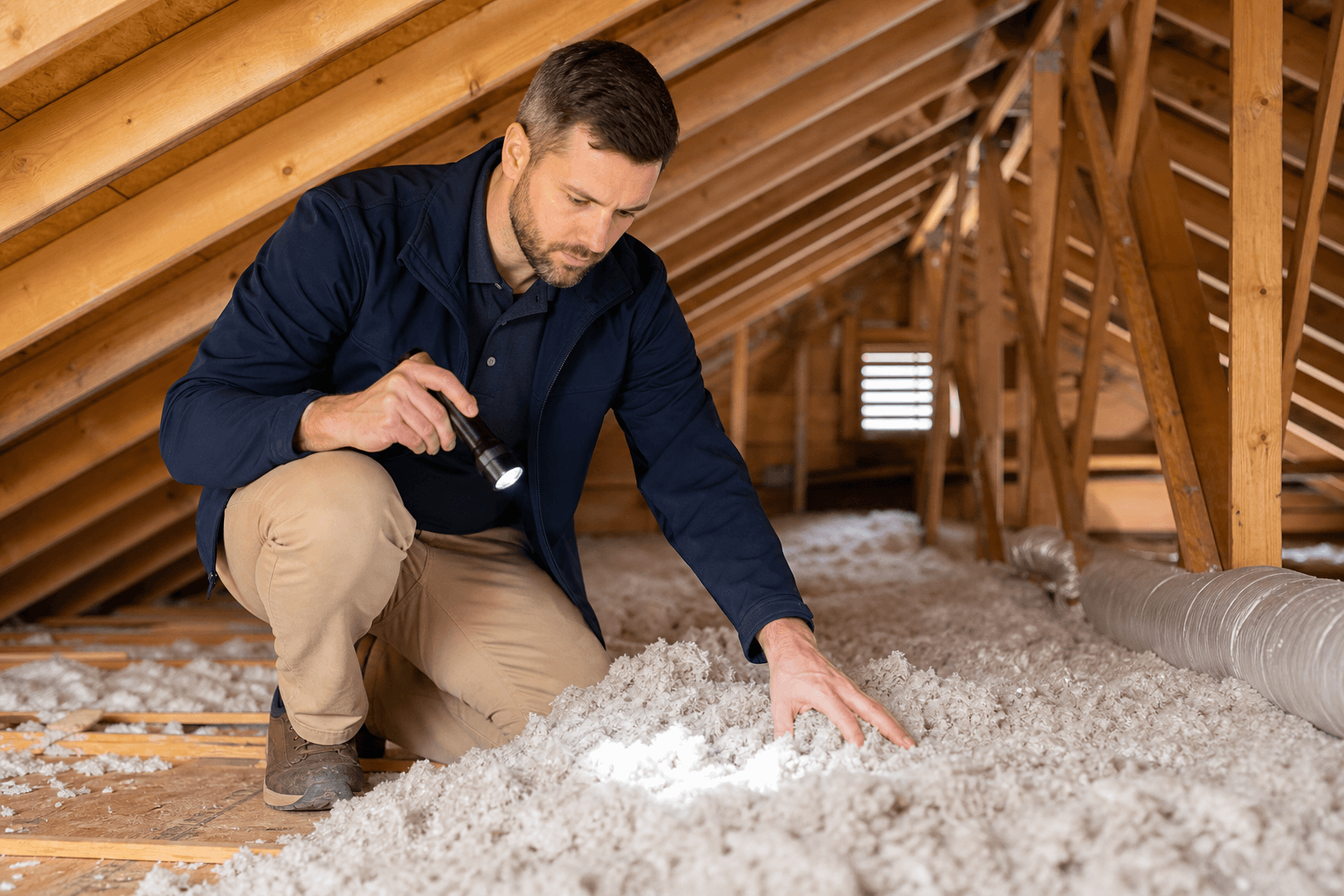
- Inspect the attic and floors adjacent to the chimney for water stains or dampness that suggest moisture penetration.
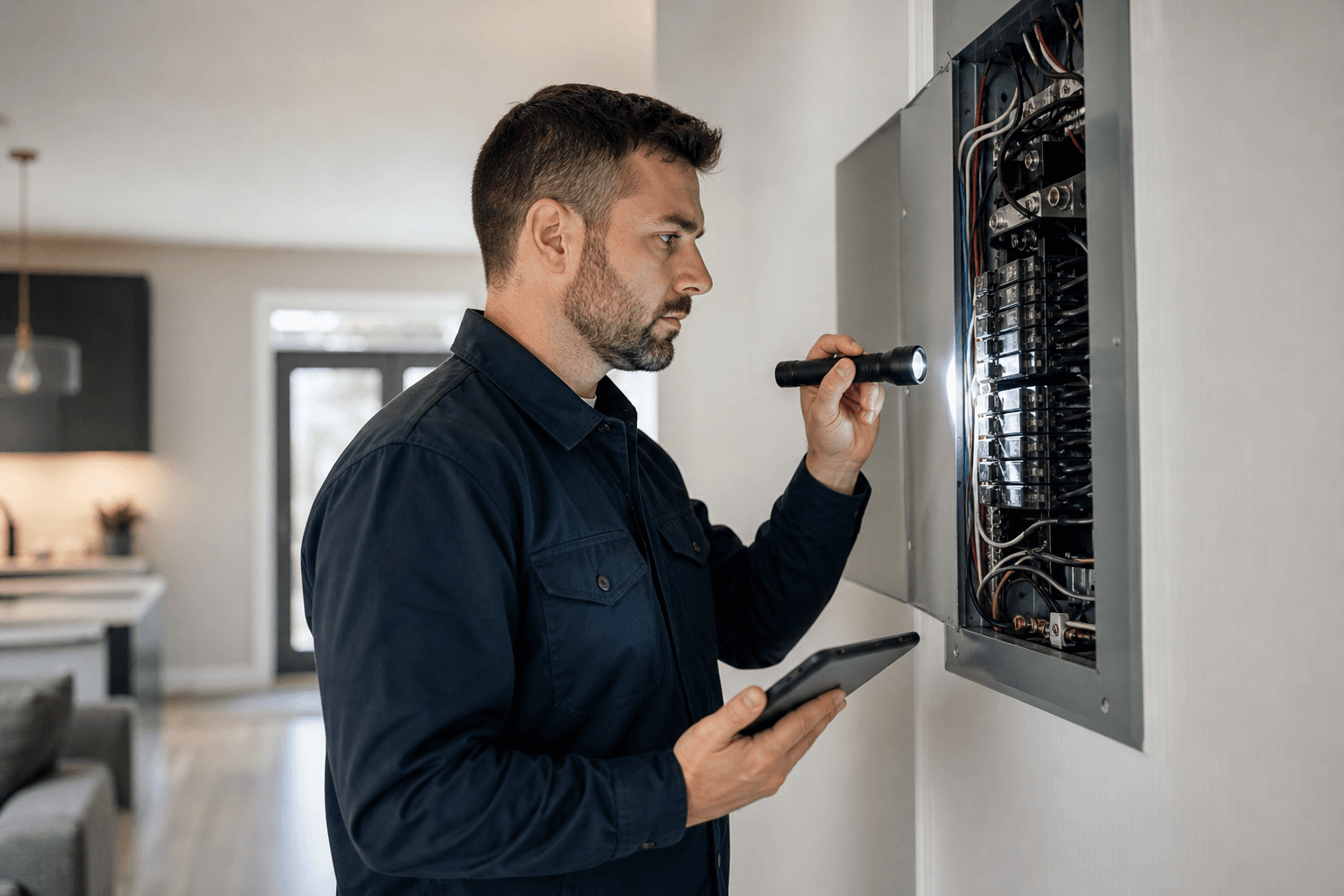
- Clear access to the furnace room and the appliance flue connector so the inspector can evaluate connectors and combustion appliances without delay.
Tasks to avoid and safety limits
Never attempt invasive or confined-space work. Specifically, do not enter the flue, remove liners, disassemble connectors, or force appliances to run as a test for spillage. Climbing on an unsafe roof or working on ladders in poor weather is hazardous. Natural Resources Canada advises leaving crack, blockage and combustion spillage checks to trained professionals who use safe testing procedures and instruments (Combustion Gases in Your Home – Things You Should Know About Combustion Spillage).
Step 2 — what the inspector will do on site and how long it takes

When the inspector arrives they will trace the whole system from the appliance outlet to the chimney top. For a Level 1 the inspector performs a visual review of exterior and interior elements, records observable defects, and may use photography or a borescope where openings exist. A Level 2 adds camera inspection of the flue interior or selective removal of chase covers and access panels. A Level 3 is performed when hidden defects are suspected and may require partial dismantling to expose the problem. The national chimney safety manual explains how checklists are used to evaluate the chimney, liner, flue connector and appliances to reach safety conclusions (Chimney safety tests user's manual : procedures for determining the safety of residential chimneys).
If you need a fast report for a real estate closing, ask whether the inspector offers same-day PDF delivery. Confirm whether the inspector will include photos or video and whether those files are embedded in the report or provided as separate attachments (the official website).
Level 1, Level 2 and Level 3 explained
Level 1 is suitable for routine maintenance and for properties without known events. Level 2 is appropriate after incidents such as a chimney fire, major appliance change, or before property transfer. Level 3 is reserved for cases where further exposure or dismantling is necessary to find the cause of a hazard or to assess structural damage. Use these definitions to match your property history to the correct scope and to budget for additional access work when it is likely required (Chimney safety tests user's manual : procedures for determining the safety of residential chimneys).
When to request a WETT-certified inspection or a specialist
WETT inspections are performed by specialists trained to evaluate wood-burning appliances against Ontario WETT standards. They are more detailed than a standard visual check and are sometimes required by insurers or for certain transactions. Request a WETT-certified inspector if you burn wood regularly, if clearances were altered by renovations, or if your insurer or municipal process asks for a WETT report (How to Pass a WETT Inspection the First Time).
Step 3 — how to interpret the report and what to do if problems are found

Reports typically group findings by urgency: immediate safety items, recommended repairs within a short timeframe, and maintenance items for future attention. Inspectors usually include photographs, photo captions, and clear recommendations, for example, immediate appliance shutdown or hiring a licensed mason or chimney technician. Follow the inspector's safety recommendations and arrange licensed repairs for combustion and structural defects without delay (Chimney safety tests user's manual : procedures for determining the safety of residential chimneys, Combustion Gases in Your Home – Things You Should Know About Combustion Spillage).
Urgent issues that require immediate action
- Combustion spillage that allows smoke or combustion gases into living spaces, which may require immediate appliance shutdown and professional correction (Combustion Gases in Your Home – Things You Should Know About Combustion Spillage).
- Large flue liner fractures or missing liner material that expose combustible structure.
- Severely weakened masonry, major leaning, or signs of recent movement that threaten collapse.
- Heavy, hardened creosote that cannot be safely removed with a routine sweep and poses a chimney fire risk.
When an urgent issue is reported, stop using the appliance until a qualified contractor makes repairs. For non-urgent repairs obtain at least two written quotes, ask for an explanation of proposed materials and methods, and confirm the contractor's credentials and insurance.
How to choose a qualified chimney inspector in the GTA
Ask these questions when you call for a quote. Request a sample report before booking so you can confirm the level of detail and turnaround time you will receive.
- What certifications do you hold, for example InterNACHI or CCPIA for general inspections, and WETT for wood-burning appliances? Check credentials on the inspector's website (the official website).
- Do you carry liability insurance and can you provide proof?
- Will you deliver a same-day PDF report, and are images and video included?
- Which inspection level do you recommend and what would trigger a deeper Level 2 or Level 3 scope?
- Do you perform borescope camera inspections and will you provide the video or images in the report?
Also check local references or online reviews, and confirm whether the inspector coordinates with licensed masons, sweep services, or relining specialists should repairs be required.
Printable one-page pre-inspection checklist
Use this condensed checklist as a handout for the inspector or as a quick reminder before the visit. It synthesizes standard inspection items and homeowner steps (Chimney Inspection Checklist, Chimney safety tests user's manual : procedures for determining the safety of residential chimneys).
- Exterior: photograph crown, cap, masonry, mortar and flashing, and note any leaning.
- Interior: photograph fireplace opening, soot levels, nearby stains and attic water stains.
- Access: clear the furnace room and appliance areas, provide keys or attic access if required.
- Safety: stop using the appliance if you smell persistent smoke or notice spillage.
- Documentation: gather records of last sweep, past repairs, appliance changes and warranties.
Frequently asked questions
What is the difference between a Level 1, Level 2 and Level 3 chimney inspection?
Level 1 is a routine visual inspection for chimneys and appliances without known events. Level 2 includes camera inspection or limited openings and is used after incidents, appliance changes, or for property transfers. Level 3 involves partial dismantling to investigate hidden hazards. National chimney safety guidance explains when each level is appropriate (Chimney safety tests user's manual : procedures for determining the safety of residential chimneys).
When should I book a WETT inspection in Ontario?
Book a WETT inspection if you have a wood-burning appliance, if your insurer requests one, after renovations that affect clearances, or when selling a property that relies on wood heat. WETT inspections follow a specific checklist and are performed by credentialed specialists (How to Pass a WETT Inspection the First Time).
How long does a chimney inspection take in the GTA and how much notice should I give?
A Level 1 inspection typically takes about 45 to 75 minutes in the GTA. Level 2 and Level 3 take longer depending on access and findings. Give at least a few days notice when scheduling, or ask the inspector about expedited options if you need a report quickly for a transaction (The Complete GTA Chimney Inspection Guide: Levels, Costs, Timing & What Really Matters (2026)).
What should I do if the inspector finds creosote buildup or a cracked flue liner?
Follow the inspector's written recommendations. Light to moderate creosote is usually scheduled for a professional sweep. Heavy, hardened creosote or a cracked liner may require immediate appliance shutdown and repairs such as relining or masonry work. Obtain written repair quotes and confirm the contractor's methods and credentials (Chimney safety tests user's manual : procedures for determining the safety of residential chimneys).
Can I perform a chimney inspection myself and which checks are safe to do?
You can perform non-invasive checks such as photographing the exterior crown, cap, mortar joints, and looking for interior soot stains or attic water marks. Do not enter the flue, remove liners, disassemble connectors, or climb on unsafe roofs. For combustion spillage risks or suspected structural defects contact a professional promptly (Combustion Gases in Your Home – Things You Should Know About Combustion Spillage).
Ready to schedule a chimney inspection with a certified GTA inspector who provides same-day PDF reports and professional follow up?
Asmhomeinspection can help you book the right inspection level and deliver the report you need for maintenance, sale, or safety verification.