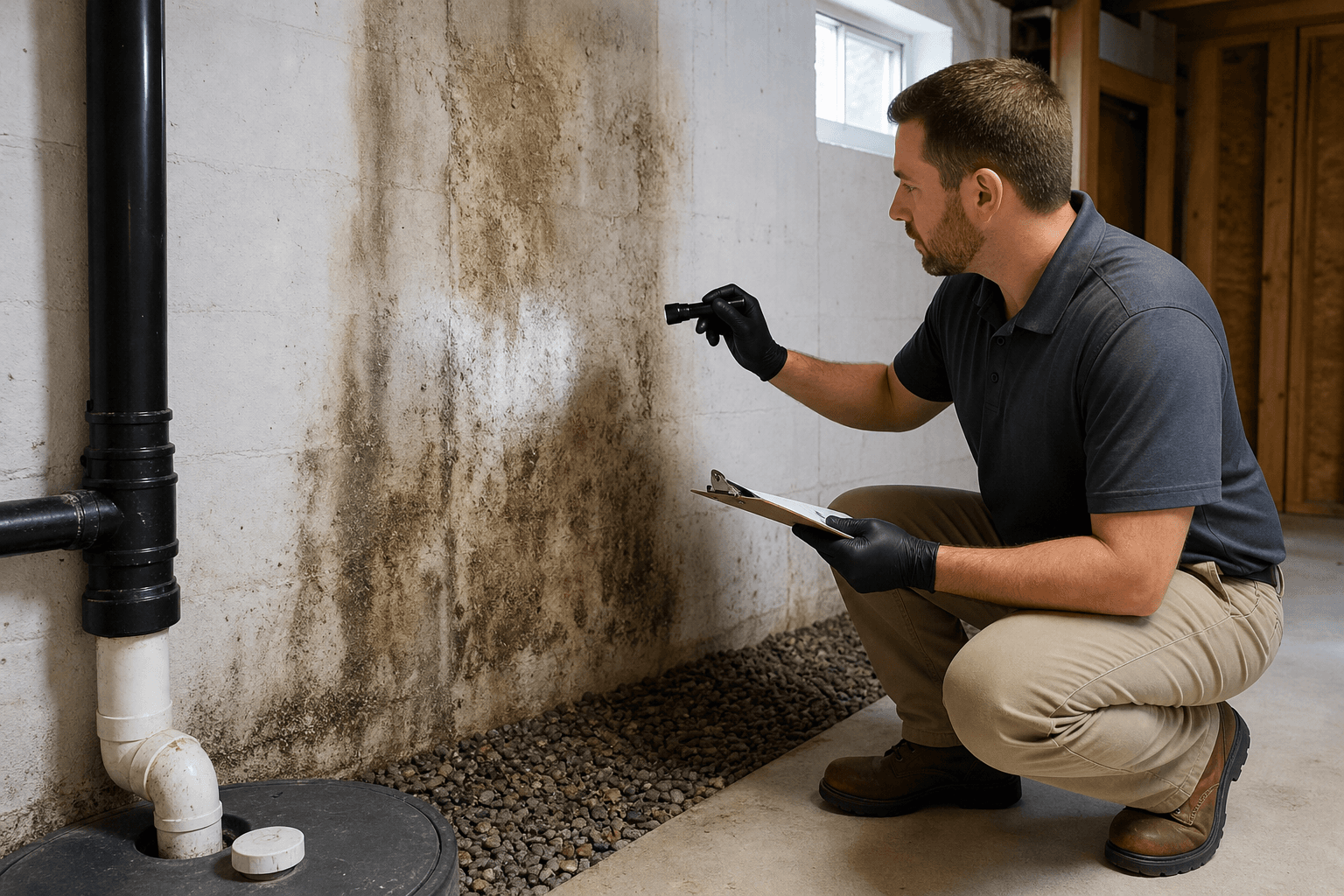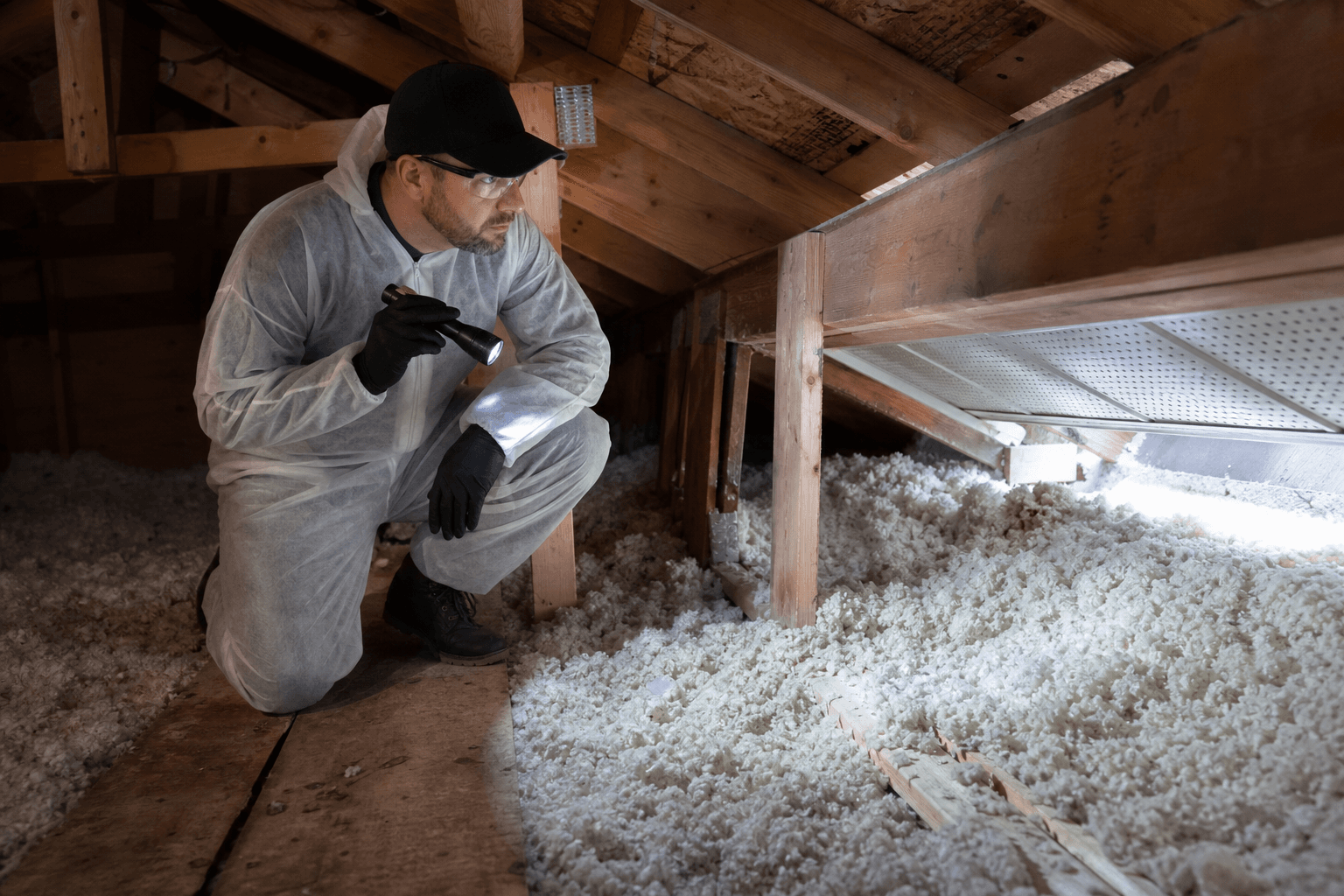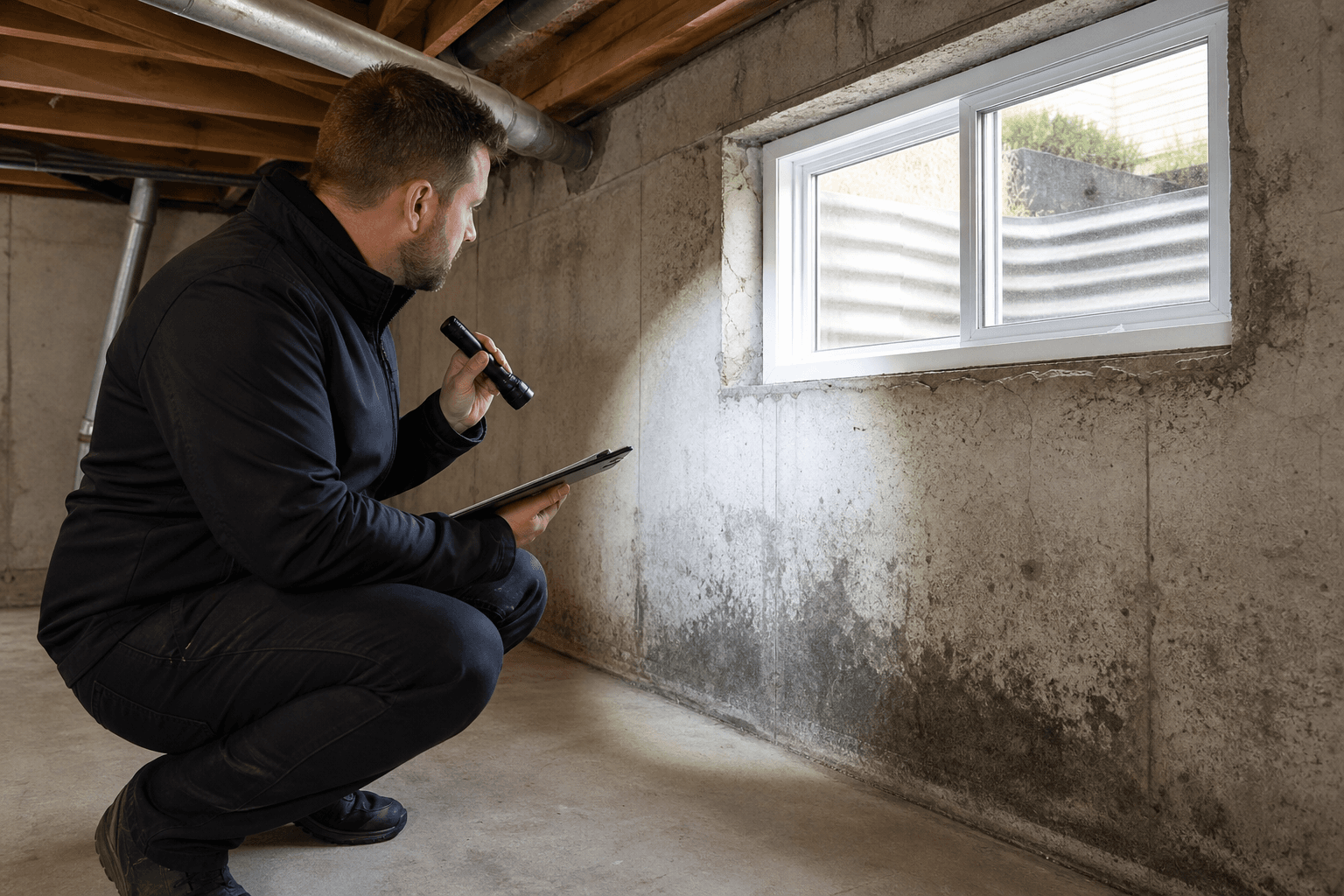
A mold risk assessment is a visual review of accessible areas for moisture pathways, stains, discoloration, condensation, musty odours, and mold-like growth. It can document visible conditions and suggest follow-up, but it cannot identify mold species, measure exposure, or rule out concealed mold without specialized work.
In Ontario, a home inspection is an in-person visual examination of a property’s condition and structure, not a pass-or-fail test or code-compliance assessment. Health Canada recommends checking rooms, attics, basements, crawl spaces, and storage areas for mold signs and moisture indicators such as stains and discoloration. Ontario’s home-buying guidance and Health Canada’s moisture and mould guidance provide useful context for those limits.
What a Mold Risk Assessment Actually Means
The phrase “mold risk assessment” is best understood as a practical mold and moisture review. The goal is to identify conditions that support mold growth, document what is visible, and decide whether the next step should be repair, specialist evaluation, testing, or monitoring.
A useful assessment looks beyond a dark mark on a wall. It considers where the evidence appears, whether materials feel or appear damp, whether water could be entering from outside or escaping from plumbing, and whether ventilation, drainage, or condensation is contributing to the problem.
The review remains limited to accessible and observable conditions. Finished walls, insulation, flooring, ceilings, crawl spaces, and other assemblies may conceal damage or growth. A clean visible surface does not prove that no concealed moisture or mold exists.
Assessment, Testing, Remediation, and Clearance Are Different Jobs
These terms are often used together, but they answer different questions. Choosing the right one prevents you from paying for a test that does not address the source of the problem.
| Service or activity | What it can help answer | What it does not establish by itself |
|---|---|---|
| Visual property assessment | Where visible moisture clues, staining, condensation, odours, and mold-like conditions occur | Whether concealed areas are affected, which species are present, or whether someone has been exposed |
| Laboratory sampling | A specific question about a collected air, surface, or material sample, when sampling is appropriate | That a building is generally safe or unsafe, or that a sample represents every area |
| Exposure or health evaluation | Health concerns through an appropriately qualified healthcare professional | The source or extent of a building moisture problem |
| Remediation | Removal, cleaning, containment, or repair work for identified affected materials | That the original water source has been corrected unless the building problem is also addressed |
| Clearance review | Whether defined post-work conditions meet an agreed review scope | A guarantee that future leaks or hidden conditions will not occur |
A question such as “What is a high level of Aspergillus or Penicillium?” cannot be answered responsibly from a general visual assessment. A laboratory result requires context about the sample, collection method, location, building conditions, and question being asked. It does not provide a medical diagnosis or a universal safe-or-unsafe threshold for every property.
If you are worried about mold exposure or symptoms, seek advice from a qualified healthcare professional. A property inspector can document building conditions, but does not diagnose illness or determine a person’s exposure.
Which Property Clues Deserve Attention?

A single stain does not reveal the entire cause. The stronger clue is a pattern connecting discoloration, damp materials, odours, condensation, drainage, ventilation, or a known leak.
Basements and foundation edges
Look for damp or discoloured walls and floors, efflorescence, peeling finishes, musty odours, wet contents, and water marks near foundation walls or window wells. Check whether downspouts discharge close to the foundation and whether grading directs water toward the building.
Bathrooms, kitchens, and windows
Inspect corners, ceilings, cabinet bases, plumbing fixtures, window sills, and exterior-wall surfaces for discoloration, soft finishes, failed caulking, condensation, or recurring dampness. Exhaust fans that do not remove moisture effectively can contribute to condensation, but visible symptoms alone do not prove the exact source.
Attics, crawl spaces, and storage areas
Accessible areas may show roof leaks, damp insulation, staining on sheathing, blocked airflow, or condensation. Storage rooms can preserve musty odours and hide wet contents after a leak or flooding event.
Attic insulation should not be added over an unresolved moisture pathway. An attic ventilation and moisture assessment can help separate an airflow concern from evidence needing roof or building-envelope follow-up.
Ceilings and HVAC-adjacent spaces
Ceiling stains below roof penetrations, plumbing lines, or upper bathrooms can point to different sources. Condensation near supply registers, ducts, windows, or cold-water piping may indicate a temperature and humidity problem rather than a roof leak.
Record the location, size, colour, odour, apparent moisture, recent weather, and whether the condition is changing. Do not scrape, cut, or disturb suspect materials simply to investigate them.
Choose the Right Next Step for the Clue You Found
Use the source and urgency of the clue to choose the next service. A visual property inspection is useful when the cause or extent is unclear, while a specialist or trade professional is more appropriate when the problem is already identified.
- Stain with no clear source: Arrange a visual property inspection covering surrounding roof, exterior, plumbing, attic, basement, and interior conditions.
- Visible growth or affected materials: Ask a qualified mold or remediation specialist to define the required work. A general inspection does not replace remediation.
- Possible laboratory testing: Define the specific question the sample should answer first. Testing without a clear question may not explain the source or change the repair decision.
- Clearly identified leak: Contact the relevant plumber, roofing professional, HVAC specialist, or building contractor.
- Active water entry, wet electrical components, or possible structural deterioration: Prioritize urgent repair and do not enter or handle an unsafe area to gather more evidence.
There is no universal answer to whether you should move because of “black mold.” The practical decision depends on extent, location, active moisture, access, required repair, and any health concerns assessed separately by a healthcare professional.
What a Visual Inspection Can Document
A residential or commercial property inspection can document accessible conditions across systems that often explain moisture clues, including the roof and exterior, structure and foundation, plumbing, electrical, heating, cooling, insulation, attic, basement, and interior surfaces.
For example, a ceiling mark may be considered alongside roof penetrations, attic sheathing, plumbing above the ceiling, exterior drainage, and nearby finishes. That broader view is more useful than treating every discoloured area as a standalone mold problem.
Asmhomeinspection provides certified residential and commercial inspections across Toronto and the GTA. The company holds InterNACHI and CCPIA certifications and delivers photo-rich PDF inspection reports the same day. The report can document visible observations and recommendations, but it does not turn mold-like staining into species identification.
How to Read a Mold-Related Finding in the Report

A useful finding separates what was seen from what is suspected. Read each item through five questions:
- Where is it? Identify the room, surface, level, and position relative to windows, plumbing, roof penetrations, or exterior walls.
- What was observed? Look for factual descriptions such as staining, dampness, discoloration, peeling material, condensation, or mold-like growth.
- What moisture pathway is possible? Consider plumbing, roof flashing, grading, drainage, or ventilation.
- What could not be inspected? Note concealed spaces, stored belongings, finished assemblies, unsafe access, or other limitations.
- What is the next action? Prioritize stopping water entry, drying materials, trade assessment, specialist work, or monitoring.
Consider this hypothetical finding: “Dark staining is visible on accessible attic sheathing below a roof penetration. The surrounding material is dry during the inspection, but the history is unknown. Roof and moisture-source follow-up is recommended.” This points to a roof and moisture investigation. It does not prove species, confirm hidden mold, or establish a health effect.
A home inspection report with photos and prioritized recommendations should connect the observation to a decision. Under Ontario’s Home Inspection Act, the inspection contract and scope matter. Ontario’s inspection legislation requires the inspection to be performed in accordance with the contract.
The Right Assessment Depends on Your Situation
Buying during due diligence
If you notice a musty smell, basement staining, attic discoloration, or a history of leaks, schedule an inspection early enough to understand the findings before your condition deadline. Ask which areas are accessible and which concerns require specialist follow-up.
Selling before listing
A seller may arrange an assessment to understand visible moisture concerns before showings and buyer due diligence. A pre-listing inspection for mold concerns can help organize repairs and documentation, but does not replace remediation expertise.
Owning or managing a home
Compare current conditions with previous leaks, repairs, seasons, and changes in odour or staining. An annual home maintenance inspection can help review recurring moisture risks across roof flashings, attic ventilation, drainage, downspouts, grading, and basements.
Renting or documenting move-in condition
Photograph stains, dampness, damaged finishes, and affected belongings, then report the issue through the appropriate rental process. Landlords benefit from dated documentation distinguishing a pre-existing condition from a new leak.
Evaluating a commercial property
Commercial owners, investors, and occupants should define the building area and decision first. A warehouse roof leak, HVAC condensation, or multi-unit staining may require different trade follow-up, access planning, and documentation than a single-family home.
Reduce the Conditions That Allow Mold to Grow
Risk reduction starts with moisture control. Repair water entry, correct drainage and downspout discharge, dry wet materials promptly, improve bathroom and kitchen ventilation, address recurring condensation, and preserve clear attic airflow.
After a repair, watch the same location through changing weather and normal use. A stain that remains dry and stable is different from one that expands after rain, returns after bathing, or appears with a persistent odour.
Do not disturb suspect materials or enter unsafe areas merely to investigate, particularly where electrical components, structural deterioration, contaminated water, or unstable surfaces may be involved.
Frequently Asked Questions About Mold Risk Assessment
How do you read a mold assessment report?
Start with the exact location and observed condition, then identify the likely moisture pathway, inspection limitations, urgency, and recommended follow-up. “Mold-like staining” describes an observation, not proof of species, exposure, or a health outcome.
Can a visual mold assessment find mold behind walls?
No. It may identify surface clues, moisture pathways, odours, or damage suggesting concealed conditions, but it cannot confirm what is behind walls, under floors, or inside inaccessible assemblies without specialized investigation.
Is mold testing needed after a visible leak?
Not automatically. First determine whether the leak stopped, materials dried, and visible affected material remains. Testing is worth considering only when a qualified professional identifies a specific question that a properly collected sample can answer.
What is the difference between a mold assessment and mold remediation?
An assessment documents conditions and helps decide what happens next. Remediation is the physical work of addressing affected materials and the moisture source under a defined scope.
Make the Next Property Decision With Better Information
If you need an accessible visual review of moisture pathways and mold-related property conditions, Asmhomeinspection provides certified residential and commercial inspections across Toronto and the GTA, with photo-rich PDF reporting delivered the same day. Learn more about residential home inspections and the accessible systems they review.