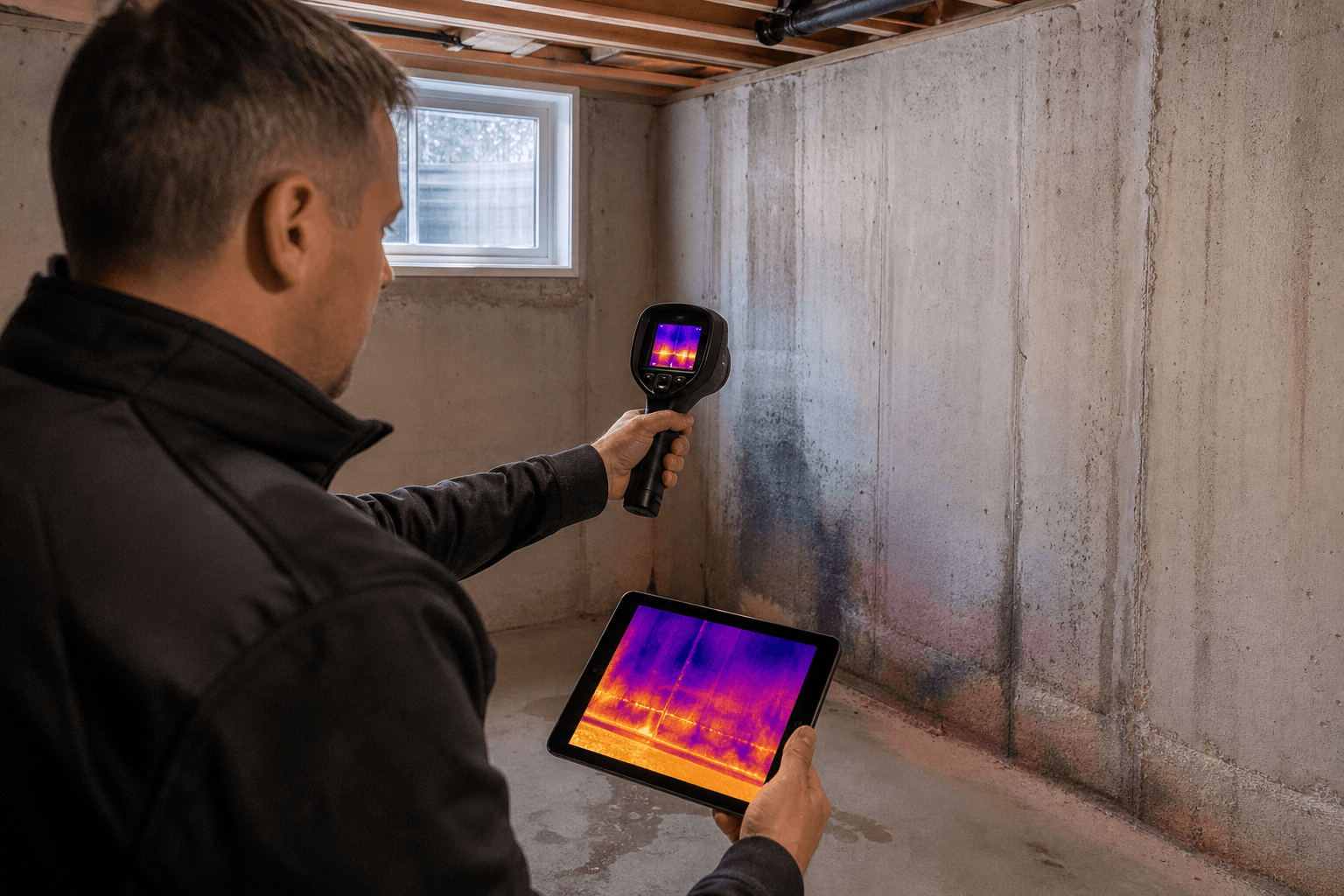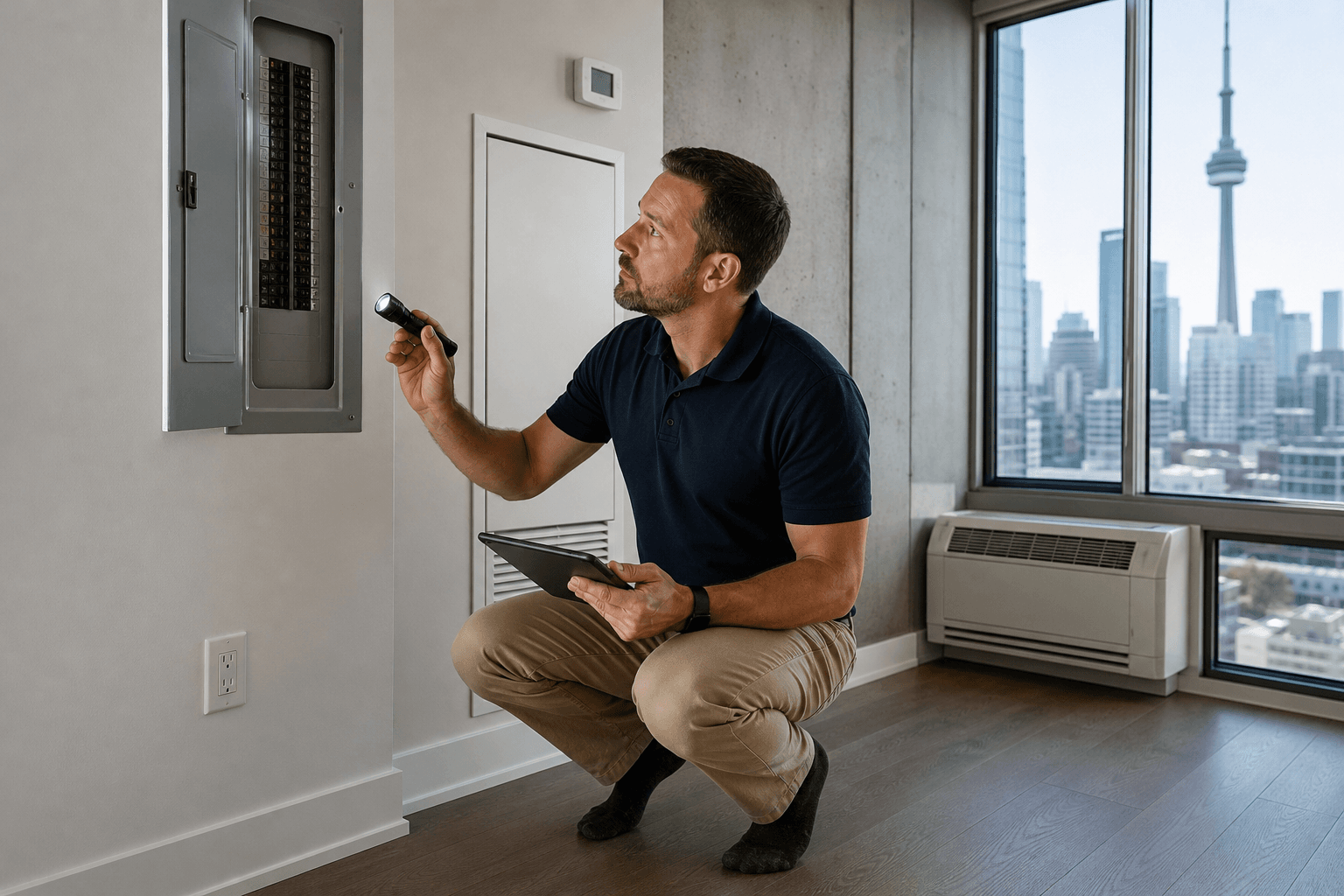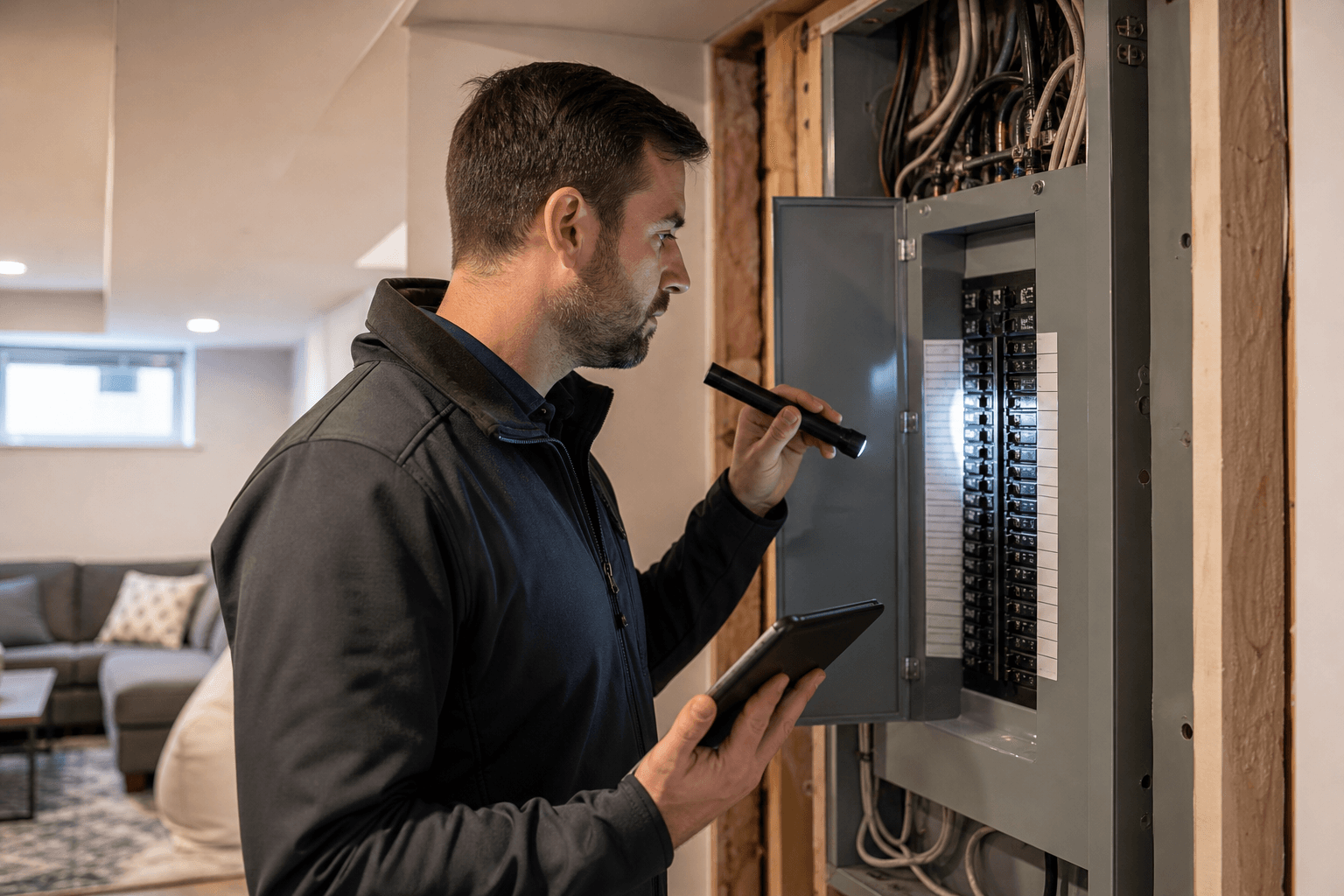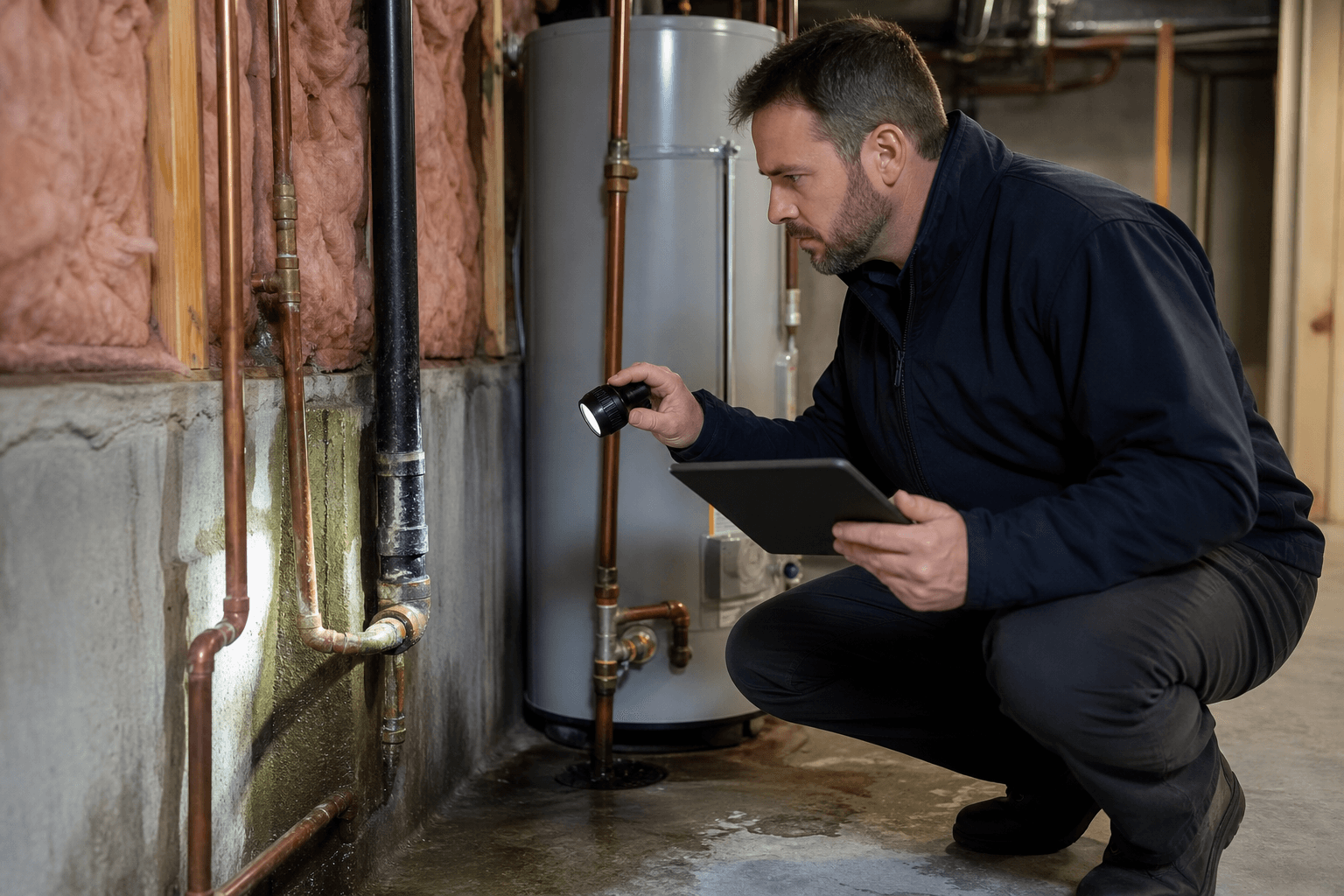
A plumbing leak detection inspection in Toronto can help document accessible plumbing, visible water damage, and moisture indicators before you buy, sell, repair, or maintain a property. However, a standard home inspection is usually a visual, non-destructive review. It is not automatically the same as emergency plumbing response or specialized testing to locate a leak behind a finished wall, below a floor, or underground.
The right choice depends on the evidence available and the urgency of the problem. Use a visual inspection when you need documented information about accessible conditions. Call a plumber or other specialist when water is actively escaping, the source is concealed, or immediate repair is more important than documentation.
Quick summary

- Choose a visual inspection to review accessible supply lines, drainage, fixtures, water heaters, visible piping, and related moisture signs.
- Choose urgent plumbing help for a burst pipe, active flooding, sewage backup, rapidly spreading water, or electrical danger near water.
- Ask specifically about concealed-leak location if the suspected source is behind a wall, beneath a finished floor, or underground.
- Provide the address, property type, symptom history, access limitations, and timing before booking.
- A same-day PDF report can organize follow-up questions, but it does not replace plumbing repairs, engineering advice, or specialist testing.
Which service do you need?
People often use “leak inspection” to describe several different services. Clarifying the difference before booking prevents a routine inspection from being treated as an emergency repair visit or a specialized leak-location investigation.
| Situation | Best starting point | Purpose |
|---|---|---|
| Visible stain, damp area, or concern before buying or selling | General visual home inspection | Document accessible plumbing, visible moisture indicators, and related property conditions. |
| Recurring plumbing symptom with an identifiable area | Targeted plumbing assessment | Review the reported concern more closely and determine whether plumbing follow-up is needed. |
| Active flooding, burst pipe, sewage backup, or rapidly spreading water | Emergency plumber or immediate professional help | Control the water, protect people and property, and complete urgent repair or mitigation. |
| No visible source behind a wall, under a floor, or underground | Specialized concealed-leak detection professional | Use confirmed leak-location methods if required. |
A general inspection is particularly useful when the broader condition of the property matters, such as during a purchase, listing, move-in, or maintenance review. It provides context around the plumbing concern instead of examining one pipe in isolation.
When a plumbing leak inspection makes sense

Book an inspection when you need to understand a condition and plan the next step, rather than when water requires immediate control. Common reasons include a ceiling stain, damp basement area, musty odour, recurring drainage concern, unexplained water use, or evidence that a previous repair may not have resolved the underlying issue.
These signs are reasons to investigate, not diagnoses. A stain may relate to plumbing, exterior water entry, condensation, or a previous event. A slow drain may reflect a localized blockage, a wider drainage issue, or a condition that needs a plumber to assess.
An inspection can also support a pre-purchase or pre-listing decision. Buyers may want visible plumbing conditions documented before finalizing a purchase, while sellers can use findings to prioritize questions and repairs before the property reaches the market.
What a Toronto inspection can examine
A residential inspection generally reviews plumbing components that are accessible at the time of the visit. This can include plumbing supply and drainage, visible piping, plumbing fixtures, the water heater, basement areas, and visible signs of moisture or water damage. The exact scope depends on the property, access, and service agreed before the inspection.
The review is visual and non-destructive. An inspector may document a visible connection, staining, corrosion, dampness, or another observable condition, but should not be expected to open walls, remove finished flooring, dismantle installed systems, or excavate a buried line as part of a standard inspection.
What the inspection cannot confirm
A standard home inspection cannot guarantee that every concealed leak will be found or identify the exact source of every water symptom. Pipes behind finished walls and ceilings, under slabs, beneath flooring, or below ground may not be accessible for visual review.
It also does not automatically include repairs, destructive investigation, engineering conclusions, municipal code determinations, or specialized electronic, acoustic, thermal, or camera-based leak-location testing. If you need one of those services, ask whether it is available, who performs it, what equipment is used, and whether it must be arranged separately.
The practical value of the inspection is accurate documentation of observed conditions and limitations. A report that says an area was inaccessible is useful because it identifies where additional investigation may be necessary.
Toronto-specific plumbing considerations
Toronto contains a wide range of housing ages, construction types, renovations, condominiums, townhomes, and converted spaces. That variety matters because visible plumbing arrangements, access, drainage layouts, and repair responsibilities can differ significantly from one property to another.
Older properties may include aging plumbing systems or original clay drains, but their presence should never be assumed without property-specific evidence. Renovated basements also deserve careful expectation-setting because finished walls and ceilings can limit visual access.
In a condominium, an inspection usually focuses on the accessible interior of the unit, including fixtures, plumbing serving the suite, and visible conditions. Some exterior pipes, shared drains, risers, roofs, and other common elements may fall under the corporation’s responsibility. Review condominium documents and ask management about shared-system concerns.
When to stop investigating and get urgent help
Do not wait for a routine inspection if water is actively flowing, a pipe has burst, a ceiling is sagging, a drain is backing up with sewage, or water is spreading toward electrical equipment. Move people away from danger, avoid contact with contaminated water, and contact the appropriate emergency professional or utility provider. The City of Toronto provides guidance on pipe leaks or bursts.
If basement water is entering during rainfall or snowmelt, immediate protection and cleanup may be more important than arranging a standard inspection. After the urgent risk is controlled, an inspection may help document visible conditions and support decisions about repairs, maintenance, or a future transaction.
What to prepare before booking
Give the inspector or service provider enough information to decide whether a general inspection, targeted assessment, or specialist is appropriate:
- Property details: address, property type, approximate age, unit or building status, and occupancy.
- Concern location: room, ceiling, wall, basement, fixture, drain, or exterior area.
- Timing: when the symptom began, whether it recurs, and whether water is active now.
- History: previous leaks, water damage, renovations, plumbing repairs, or drainage work.
- Access: locked rooms, stored items, finished areas, tenant occupancy, or condo access rules.
- Decision deadline: closing date, listing date, move-in date, maintenance schedule, or investigation urgency.
Before confirming, ask what the visit includes, what it excludes, whether the scope is visual or targeted, whether specialized leak-location testing is available, and when the report will arrive.
How to use the inspection report
A same-day PDF report can turn a vague concern into an organized follow-up list. Photographs and written observations may help you show a plumber where a visible condition was recorded, ask a contractor what further opening or repair is needed, discuss priorities with an agent, or share documentation with a property manager or insurer.
Read the report for observed conditions, recommended next steps, and limitations. A visible moisture mark may justify further assessment, but it does not by itself establish the source, extent, diagnosis, or repair method.
Cost, scope, and quote questions
Published residential inspection pricing from ASM starts at $199, but the exact figure varies with property type, size, age, access, and requested scope. Commercial inspections are quoted individually. Treat the starting price as an entry point, not a universal quote for every Toronto property.
- Is this a general residential inspection, a targeted plumbing assessment, or another service?
- Will accessible supply lines, drainage, fixtures, the water heater, basement areas, and visible moisture signs be reviewed?
- What areas will be excluded because they are concealed, unsafe, finished, or inaccessible?
- Does the service include specialized leak-location testing, or would that require another provider?
- When will the PDF report be delivered, and will it include photographs and written observations?
If the concern is part of a home purchase
A plumbing concern should be considered alongside the property’s overall condition, access, transaction timing, and the cost or feasibility of follow-up work. Buyers comparing properties can benefit from a clear process for reviewing visible findings, obtaining specialist opinions, and deciding whether a concern changes the purchase plan. This guide to buying a home in Toronto places the inspection decision within the wider path from budget to closing.
Do not use an inspection report as a guarantee that a property is free from hidden defects. Use it to identify what is visible, what remains uncertain, and which questions should be answered before you commit.
Frequently asked questions
Can a general home inspection find a hidden plumbing leak behind a wall?
It may identify visible signs such as staining, dampness, or an abnormal accessible connection. It cannot guarantee the location or source of a leak behind a finished wall. Specialized leak-location testing or plumbing investigation may be needed.
Do I need a plumbing leak inspection for a Toronto condo?
It can be useful for concerns involving in-suite fixtures, visible piping, drainage, water damage, or plumbing components serving the unit. Common elements may fall under the corporation’s responsibility, so review building records and ask management about shared systems.
Is a slow drain enough reason to book a plumbing inspection?
A recurring slow drain is a reasonable reason to investigate, especially if it affects more than one fixture, returns after clearing, or occurs with dampness or odours. A plumber may be the better first call if the drain is blocked or backing up.
Does a home inspection include plumbing repairs or specialized leak-location testing?
No. A standard inspection documents accessible, observable conditions and reports its limitations. Repairs, destructive investigation, and specialized electronic, acoustic, thermal, or camera testing should be confirmed separately.
What should I do if I discover active water leaking before the inspection?
Prioritize safety and water control. If the leak is severe, spreading, contaminated, or near electrical equipment, seek immediate professional help rather than waiting for a routine inspection.
Make the next step match the leak risk
A Toronto plumbing leak inspection is most useful when you need a documented view of accessible plumbing and visible moisture conditions. It can support a purchase, sale, move-in, maintenance, or repair decision, but it should not be presented as a guarantee of concealed leak detection.
Match the response to the evidence: use a visual inspection for planning and documentation, a plumber for repair or active problems, and a qualified specialist when the suspected leak is concealed and requires dedicated location testing.
Asmhomeinspection provides certified residential and commercial inspections across Toronto and the GTA, with accessible plumbing review and a same-day PDF report included within the agreed scope. Visit Asmhomeinspection with the property address and concern details to confirm the appropriate inspection path.