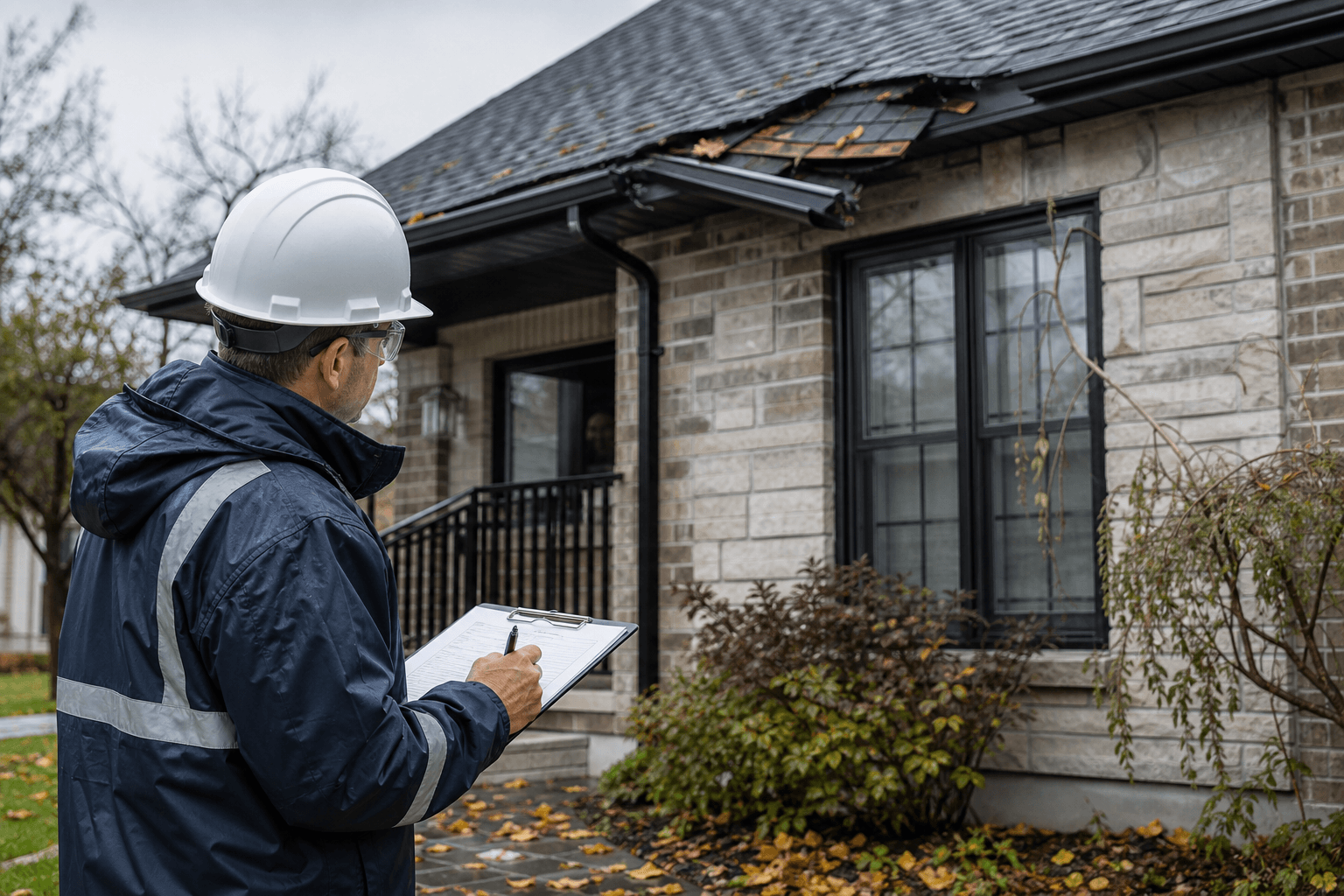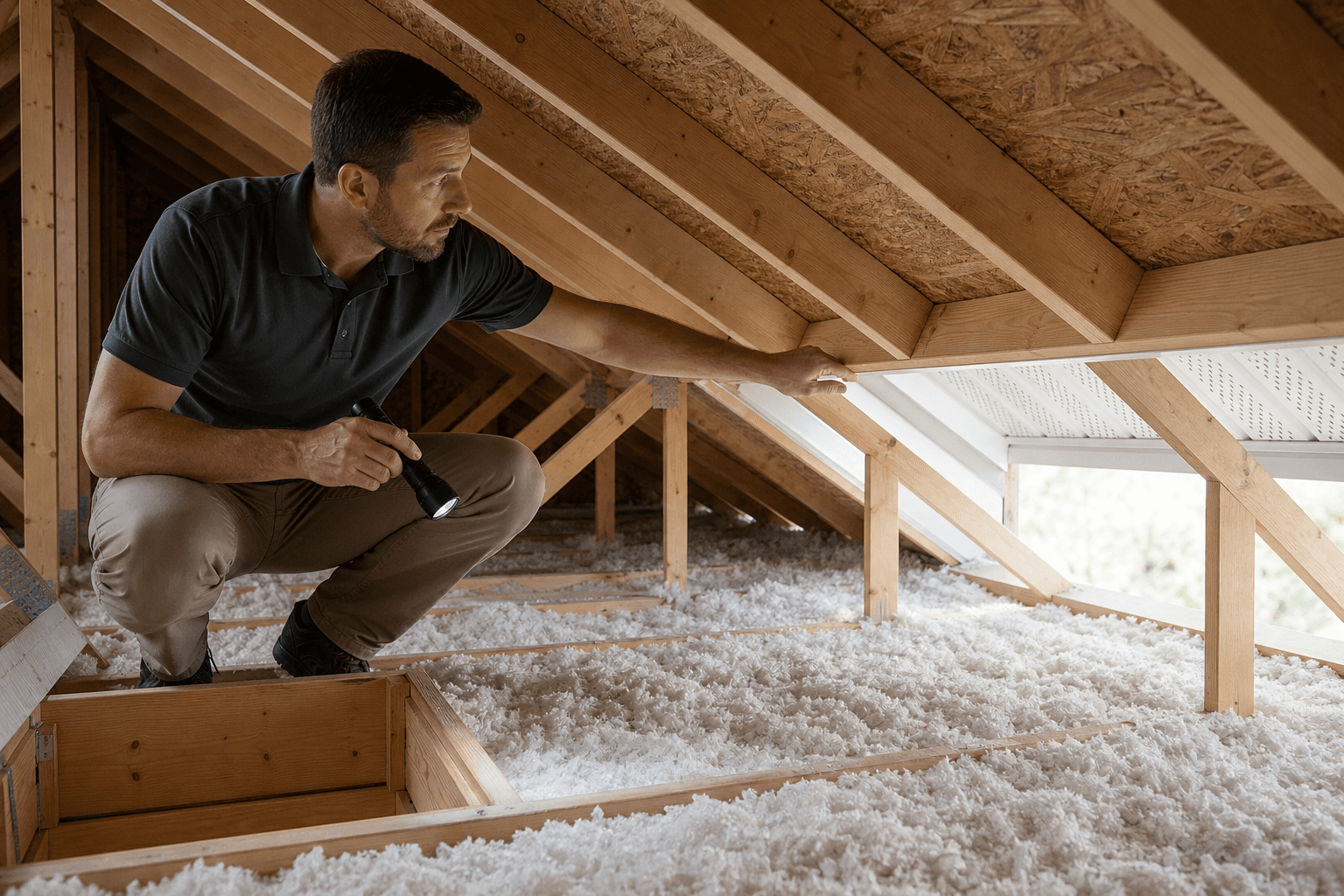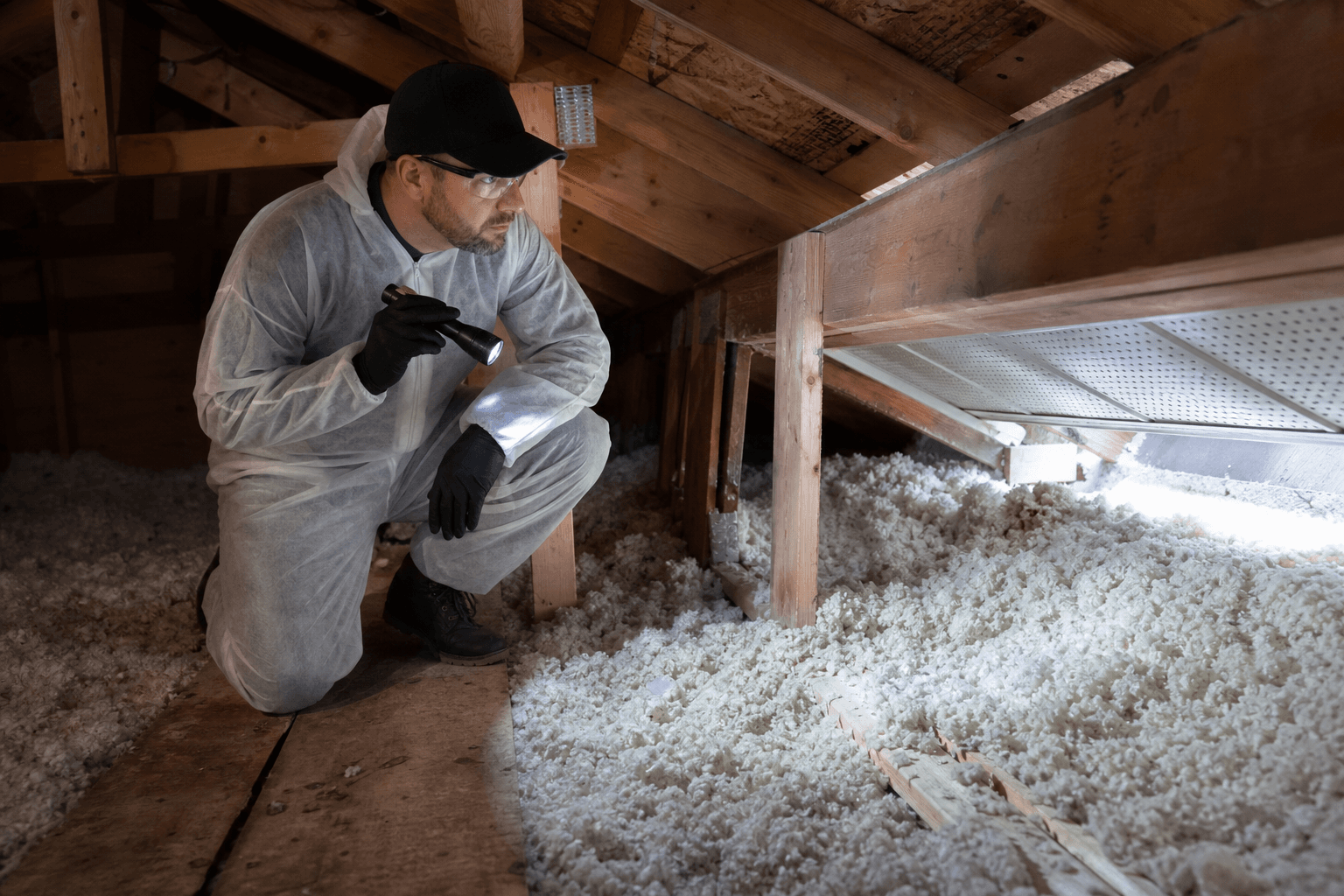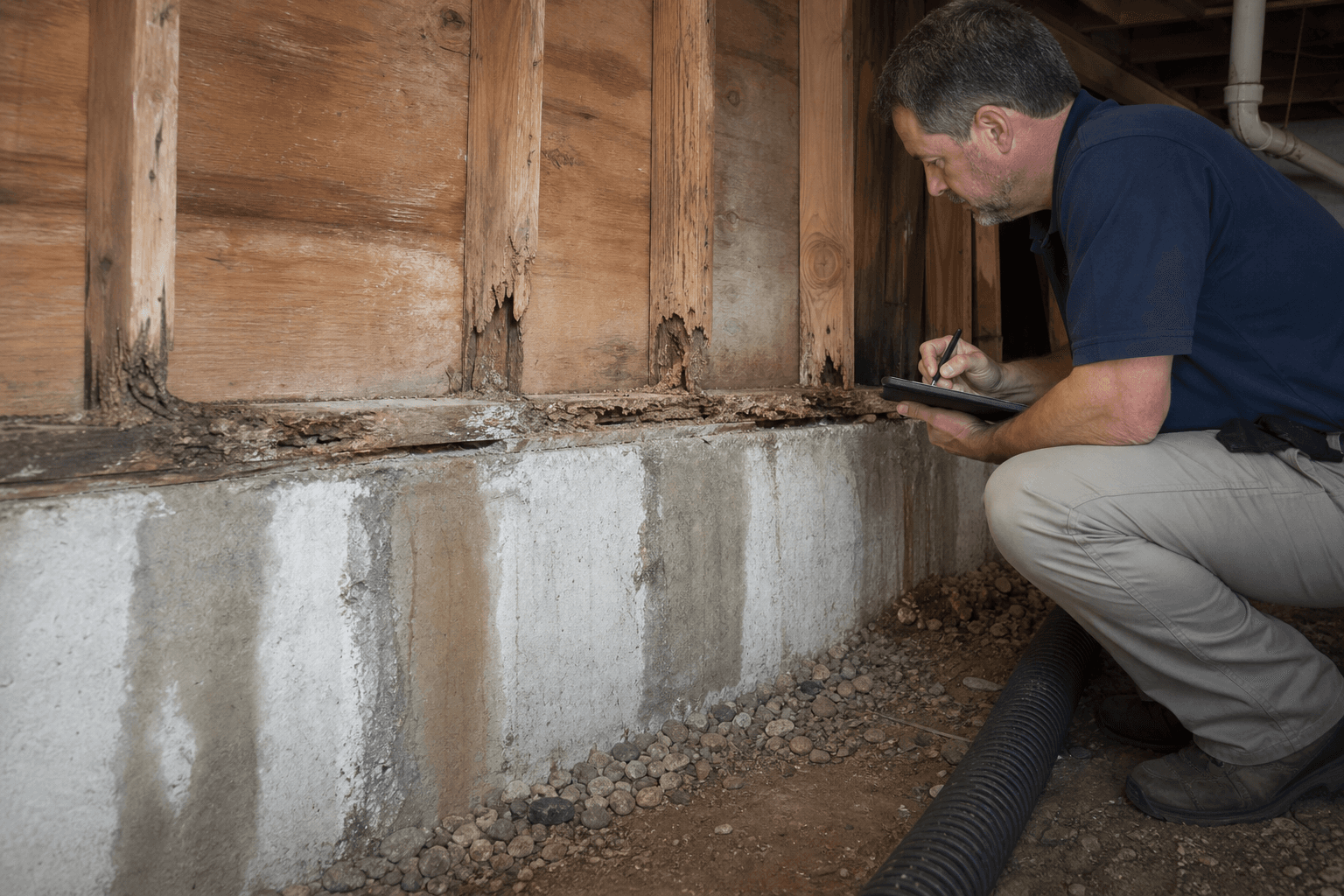
A termite damage assessment starts by documenting visible clues such as mud tubes, damaged wood, moisture, wood-to-soil contact, and deterioration, but those clues do not prove an active infestation. A visual home inspection can record accessible conditions and recommend follow-up, while a qualified pest professional is needed for termite identification, treatment decisions, and confirmation of active activity.
What a Termite Damage Assessment Actually Means
A termite damage assessment is an evidence-gathering process. It considers the condition of accessible wood, foundation areas, basement or crawlspace spaces, exterior drainage, moisture sources, and signs that warrant a pest-specific investigation. Related reading: What is a water damage assessment guide and why does it matter?.
The phrase does not describe one universally defined Ontario inspection category. In practice, the right assessment depends on the question you need answered: Are there visible conditions that may support deterioration? Is there evidence that wood has been damaged? Are termites currently active? Has the damage affected load-bearing components?
A general home inspection is broader. Ontario describes it as an on-site, visual examination of major elements and systems such as the foundation, electrical and plumbing systems, attic ventilation, and roof. It is not a pass-or-fail test or a building-code assessment. Ontario’s home-buying guidance explains that distinction clearly.
A termite-specific assessment has a narrower purpose. A qualified pest professional examines evidence of termites or other wood-destroying organisms, identifies the likely cause where possible, and advises on treatment or further investigation. A structural professional may then be needed if damaged wood appears to affect supports, beams, joists, sill plates, or other load-bearing components.
Visible Damage, Conducive Conditions, Suspected Activity, and Confirmed Infestation
One clue rarely answers the entire termite question. Use the four categories below to separate what you can observe from what requires specialist confirmation.
| Category | What may be observed | What it suggests | What it does not prove | Appropriate next step |
|---|---|---|---|---|
| Visible damage | Soft, weakened, blistered, hollow-sounding, split, or visibly deteriorated wood | The component may have experienced moisture, insects, decay, impact, or age-related deterioration | It does not identify termites, establish when the damage occurred, or reveal concealed damage | Photograph and document the location, then arrange pest or structural advice based on the component |
| Conducive conditions | Persistent moisture, poor drainage, wood-to-soil contact, foundation-area deterioration, leaks, or concealed damp wood | The property has conditions that can contribute to wood deterioration or support pest activity | It does not prove that termites are present | Correct the moisture or drainage issue and arrange a focused pest assessment if concern remains |
| Suspected activity | Mud tubes, insect-like material, fresh-looking damage, discarded wings, or repeated signs in a localized area | There may be current or previous pest activity | It does not establish species, live activity, extent, or treatment requirements | Leave the evidence undisturbed and contact a qualified pest professional |
| Confirmed infestation | A qualified pest professional identifies the organism and supports the finding with appropriate observations or testing | The pest question has been addressed within the professional’s defined scope | It still does not automatically establish the strength or full extent of damaged structural wood | Follow the pest professional’s treatment and investigation recommendations, then obtain structural or repair advice where needed |
Mud tubes are a useful example of why context matters. They can be a reason to seek pest advice, but a general inspector should not describe them as proof of active termites without the appropriate identification. Frass-like material, staining, or hollow-sounding wood can also have more than one possible cause.
A home inspection report can document visible evidence of termite-related damage and explain access limitations. It should not present a visual observation as confirmation of an active infestation when the inspection did not include pest identification.
What to Look for Without Treating Clues as a Diagnosis
You can gather useful information before booking an assessment, provided you observe without dismantling, scraping, probing aggressively, or disturbing suspected evidence. Record the exact location, approximate size, appearance, date noticed, and any recent changes.
Exterior and foundation areas
- Look near foundation walls, sill areas, porch connections, steps, attached structures, and exterior wood close to the ground.
- Note mud-like tubes, damaged trim, soft wood, gaps, cracks, or areas where soil, mulch, or stored materials touch or bridge wood.
- Check whether gutters and downspouts discharge water away from the foundation and whether grading directs surface water away from the building.
- Photograph the wider context as well as a close-up. A close-up shows the clue, while the wider image shows its relationship to the foundation, drainage, or structural component.
Basements, crawlspaces, and lower-level rooms
- Record dampness, staining, efflorescence, musty odours, peeling finishes, or visible water entry near foundation walls and floor edges.
- Look at exposed joists, beams, posts, sill plates, subfloor edges, and wood around plumbing penetrations where access is safe.
- Note whether a finished wall, insulation, stored belongings, or low clearance prevents useful observation.
- Do not enter an unsafe confined space or approach structurally compromised wood just to investigate. The risk of collapse, poor air quality, or injury is more important than obtaining another photograph.
Interior wood and finishes
- Watch for doors or windows that bind, floors that feel unusually soft, trim that has blistered, or localized finishes that have changed.
- Look for staining or deterioration around bathrooms, kitchens, laundry areas, exterior doors, windows, and plumbing lines.
- Do not assume that one soft spot is termite damage. Leaks, rot, installation defects, and long-term moisture exposure can create similar symptoms.
Moisture and drainage observations are valuable even when no pest evidence is visible. An annual home maintenance inspection can establish a repeatable baseline for accessible foundation, exterior, drainage, plumbing, and other property conditions. That baseline supports comparison over time, but it is not a termite certification.
What a General Home or Building Inspection Can Document
A general property inspection can connect termite-related concerns to the wider condition of the building. Depending on the property and agreed scope, accessible components may include structure, foundation areas, roofing, attic areas, exterior conditions, plumbing, electrical, heating, cooling, insulation, and interior conditions.
During a residential or commercial inspection, visible wood deterioration, moisture intrusion, drainage deficiencies, foundation-area conditions, damaged finishes, and access limitations may be recorded when they fall within the agreed scope. These observations help the property owner or buyer decide which specialist should investigate next.
The inspection cannot, by itself:
- Identify the termite species or another wood-destroying organism.
- Prove that an infestation is active.
- Determine the age of the damage.
- Expose wood concealed behind finished walls, flooring, insulation, soil, or stored materials.
- Establish the full extent or structural significance of damaged wood.
- Replace destructive investigation, pest treatment planning, engineering advice, or repair work.
These limits are part of an accurate assessment, not a weakness in the report. A visual inspection records what was accessible and observable at the time. The report should identify the unresolved question and recommend the professional who can answer it.
Which Specialist Answers the Unresolved Question?
The best next step depends on what remains unknown. Sending every concern to the same professional can create delays, because pest identification, structural evaluation, and repair design are different tasks.
| Your question | Professional that usually fits | What to request |
|---|---|---|
| Are these signs caused by termites or another pest? | Qualified pest professional | Identification, activity assessment, treatment options, and advice on whether further investigation is needed |
| How should a confirmed pest issue be treated? | Appropriately licensed pest professional | A written treatment scope, areas included, limitations, and follow-up recommendations |
| Has damaged wood affected a beam, joist, post, sill, or other support? | Structural engineer or other qualified structural professional | Assessment of the affected component, required openings or measurements, and repair or reinforcement recommendations |
| How should deteriorated wood or finishes be repaired? | Qualified contractor or appropriate trade | Repair scope, materials, access requirements, and a written estimate |
| What visible property conditions should be documented more broadly? | Residential or commercial property inspector | A defined visual inspection of accessible building components and a report that separates observations from specialist referrals |
Ontario regulates commercial pesticide application. Unless an exemption applies, a pesticide exterminator licence is required to apply pesticides commercially on property that the applicator or employer does not own or farm. Ontario’s framework also includes a termite licence class for structural extermination. See the provincial guidance on pesticide licences and permits and Ontario Regulation 63/09.
This licensing information does not turn a general home inspection into a pest treatment service. It explains why treatment questions should be directed to the appropriately qualified and licensed pest professional.
If You Are Buying: A Practical Path Before Closing
A possible termite finding does not automatically determine whether you should proceed with a purchase. It does mean you should turn an uncertain observation into documented answers before the relevant agreement deadline passes.
- Preserve the evidence. Keep the photographs, report wording, inspection date, location, and any seller or agent disclosures. Avoid removing tubes, damaged wood, or insect material before the pest professional sees it.
- Check the agreement and timeline. Review the inspection condition, notice requirements, and closing schedule with your real estate and legal professionals. Do not assume a general inspection deadline automatically covers a later pest or structural assessment.
- Arrange a pest-specific assessment. Ask the pest professional to address whether the evidence is consistent with termites or another organism, whether activity appears current, and what treatment or monitoring is recommended.
- Obtain structural advice when needed. If the evidence involves load-bearing wood, significant deterioration, or movement, request an assessment that addresses structural significance rather than relying on a treatment receipt.
- Separate treatment from repair. Ask for repair estimates or a defined repair scope for damaged wood, finishes, drainage, or moisture sources. Treatment and carpentry solve different problems.
- Discuss the documented options. Depending on the findings and the agreement, your legal and real estate professionals can explain choices such as requesting information, negotiating repairs or adjustments, proceeding with conditions, or reconsidering the transaction.
Ontario describes a home inspection as a visual review, not a guarantee that every concealed defect will be found. A buyer’s inspection can support a better decision, but it does not replace the pest or structural assessment needed to answer a termite-specific question.
For Owners and Managers: Reduce Conducive Conditions and Build a Record
Owners can reduce avoidable moisture and deterioration conditions even though no maintenance step proves that termites are absent. Direct downspouts away from the foundation, correct plumbing or roof leaks, maintain gutters, improve drainage where practical, and avoid storing materials against exterior walls or bridging wood with soil or mulch.
Record the condition before and after work. Photograph foundation areas, exterior wood, drainage outlets, basement staining, and repaired components. Add dates, invoices, contractor descriptions, and any pest or structural reports to the property file.
For commercial properties, the record should also identify the building areas inspected, tenant or storage access limitations, recurring moisture complaints, roof or envelope work, and specialist recommendations. A broad commercial inspection can help organize visible building conditions, but pest treatment and structural investigations need their own defined scopes.
How to Read the Finding in the Final Report
Read a termite-related finding as an action statement, not as a diagnosis. First identify the exact observation and location. Then check the photograph, accessibility note, urgency, limitation, and recommended specialist. Related reading: Attic Ventilation Assessment: What Inspectors Check.
“Visible deterioration at the basement sill area; pest and structural assessment recommended” accurately separates the observation from the unresolved questions. “Active infestation confirmed” is a much stronger conclusion and should not appear in a general visual report unless the appropriate pest-specific work supports it.
Retain the inspection report with photographs, pest findings, structural opinions, invoices, permits or approvals where applicable, and repair records. A clear sequence of observations and actions helps future owners, contractors, and advisers understand what changed and what remains unresolved.
Frequently Asked Questions About Termite Damage Assessment
Can a home inspector confirm termites?
Not through a general visual home inspection alone. An inspector may document mud tubes, damaged wood, moisture, or other clues and recommend a qualified pest assessment, but confirmation of termites, species, or active infestation requires the appropriate pest-specific expertise and scope.
Does termite treatment prove how much structural damage exists?
No. Treatment addresses the pest question, while structural significance depends on the condition, location, size, and load-bearing role of the affected wood. A structural professional or qualified repair specialist may need to inspect accessible or concealed components separately.
Should a buyer get a termite inspection before closing in Ontario?
Ontario guidance does not state that every buyer must obtain a termite inspection. Whether one is appropriate depends on the property, the evidence observed, and the buyer’s agreement and professional advice.
Who is allowed to apply termite pesticides commercially in Ontario?
Unless an exemption applies, commercial pesticide application on property the applicator or employer does not own or farm requires a pesticide exterminator licence. Ontario Regulation 63/09 includes a termite licence class within its structural extermination framework. Ask the pest provider which licence and scope apply to the proposed work.
Choose the Assessment That Matches the Question
If you need broader documentation of accessible moisture, drainage, foundation, exterior, structural, and building-system conditions across a GTA home or commercial property, Asmhomeinspection can provide a defined residential or commercial inspection scope. For suspected termite activity, treatment, or pest identification, arrange the appropriately qualified pest professional separately, then use the resulting findings to decide whether structural or repair advice is also needed.
For a defined residential or commercial inspection in the GTA, contact Asmhomeinspection and explain the property, concern, access conditions, and decision deadline.