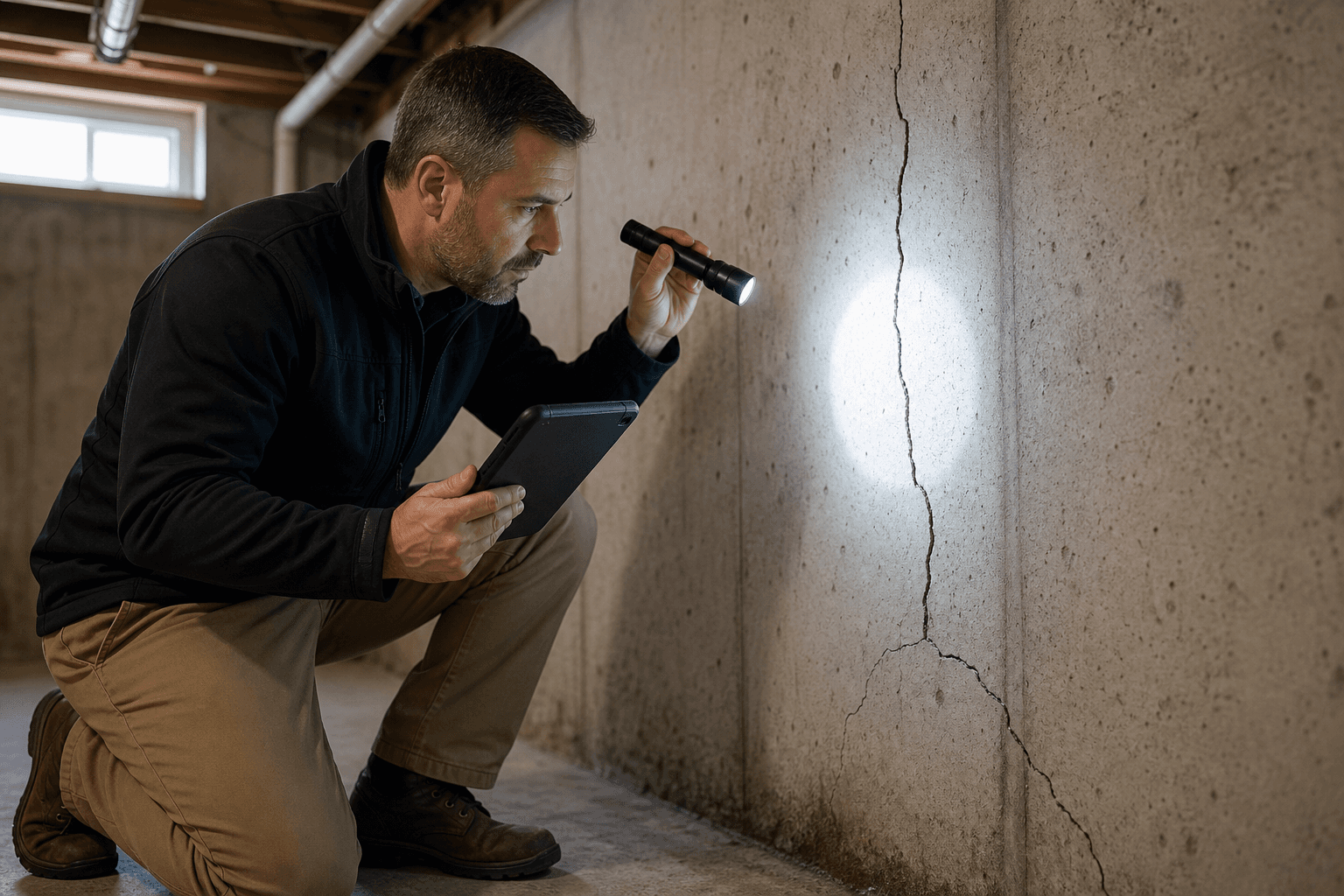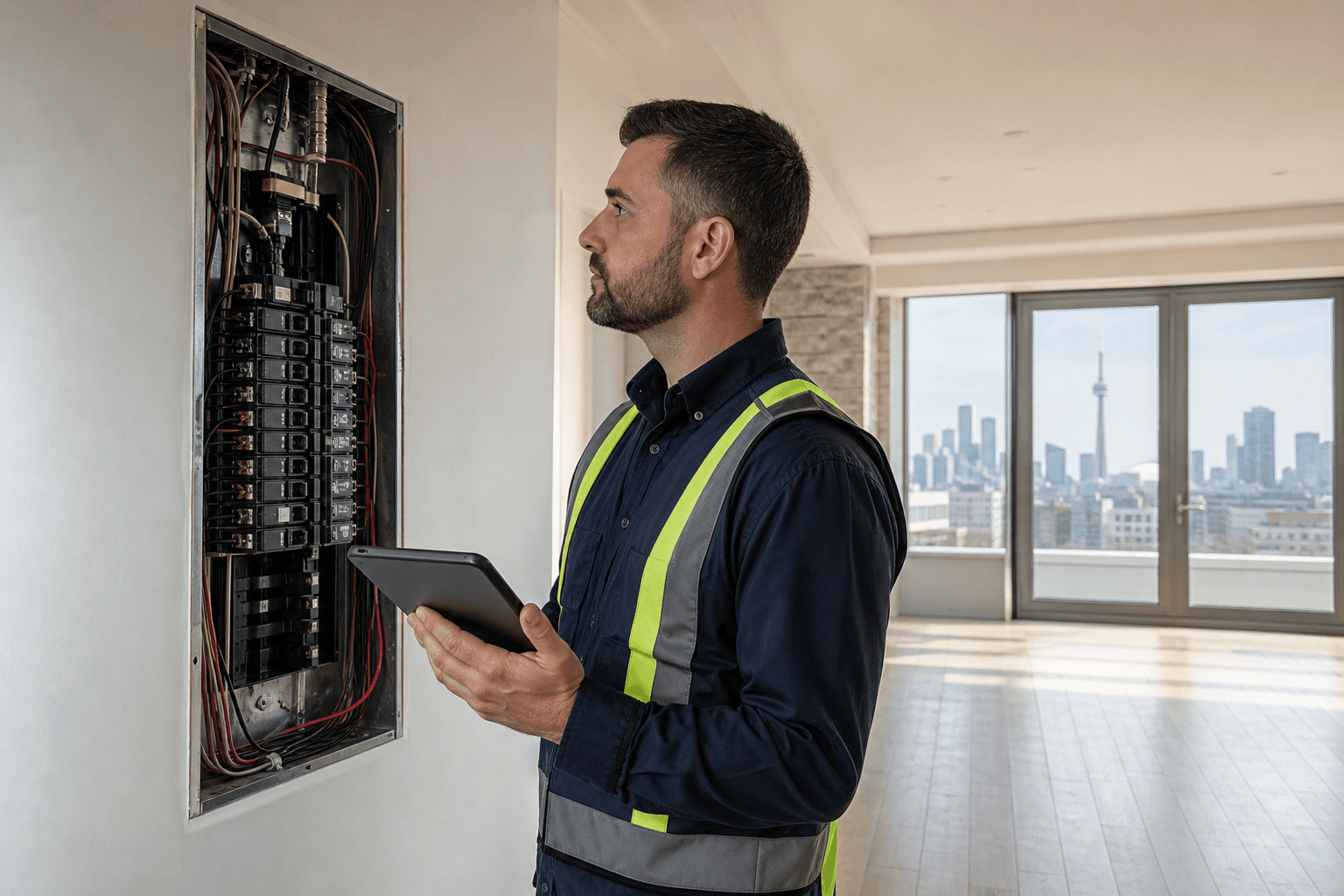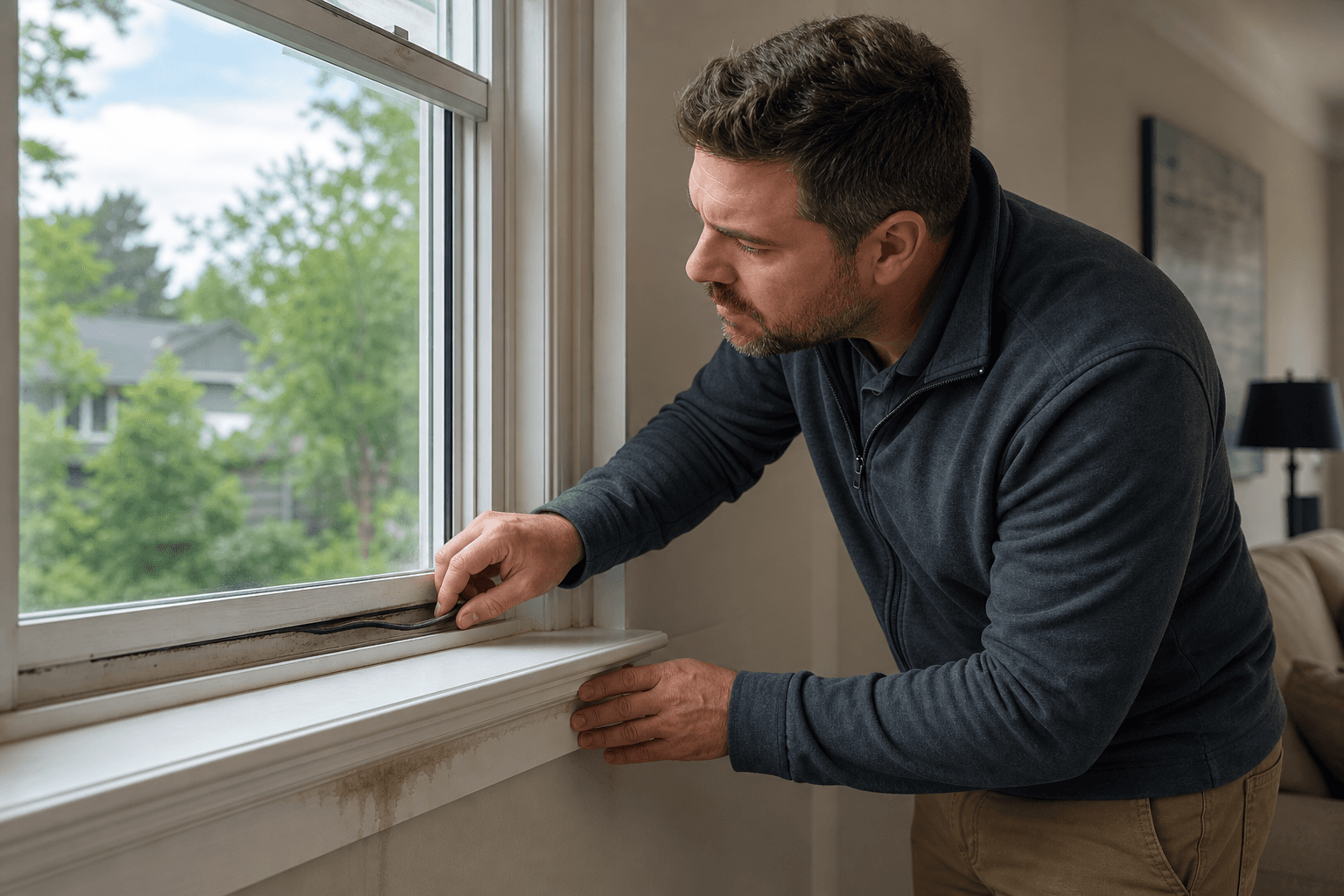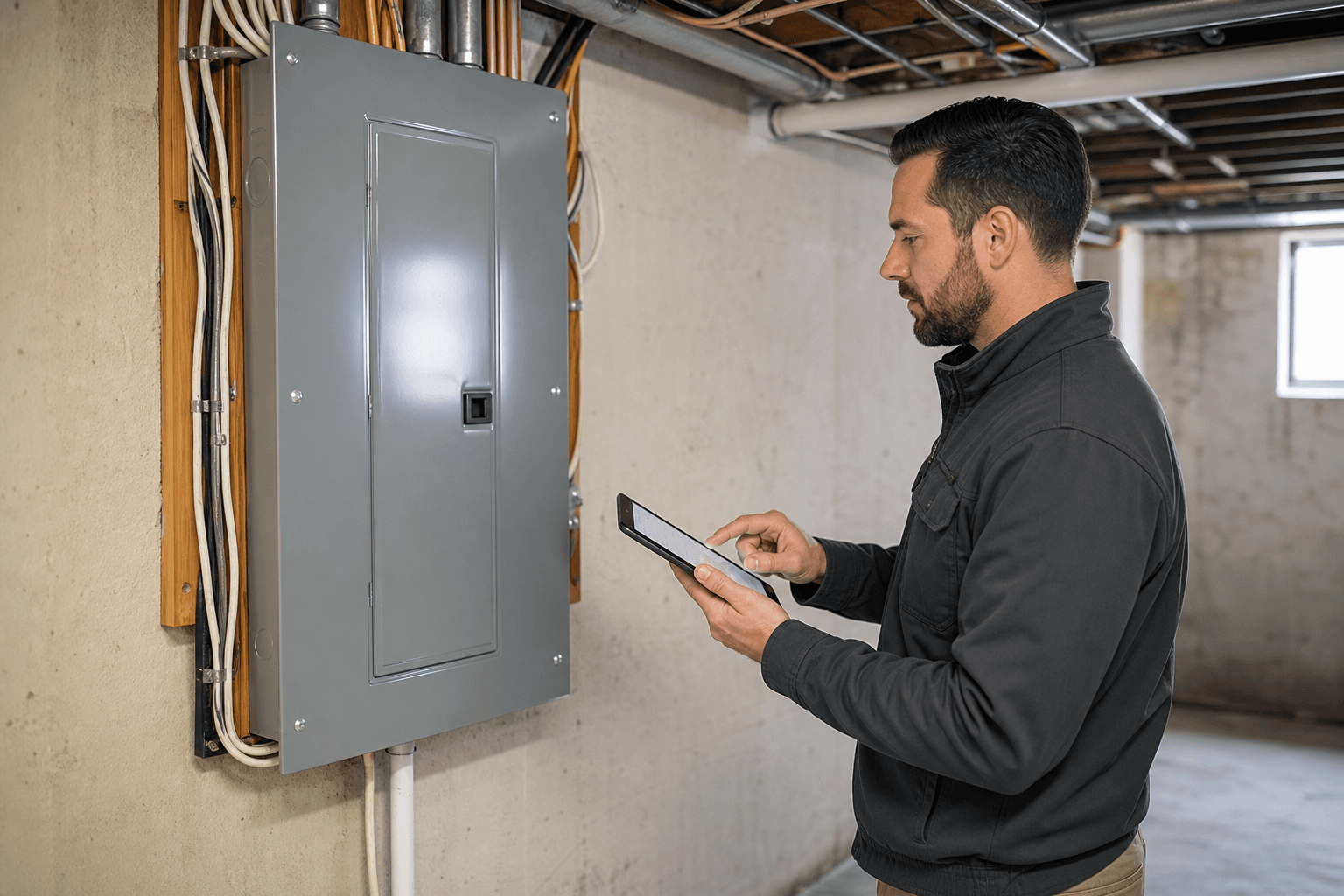
Electrical panel concerns should be treated as observations to document and refer, not as DIY troubleshooting problems. Unusual sounds, heat, visible damage, repeated breaker activity, flickering lights, or nearby moisture may justify professional attention, but no single sign proves a specific fault.
This comparison helps Toronto and GTA homeowners, buyers, sellers, landlords, and property managers decide what to record, what not to touch, and whether they need a qualified electrical assessment, a residential home inspection, or both.
Start with the safety boundary
An electrical panel is not a suitable place for homeowner experimentation. A visual symptom cannot reliably identify its source, severity, or safe remedy.
Do not remove the panel cover, put tools or objects inside, test live components, tighten connections, replace breakers, or repeatedly reset a breaker. Avoid touching damaged areas or investigating when there is smoke, an unusual odour, heat, or another sign of active danger.
Move away from the equipment, note what you observed from a safe distance, and contact an appropriately qualified electrical professional when the situation appears active or hazardous. A home inspection can document property condition, but it is not electrical repair, code certification, or a substitute for electrical diagnosis.
Electrical panel concerns compared at a glance

| Observation | What it may indicate | What not to assume | Next step |
|---|---|---|---|
| Buzzing, crackling, or humming | An electrical or equipment-related concern | That the sound identifies a particular fault | Stop investigating and seek qualified electrical attention, especially with heat or odour |
| Heat, burning odour, or smoke-like signs | Possible active damage or another condition requiring prompt attention | That you can safely locate the cause | Do not touch the panel. Move away and refer the concern |
| Discoloration, scorching, corrosion, or physical damage | Visible deterioration around the equipment | That appearance proves the cause or severity | Photograph from a safe distance if appropriate and arrange assessment |
| Repeated breaker trips or shutdowns | A recurring electrical concern | That the circuit is overloaded or the breaker is defective | Do not repeatedly reset it. Record the pattern and seek assessment |
| Flickering lights or inconsistent power | A concern involving the panel, circuit, equipment, or another property area | That the panel is definitely the source | Record affected areas and timing, then arrange professional evaluation |
| Moisture near electrical equipment | A property condition requiring caution | That you can determine the electrical consequence visually | Avoid contact and refer the electrical concern |
Unusual buzzing, crackling, or humming
A new or changing sound near the panel may be intermittent or difficult to locate, and it may not originate from the panel itself. Sound alone cannot identify its source or severity.
Do not remove the cover, press against the enclosure, or use a tool to locate the sound. If it occurs with heat, an odour, visible damage, or other concerning changes, stop investigating and seek qualified electrical attention. For a non-active concern, record when it occurs and which rooms or equipment appear related.
Heat, burning odours, or smoke-like signs
Unusual warmth, a burning odour, or smoke-like signs deserve a more cautious response than a routine visual observation. These signs do not prove a particular cause, but they are not prompts for opening the panel or testing components yourself.
Do not touch the panel or attempt to locate the affected connection. Move away and refer suspected electrical danger to an appropriately qualified professional. Do not wait for a routine inspection to address an active concern.
Discoloration, scorching, corrosion, or physical damage
Dark marks, corrosion, cracked parts, loose-looking exterior components, or enclosure damage are observations worth documenting. Moisture-related deterioration may also make the surrounding property condition relevant.
Do not scrape, clean, straighten, remove, or open anything. Take a photograph only from a safe distance if possible, and arrange professional assessment. A residential inspection may also document visible panel and surrounding conditions during a purchase, sale, move-in, or maintenance decision.
Repeated breaker trips or unexplained shutdowns
Record a breaker that trips repeatedly or a circuit that shuts down without an obvious explanation. Note the affected room, appliance or equipment, approximate time, and whether other areas experienced a similar interruption.
Do not assume the pattern proves an overload, defective breaker, or another specific fault. Do not repeatedly reset it. Seek qualified electrical assessment. A residential inspection is a separate option when you need property-condition documentation.
Flickering lights or inconsistent power
Flickering lights, inconsistent outlets, or power changes affecting several areas are important observations, but the panel may not be the source. The issue could involve a circuit, connected equipment, or another part of the property.
Record affected rooms, lights, outlets, or appliances and whether the issue is occasional or continuing. Do not remove covers or insert test equipment. Share the pattern with a qualified electrical professional, and arrange a broader residential inspection when you also need documented property information.
Moisture, damp areas, or concerning surroundings
Dampness, staining, a leak, or other moisture near electrical equipment is a reason for caution. Surface appearance cannot determine the electrical consequence, and moisture may indicate a wider roof, plumbing, basement, or building-envelope concern.
Do not touch wet equipment or open the panel. Refer the electrical concern to an appropriately qualified professional. A residential inspection can document broader observed conditions alongside separate electrical assessment.
Electrical assessment or home inspection: which fits?
Choose based on the question you need answered. A qualified electrical professional is appropriate for diagnosis, repair advice, or suspected active danger. A residential home inspection is appropriate when you need broader, documented property-condition information for a purchase, listing, new construction, rental move-in, or maintenance decision.
ASM Home & Commercial Inspection lists the electrical panel, lights, and receptacles within its residential scope, alongside major components such as the roof, structure, plumbing, and HVAC. This does not make the inspection a repair service or a replacement for qualified electrical diagnosis.
Choose the next step by property situation
Current homeowners
Document the symptom and timing without testing or opening equipment. Seek qualified electrical attention for suspected danger or recurring concerns. An annual maintenance inspection can provide a broader record of observed systems and components.
Homebuyers
Record the concern and decide whether you need immediate electrical diagnosis, property-condition information, or both. A pre-purchase home inspection can document the panel and other systems, but it is not a guarantee that every issue will be identified or a substitute for repairs.
Sellers
A pre-listing inspection can document observable conditions before listing and provide information to discuss with relevant professionals. Suspected electrical problems still need separate assessment or repair.
Landlords and tenants
For a rental move-in, document visible electrical equipment and report concerns through the appropriate property channel. Do not open a panel or attempt to diagnose a fault.
Property managers
Preserve the timing, location, and reported pattern, then route suspected electrical danger to an appropriately qualified professional. A commercial property inspection may document broader building condition, while electrical diagnosis remains separate.
Before booking, clarify the inspection scope and reporting process using these questions to ask a Toronto home inspector.
What a GTA residential inspection can document
ASM lists electrical panels, lights, and receptacles within its residential inspection scope, along with major systems such as roofs, attics, structures or foundations, plumbing, and HVAC when relevant.
The company states that it provides a same-day PDF inspection report. This can organize observed conditions for communication and decision-making, but it is not a repair authorization, electrical diagnosis, code conclusion, or promise that every defect will be found.
What to record before booking or attending
- Property address and panel location.
- Affected rooms, outlets, lights, or equipment.
- When the concern began and whether it is intermittent or continuing.
- Visible observations from a safe distance, such as sound, odour, marks, moisture, or shutdown.
- Related events you know about, without guessing at the cause.
- Safe-distance photographs, if taking them requires no contact.
- Your transaction, occupancy, maintenance, or reporting deadline.
Share observations rather than conclusions. Saying that a light flickered twice in one room is more useful than asserting that the panel is overloaded without a professional diagnosis.
Toronto and GTA inspection considerations
ASM Home & Commercial Inspection provides certified residential and commercial property inspections across the GTA, including Toronto, Mississauga, Markham, Vaughan, Richmond Hill, Brampton, Oakville, Pickering, Whitby, and Oshawa.
The company states that it provides same-day PDF reports. Confirm available scope and timing when booking, especially if you also need separate electrical attention before a transaction, occupancy date, or maintenance decision.
Frequently asked questions
Can a residential inspection evaluate an electrical panel?
ASM lists the electrical panel, lights, and receptacles within its residential scope. The inspection documents observed condition within that scope and does not replace electrical diagnosis or repair.
Should a Toronto homebuyer arrange an inspection after noticing a panel concern?
Document the observation without opening or testing the panel. Seek qualified electrical attention if there may be active danger. A pre-purchase inspection may be appropriate when broader property-condition information is also needed.
How can an inspection report help after an electrical concern?
A report can organize observed findings for communication with buyers, sellers, landlords, managers, or relevant professionals. ASM states that it provides same-day PDF reports. The report does not promise a repair outcome, code conclusion, insurance decision, or identification of every defect.
Which inspection fits a new build, rental move-in, or maintenance need?
A new construction inspection documents a newly built property, a move-in inspection supports rental condition documentation, and an annual maintenance inspection supports ongoing property review. Suspected electrical danger should always be referred separately.
Make the next step a documented, safety-first decision
Electrical panel signs are reasons to pause, record what you observed, and choose the right professional response. They are not invitations to remove a cover, test live components, replace a breaker, or repeatedly reset equipment.
Use qualified electrical attention for diagnosis or active concerns. Use a residential inspection for broader property-condition documentation. In some situations, both are appropriate because they answer different questions.
ASM Home & Commercial Inspection provides certified residential inspections across the GTA, including electrical panels, lights, and receptacles, with same-day PDF reports. Learn more and arrange a GTA residential inspection.