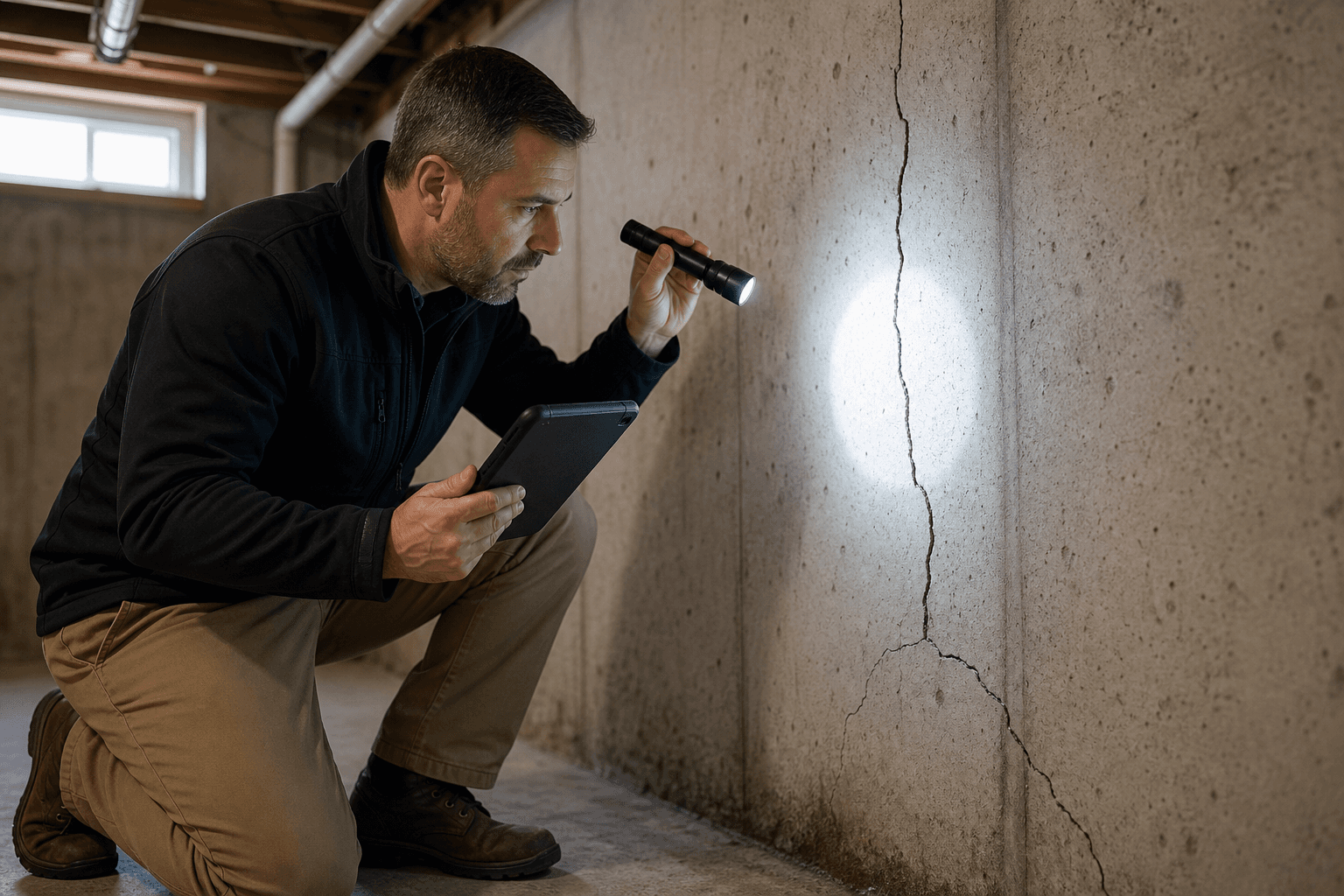
Foundation settlement warning signs in Toronto can include new cracks, uneven floors, sticking doors or windows, basement moisture, and changes in exterior drainage. However, no single symptom confirms settlement. Similar conditions can result from age, construction, seasonal movement, moisture, or other property issues.
The useful first step is to document what you see and look for patterns or changes over time. A professional residential home inspection can review visible foundation and structural conditions, the basement, moisture indicators, and related major systems. If concealed conditions or an engineering opinion are needed, the inspection may indicate that further specialist assessment is appropriate.
1. New, Widening, or Patterned Foundation Cracks
Cracks are among the most noticeable foundation observations, but their presence alone does not establish a cause. Record where each crack appears, whether it is vertical, horizontal, stepped, or irregular, and whether it seems to have changed. Note whether it is in a foundation wall, floor, interior finish, or another material.
Take one photograph showing the crack in its surrounding room or wall and another close view capturing its shape. Add the date and location to your notes. A crack that is new, changing, or accompanied by other concerns is useful information for an inspector, but it should not be treated as a confirmed settlement diagnosis without appropriate assessment.
2. Uneven or Newly Sloping Floors

A floor that feels uneven or appears newly sloped may be worth documenting, particularly if the change is noticeable in a specific room or seems different from the rest of the property. It can provide context about the building’s condition, but it may also relate to construction, finishes, age, or other factors.
Record the room, the direction of the perceived slope, and when you first noticed it. Photograph the floor from a consistent angle and note whether furniture, trim, or nearby walls show related alignment changes. Avoid treating a visual impression as proof of foundation movement. A broader inspection is more useful than relying on one floor observation.
3. Doors or Windows That Stick, Bind, or No Longer Latch
Doors or windows that begin to stick, bind, or stop latching can be a change worth recording. Shifts in openings may occur for several reasons, including seasonal conditions, hardware problems, frame movement, or changes elsewhere in the structure. The symptom does not, by itself, confirm foundation settlement.
Note which openings are affected and whether the problem is occasional, seasonal, or persistent. Check for related gaps, cracks, or changes in surrounding trim, and photograph those conditions. If several openings changed around the same time, share that pattern with the inspector rather than drawing a structural conclusion yourself.
4. Sloping Surfaces, Gaps, or Visible Shifts
Other visible alignment changes can include sloping ceilings, gaps where trim meets a wall, separated finishes, or a noticeable shift between adjoining surfaces. These observations can help an inspector understand where to look more closely, especially when they occur alongside cracks, uneven floors, or sticking openings.
Photograph the wider area first, then take a close view of the gap or separation. Identify the room and describe what appears to have changed. Do not assume that a visible gap represents foundation settlement; finishes can move or deteriorate independently. The value of this check is the context it adds to a review of the property as a whole.
5. Basement Moisture, Dampness, or Water Entry
Basement dampness, staining, visible water entry, or persistently musty conditions deserve attention whether or not settlement is present. Moisture intrusion can contribute to structural damage and safety risks for occupants, which is why moisture and foundation observations should be considered together.
Document the location of damp areas, staining, deposits on masonry, or visible water paths. Note whether the condition appeared after rain, snowmelt, or another event, if known. Do not diagnose mould, hidden damage, or the source of water from appearance alone. A basement inspection can help identify visible conditions and indicators that may require further investigation.
6. Changes in Exterior Grading, Drainage, or Water Flow
Look for changes in how water moves around the property. Examples include pooling near the foundation, downspouts discharging close to the wall, ground that appears to slope toward the building, or erosion and settled areas that redirect water. These observations are relevant context because water management and foundation conditions can affect one another.
Photograph the area from far enough away to show the foundation, downspout, and surrounding ground. Note where water collects and whether the condition appears after precipitation. Avoid assigning a specific cause based only on exterior appearance. A professional inspection can consider visible drainage and grading conditions alongside the basement and foundation.
7. Multiple Related Changes That Progress Over Time
Progression is an important decision check. A single old crack or sticking door may have limited meaning without context, while several changes that develop or worsen over time deserve closer attention. Useful patterns might include expanding cracks, increasingly uneven surfaces, more affected openings, and recurring moisture in related areas.
Keep dated photographs, room locations, brief descriptions, and notes about moisture or weather conditions. If you are buying a property, ask for available records and compare your observations with disclosures or previous inspection information. A cluster or progression does not prove settlement, but it gives a residential home inspector a clearer basis for assessment.
How to Document What You Notice Before Booking an Inspection
- Take wide photographs and close-ups so the location and detail are clear.
- Include a familiar object for scale without disturbing finishes or entering unsafe areas.
- Record the date, room, wall or surface, and what changed.
- Note visible moisture, recent precipitation, or other useful context.
- Keep previous inspection reports, repair records, photographs, and property disclosures together.
These steps support communication, but DIY monitoring does not replace an inspection or specialist evaluation when the condition is unclear, progressive, or potentially significant.
What a GTA Residential Home Inspection Can Review
A GTA home inspection can provide a system-by-system review of visible conditions. ASM Home & Commercial Inspection’s residential scope includes structural and foundation components, basements, roofs, attics, plumbing, electrical systems, HVAC, and other major components. That broader view matters because foundation concerns can appear alongside moisture, drainage, or building-system observations.
An inspection is not a guarantee that concealed defects are absent, and it is not automatically an engineering, geotechnical, mould, asbestos, or repair assessment. Before booking, use this Toronto home inspector checklist to clarify scope, reporting, and qualifications.
When to Arrange an Inspection or Further Assessment
Consider arranging an inspection when you notice a new or recurring concern, several related changes, moisture near foundation areas, or conditions that could affect a purchase, sale, tenancy, or investment decision. An inspection can organize the visible evidence and help identify which observations may warrant further review.
For buyers, it is useful to document concerns before closing decisions are finalized rather than relying only on a quick walkthrough. The article on pre-purchase home inspection mistakes provides additional decision points. An inspector may recommend specialist follow-up where the question exceeds the scope of a general residential inspection.
Conclusion: Treat Patterns as a Reason to Investigate, Not a Diagnosis
Foundation settlement warning signs in Toronto are best understood as observations to document: cracks, uneven floors, sticking openings, visible shifts, basement moisture, drainage changes, and progression over time. None proves settlement on its own. Preserve the evidence, consider the observations together, and obtain an appropriately scoped assessment when concerns remain.
ASM Home & Commercial Inspection provides certified residential inspections across the GTA, reviewing visible foundation and structural conditions, basements, moisture indicators, and other major systems. Contact ASM Home & Commercial Inspection to schedule a GTA residential inspection; the company provides a same-day PDF inspection report.