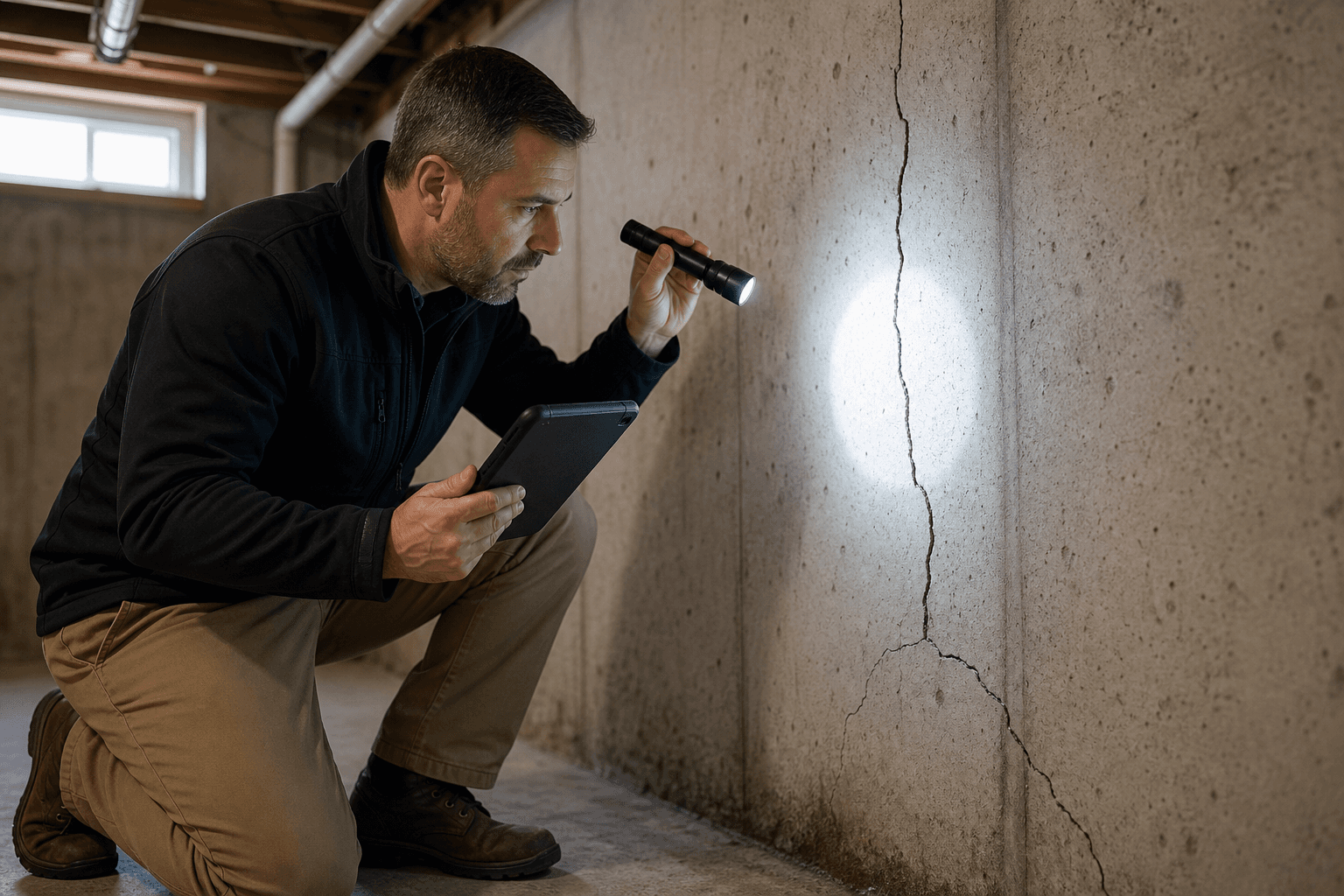
The most useful soffit damage warning signs are visible openings, displaced panels, moisture marks, surface deterioration, soft or warped fascia, roof-edge clues, and repeated pest activity. These observations can help GTA homeowners, buyers, sellers, landlords, and property managers decide whether a closer assessment is worthwhile, but they do not prove the cause or extent of the problem.
Start with a ground-level visual check. Do not climb onto the roof, lean ladders against loose materials, or reach into an opening without suitable equipment and expertise. A soffit inspection should consider nearby gutters, fascia, attic ventilation, and interior signs of moisture rather than treating one visible mark as a diagnosis.
1. Open, Cracked, or Missing Soffit Panels
From the ground, look for visible holes, cracks, gaps, or sections where a soffit panel is missing. An opening leaves the roof overhang less enclosed and may provide a path for weather or pests to reach the roof cavity. Visible cracks, holes, missing panels, and animal activity are commonly identified as soffit concerns.
The opening does not reveal its precise cause. It could relate to impact, failed fastening, deterioration, or another roofline condition. Photograph the location from a safe position and note whether the gap is isolated or continues along the eaves. Avoid an improvised repair that could conceal moisture or damage. If the concern is near a roof junction or accompanied by staining, consider a safe roof-moisture assessment.
2. Sagging, Hanging, or Detached Soffits

A soffit that bows, hangs down, pulls away from the fascia, or appears displaced is worth recording. The condition may be associated with failed fasteners, water exposure, gutter-related problems, or deterioration, but a ground-level view cannot establish which explanation applies.
Compare the affected section with adjacent portions of the roofline. Look for a change in alignment, a widening gap, or nearby gutter movement, but do not touch unstable panels or climb to examine them. Document the location and arrange a closer roofline or property assessment, particularly if displacement is combined with stains, soft materials, or an opening.
3. Dark Stains, Discoloration, or Water Marks
Dark patches, streaks, uneven discoloration, and water marks on the soffit or fascia can be associated with moisture exposure. Possible pathways include roofing materials, gutters, roof-edge junctions, or other surfaces above the overhang. These marks do not establish whether moisture is active or whether the underlying material is damaged.
Photograph the mark, note its position in relation to gutters and roof valleys, and check whether similar signs appear nearby. If moisture is a concern, consider a roof, attic, or moisture-focused inspection rather than assuming that cleaning the surface will resolve the cause.
4. Peeling, Bubbling, or Flaking Paint
Peeling, bubbling, or flaking paint on fascia or soffit surfaces deserves attention, especially when concentrated near gutter seams, joints, or other roof-edge details. These changes may be associated with moisture trapped behind the finish or with material deterioration, although they can also reflect surface wear.
Record where the paint is changing and whether the area overlaps with staining, sagging, or gutter problems. Do not scrape, cut, or remove the finish simply to see what is underneath. A closer assessment can distinguish cosmetic wear from a condition involving the fascia, soffit, roof edge, or water-management system.
5. Soft, Spongy, or Warped Fascia
Warped or visibly distorted fascia is a useful warning sign, and soft or spongy wood may indicate deterioration associated with moisture. These conditions deserve further attention, but a visual check cannot determine how far deterioration extends or whether it affects an important connection.
Only observe or touch material that is safely accessible without climbing or forcing access. Do not press hard, cut into the fascia, or remove trim to test its depth. For a home purchase, listing, or suspected moisture problem, a professional property inspection can place the fascia observation alongside the roof, attic, structure, and other major systems.
6. Gutter, Drip-Edge, or Roof-Edge Clues
Inspect the soffit in context by looking at the nearby eavestrough, gutter seams, fascia line, and roof edge. Overflowing gutters, detached gutters, missing drip-edge protection, or debris may create pathways for water to reach fascia and soffit materials. A gutter pulling away can also be associated with deteriorated fascia, although that observation does not prove the condition of the board behind it.
Look for staining below a gutter joint, a section that sits lower than adjacent gutters, or a roof-edge area that appears open or poorly aligned. Do not assume that one clue identifies the source of moisture. A broader roofline review is more useful than examining the soffit in isolation; see this safe approach to detecting roof moisture.
7. Repeated Bird, Wasp, Squirrel, or Other Pest Activity
Repeated birds, wasps, squirrels, or other animals entering and leaving the roofline may indicate an opening in the soffit or an adjacent enclosure. Activity alone does not identify the size of the opening, the species involved, or the extent of related damage.
Observe from a safe distance and do not reach into the opening, disturb wildlife, or attempt to seal it while animals may be inside. If activity continues or appears alongside a gap, stain, or displaced panel, document the location and arrange an inspection so the enclosure and surrounding roofline can be assessed together.
How to Decide What to Do Next
Use these checks as a screening process, not as a diagnosis. An isolated, minor-looking observation may be documented and monitored during routine maintenance. Stains, soft materials, displaced panels, gutter separation, or multiple signs in one area justify a closer roofline, attic, or moisture assessment. Persistent openings or animal activity should also be investigated without attempting an unsafe repair.
- Buying: Include visible soffit concerns in a pre-purchase home inspection and ask how the roof, attic, gutters, and related areas were assessed.
- Selling: A pre-listing inspection can help document known roofline observations before a transaction discussion.
- Building or moving in: A new construction inspection or move-in inspection can record condition concerns at the relevant stage.
- Maintaining a property: An annual maintenance inspection can place soffit observations alongside the roof, attic, structure, and other major components.
Before arranging an assessment, save photos from several angles, note each concern’s location and approximate size, record when you noticed it, and mention related interior staining or attic observations. For preparation, see what to ask a home inspector in Toronto before booking and review these attic ventilation checks for Toronto homes.
Conclusion: Treat Visible Soffit Damage as a Clue, Not a Diagnosis
Openings, displacement, stains, peeling finishes, soft or warped fascia, roof-edge clues, and pest activity are meaningful reasons to look more closely. They can point toward moisture exposure, ventilation concerns, deterioration, or an entry point, but the visible sign alone does not establish the underlying defect. Safe ground-level documentation is the appropriate starting point; climbing, dismantling, or making an unsupported repair is not.
ASM Home & Commercial Inspection provides certified residential and commercial property inspections across the Greater Toronto Area, including assessments of roofs, attics, structure and foundations, plumbing, electrical, HVAC, and other major components. The company offers pre-purchase, pre-listing, new construction, move-in, and annual maintenance inspections, with same-day PDF reports. To schedule a GTA inspection, visit ASM Home & Commercial Inspection.