The safest way to investigate possible roof moisture is to begin indoors, continue only through accessible areas, and treat every observation as evidence rather than a diagnosis. Look for changes on ceilings and upper walls, document what you find, check an attic only if it is safe, and observe roof edges from the ground. Do not climb onto the roof, disturb suspected mold, open electrical equipment, or enter an unsafe attic.
Moisture can affect roofing materials, insulation, finishes, structure, and occupant safety. A careful visual check can guide your next decision, but confirming the source and extent of concealed moisture may require a residential home inspection, commercial property inspection, roofing assessment, engineering review, or another specialist.
Quick Summary

- Start with ceilings, upper walls, attic access points, and other visible interior areas.
- Photograph stains, dampness, odors, and locations without cutting or opening materials.
- Check an attic only from a safe, accessible position and observe roof edges from the ground.
- Stop for active water near electrical equipment, sagging surfaces, unsafe access, suspected mold, or structural concerns.
- Choose professional help based on the property and risk, including residential, commercial, roofing, engineering, electrical, environmental, or remediation support.
Step 1: Look for Interior Signs of Possible Roof Moisture
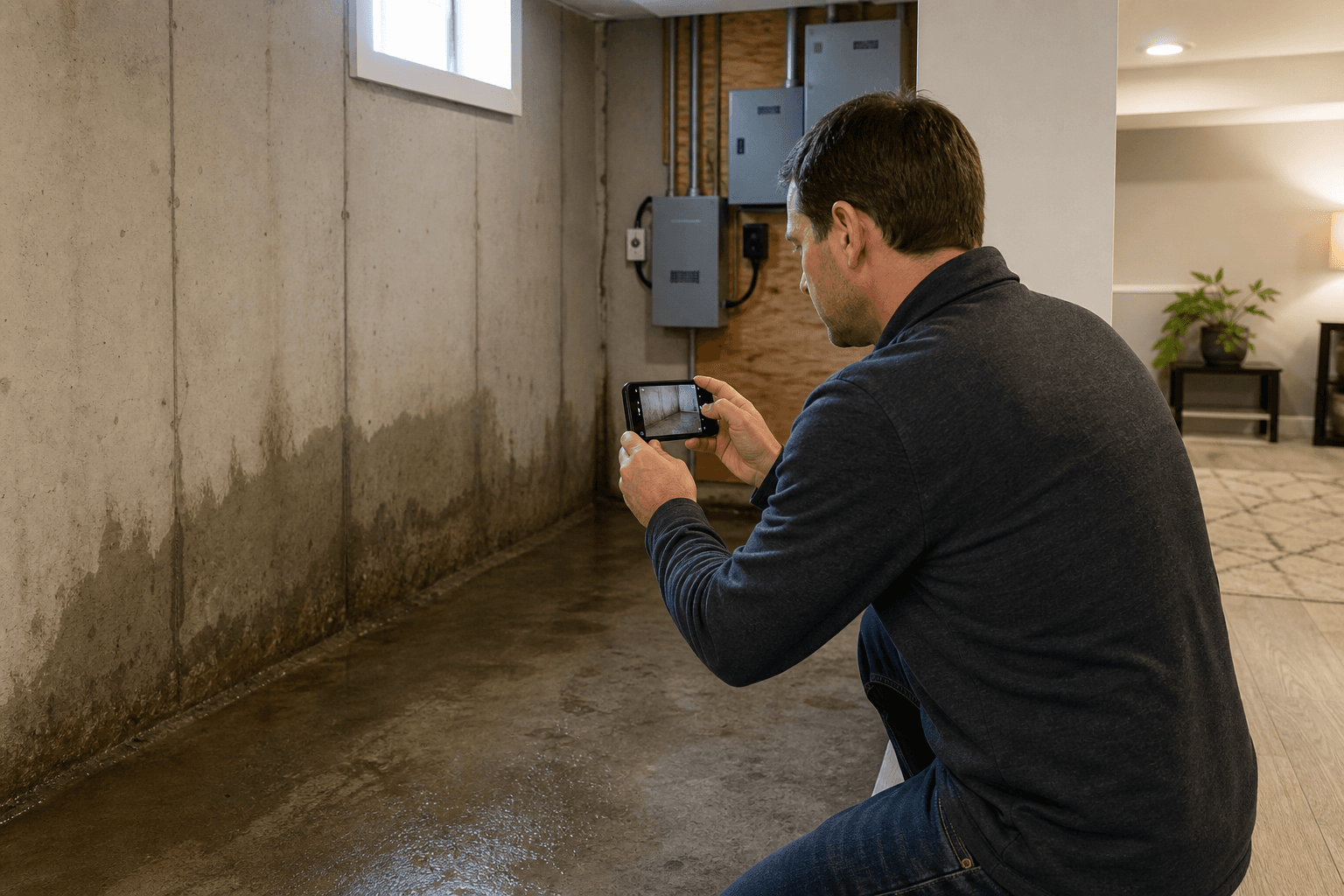
Begin inside the property, especially below roof lines, near attic access points, and around ceiling height changes. Look for brown, yellow, grey, or discolored marks; peeling paint; bubbling finishes; damaged drywall; visible dampness; musty odors; or areas that appear to be spreading, returning, or darkening. Also check around skylights, chimneys, vents, roof penetrations, and exterior walls where visible.
These signs do not prove that the roof is the source. Plumbing, condensation, and other building components can create similar evidence, and water may travel before it becomes visible.
Step 2: Document the Location and Condition

Create a simple record before contacting an inspector or contractor:
- Location: Note the room, ceiling or wall position, and the area above or beside it if known.
- Appearance: Record the color, shape, approximate size, peeling, bubbling, or dampness.
- Odor: Note unusual smells without treating odor alone as proof of mold.
- Photographs: Take wider images showing the room and closer images showing the condition.
- Timing: Record when you noticed it and whether it appears active, unchanged, or historic.
- Context: Note recent plumbing work, condensation, or water observed during weather.
Do not scrape, cut, pull down, or cover affected materials before assessment. If the surface is sagging, visibly wet, or close to electrical components, stop immediately.
Step 3: Check the Attic Only If It Is Safe and Accessible
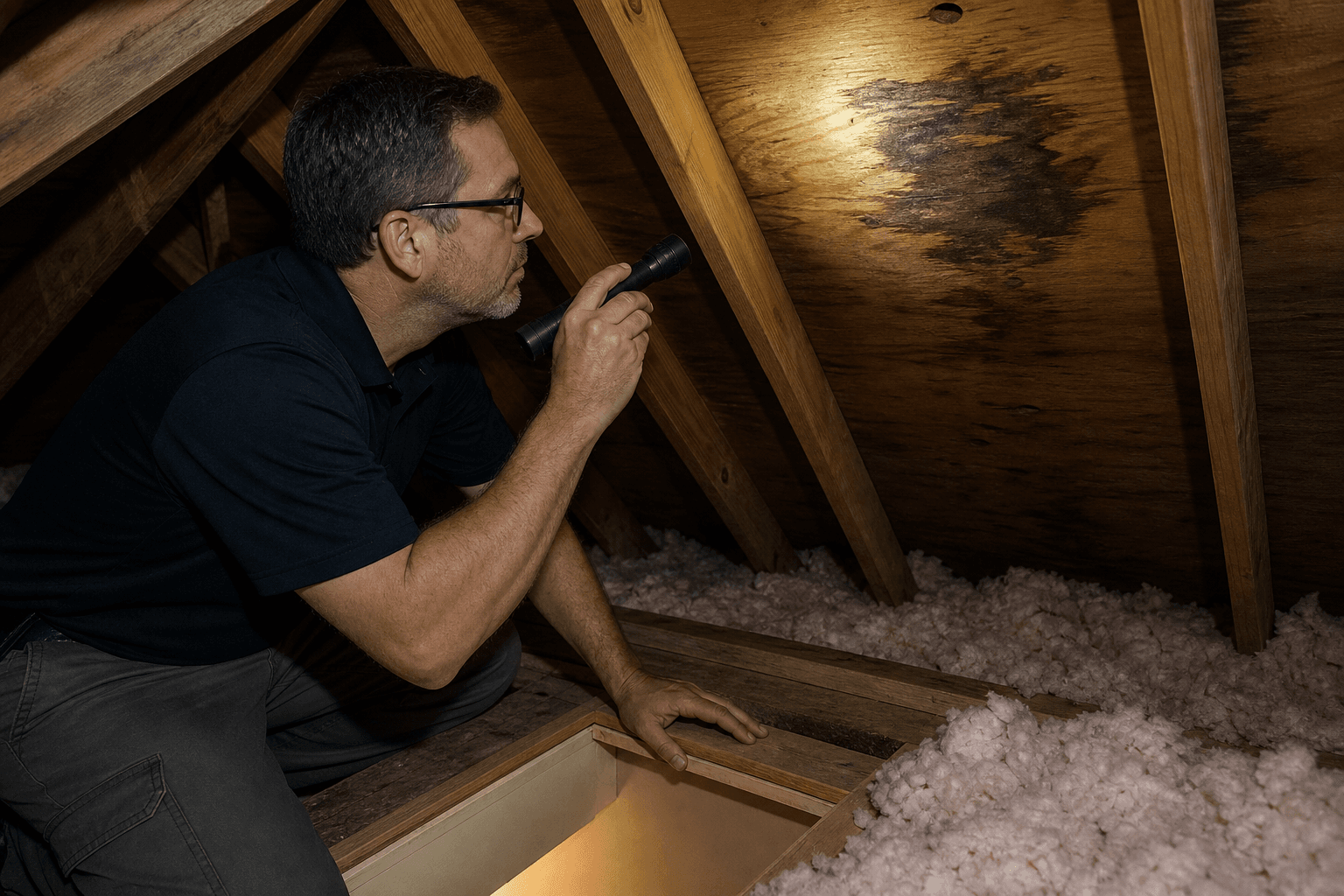
If the property has an attic and its access point is safe, make only a limited visual observation from the entry area. Do not crawl across insulation or walk where there is no clear, stable floor. Avoid contact with wiring, fixtures, and unfamiliar equipment.
From a safe position, look for staining on roof decking or framing, damp or compressed insulation, unexpected daylight, damaged ventilation components, or evidence that appears connected to the interior mark. For related background, see these attic ventilation checks for Toronto homes.
Stop point: Do not enter if flooring is unstable or unclear, visibility is poor, the space is confined, wiring creates a hazard, damage appears extensive, or mold is suspected.
Step 4: Observe Roof Edges From the Ground
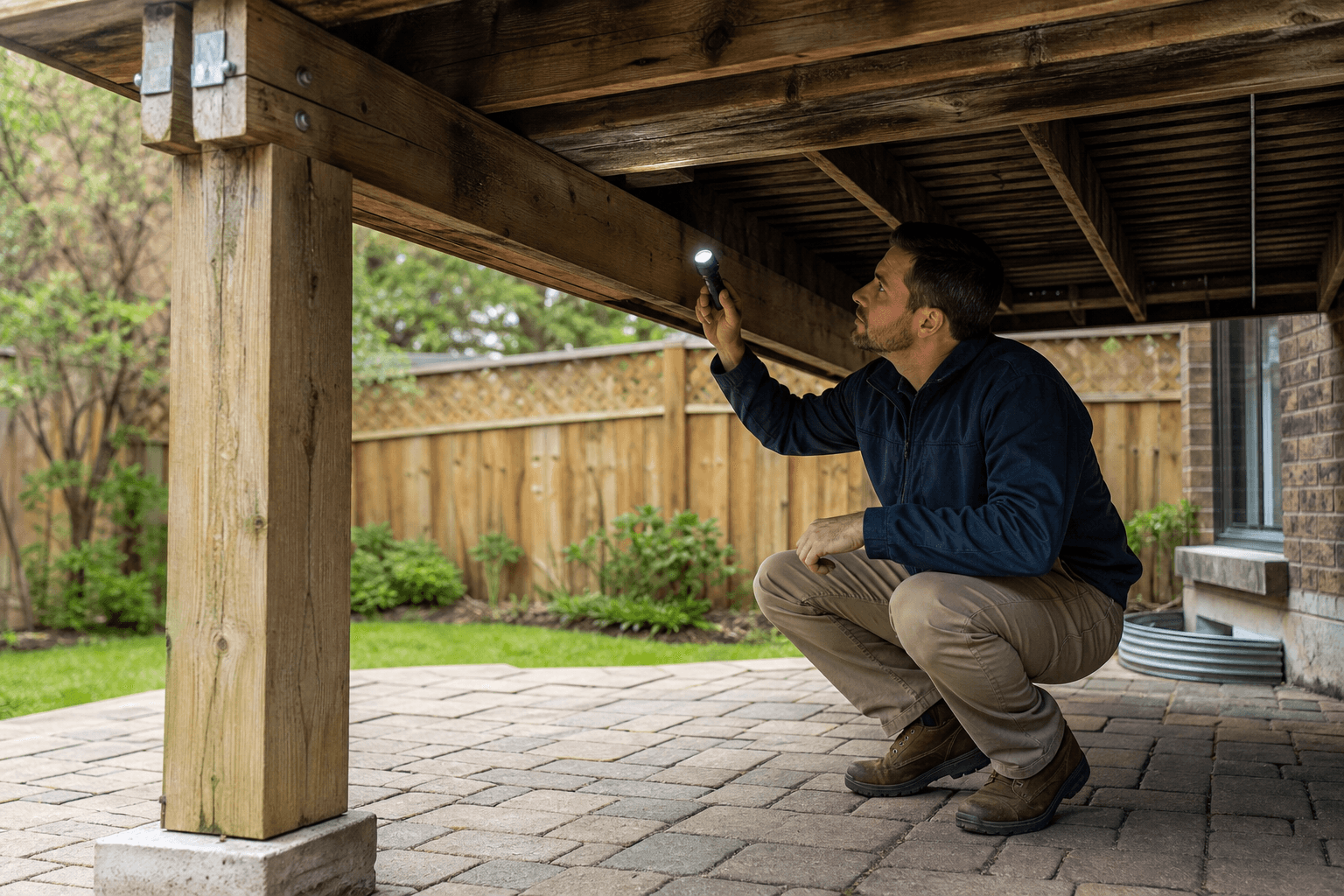
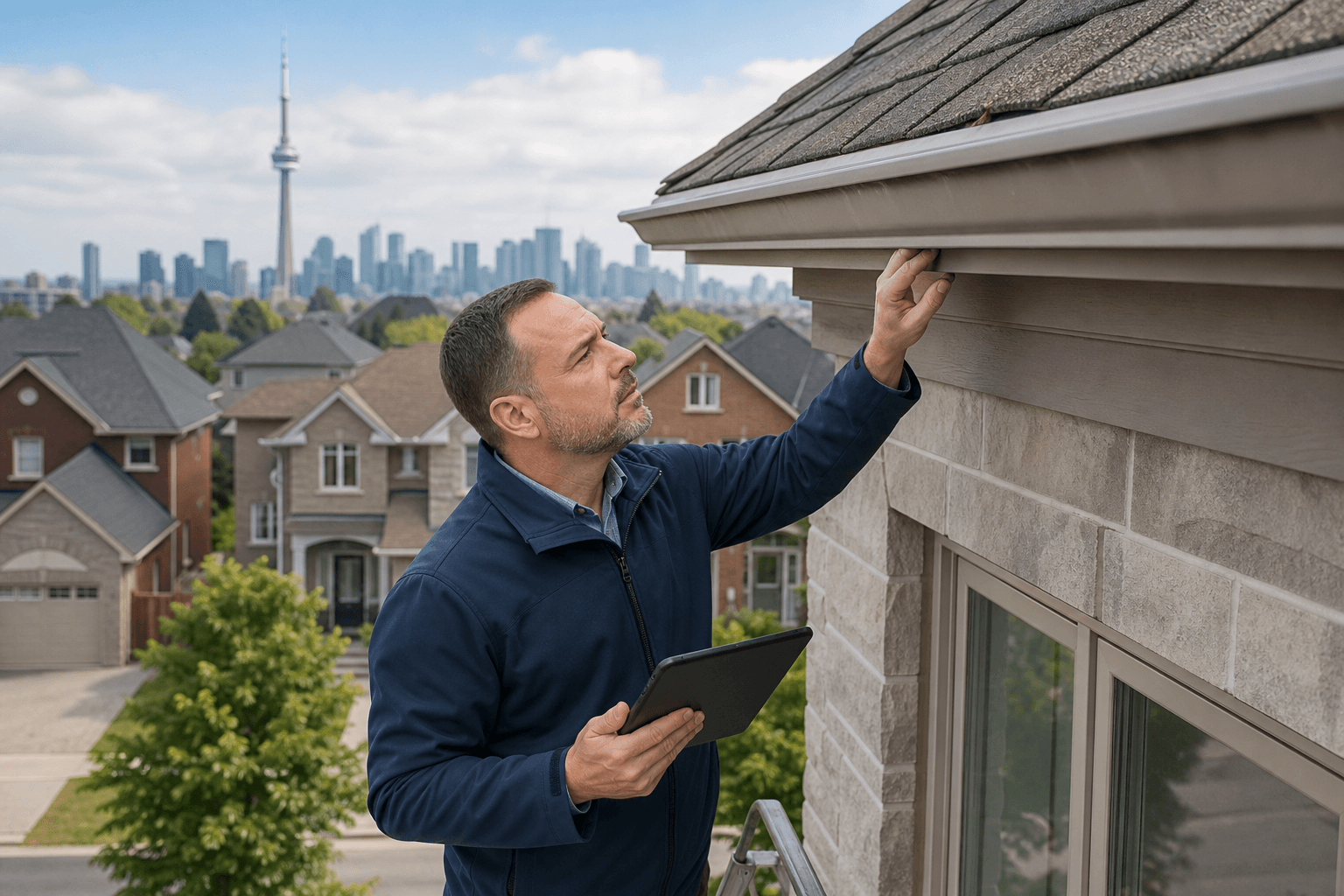
From a safe ground-level viewpoint, look for visibly missing or displaced roofing materials, damaged gutters and downspouts, deteriorated soffits or fascia, and visible damage near vents, flashing, or other roof penetrations. Ground-level observations can help focus a professional assessment.
Do not walk on the roof, climb onto it from a ladder or window, dismantle flashing, or remove roofing materials. These actions can create fall hazards and disturb evidence.
Step 5: Compare Evidence Across Connected Areas
Compare the interior mark with the attic area above, roof edge outside, nearby plumbing, and ceiling or wall boundaries. Note whether a similar pattern appears in another room or unit. Alignment can help a professional investigate, but it does not conclusively identify the source because water may travel along framing, insulation, ducts, finishes, or other components.
Step 6: Know When to Stop a DIY Check
Stop investigating and seek appropriate professional help for:
- Active water near outlets, fixtures, panels, wiring, or other electrical equipment
- A sagging ceiling, wall, roof deck, or other possible structural damage
- Unsafe roof access, unstable attic flooring, or restricted visibility
- Suspected mold, extensive dampness, or strong unusual odors
- Large, recurring, or expanding damage
- Any condition requiring a wall, ceiling, roof, or concealed assembly to be opened
An electrical hazard calls for an electrical professional. Roofing concerns may require a qualified roofing professional. Possible structural damage may warrant engineering review, while suspected mold or contaminated materials may require environmental or remediation support.
Step 7: Choose the Right Professional Assessment
- Residential home inspection: Useful for a broad review of accessible roofs, attics, structure, foundations, basements, plumbing, electrical systems, HVAC, and related components.
- Commercial property inspection: Appropriate for apartment and condominium properties, retail locations, restaurants, offices, warehouses, manufacturing facilities, schools, hospitals, churches, hotels, motels, gas stations, storage facilities, and other commercial sites.
- Roofing assessment: Best suited to questions about roof coverings, flashing, drainage, penetrations, or repair condition.
- Structural or engineering review: Appropriate for movement, sagging, compromised framing, or significant structural concerns.
- Electrical assessment: Necessary when water has reached electrical equipment or electrical safety is uncertain.
- Environmental or remediation service: Appropriate for suspected mold, contaminated materials, or extensive water damage.
A general inspection can connect observations across major systems, but it does not replace specialized testing, engineering, environmental assessment, or repairs. Before booking, ask what areas are included, how limitations are reported, and whether specialist support may be needed. These questions to ask a Toronto home inspector before booking can help.
Residential and Commercial Checks Are Not the Same
A home may require attention to one roof, attic, ceiling, basement, foundation, and connected residential systems. A commercial property can involve larger roof areas, multiple units or occupants, complex mechanical systems, several building sections, and broader operational consequences if moisture is suspected.
The appropriate scope depends on construction, accessible areas, visible evidence, property records, and the question the owner or manager needs answered. Do not assume every commercial roof requires the same technology or test. For either property type, distinguish visible evidence from confirmation of concealed moisture.
Decision Table: What Should You Do With the Finding?
| Observation | Next step |
|---|---|
| No visible evidence | Continue routine maintenance and arrange an inspection when it fits a purchase, listing, move-in, or maintenance decision. |
| Small historic mark with no change | Document it and consider a residential inspection if the cause is unknown or it returns. |
| Recurring, expanding, or newly wet staining | Arrange prompt professional assessment without assuming the roof is the only source. |
| Active water near electrical equipment | Stop and seek appropriate electrical and water-intrusion assistance. |
| Unsafe or inaccessible attic or roof | Do not force access. Tell the inspector which areas could not be observed. |
| Suspected mold or extensive dampness | Do not disturb materials. Seek environmental or remediation guidance. |
| Sagging, movement, or structural concern | Stop and arrange structural or engineering review. |
| Multi-unit or commercial concern | Request a commercial inspection scope and coordinate access to affected areas. |
When to Arrange an Inspection in the GTA
A pre-purchase home inspection can help a buyer understand visible conditions before committing to a property. A pre-listing inspection can help a seller identify concerns before marketing. A new construction inspection can review accessible components and workmanship concerns, subject to the construction stage and agreed scope.
A move-in inspection can document a rental property's condition, while an annual maintenance inspection can help track changes in roofs, attics, foundations, basements, plumbing, electrical systems, HVAC, and other components. For buying decisions, review pre-purchase inspection mistakes to avoid. Sellers can read about a GTA pre-listing inspection.
Questions to Ask Before Booking
- Will the inspection include accessible roof, attic, ceiling, basement, structural, plumbing, electrical, and HVAC observations?
- Which areas are excluded or inaccessible?
- Can I provide photographs and a history of the staining?
- How will limitations and findings appear in the report?
- Which specialist should assess suspected concealed moisture, mold, structural damage, electrical risk, or roofing defects?
- Is the property best handled as residential or commercial?
- When will the report be delivered, and will it be a PDF?
Frequently Asked Questions
Can I check my roof for moisture without climbing onto it?
Yes. Begin indoors, use a safe attic entry point if available, and observe roof edges from the ground. This can identify evidence worth investigating but cannot confirm the full roof condition.
Does a ceiling stain prove that the roof is leaking?
No. Plumbing, condensation, and other sources can create similar marks, and water may travel before becoming visible.
When is a general home inspection not enough?
Specialized support may be needed for unsafe access, concealed damage, active water near electrical equipment, suspected mold, structural movement, extensive dampness, or a specific roof repair question.
Should commercial owners arrange a different assessment?
The scope should reflect the property's size, use, construction, and systems. A commercial property inspection may be appropriate, with additional roofing, engineering, electrical, or environmental review when needed.
What should I document?
Record the location, appearance, approximate size, dampness or odor, photographs, timing, changes, and relevant plumbing or weather context. Do not disturb the affected material.
Conclusion: Use Safe Observations to Choose the Next Step
Effective roof moisture investigation starts with restraint: observe from safe locations, document carefully, compare connected areas, and stop when access, electrical, mold, or structural risks appear. Visible evidence can guide the next decision, but it cannot confirm the source or extent of concealed moisture. Match the assessment to the property and concern.
ASM Home & Commercial Inspection serves the GTA with certified residential and commercial inspections covering roofs, attics, structure, foundations, plumbing, electrical systems, HVAC, basements, and related components, with same-day PDF inspection reports. Contact ASM Home & Commercial Inspection to discuss the appropriate inspection for your property.