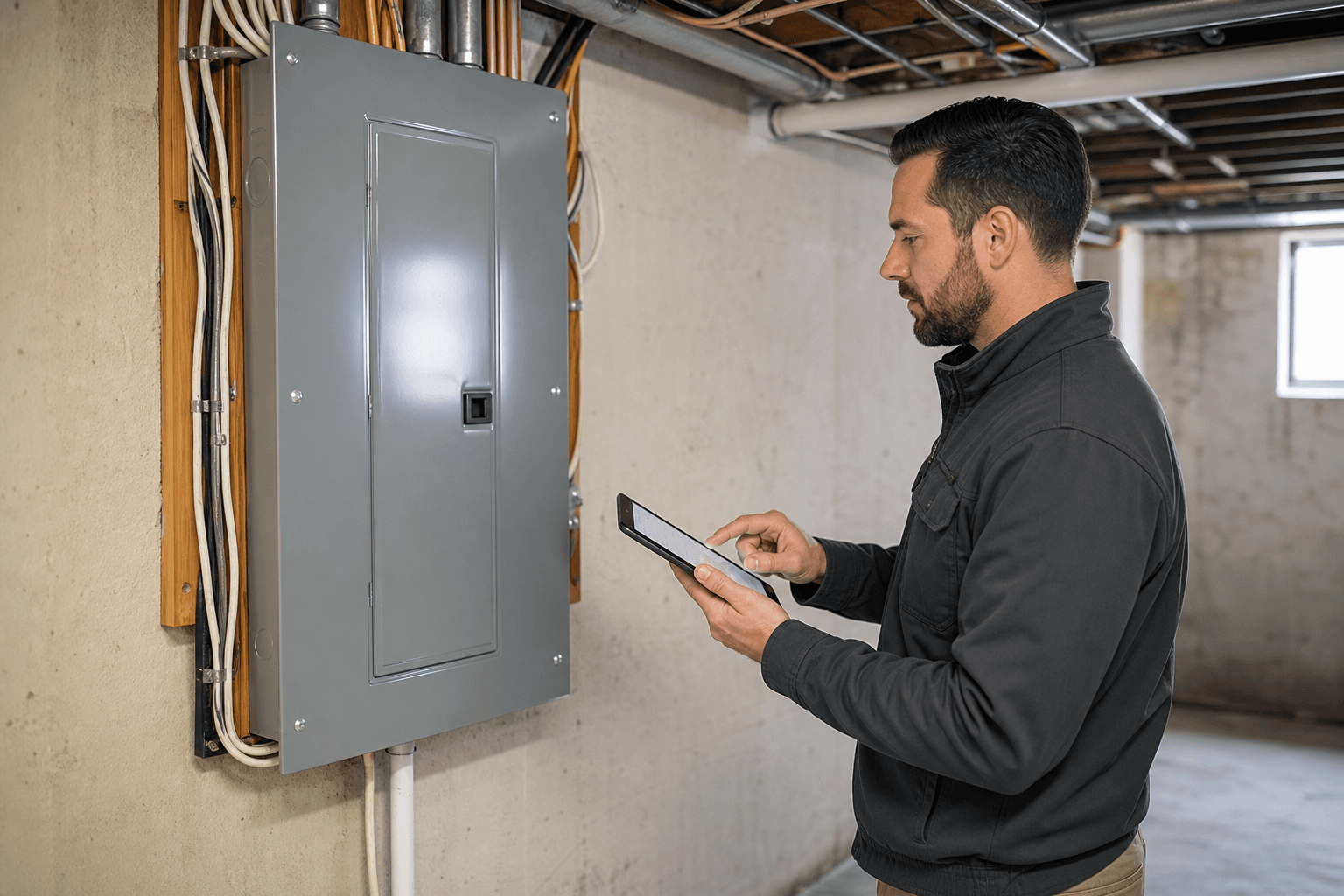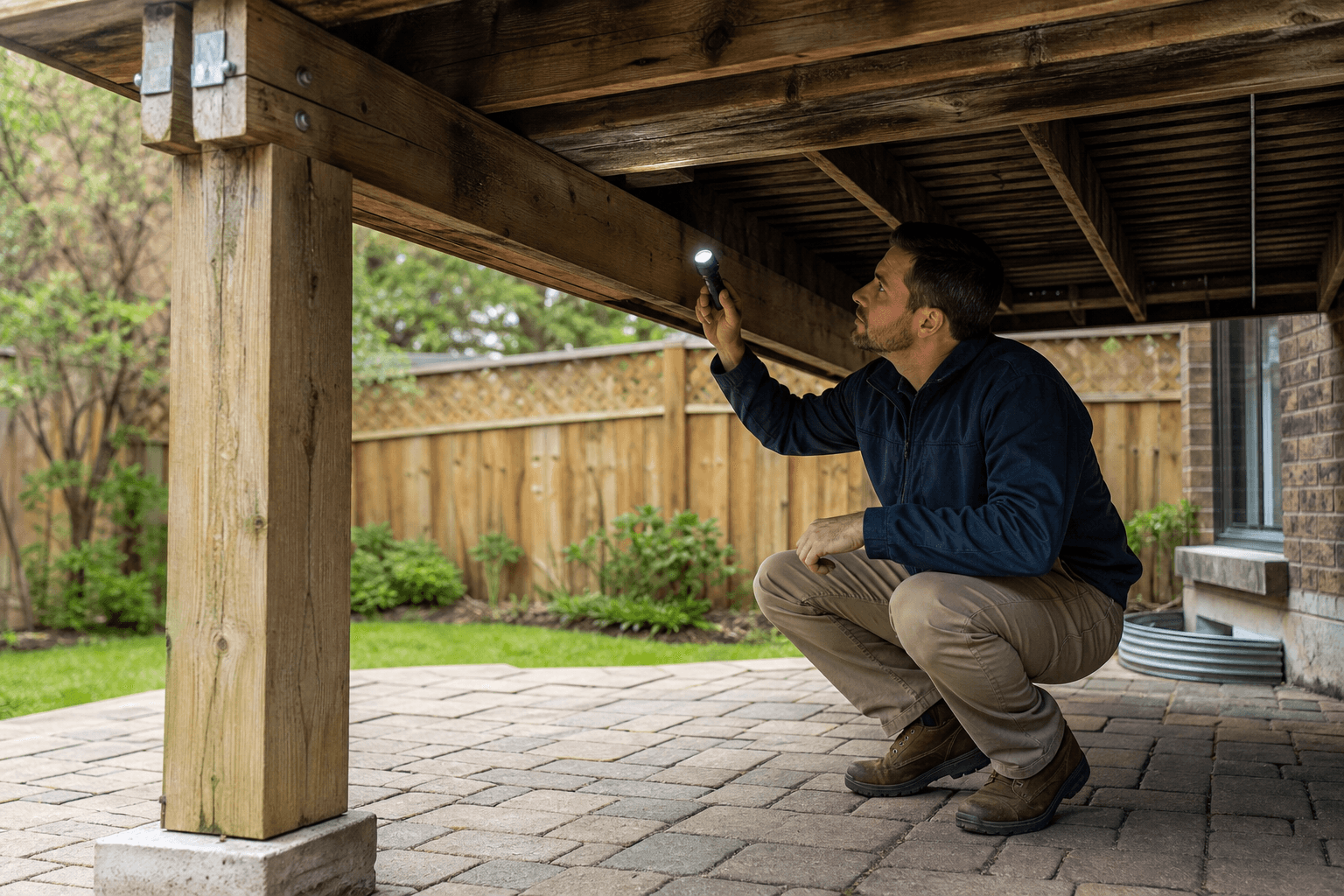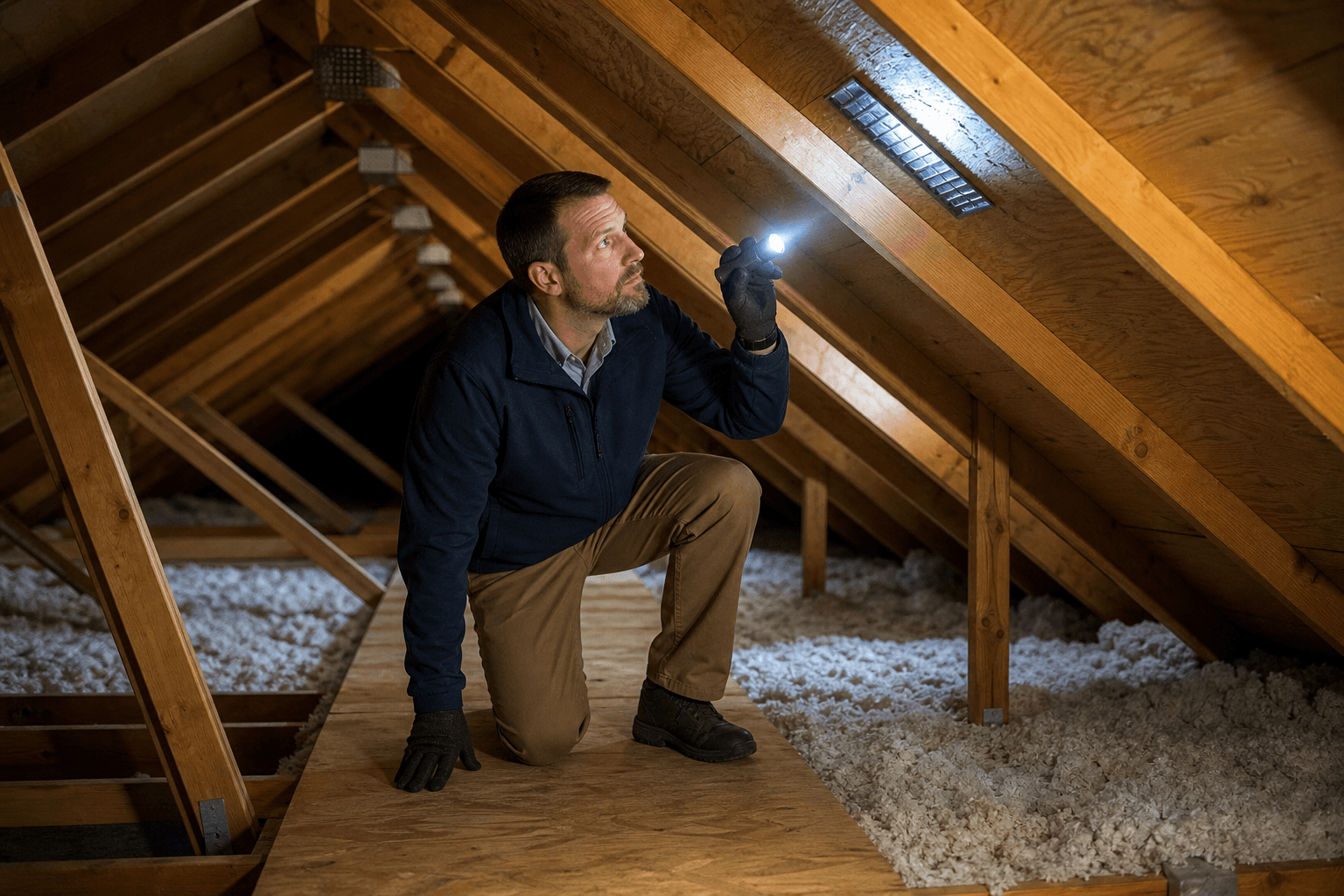
A useful attic ventilation checklist for Toronto homes should help you compare visible system components, not promise a diagnosis from a quick look. Check whether intake and exhaust areas appear connected, whether airflow paths are obstructed, whether insulation looks dry, and whether soffits and roof components are intact.
These observations can help you document concerns and decide whether you need a broader residential home inspection or advice from a qualified specialist. ASM Home & Commercial Inspection emphasizes identifying moisture intrusion early because it may contribute to structural damage and occupant safety risks. A visual checklist, however, cannot confirm the source of moisture, installation adequacy, or compliance with a building requirement.
1. Roof Vents and Soffit Vents: Is There a Visible Airflow Path?
Compare components that appear to let air into the attic with those intended to let air out. From the exterior, note the location and condition of soffit vents, roof vents, ridge vents, or other visible openings. From an accessible attic area, look for a reasonable path between lower roof edges and higher exhaust points.
A clearer arrangement has identifiable intake and exhaust areas that are not visibly covered, crushed, or blocked. A concern is an attic with visible exhaust vents but no apparent intake area, covered soffits, or openings whose purpose is unclear. The presence of a vent alone does not prove adequate ventilation.
Record locations and take photographs from a safe position. Do not climb onto the roof or remove components. The Canadian Home Inspection Services attic ventilation checklist can help organize observations before requesting an assessment.
2. Ridge Ventilation and Isolated Exhaust Vents: How Do They Compare?

A ridge vent may appear as a continuous feature along a roof ridge, while isolated exhaust vents are separate roof or gable components. Neither format is automatically correct or universally better. The relevant question is whether the visible components appear to work together for that particular roof and attic.
Document whether the ridge line appears consistently vented, whether individual vents are intact, and whether different vent types seem to have been added over time. A mixed arrangement is not proof of a defect, but it is a reason to ask how the components interact.
Do not infer code noncompliance or specify a replacement system from appearance alone. If the roof has had repairs, the attic shows moisture evidence, or the arrangement is unclear, include the issue in a roof or attic assessment. Natural Resources Canada’s roof and attic information provides useful background, but property-specific conclusions require property-specific review.
3. Clear and Blocked Airflow Paths: What Could Be Restricting Movement?
From a safe, accessible position, compare areas where airflow appears open with areas where it may be restricted. Look near soffit openings, roof edges, insulation, framing, and visible vent channels. Record insulation pushed against an opening, debris near a vent, a damaged screen, or a section that looks compressed or covered.
A clear-looking path does not confirm sufficient airflow, while a visible obstruction identifies a location for closer review. Avoid pulling insulation aside, cutting materials, crawling across unsupported surfaces, or reaching into areas you cannot see clearly.
Use photographs taken from stable locations and mark the approximate area on a simple roof or room sketch. An inspector can assess the attic alongside the roof, insulation, soffits, and other components rather than treating one blocked-looking area as a complete diagnosis.
4. Dry and Moisture-Affected Insulation: What Visible Evidence Should You Record?
Compare insulation that appears clean and dry with insulation showing staining, dampness, compression, discoloration, or an unusual change in texture. Also look for marks on roof sheathing, rafters, or surfaces around penetrations. These are observations, not proof of the source or age of a moisture problem.
Moisture evidence deserves attention because water intrusion can contribute to damage in building components. It may be associated with the roof, flashing, exterior openings, indoor moisture, or another condition. A checklist cannot confirm whether a mark is active, diagnose mold, establish structural damage, or determine a health risk.
Photograph the area without disturbing it and note whether the concern is near an exterior wall or roof penetration. If insulation is visibly wet or the area appears unsafe, avoid entering it. A residential home inspection can place the attic observation alongside roof, foundation, plumbing, electrical, and HVAC findings.
5. Intact and Damaged Soffits: Do Exterior Components Support the Attic Review?
Compare intact, secure-looking soffit sections with areas showing gaps, sagging, impact damage, loose panels, peeling finishes, or visible blockage. Look around the entire building rather than checking only one elevation.
An intact-looking soffit does not confirm that vent openings are clear behind the surface. Conversely, a damaged panel does not by itself prove that attic ventilation has failed. Record the location and type of concern, then avoid removing panels or inserting tools into openings.
Include soffits in a broader review when they appear connected to attic moisture evidence, roof deterioration, or an unresolved airflow concern. ASM’s inspection scope includes attic, roof, gutters and downspouts, soffits, and structural and foundation components.
6. Balanced Ventilation and Improvised Changes: What Should You Compare?
Compare a ventilation arrangement whose components appear intentional and consistent with one that includes additions, disconnected-looking parts, or alterations whose purpose is unclear. A roof may have been repaired in sections, or an exterior opening may have been covered or modified.
These differences are clues for questions, not automatic evidence of poor work. Do not assume that adding another vent solves an airflow problem, that removing one is appropriate, or that a mixed arrangement violates a requirement. The correct assessment depends on the roof design, attic layout, existing components, and building condition.
Ask for available records of roof or ventilation work. If changes coincide with staining, damp insulation, or recurring maintenance concerns, arrange a property-specific review before attempting alterations.
7. Visual Review and Professional Inspection: Which Next Step Fits the Risk?
A visual checklist helps you record accessible conditions, prepare questions, and decide whether a concern deserves attention. It is not a substitute for an inspection when you need a fuller view of the attic, roof, soffits, structure, or related systems.
A broader residential home inspection may be useful before purchasing, before listing, after new construction, during a move-in review, or as part of annual maintenance. It is also sensible when moisture evidence remains unexplained or roof and attic conditions appear connected. ASM identifies its inspector as an InterNACHI certified inspector and CCPIA certified inspector and provides same-day PDF inspection reports.
Before booking, ask what areas will be inspected, how inaccessible areas are handled, what the report includes, and whether a specialist may be needed. Read these questions to ask a home inspector in Toronto before booking and learn which GTA home inspection fits your property and timeline.
How to Act on Your Findings
- Document the observation: note the location, date, visible condition, and nearby staining or damage.
- Stay within safe limits: do not climb onto a roof, walk on unsupported attic surfaces, move insulation, or disturb suspected damage.
- Separate observation from diagnosis: write “staining visible near roof penetration,” not “there is mold” or “the roof is leaking.”
- Choose the appropriate assessment: use a residential inspection for broader review and consult a roofer or other specialist when needed.
- Keep records together: photographs and a clear PDF report can support maintenance planning or real-estate discussions.
Frequently Asked Questions
Can an attic ventilation checklist confirm that a Toronto attic is properly ventilated?
No. It can compare visible components, obstructions, soffit condition, insulation, and possible moisture evidence, but it cannot confirm design adequacy or compliance. Those conclusions require a property-specific assessment.
Should attic ventilation be included in a pre-purchase home inspection?
It is a useful area to discuss when the attic and roof are accessible. A pre-purchase review can place ventilation observations alongside roof, structure, foundation, plumbing, electrical, and HVAC findings.
Which visible attic moisture signs should prompt further assessment?
Staining, dampness, changed insulation, marks on roof sheathing, and recurring concerns near roof penetrations are reasonable reasons to document the area and seek further assessment. They do not identify the source or prove mold or structural damage.
Does a home inspection replace a roofing or ventilation specialist?
No. A residential inspection provides a broad condition review, while a roofing or ventilation specialist may be needed for detailed design, repair, installation, or technical testing.
Conclusion: Use the Checklist to Choose the Right Next Step
These seven comparisons provide a practical way to review a Toronto or GTA attic without overinterpreting what you see. Compare roof and soffit vents, ridge and isolated exhaust components, clear and blocked paths, dry and moisture-affected insulation, intact and damaged soffits, coherent and improvised changes, and a visual review with the level of assessment your property decision requires.
Use photographs and notes to preserve the facts, treat moisture evidence as a reason for attention rather than a diagnosis, and involve the appropriate specialist when the concern goes beyond a general inspection.
ASM Home & Commercial Inspection provides certified residential inspections across the GTA, including attic, roof, soffit, and related components, with same-day PDF reports and InterNACHI and CCPIA certified inspection credentials.