Basement moisture mitigation should begin with understanding the pattern, not covering the evidence or choosing the first repair that appears suitable. Note where moisture appears, when it occurs, what materials are affected, and whether it changes after rain or when nearby systems operate. That information helps a homeowner, buyer, landlord, or investor decide whether a residential home inspection, a specialist assessment, or both may be appropriate.
The visible symptom does not always identify the source. Dampness may relate to condensation, plumbing, the roof or upper walls, drainage observations, foundation conditions, or another pathway. A careful inspection can document accessible conditions, but it does not automatically confirm hidden conditions or replace repair, engineering, waterproofing, or remediation work.
Quick summary

- Document recurring dampness, staining, odour, and water entry before cleaning, painting, or sealing.
- Do not assume every wet basement surface indicates foundation leakage. Record timing, weather, indoor conditions, and nearby plumbing or HVAC equipment.
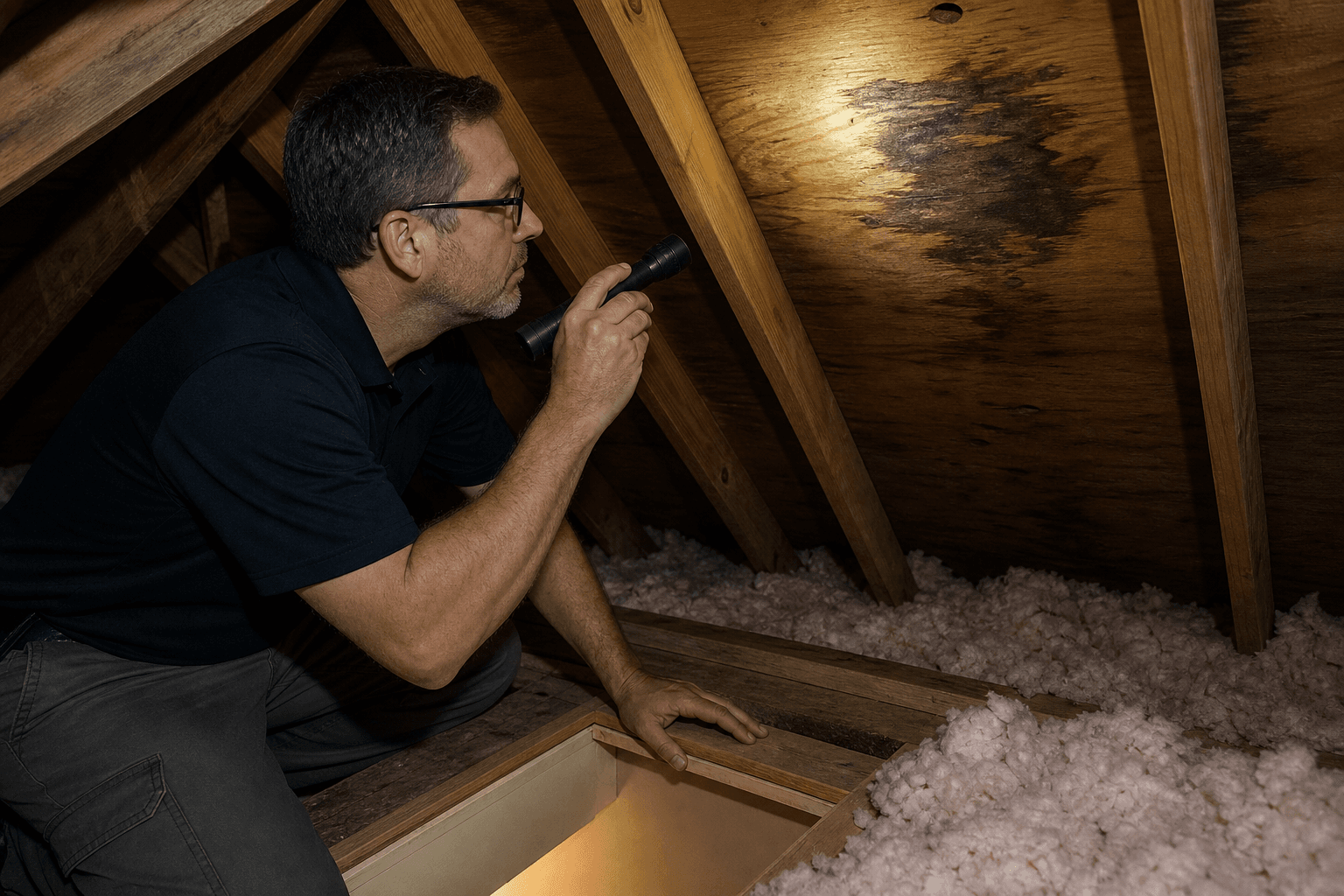
- Inspect beyond the basement when the source is unclear. Roof, attic, foundation, plumbing, electrical, HVAC, windows, and upper-level pathways may be relevant.
- Stay within safe observation limits. Do not open finished walls, disturb structural components, or approach electrical hazards to investigate.
- Ask for a documented scope and clear limitations before accepting repair or specialist recommendations.
Which basement moisture decisions should you question first?
The first question is not “Which waterproofing product should I buy?” It is “What is happening, where is it happening, and what evidence supports the proposed response?” A repair may be appropriate, but selecting it from a single stain, musty smell, or damp corner can leave the actual source unresolved.
Use a simple sequence: observe safely, record the conditions, consider connected building systems, arrange an inspection when the cause or extent is uncertain, and then ask the appropriate qualified professional to explain the proposed work.
Mistake 1: Treating recurring dampness as a one-time problem

A basement that becomes damp repeatedly deserves more attention than one that was simply cleaned after an isolated event. Repeated staining, wet materials, odour, or water appearing under similar conditions can provide useful clues about timing and extent, even though those signs do not prove a particular cause.
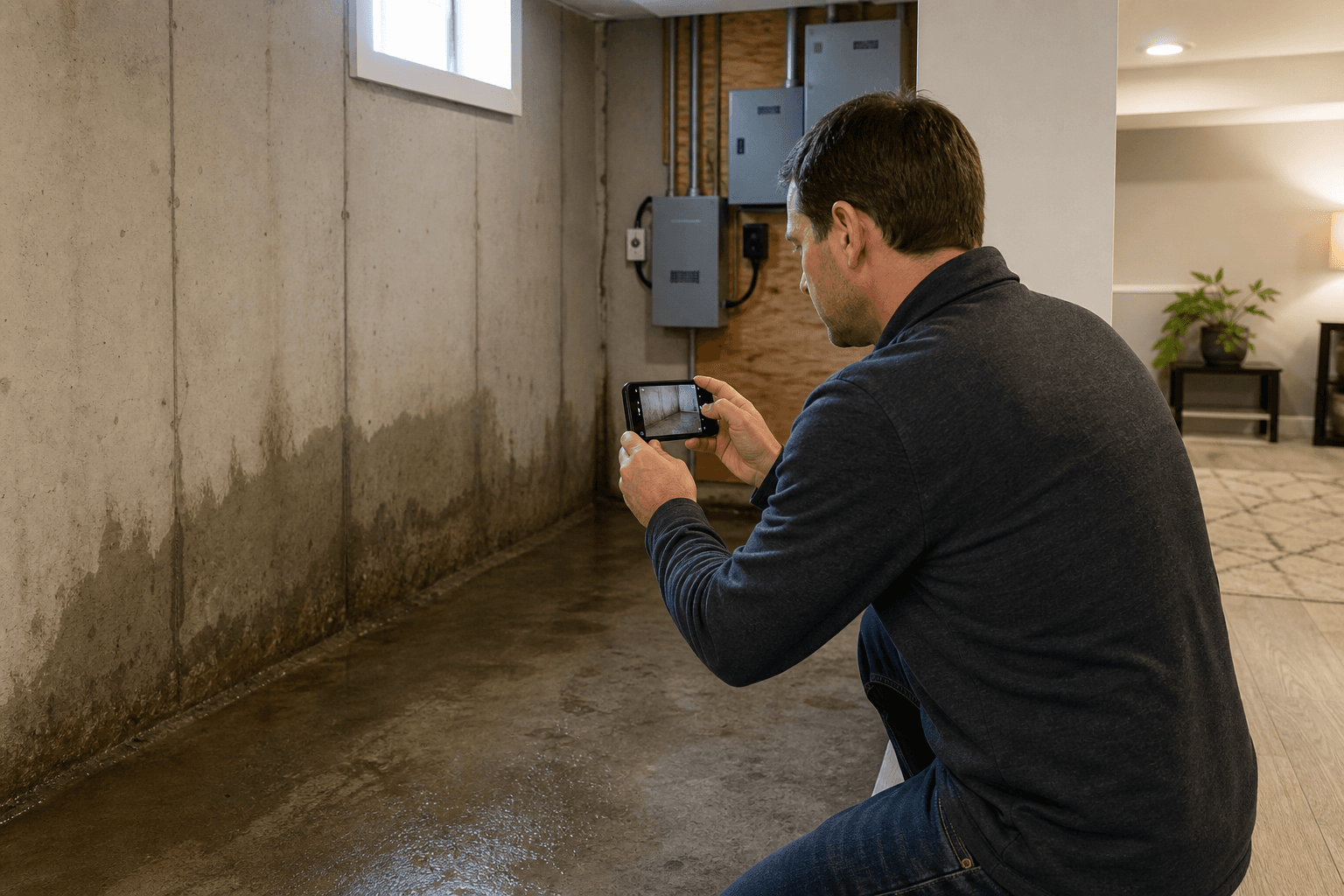
Record each occurrence. Note the date, location, approximate affected area, weather, nearby activities, and whether the condition changes after drying. Cosmetic cleanup may improve appearance, but it does not establish that the underlying moisture issue has ended.
Mistake 2: Assuming every wet surface means foundation leakage
A wet basement surface can have several possible explanations. Condensation may appear on cool surfaces during certain indoor conditions. Plumbing may be relevant near fixtures, supply lines, drains, or mechanical equipment. Moisture may also follow a pathway from the roof, attic, windows, upper walls, exterior drainage, or foundation.
Compare the location with nearby fixtures and equipment, note whether the condition follows rainfall or temperature changes, and record whether it appears at a wall, floor, ceiling, window, or joint. A qualified inspection may help assess accessible evidence, but hidden pathways can require further investigation.
Mistake 3: Sealing a stain before identifying its source
Painting, applying sealant, adding insulation, or covering a stained area can make the basement look improved while removing useful visual evidence. Photograph the area and record its location, appearance, and dimensions before covering it.
If a contractor recommends sealing or coating, ask what condition the work addresses, what evidence supports that conclusion, and how the result will be checked. A coating alone does not prove that the source has been corrected.
Mistake 4: Looking only at the basement walls and floor
Basement moisture can involve more than the surface where it becomes visible. A review may need to consider the roof, attic, upper walls, windows, foundation, plumbing, HVAC equipment, and accessible drainage features. Water can appear in one location even when the contributing pathway begins elsewhere.
If the source cannot be explained from the basement alone, ask whether the roof, attic, foundation, plumbing, electrical, and HVAC systems should also be reviewed as part of a broader residential inspection.
Mistake 5: Disturbing electrical or structural components
Do not open finished walls, remove flooring, move structural elements, dismantle equipment, or approach potentially unsafe electrical conditions without qualified help. Invasive work can create safety risks and destroy evidence before the right professional has assessed it.
Stay with accessible visual observations. Keep clear of questionable electrical components, avoid contact with wet equipment, and document what is visible before asking which qualified specialist should evaluate it.
Mistake 6: Requesting a narrow check when the source is unclear
A limited look at one wall may be suitable when the question is already well defined. It may be less useful when the moisture source, extent, or relationship to other systems is uncertain.
ASM Home & Commercial Inspection states that its inspection scope includes basements, structural and foundation components, roofs, attics, plumbing, electrical systems, HVAC, and other major systems. Confirm the relevant scope for the property, because a visual inspection does not expose every hidden condition.
Mistake 7: Accepting a repair recommendation without a documented scope
Before approving work, ask the provider to describe the observed condition, suspected source, proposed response, areas included, and exclusions. Also ask what follow-up observation or testing is expected and which professional handles questions outside the provider’s specialty.
An inspection finding is not the same as a repair design or a guarantee that a mitigation method will solve the problem. Review questions to ask a home inspector before booking when comparing scope, credentials, communication, and reporting.
What can you safely document before booking?
- The exact room, wall, floor area, ceiling, window, or junction involved.
- When the condition appeared and whether it changes after rain, snow, temperature changes, or indoor activity.
- Visible staining, deposits, damp materials, peeling finishes, or odour.
- Nearby plumbing fixtures, drains, mechanical equipment, windows, and electrical components.
- What happens when the area dries and whether the condition returns.
- Visible sump, drainage, or downspout observations, without dismantling equipment.
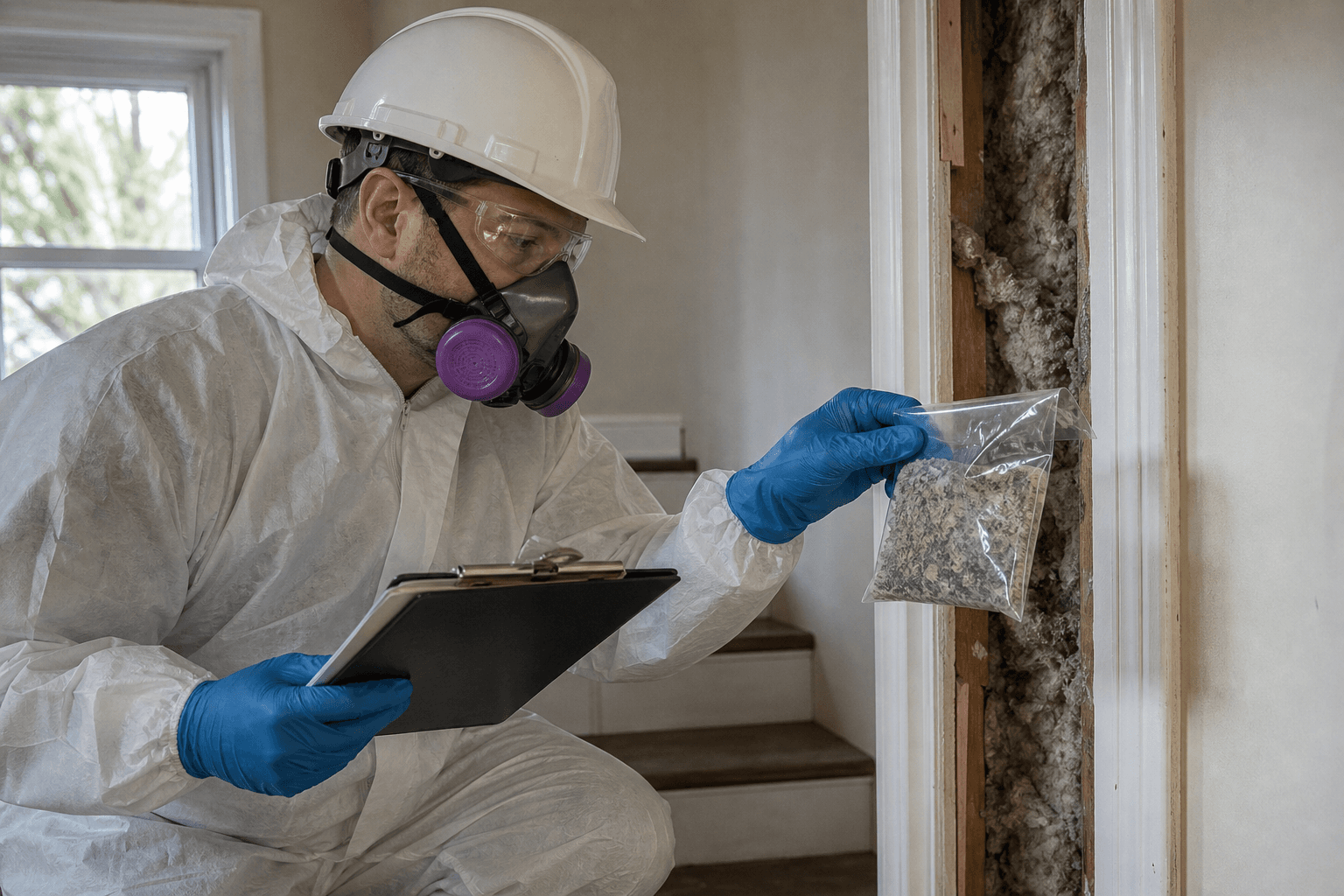
Do not scrape suspected materials, remove finishes, enter unsafe areas, or test electrical equipment. The goal is to preserve observations and give the inspector or specialist a clearer starting point.
How should you prioritize the next step?
Active water entry
Keep people away from unsafe areas and avoid contact with electrical equipment or wet outlets. Record where water appears if you can do so safely, then ask an appropriate qualified professional about the immediate condition and broader inspection needed.
Persistent dampness or odour
Document repeated dampness or odour rather than masking it. Arrange an inspection when the source or extent is unclear. Additional specialist assessment may be needed for concealed areas or materials.
Visible material damage
Photograph damaged finishes and note whether the damage is changing. Avoid removing or covering materials if doing so could eliminate useful evidence.
Uncertain source
A broader residential home inspection can help organize questions around the basement and connected systems. The report may also clarify limitations and whether another professional should investigate further.
What a residential inspection can and cannot establish
A residential inspection can document accessible, visible conditions and review relevant major systems within its agreed scope. It may identify moisture indicators, affected areas, maintenance concerns, or conditions that warrant follow-up.
It should not be presented as confirmation of conditions behind finished walls, beneath floors, inside concealed assemblies, or within inaccessible equipment. Invasive investigation, structural opinions, laboratory testing, repairs, waterproofing design, and specialized remediation may require other professionals. A same-day PDF inspection report provides timely documentation, but not necessarily same-day diagnosis, repair, or testing.
How moisture findings affect property decisions
For a buyer, moisture documentation can separate an observed condition from an assumption and support better questions before purchase. A pre-purchase home inspection is part of a broader condition review, not a substitute for specialist work when findings call for it. See common pre-purchase inspection mistakes to avoid.
Sellers may use a pre-listing inspection, while landlords and tenants may use a move-in inspection to document a rental’s starting condition. Owners and investors may also use an annual maintenance inspection to track property health over time.
What should you look for in GTA inspection support?
Ask whether the provider works across your property type and location, addresses the systems relevant to the concern, explains limitations clearly, and provides a usable report. Credentials, communication, report timing, and residential or commercial experience may also matter.
ASM Home & Commercial Inspection provides certified residential and commercial property inspections across the GTA. The business identifies its inspector as a certified member of InterNACHI and the Certified Commercial Property Inspectors Association, and states that its scope includes basements and foundations as well as other major systems.
Basement Moisture Mitigation GTA FAQ
Can a home inspection confirm whether basement moisture is condensation or leakage?
An inspection can document accessible conditions and patterns, but it may not conclusively establish the source in every case. Finished walls, concealed pathways, weather, and other limitations affect what is observable. Ask the inspector to identify findings, limitations, and recommended follow-up.
Should you cover a basement stain before an inspection?
It is generally more useful to document an unexplained stain first. Photograph its location and appearance, and record whether it changes. Painting or sealing can hide evidence and make comparison more difficult.
When might basement moisture require a specialist?
Specialist help may be appropriate for invasive investigation, structural opinions, electrical or plumbing work, waterproofing, or specialized material remediation. A home inspector is not a replacement for every trade, engineering, or remediation professional.
What should a basement moisture inspection report include?
Useful documentation identifies observed locations, visible conditions, affected or related systems, photographs where applicable, limitations, and next-step questions. ASM states that it provides same-day PDF inspection reports, so confirm what the report covers for your inspection.
Document the pattern before choosing mitigation
Base the decision on a documented pattern rather than a single symptom. Observe from accessible areas, record timing and location, avoid actions that obscure evidence, and consider whether connected systems belong in the inspection scope.
ASM Home & Commercial Inspection provides certified residential and commercial inspections across the GTA, includes basements and foundations among its stated scope, and offers same-day PDF reports. Visit ASM Home & Commercial Inspection or call 647-381-9030 to discuss scheduling.